Tax return bookkeeping is an essential aspect of managing your finances, whether you’re a small business owner, freelancer, or individual taxpayer. Proper bookkeeping ensures accurate financial records and facilitates smooth tax-filing processes. In this guide, we’ll explore the fundamentals of tax bookkeeping and provide valuable tips to streamline the process.
Understanding Tax Return Bookkeeping:
Tax return bookkeeping involves organizing and maintaining financial records throughout the year to accurately calculate and report income, expenses, and deductions for tax purposes. It requires meticulous record-keeping and adherence to relevant tax laws and regulations.
Key Components of Tax Bookkeeping:
Income Tracking:
Record all sources of income, including earnings from employment, self-employment, investments, and rental properties. Maintain detailed records such as invoices, receipts, and bank statements.
Expense Management:
Keep track of business expenses, deductible expenses, and personal expenses that may qualify for tax deductions. Categorize expenses properly and retain receipts and documentation to support deductions.
Asset Depreciation:
If you own business assets subject to depreciation, such as equipment or vehicles, accurately calculate and record depreciation expenses. Properly documenting depreciation can result in significant tax savings over time.
Record Retention:
Maintain organized records of financial transactions, receipts, invoices, and other relevant documents. Retain records for the required period as per tax regulations, typically at least three to seven years.
Tips for effective tax bookkeeping:
Use accounting software.
Invest in accounting software like QuickBooks, Xero, or FreshBooks to automate bookkeeping tasks and streamline record-keeping processes.
Separate business and personal finances:
Maintain separate bank accounts and credit cards for business and personal expenses. This separation simplifies bookkeeping and ensures accurate reporting of business income and expenses.
Stay Organized Throughout the Year:
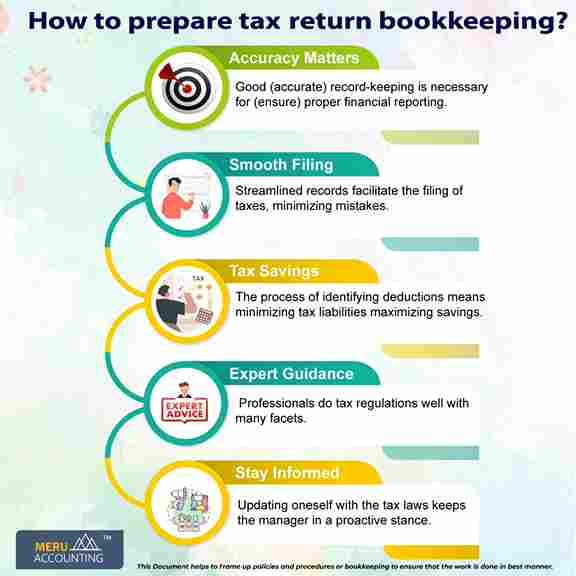
Don’t wait until tax season to organize your financial records. Develop the habit of regularly updating and reconciling your books to avoid last-minute stress and errors during tax preparation.
Seek professional assistance.
Consider hiring a qualified accountant or tax professional to assist with tax return bookkeeping and ensure compliance with tax laws. A professional can provide valuable advice, identify potential deductions, and optimize your tax strategy.
Stay Informed About Tax Law Changes:
Keep abreast of changes to tax laws and regulations that may impact your tax obligations. Stay informed through reputable sources such as the IRS website and tax publications, or consult with a tax advisor for guidance.
Tax Return Bookkeeping Checklist
A tax return bookkeeping checklist helps individuals and businesses stay organized throughout the year and avoid missing important financial information during tax season. Following a structured process improves tax accuracy, reduces filing stress, and helps ensure compliance with tax regulations.
Before preparing your tax return, review the following checklist:
- Record all income from employment, self-employment, investments, rental properties, and other sources.
- Categorize expenses correctly to identify deductible business and personal tax expenses.
- Reconcile bank and credit card accounts to ensure transactions match your financial records.
- Review available deductions and tax credits that may reduce taxable income.
- Verify payroll records, employee payments, and payroll tax information.
- Maintain receipts, invoices, and supporting documentation for all deductible expenses.
- Update asset records and calculate depreciation for eligible business assets.
- Review accounts receivable and accounts payable records for accuracy.
- Confirm estimated tax payments and tax withholding amounts.
- Generate year-end financial reports, including profit and loss statements and balance sheets.
- Organize tax documents in a secure location for easy access during filing.
Using this bookkeeping checklist throughout the year can significantly simplify tax preparation and reduce the likelihood of errors or missed deductions.
Documents Needed for Tax Preparation
One of the most common reasons for delayed tax filing is missing documentation. Keeping all tax-related records organized makes the filing process faster, more accurate, and less stressful.
The following documents are commonly required for tax return preparation:
Bank Statements
Bank statements provide a record of deposits, withdrawals, and account activity. They help verify income, reconcile transactions, and identify deductible expenses.
Credit Card Statements
Credit card statements help track business and personal expenses throughout the year. These records are particularly useful when supporting expense deductions and reconciling financial accounts.
Invoices
Invoices document income earned from customers or clients. Businesses and freelancers should maintain organized invoice records to ensure all income is reported accurately.
Payroll Reports
Payroll reports provide details about employee wages, tax withholdings, benefits, and payroll tax payments. These records are essential for businesses with employees.
Expense Receipts
Receipts serve as supporting documentation for deductible expenses. Keeping digital or physical copies of receipts helps validate tax deductions if requested during an audit or review.
Prior Tax Returns
Previous tax returns provide valuable reference information when preparing current-year filings. They can help identify carryforward deductions, verify reporting consistency, and reduce preparation errors.
Investment Statements
Investment income from dividends, interest, and capital gains may affect tax liability. Maintaining investment records helps ensure accurate reporting of taxable income.
Asset and Depreciation Records
Businesses that own equipment, vehicles, or other depreciable assets should maintain detailed records of purchases, depreciation schedules, and disposal transactions.
Loan and Interest Statements
Interest paid on certain business loans or qualified expenses may be deductible. Loan documentation helps support these claims and maintain accurate financial records.
Tax Forms and Income Statements
Gather all applicable tax forms received during the year, including employment income statements, contractor income forms, and other tax reporting documents.
Proper organization of these documents throughout the year makes tax return bookkeeping more efficient and helps ensure accurate tax preparation while minimizing compliance risks.
Tax bookkeeping is a crucial aspect of financial management that requires diligence, accuracy, and adherence to regulations. By implementing effective bookkeeping practices, you can streamline the tax filing process and maximize tax savings. With proper tax bookkeeping, you can maintain financial transparency, mitigate risks, and achieve compliance with tax authorities.
Meru Accounting offers comprehensive solutions to streamline tax return bookkeeping processes, ensuring accuracy and compliance with tax regulations. Through our expertise in accounting software and deep understanding of tax laws, Meru Accounting can assist individuals and businesses in efficiently managing income tracking, expense management, and asset depreciation.
We also provide personalized guidance, staying updated with tax law changes and offering proactive advice to maximize tax savings and minimize liabilities. With Meru Accounting’s assistance, you can navigate complex tax requirements with confidence, freeing up time to focus on core activities and financial goals.
FAQ
1. What is tax return bookkeeping?
Tax return bookkeeping is the process of recording, organizing, and reviewing financial transactions to prepare accurate tax filings and maintain compliance.
2. How often should bookkeeping records be updated for taxes?
Bookkeeping records should ideally be updated weekly or monthly to ensure tax accuracy and reduce year-end workload.
3. What documents are required for tax return bookkeeping?
Key documents include invoices, receipts, payroll records, bank statements, expense reports, and depreciation schedules.
4. Which software is best for tax bookkeeping?
Popular solutions include QuickBooks, Xero, FreshBooks, and Zoho Books because they automate reconciliation and reporting.
5. Why is bank reconciliation important for tax preparation?
Bank reconciliation ensures recorded transactions match actual bank activity, helping identify errors before filing taxes.
6. Can outsourced bookkeeping help with tax returns?
Yes. Professional outsourced bookkeepers maintain accurate records, improve compliance, and simplify tax filing.