A lot of small businesses are still not maintaining a proper bookkeeping system in their organization. It is very important for them to understand that bookkeeping is one of the vital aspects of any business. They record all the financial transactions happening in your business organization. So, it does not matter if your business is small; maintaining a basic bookkeeping system is important. It will give you a proper understanding of your cash flow and help you manage your finances better.
Basic bookkeeping for small businesses can be easily set up, ensuring all important aspects are covered. If you do not have much idea about bookkeeping, then this guide will help you understand basic bookkeeping.
What You Will Learn From This Blog
- Understand the key aspects involved in basic bookkeeping for small businesses.
- Learn about suitable bookkeeping methods based on business needs and transaction volume.
- Identify essential features to consider when selecting bookkeeping software.
- Maintain accurate records of business income and expenses.
- Understand the importance of regularly reconciling business bank accounts.
- Maintain proper records for payroll and applicable tax requirements.
- Recognize when outsourcing bookkeeping can support your business.
What are the important aspects of basic bookkeeping?
Whether you are handling bookkeeping yourself or hiring someone, small business bookkeeping for beginners starts with understanding a few fundamental aspects of financial recordkeeping.
Here are the fundamental aspects to set up basic bookkeeping for small business:
Recording financial transactions
Recording all financial transactions in the proper places in the accounting books is one of the basic bookkeeping aspects. Journal entries are done by the bookkeepers to record credits and debits. It is done in the general ledger, and making the financial transaction entry in it is also referred to as making a journal entry.
Choose a suitable method of bookkeeping
Single-Entry bookkeeping and Double-Entry bookkeeping are two main methods of bookkeeping. Most large businesses use standard double-entry bookkeeping that helps in maintaining accuracy and efficient management. Small businesses can also opt for the single-entry bookkeeping system if their transactions are fewer.
Preparing basic financial statements
The basic activities will also include the preparation of the important financial statements. Balance sheet, income and expense statements, and cash flow statements are some of the basic financial statements that you must make.
Handling taxes
Taxes are important for every business, so know where all the taxes are applicable to you. Further, you can make provisions for the taxes for each of the transactions. If you find tax-related aspects complicated, then you can take the guidance of tax consultants. You can make necessary settings in the accounting software that can automatically handle most tax-related aspects.
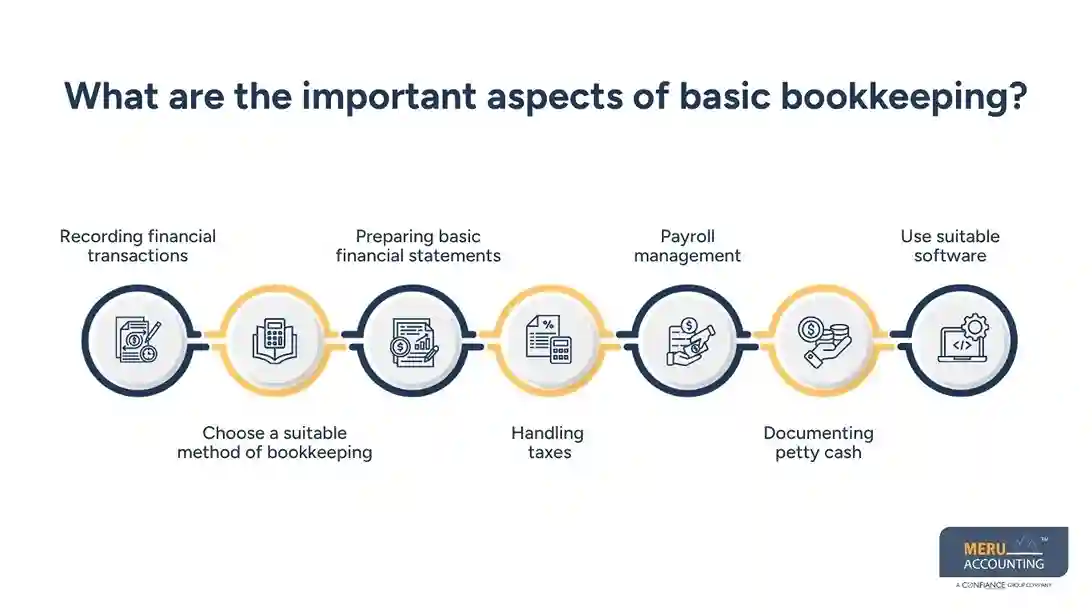
Payroll management
Payroll is one of the basic bookkeeping for small business if you have employees. Here, you need to maintain the work details like the number of hours dedicated along with the rates. While calculating the total pay, withholding and the taxes applicable must also be calculated properly.
Documenting petty cash
Petty cash is one of the common aspects for most small businesses. While maintaining the bookkeeping, all the necessary documents for the petty cash must be maintained. Make sure that petty cash is maintained properly, as it can be a better asset for your balance sheet.
Use suitable software
Traditionally, bookkeeping was done on physical ledger books. However, now most businesses use accounting software for maintaining bookkeeping. It can automate most of the tasks and bring accuracy, so choose proper software for bookkeeping.
These are some steps to set up basic bookkeeping for small businesses. If you still find it difficult to handle the bookkeeping of your business, then outsource this task to the experts.
Steps to Set Up Basic Bookkeeping for Small Business
Setting up basic bookkeeping involves creating a simple financial system and following it consistently.
Separate Business and Personal Finances
Open a dedicated business bank account and, where appropriate, a separate business credit card for business transactions.
Keeping finances separate makes transaction tracking, reconciliation, reporting, and tax preparation easier.
Choose a Bookkeeping Method
Choose between cash-basis and accrual-basis bookkeeping based on your business and applicable accounting requirements.
Cash basis records transactions when money moves, while accrual basis records income and expenses when earned or incurred.
Select Bookkeeping Software
Choose bookkeeping software with features such as bank connections, invoicing, expense tracking, reconciliation, reports, and receipt management.
Prioritize ease of use and business needs instead of selecting software based only on its number of features.
Create a Simple Chart of Accounts
Create categories for assets, liabilities, equity, revenue, and expenses to organize financial transactions.
Keep categories detailed enough for useful reporting without creating unnecessary complexity.
Connect Business Bank and Credit Card Accounts
Connect eligible business bank and credit card accounts to simplify transaction imports and reduce manual data entry.
Review imported transactions regularly to identify incorrect categories, duplicates, missing entries, or unusual activity.
Record Income Regularly
When learning how to do bookkeeping for a small business, record sales and other business income consistently according to your chosen bookkeeping method. For invoiced sales, track invoice dates, customers, amounts, payments, and outstanding balances.
Track Business Expenses
Record business expenses regularly and categorize them correctly in your bookkeeping system.
Keep receipts, invoices, and payment records to support financial reporting and applicable recordkeeping requirements.
Keep Business Receipts and Documents Organized
Organize invoices, receipts, bank statements, payroll records, loan documents, and tax records in clearly labeled folders.
Consistent digital file names and storage systems make important documents easier to locate when needed.
Reconcile Bank Accounts Regularly
Compare bookkeeping records with actual bank activity to confirm that transactions have been recorded accurately.
Review deposits, payments, bank fees, transfers, duplicates, and outstanding transactions during regular reconciliation.
Review Accounts Receivable and Accounts Payable
Monitor accounts receivable to track customer balances and identify overdue invoices that require follow-up.
Review accounts payable regularly to manage upcoming bills and avoid missed or late payments.
Record Payroll Correctly
Record wages, deductions, employer taxes, benefits, and payroll payments accurately in the bookkeeping system.
Consider qualified payroll or accounting assistance when payroll tax requirements become difficult to manage.
Record Loans and Major Purchases Properly
Record loan proceeds as liabilities rather than ordinary business income and track repayments separately.
Classify qualifying equipment and major purchases correctly because their accounting and tax treatment may differ from regular expenses.
Meru Accounting provides outsourced bookkeeping for small businesses cost-effectively. Their experts will handle all activities of the basic bookkeeping for small businesses. They are well-equipped with the technology to handle bookkeeping. Meru Accounting is a proficient bookkeeping agency across the globe.
Our Expert Perspective
Basic bookkeeping can remain simple when financial activities are organized consistently. Separating business finances, recording transactions, tracking expenses, and reconciling accounts can help maintain reliable financial records.
Our expert perspective is to focus on accuracy and consistency rather than creating an overly complicated system. Small businesses should also keep receipts, invoices, payroll records, and tax documents organized. Professional bookkeeping support can be considered when transaction volume or financial responsibilities become difficult to manage.
Key Takeaways
- Keep business and personal finances separate to simplify financial tracking.
- Select a bookkeeping method that suits your business requirements.
- Choose bookkeeping software based on your business needs and activities.
- Create a simple chart of accounts to organize financial transactions.
- Record business income and expenses regularly and accurately.
- Keep receipts, invoices, and other financial documents organized.
- Reconcile bank and credit card accounts regularly to identify discrepancies.
- Monitor accounts receivable and accounts payable to manage cash flow.
- Record payroll, loan proceeds, and repayments correctly in your records.
- Consider outsourcing bookkeeping when managing financial records becomes difficult.