Each year, many U.S. firms file Form 1099 for vendors, freelancers, and other staff. While the task may look easy, one missed step can lead to late fees, wrong tax data, or IRS notices. Small data gaps, incorrect tax ID numbers, and lost files can slow the work and raise risk.
An important part of this process is the W-9 form. This form gives the payee’s legal name, tax ID, and tax type. If the form is wrong, old, or not on file, the data used for Form 1099 may also be wrong. That can lead to filing errors or more work later.
Many firms now use outsourced accounting services to make this work easy. A skilled team can help track payees, check tax data, keep files up to date, and complete each required tax filing on time. They also help make sure vendor tax forms are in place well before tax due dates.
This blog will show how outsourced accounting helps make tax work clear, fast, and more precise. It also explains why good vendor tax records are the basis for smooth year-end tax filing.
What You Will Learn From This Blog
- What Form 1099 is and when a firm must file it.
- Why the W-9 form is a key part of tax file work.
- The most common issues firms face with vendor tax data.
- How outsourced accounting teams help cut filing risk.
- The steps used to manage year-end tax reporting from start to end.
- Ways to keep tax files neat all year.
- How good tax filing work helps save time and avoid IRS issues.
What Is Form 1099 and Who Must File It?
A Form 1099 is a tax form used to tell the IRS about some kinds of payments made to unpaid staff and other payees. It helps the IRS match what a firm paid with what the payee must report on a tax return.
Many firms use Form 1099-NEC for payments made to freelancers, self-run pros, and some firms that meet IRS rules. Other information returns may be used for rent, bank payments, or other kinds of income.
In many cases, a firm must file Form 1099 when it pays a set amount to a non-payroll worker in a tax year. IRS rules may vary by payment type, so firms should check the right filing rules for each case.
A firm may need to file Form 1099 if it pays:
- Freelancers
- Self-run staff
- Law firms in some cases
- Landlords
- Some health care firms
- Other payees who meet IRS rules
Not all payments require this tax form. Payment made by card or some third-party tools may be sent on a new tax form by the firm. Each payment type has its own IRS rule.
Since tax laws may change, firms should keep up with new IRS rules each year. This helps stop filing gaps and keeps tax work in line with the law.
Bookkeeping also supports year-end tax reporting. When all payments are put in the right class and tied to the right payee, year-end tax work takes far less time.
Understanding the W-9 Form Before Preparing Form 1099
The W-9 form is one of the first forms a firm should get from a new vendor or free agent. It gives the tax data used to fill out Form 1099 at year’s end.
This form asks for key facts such as:
- Legal name
- Firm name, if used
- Tax class
- Tax ID number
- Home or work address
- Sign and date
This data helps make sure the tax form has the right facts. If a tax ID or name does not match IRS files, the firm may face tax issues or may need to ask for new data. Many firms wait until tax time to request the form. That can slow the whole filing job. It is far better to collect this tax document before the first bill is paid.
Good file management also means that the form should be kept safe and easy to find. If a vendor gives new tax data, the old file should be changed right away. A good rule is to check vendor tax files each year. This helps spot old names, bad tax IDs, or old mail data before year-end filing starts.
When the W-9 form is complete, signed, and kept up to date, firms can prepare the required tax forms with less risk and far less stress.
Common Form 1099 Filing Challenges Businesses Face
Many firms know they must file Form 1099, yet they still face the same tax issues year after year. Most of these issues start with poor file management, late tax work, or weak vendor data.
Missing W-9 Forms
One of the top issues is not having a complete vendor tax form for each payee. When key tax data is not on file, staff must spend more time to get the facts. This can slow tax work and lead to late filing.
Wrong Tax ID Numbers
A tax ID that does not match IRS data may lead to IRS mail, backup tax rules, or a need to fix the filed return. A quick check at the start of the work year helps cut this risk.
Poor Vendor Records
Some firms keep vendor data in many files, apps, or sheets. This makes it hard to know which file is right. Mixed data can lead to wrong names, old mail data, or missed tax filing requirements.
Late Data Collection
Many firms wait until year end to check tax files. By then, some payees may have moved, shut down, or be slow to send an updated tax form. This adds stress when tax due dates are near.
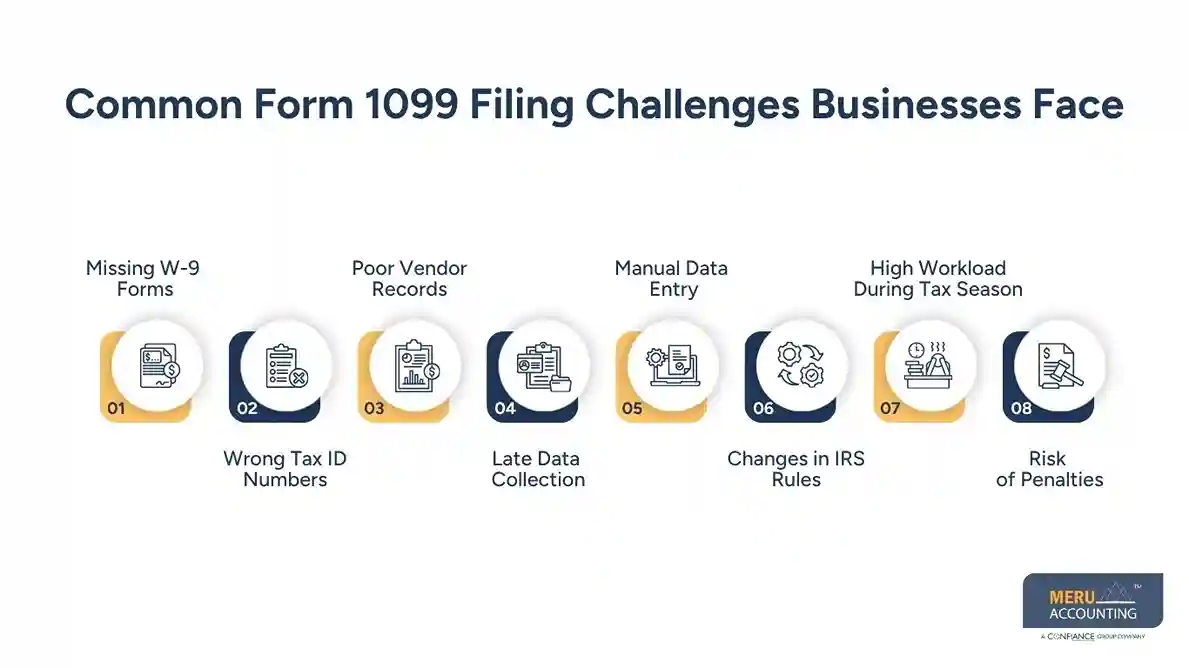
Manual Data Entry
Typing tax data by hand takes time and may lead to small but costly errors. One wrong digit in a tax ID or pay sum can mean that a new tax form must be made and sent.
Changes in IRS Rules
Tax rules may change from one year to the next. Due dates, pay caps, and filing needs may all shift. Firms that do not keep up with IRS news may miss key steps.
High Workload During Tax Season
Tax time is busy for most firms. Staff may also work on year-end books, tax prep, pay runs, and cash flow reports. With so much to do, tax filing work may not get the care it needs.
Risk of Penalties
Late filing, wrong tax data, or missed forms may lead to IRS fees. The cost can rise if many forms are wrong or sent late. Good file care helps lower this risk.
For these reasons, many firms now look to outsourced accounting teams. They help keep vendor files in good shape, track vendor tax records, and make sure year-end tax filing is done with care and on time.
How Outsourced Accounting Services Simplify Form 1099 Preparation
Outsourced accounting services help firms make tax reporting more clear, fast, and well planned. A skilled team follows set steps, keeps tax files in one place, and checks key data long before tax due dates. This cuts last-minute work and helps lower filing risk.
Collect Vendor Data Early
A good team asks for the W-9 form when a new vendor starts work. This helps build full tax files from day one. Early file care also means there is less need to chase vendors at year end.
Review Vendor Records
Outsourced staff checks vendor names, tax IDs, pay type, and mail data. They also look for old or missing files. This helps make sure each tax return has the right facts.
Track Payment Data
Each bill and payment is put in the right class. This makes it easy to see which vendors may need a Form 1099. Good books also help stop missed forms.
Reduce Manual Work
Cloud tools cut the need for manual entry. Less manual work means fewer key-in errors. It also helps speed up tax work.
Stay Current With IRS Rules
Tax rules may change from year to year. An outsourced team keeps up with new filing rules and due dates. This helps firms stay in line with IRS needs.
Meet Filing Deadlines
Late filing can lead to fees. A skilled team uses a work plan with set due dates and file checks. This helps each filing reach the IRS on time.
Keep Tax Files Safe
The form holds key tax data. Good file care keeps these files safe with user limits, cloud back-up, and clear file names. Safe files are also easy to find when they are needed.
Support Business Growth
As a firm adds more vendors, tax work grows too. Outsourced accounting teams can scale with that growth. Firms get the help they need without adding full-time staff.
Step-by-Step Form 1099 Filing Process with Proper W-9 Form Management
A clear plan helps make Form 1099 filing less hard. Each step builds on the last one and helps cut filing errors.
Step 1: Gather Vendor Details
Ask each vendor to fill out a W-9 form before the first payment. Check that all fields are full and easy to read.
Step 2: Build a Vendor List
Keep one list with all vendor names, tax IDs, pay type, and pay totals. Update the list each time new vendor data comes in.
Step 3: Review Payment Records
Match vendor pay with book data. Make sure each payment is in the right class and tied to the right payee.
Step 4: Check Filing Rules
Not all vendor pay needs a Form 1099. Review IRS rules for each pay type before the forms are made.
Step 5: Prepare Form 1099
Use the data from the books and the vendor tax form to complete each tax form. Check names, tax IDs, and pay totals for accuracy.
Step 6: Review Before Filing
Look for gaps, math errors, or old vendor data. A full review helps stop the need for later fixes.
Step 7: File With the IRS
Send each completed return by the due date using the right filing method. Keep proof that the forms were filed.
Step 8: Save Tax Records
Keep copies of every filed tax form, the related W-9 form, and other tax files for the time set by law. Good file management helps with future tax work and audits.
How Meru Accounting Helps with Form 1099 Filing and W-9 Form Compliance
At Meru Accounting, we help firms manage Form 1099 filing with care, speed, and strong tax file control. Our team works with firms of all sizes to keep vendor records up to date and ready for tax time.
Our services include:
- Review of vendor records before tax season.
- Collection and review of each W-9 form.
- Tax ID and vendor data checks.
- Full Form 1099 preparation and filing support.
- Year-round bookkeeping to keep payment data clean.
- Cloud accounting support with secure file storage.
- Help with IRS filing dates and tax record management.
- Ongoing support to improve tax file work each year.
With clear steps and skilled staff, Meru Accounting helps reduce filing stress and supports better tax compliance throughout the year.
Our Expert Insight
Many tax reporting issues begin long before tax season starts. They often come from poor vendor records, missing tax data, or late file checks. The best way to avoid these issues is to collect every W-9 form before the first payment and keep vendor files current all year.
Outsourced accounting services help build this process into daily bookkeeping instead of leaving it until year-end. This saves time, lowers filing risk, and helps firms meet IRS rules with more confidence.
Key Takeaways
- Form 1099 helps report many types of non-payroll payments.
- A complete W-9 form is the base for correct tax reporting.
- Early vendor setup helps reduce year-end filing stress.
- Clean bookkeeping supports accurate tax reporting.
- Outsourced accounting teams help lower filing errors and missed due dates.
- Secure cloud records make tax files easy to manage.
- Regular vendor reviews help keep tax data current.
FAQs
Form 1099 reports many types of payments made to non-payroll workers and other payees. It helps businesses meet IRS tax reporting rules.
The W-9 form gives the legal name, tax ID, and tax class needed to prepare the required tax form.
You should collect this tax form before you pay a new vendor. This helps avoid delays and tax filing issues later.
They organize vendor records, review payment data, manage vendor tax records, prepare Form 1099, and help meet IRS filing deadlines.
Yes. Meru Accounting helps collect, review, manage, and maintain vendor tax records while also preparing and supporting accurate Form 1099 filing for businesses.