




Proper accounting for legal firm operations is crucial for maintaining financial health, meeting regulatory requirements, and ensuring client trust. Law firms handle complex financial transactions, including client funds, trust accounts, billable hours, and expenses, making accurate accounting essential.
With the right systems and strategies, legal accounting can streamline operations and support long-term growth. Implementing robust accounting for legal firm practices not only prevents financial errors but also saves time and reduces stress for lawyers and staff.
By staying organized and using the right legal accounting solutions, firms can focus more on delivering quality legal services while maintaining transparency and compliance.
What You Will Learn From This Blog
In this blog, you will learn:
- The basics of accounting for legal firm operations and why it matters.
- Common challenges law firms face in financial management.
- How accurate record-keeping supports legal accounting solutions.
- Methods to manage trust accounts and client funds efficiently.
- The best legal accounting services suited for law firms.
- Tips to track billable hours and recognize revenue correctly.
- How financial reporting improves firm performance.
- Ways to integrate legal accounting solutions with your existing systems.
- How Meru Accounting can help you maintain accurate books and stay compliant.
Introduction to Accounting for Legal Firm
Accounting for legal firm operations requires careful tracking of income, expenses, client funds, and overall operational costs. Unlike other businesses, law firms manage trust accounts and client money, making general accounting practices insufficient.
Accurate record-keeping ensures financial transparency, compliance with federal, state, and local regulations, and proper reporting to regulatory authorities.
Using specialized legal accounting solutions helps maintain client funds separately, reduces errors, and simplifies complex transactions such as billable hours, retainer fees, operating expenses, and trust funds.
Effective accounting for legal firm operations not only prevents financial discrepancies but also strengthens cash flow management and builds client trust. Accurate financial records support strategic decision-making, simplify audits, and provide insights for long-term growth.
By integrating the right accounting practices and tools, law firms can stay compliant, manage client funds efficiently, track revenue correctly, and focus on delivering high-quality legal services without the stress of financial mismanagement.
Key Challenges in Managing Legal Firm Finances
Handling Client Funds and Trust Accounts
Managing client money in trust accounts is one of the most complex aspects of accounting for legal firm operations. Errors can result in legal penalties, making precise tracking essential. Proper monitoring safeguards both the firm and clients.
Tracking Billable Hours
Lawyers often work on multiple cases simultaneously. Accurate recording of billable hours ensures proper client billing. Within accounting for legal firm practices, timely tracking maximizes revenue and reduces client billing disputes.
Managing Overheads and Operational Costs
Law firms have rent, staff salaries, software fees, and other expenses. Without careful accounting, costs can spiral unnoticed. Controlling overheads improves profitability and financial stability.
Revenue Recognition Issues
Recognizing revenue correctly is vital for financial accuracy. Mismanagement can affect reporting and tax filings. Clear guidelines ensure revenue is recorded at the right time.
Staying Compliant with Legal Regulations
Regulations for law firm accounting are strict. Non-compliance can lead to fines, penalties, and reputational damage. Staying compliant protects the firm’s credibility and client trust.
How Accurate Record-Keeping Supports Legal Accounting Solutions
Reduces Errors in Financial Reporting
Accurate data entry and record-keeping prevent discrepancies in financial reports. This is a core component of legal accounting solutions. Consistent records ensure all financial statements are reliable and trustworthy.
Improves Cash Flow Management
Keeping track of payments and expenses helps law firms maintain positive cash flow and avoid shortages. Proper monitoring allows better planning for upcoming obligations.
Enhances Client Trust
Transparent handling of client funds through precise accounting strengthens client confidence in your firm. Clients are reassured that their money is managed responsibly.
Supports Audit Readiness
Well-maintained records are essential in accounting for legal firm audits and reducing the stress of regulatory inspections. Quick access to organized data speeds up the audit process.
Facilitates Tax Compliance
Accurate records help meet tax obligations and avoid penalties for late or incorrect filings. Proper documentation also ensures smooth communication with tax authorities.
How to Manage Trust Accounts and Client Funds Effectively
Segregating Client Funds
Always keep client funds separate from the firm’s operating accounts. This ensures compliance and reduces the risk of misappropriation. Segregation also simplifies audits and reporting for regulators.
Tracking Deposits and Withdrawals
Monitor every deposit and withdrawal in trust accounts. Accurate tracking avoids errors and discrepancies. Timely updates help maintain transparency for clients and partners.
Reconciling Accounts Regularly
Frequent reconciliation is a best practice in accounting for legal firm trust accounts to ensure balance accuracy. Regular checks prevent mistakes and protect against financial loss.
Documenting Client Agreements
Keep clear records of retainer agreements and billing terms for each client. This prevents disputes. Well-documented agreements also support legal and financial accountability.
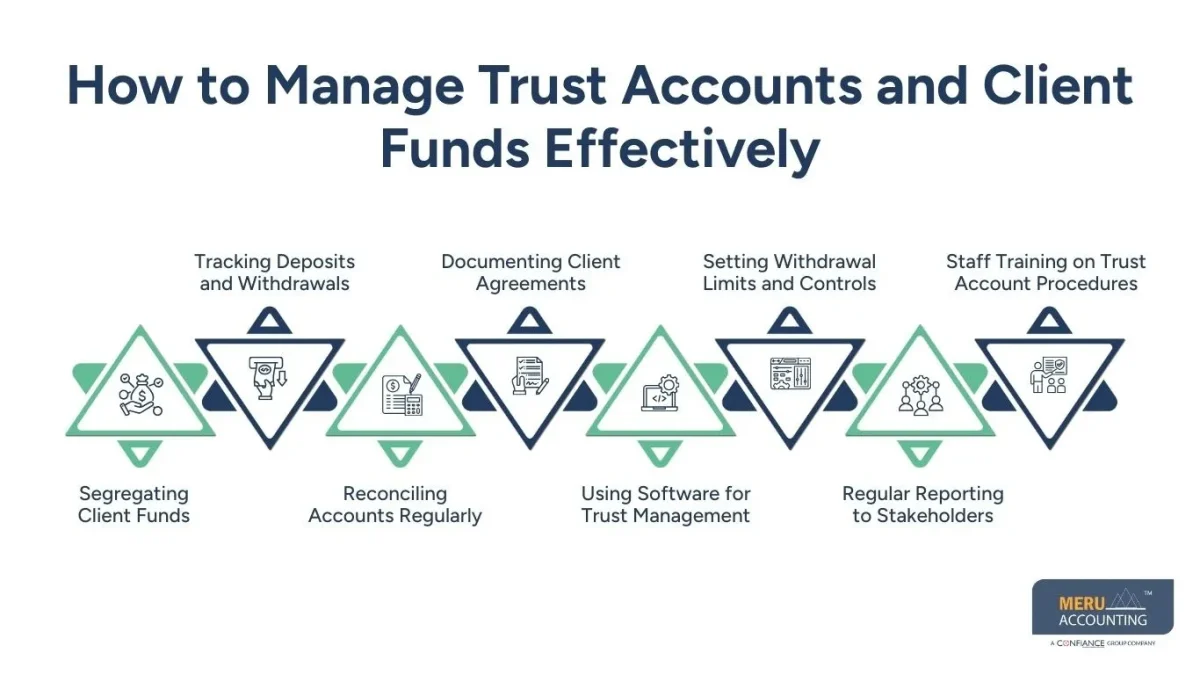
Using Software for Trust Management
Employ software designed for accounting for legal firm trust management to automate tracking and reporting efficiently. Automation reduces manual errors and saves valuable administrative time.
Setting Withdrawal Limits and Controls
Establish limits on who can access trust funds and under what conditions. Controls prevent unauthorized withdrawals and enhance security.
Regular Reporting to Stakeholders
Provide periodic statements to clients and partners showing trust account activity. Transparent reporting builds confidence and accountability.
Staff Training on Trust Account Procedures
Ensure all staff handling client funds are trained on proper procedures. Knowledgeable staff reduce errors and maintain compliance consistently.
What Are the Best Legal Accounting Solutions for Law Firms
Cloud-Based Accounting Tools
Cloud-based tools enhance accounting for legal firm workflows by offering real-time financial access and improved collaboration. They also allow secure access from anywhere, making remote management easier.
Specialized Law Firm Software
Software like Clio, Tabs3, or Timeslips supports trust account management and billable hour tracking. These tools are designed specifically to handle legal firm requirements efficiently.
Integrated Billing Systems
Integrating billing with accounting software ensures accurate invoicing and revenue tracking. This reduces manual errors and speeds up the billing process.
Automated Reporting Features
Automated reporting simplifies financial analysis and provides insights for strategic decision-making. Reports can be generated quickly for partners and clients when needed.
Customizable Accounting Solutions
Tailored legal accounting solutions fit the specific needs of your law firm, improving accuracy and efficiency. Customization ensures your unique workflows are supported seamlessly.
How to Track Billable Hours and Recognize Revenue Accurately
Recording Time Consistently
Daily time logging is essential in accounting for legal firm billing accuracy and revenue protection. Consistent recording avoids underbilling and revenue leakage.
Using Time Tracking Tools
Software tools can automate time tracking, reducing errors and saving administrative effort. Automated logs also provide detailed insights for client billing.
Differentiating Between Billable and Non-Billable Work
Clearly separate client-related billable hours from internal tasks to maintain accurate revenue records. This ensures financial statements reflect true earnings.
Managing Retainers and Prepayments
Track retainer fees accurately and apply them against client invoices when appropriate. Proper management prevents misunderstandings with clients.
Recognizing Revenue Correctly
Follow accounting standards to recognize revenue only when services are performed, ensuring accurate reporting. Correct recognition supports compliance and financial transparency.
How Financial Reporting Enhances Legal Firm Performance
Monitoring Key Financial Metrics
Reports generated through accounting for legal firm systems highlight revenue trends, profitability, and overhead costs. Tracking these metrics regularly helps identify areas needing improvement.
Identifying Profitability by Practice Area
Analyze which areas of law generate the most revenue and which require cost management. This insight helps allocate resources more effectively.
Supporting Budgeting and Forecasting
Accurate reports allow law firms to plan expenses and forecast future cash flow. Reliable data improves financial planning and reduces surprises.
Detecting Financial Irregularities
Regular reporting helps spot errors, fraud, or unusual transactions early. Early detection safeguards the firm from financial loss and compliance issues.
Informing Stakeholders
Financial reports provide partners and management with insights for operational and strategic planning. Transparent reporting also builds confidence among clients and investors.
How to Integrate Legal Accounting Solutions with Your Systems
Linking Billing and Accounting Software
Integrating billing with accounting for legal firm systems ensures all revenue and client transactions are recorded automatically. This reduces manual errors and saves valuable administrative time.
Connecting Payroll and Expense Management
Integration allows smooth tracking of employee salaries and firm expenses without duplication. It also provides a clear overview of total operational costs.
Using Cloud-Based Platforms
Cloud integration ensures data accessibility from anywhere, improving collaboration and efficiency. Secure cloud access allows multiple users to work simultaneously without delays.
Synchronizing Trust Accounts
Integrated legal accounting solutions help reconcile client funds with bank accounts automatically. This ensures accurate balances and prevents compliance issues.
Custom API Solutions
APIs can connect existing systems with specialized accounting software for a fully tailored setup. Custom APIs allow firms to maintain unique workflows while keeping data synchronized.
How Meru Accounting Supports Law Firms with Expert Accounting Services
Expertise in Law Firm Accounting
Meru Accounting specializes in accounting for legal firm operations, ensuring accurate record-keeping and compliance. Our experience helps firms navigate complex financial and regulatory requirements efficiently.
Customized Legal Accounting Services
We offer legal accounting services tailored to the unique needs of law firms. Solutions can be scaled as your firm grows, providing flexibility and reliability.
Trust Account Management
Our team ensures client funds are tracked properly, preventing errors and maintaining compliance. We also reconcile trust accounts regularly to ensure transparency and accuracy.
Billable Hours and Revenue Recognition
Meru Accounting helps law firms track billable hours efficiently and recognize revenue correctly. We also provide guidance on optimizing billing practices to maximize revenue capture.
Reporting and Analysis
We provide detailed financial reporting to support strategic decision-making and improve performance. Our insights help identify trends, manage costs, and enhance overall financial health.
Advisory and Support Services
Beyond accounting, we offer advisory services to help law firms make informed financial decisions and plan for future growth. Our team also provides ongoing support to address financial challenges as they arise.
Key Takeaways
- Effective accounting for legal firm operations is essential for financial health and compliance.
- Accurate record-keeping is critical to support legal accounting solutions.
- Trust accounts must be managed separately to ensure client funds are secure.
- Specialized software and integrations simplify time tracking, billing, and reporting.
- Partnering with professionals like Meru Accounting ensures accuracy, compliance, and financial clarity.
FAQs
Accounting for legal firm tracks all financial activities and ensures compliance. Accurate accounting prevents errors and manages client funds effectively.
Legal accounting solutions include software and systems that handle trust accounts, billing, and financial management efficiently.
Client funds should stay separate from firm funds, and accounts must be reconciled regularly. Every deposit and withdrawal needs proper documentation.
Time tracking tools help log hours daily, ensuring accurate client billing and correct revenue recognition.
Professional accounting services maintain accurate books, ensure compliance, and manage client funds safely, reducing errors and saving time.


