Yes, we analyze revenue streams, cost structures, and operational efficiencies to maximize profits.

Hire Remote Bookkeeper, Accountant, Tax Preparer, or Admin Staff
Monthly Bookkeeping, Payroll, Financial Reports, and Tax Help for Franchise Business

Franchise Business is like a branch or start-up industry that caters main brand’s business in various locations with limited establishment and setup. However, various entities such as a franchisor, franchisees and other regulatory authorities function in this business.
For smooth running and proper functioning of their businesses, franchise organizations require reporting of statements. These statements are of revenue earned, profit, and loss incurred, and business updates concerned with its operations to the concerned franchisor. Then, this reporting takes place ranging from weekly to quarterly and annual periods. They base it on the specifications laid down by the parent company and other regulatory authorities like the ‘Federal Trade Commission’.
Even the franchisor is required to share details and documented information for accounts to the respective franchises that he uses as a reference and for updating. This refers to the franchise disclosure document (FDD) which is a legal report that a franchisor presents to the franchise buyers. Thus, on request, the franchisor should present this document along with other audited financial reports.
One of the best practices for bookkeeping in a franchise business is to keep detailed records of all transactions. This includes keeping track of all expenses and revenue generated by each location separately. By doing so, you can quickly identify any discrepancies or potential issues that may arise. Another important practice is to use accounting software to streamline the process. Accounting software makes it easier to organize data and generate reports quickly. It also reduces human error, saving time and resources. It’s also essential to develop a standardized system across all locations in your franchise network. This includes creating uniform chart-of-accounts (COA) codes that every location uses consistently for income statements and balance sheets. In addition, outsourcing bookkeeping tasks can free up valuable time for franchise owners who would instead focus on growing their businesses rather than getting bogged down with administrative tasks like record-keeping. Regular audits should be conducted at each location periodically to ensure compliance with local laws/regulations while catching errors early on before they become significant problems down the road.

Profitability is a fixed portion of revenue franchisee calculated in percentage form. It is a variable of the fees that is set by the parent company or the franchisor. Therefore, this fee is a determinant of the profit that the franchisees earn. It is a fixed percentage of the revenue made by an organization. Hence, it is also important to set fees based on the ability of the franchise industry to incur start-up costs so as to provide working under a brand name and its products and services. The one time they account for franchise fees is by implementing a policy that will help to calculate the amount to be deducted from the business income tax return.
We can account for franchise fees in various ways. It depends on the franchisee’s convenience and the requirements of the franchise organization and parent company. Two of the most basic account management techniques are ‘franchise royalty fees’ and ‘franchise fees amortization’.
So, through these types of accounts, the franchisee pays its fees over time, which splits up monthly, quarterly, or yearly. The royalty fee is an income for the franchisor which is obtained on the establishment of the Franchise Business. It is a fixed percentage amount of the gross sales that the franchisee pays. Franchise fee amortization is the distribution of the franchise fee over a predetermined period, either yearly or monthly.
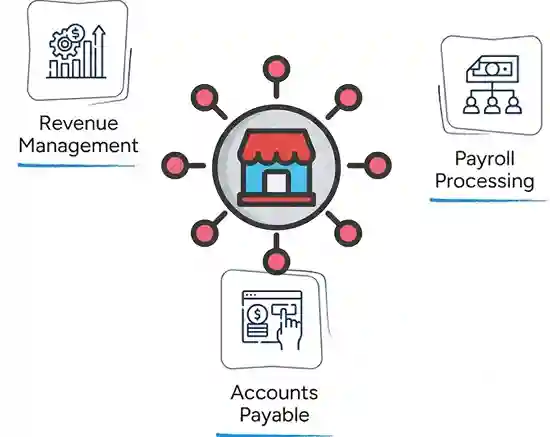
Recording and tracking all accounts payable, including bills and other financial obligations, is essential to ensure timely payments and maintain good relationships with vendors. This involves accurately recording due dates, amounts owed, and payment terms for each account payable.
Franchise businesses are a common form of business model, in which the franchisor permits a local business owner, known as the franchisee, to use their products, brand and operational system. The franchisee pays an initial fee and continues to pay royalties to maintain these privileges, while also benefiting from training, marketing help and guidance from the franchisor. This often takes place in sectors such as retail, fast food or services. As part of this agreement, the franchisee must adhere to certain practices with regards to product offerings, marketing strategies and customer service processes.
Tracking material costs, project-based income, and equipment expenses requires accurate financial management, our services keep your records in check.
Yes, we manage financial records for franchise owners and individual franchise operators.
Absolutely! We ensure accurate calculation and timely payment of franchise royalties and fees.
We consolidate financials for multiple locations while maintaining individual store profitability reports.
Yes, we analyze revenue streams, cost structures, and operational efficiencies to maximize profits.
Yes, we manage payroll processing, tax compliance, and employee benefits administration.
Yes, we handle corporate tax, sales tax, and local franchise tax filings for compliance.
We use QuickBooks, Xero, NetSuite, and franchise-specific ERP systems for financial management.
We establish a uniform accounting system and chart of accounts so every franchise follows the same financial reporting structur
Yes, we prepare detailed financial statements according to franchisor requirements and ensure timely submissions for compliance.
We classify initial fees and setup costs correctly, spreading them over time using amortization to reflect their long-term value.
We maintain clear records of transactions like royalties, reimbursements, and supply costs to ensure accuracy and avoid double-counting.
Franchisees benefit from monthly profit-and-loss statements, cash flow summaries, and balance sheets to monitor performance effectively.
We ensure all eligible deductions, such as franchise fees, travel, and marketing expenses, are correctly claimed to reduce taxable income.
Yes, we prepare financial forecasts and budgets that help franchise owners plan expansions and manage resources wisely.
Yes, we ensure all required financial disclosures are accurate, complete, and align with the FDD guidelines and audit requirements.
Standardized reports and transparent recordkeeping build trust, making financial discussions clear, consistent, and data-driven.
We assist in preparing transition reports, valuing assets, and reconciling accounts to ensure a smooth and transparent ownership handover.
Yes, we create region-wise performance reports that highlight profit trends, expenses, and operational efficiency across multiple territories.
We automate recurring expenses in the accounting system, ensuring payments are made on time and accurately recorded for every location.

Get a dedicated remote bookkeeping team set up on Xero — no cost for your first 30 days.