

Bookkeeping For Attorneys is a crucial part of running a successful law practice. Accurate financial records help attorneys manage client funds, track expenses, and meet regulatory requirements.
Many law firms are moving from traditional bookkeeping methods to Cloud-Based Bookkeeping solutions. These tools offer flexibility, security, and real-time access to financial data, helping attorneys save time and focus on their clients.
Switching to cloud accounting reduces errors associated with manual records and promotes effective collaboration between attorneys and accountants, ensuring financial decisions are based on accurate data.
In addition, cloud solutions make it easier to stay compliant with legal and tax regulations, providing attorneys with confidence and peace of mind. With these advantages, law firms increasingly see bookkeeping as a tool for efficiency and growth rather than just an administrative task.
What You Will Learn From This Blog
- Understand the importance of Bookkeeping For Attorneys and why maintaining accurate financial records is essential for law firms.
- Learn how Cloud-Based Bookkeeping works and why it is gaining popularity among law firms of all sizes.
- Explore the key benefits of using cloud systems, including better organization, real-time access, and time savings.
- Learn practical strategies for implementing cloud accounting efficiently in a law firm.
- Explore how to integrate cloud bookkeeping tools with other legal software and handle common bookkeeping challenges.
Understanding Cloud-Based Bookkeeping
Cloud-Based Bookkeeping is a modern approach to Bookkeeping For Attorneys, allowing law firms to manage financial records using software hosted on remote servers. This allows attorneys to access their records anytime, from any device, without being tied to a single office computer.
Unlike manual or desktop bookkeeping, cloud solutions provide real-time updates and automatic backups, ensuring that financial data is always current and secure.
Security is a major advantage of cloud bookkeeping. Most cloud-based tools use encryption and secure login credentials to protect sensitive client information.
At the same time, multiple users, including lawyers, accountants, and staff, can collaborate on the same files without worrying about version conflicts or lost data.
In addition to convenience and security, online bookkeeping can also be cost-effective. By reducing the need for physical storage and IT maintenance, law firms can save money while improving efficiency. This combination of accessibility, safety, and cost savings makes online bookkeeping an increasingly popular choice for law practices.
Importance of Bookkeeping for Attorneys
- Bookkeeping For Attorneys ensures that client funds are tracked correctly, helping law firms avoid legal and financial errors.
- Attorneys manage client funds separately, and Bookkeeping For Attorneys plays a critical role in maintaining compliance with legal and trust accounting regulations.
- Recording all operational expenses helps law firms monitor budgets and understand profitability.
- Accurate bookkeeping simplifies tax filing and ensures timely submissions to tax authorities.
- Detailed financial reports generated through Bookkeeping For Attorneys help law firms make informed business decisions and track long-term growth.
Key Benefits of Cloud-Based Bookkeeping for Attorneys
Real-Time Financial Insights
Cloud-Based Bookkeeping provides instant access to up-to-date financial data, making it easier for attorneys to review cash flow and balances. This helps law firms make faster and more informed decisions.
Reduced Manual Work
Automated calculations and integrations reduce manual data entry, saving time for law firm staff. It also minimizes human errors and improves accuracy.
Enhanced Security
Data stored in the cloud is protected with encryption and multi-factor authentication, ensuring client information remains safe. This gives attorneys peace of mind regarding sensitive financial records.
Flexibility and Mobility
Attorneys can access financial records from anywhere, whether at court, office, or home, improving efficiency. It allows teams to collaborate without being tied to a single location.
Cost Savings
Using cloud solutions reduces overhead and simplifies Bookkeeping For Attorneys, lowering costs for software, hardware, and IT support. It also reduces the need for physical storage and maintenance.
Improved Client Trust
Accurate Bookkeeping For Attorneys and timely reporting build stronger client trust, particularly when managing trust and escrow accounts. Clients feel confident that their funds are managed responsibly.
Better Compliance Management
Cloud-Based Bookkeeping helps law firms maintain accurate records that support compliance with legal and financial regulations. Organized data makes audits and reviews easier to manage.
Faster Reporting
Financial reports generated through cloud systems streamline bookkeeping For Attorneys, enabling quick insights without manual calculations. This allows attorneys to review financial performance whenever needed.
Scalability for Growing Firms
Cloud systems can easily adapt as a law firm grows. Additional users, cases, and transactions can be managed without changing the entire system.
Best Practices for Implementing Cloud-Based Bookkeeping
Choose the Right Software
Select cloud accounting software designed specifically for Bookkeeping For Attorneys, including trust accounting and compliance reporting features. Make sure the software can scale as your firm grows.
Train Your Staff
Provide training sessions to ensure all team members can use the software effectively. Encourage regular refresher sessions to keep everyone updated on new features.
Maintain Data Security
Set up secure passwords, access levels, and regular backups to protect sensitive financial information. Limit access to only authorized personnel to reduce risk.
Regular Reconciliation
Ensure bank accounts, trust accounts, and credit cards are reconciled frequently to maintain accuracy. This helps identify errors early and prevents discrepancies.
Keep Detailed Records
Maintaining clear records of all transactions strengthens Bookkeeping For Attorneys, ensuring audits and reporting are efficient and accurate. Consistent documentation makes audits and reporting easier.
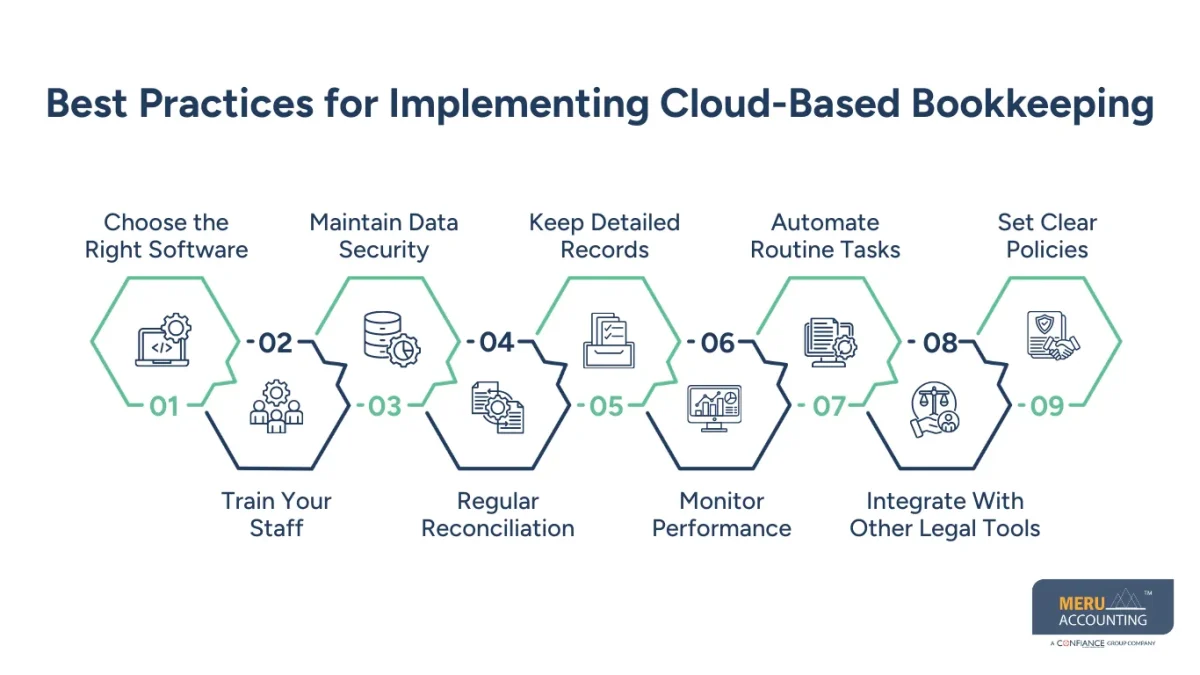
Monitor Performance
Regularly review reports to track financial health and make informed business decisions. Analyze trends to optimize expenses and improve profitability.
Automate Routine Tasks
Use cloud tools to automate repetitive tasks such as invoicing, payment reminders, and expense categorization. This saves time and reduces human errors.
Integrate With Other Legal Tools
Connect your cloud bookkeeping system with case management, billing, and time-tracking software. Integration improves efficiency and ensures all financial data is linked accurately.
Set Clear Policies
Establish clear internal policies for bookkeeping processes, including how to handle client funds, report discrepancies, and update records. Clear rules ensure consistency and compliance.
Common Challenges and How to Overcome Them
Resistance to Change
Some staff may be hesitant to adopt cloud systems. Offer training and clearly explain the benefits of Cloud-Based Bookkeeping. Ongoing support can help teams feel more comfortable over time.
Data Migration Issues
Moving existing records to the cloud can be complex. Work with professionals to ensure a smooth transition. Proper planning helps prevent data loss and errors.
Internet Dependence
Cloud systems require a stable internet connection. Keep backup options and offline access if needed. This ensures work can continue during connectivity issues.
Security Concerns
Some attorneys worry about cloud security. Choose reputable providers with strong encryption and privacy policies. Regular security reviews add an extra layer of protection.
Cost Concerns
While cloud solutions are cost-effective in the long run, initial fees may seem high. Compare pricing plans and focus on long-term savings. Choosing the right plan helps control costs.
Integrating Cloud-Based Bookkeeping with Other Legal Tools
Case Management Software
Integrating cloud bookkeeping with case management tools allows attorneys to link financial data with specific cases. This improves visibility into case-related costs and revenue.
Billing and Invoicing
Cloud solutions often integrate with billing software to generate invoices automatically and track payments. This helps reduce delays and improve cash flow.
Document Management Systems
Attach financial records to client files for easy reference and compliance audits. Organized documents save time during reviews.
Time Tracking Tools
Sync time tracking with billing and accounting to ensure accurate invoicing for billable hours. This ensures clients are billed correctly.
Reporting and Analytics
Combine cloud bookkeeping data with analytics tools to get deeper insights into firm performance. Clear reports support better planning and decision-making.
How Meru Accounting Supports Attorneys
Tailored Cloud Solutions
Meru Accounting offers customized Bookkeeping For Attorneys through secure and scalable cloud-based financial solutions. These solutions are aligned with the daily financial needs of attorneys.
Trust Accounting Expertise
Our team ensures compliance with all client fund regulations and proper trust accounting procedures. This helps law firms reduce compliance risks and avoid penalties.
Regular Reconciliation Services
Meru Accounting manages bank and trust account reconciliations to maintain accurate financial records. Regular reviews help identify and resolve discrepancies early.
Comprehensive Reporting
Detailed financial reports help law firms track expenses, revenue, and profitability efficiently. These reports support better financial planning and decision-making.
Dedicated Attorney Focus
Our services are built specifically for attorneys and law firms. This focus ensures bookkeeping processes align with legal industry requirements.
Scalable Support Services
As law firms grow, our bookkeeping support can adjust to changing workloads. This ensures consistent and reliable Bookkeeping For Attorneys at every stage of a law firm’s growth.
Key Takeaways
- Bookkeeping For Attorneys is essential for managing client funds and law firm finances.
- Cloud-Based Bookkeeping offers security, flexibility, and real-time access to financial data.
- Proper training, regular reconciliation, and secure practices are key for successful implementation.
- Integration with legal tools enhances efficiency and accuracy.
- Meru Accounting provides expert support for law firms looking to adopt cloud bookkeeping.
FAQs
Cloud-Based Bookkeeping for attorneys uses online software to manage law firm finances. Attorneys can access trust accounts, expenses, and reports from any location.
Bookkeeping For Attorneys helps track client funds, income, and operating expenses accurately.
Proper records support compliance with legal and financial regulations.
Web-Based Bookkeeping systems use encryption, secure access, and regular data backups.
These features protect sensitive financial and client information.
Web-Based Bookkeeping supports proper tracking of client trust accounts. Clear records help keep client funds separate and compliant with rules.
Web-Based Bookkeeping reduces manual accounting work and improves accuracy. More time becomes available for client service and legal work.


