



Bookkeeping for a construction company is more than just recording transactions. It is a crucial process that keeps your project costs, payments, and revenues organized. Without accurate bookkeeping, even a well-planned construction project can encounter unexpected budget overruns.
Financial blind spots often form when key expenses, labor costs, or material purchases are not tracked properly, leading to costly mistakes that could have been avoided.
Proper bookkeeping for a construction company allows project managers to see the true financial picture. It ensures that projects stay on track and that profits are not unintentionally reduced by hidden costs.
This is especially important for small and mid-sized companies where financial resources are limited, and every mistake can have a significant impact.
What You Will Learn From This Blog
- How financial blind spots develop in construction bookkeeping
- Why construction companies are particularly vulnerable to these mistakes
- How poor bookkeeping for a construction company can cause budget overruns
- The unique challenges faced by small construction businesses in managing finances
- Steps to ensure accurate bookkeeping and prevent cost overruns
By the end of this blog, you will understand the risks, signs, and preventive measures associated with financial blind spots in construction projects.
How Financial Blind Spots Arise in Construction Bookkeeping
Ignoring Small Expenses
Many construction companies overlook minor expenses, assuming they are insignificant. Over time, these small amounts add up, creating blind spots that affect the project’s budget.
Delayed Entry of Transactions
When receipts and invoices are entered late, bookkeeping for a construction company suffers, making it difficult to track real-time costs. This can lead to a misunderstanding of project profitability.
Misclassifying Costs
Expenses are sometimes incorrectly classified under general overheads rather than project-specific costs. This misclassification can hide true project expenses and cause budgeting errors.
Lack of Tracking Change Orders
Construction projects often undergo changes mid-way. Without proper bookkeeping for a construction company, these adjustments are not reflected in the budget, resulting in unexpected overruns.
Overlooking Subcontractor Payments
Subcontractor costs are a major part of construction projects. Effective bookkeeping for small construction business ensures payments are tracked accurately, preventing gaps in financial records and cash flow issues.
Unrecorded Material Purchases
Materials purchased on short notice or without documentation can remain unaccounted for, forming hidden financial blind spots that affect profitability.
Why Construction Companies Are More Affected by Financial Mistakes Than Other Industries
Project Complexity
Construction projects involve multiple stakeholders, phases, and budgets. Each step must be accurately accounted for, making bookkeeping for a construction company more challenging.
High Cash Flow Requirements
Construction companies often deal with large amounts of cash for labor, materials, and equipment. Mismanagement in recording these flows can quickly lead to financial blind spots.
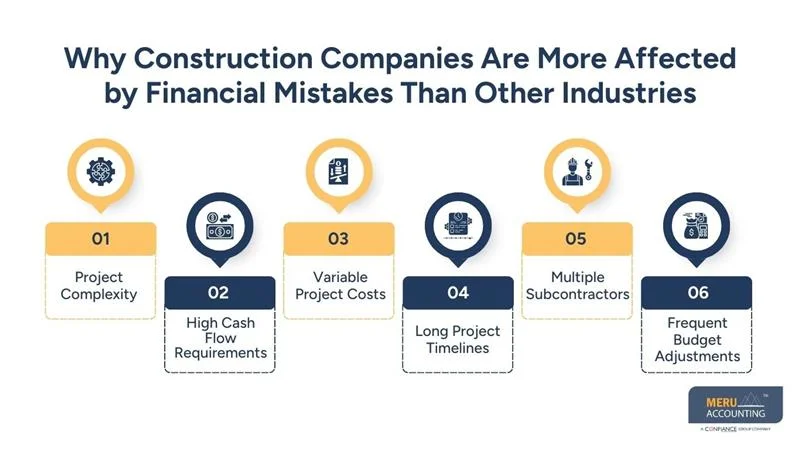
Variable Project Costs
Unlike other industries, construction costs fluctuate due to factors like weather, labor rates, and material availability. Accurate bookkeeping is essential to track these variations.
Long Project Timelines
Many projects last several months or even years. Without consistent bookkeeping, costs from early phases may be forgotten or underestimated, impacting overall budgets.
Multiple Subcontractors
Managing payments and expenses for several subcontractors increases the risk of errors if bookkeeping is not carefully maintained.
Without proper tracking, Duplicate payments or missed invoices can easily occur, especially in bookkeeping for small construction business operations with limited staff.
Frequent Budget Adjustments
Construction projects often require budget revisions. Failure to update books regularly results in blind spots that hide true project expenses.
Why Bookkeeping for a Construction Company Determines Project Profitability
Tracking Labor Costs
Labor is often the largest expense in construction. Bookkeeping for a construction company ensures labor hours and rates are correctly recorded. It also helps identify overtime or inefficiencies that can be minimized to save costs.
Monitoring Material Usage
Effective bookkeeping for a construction company helps track the use and cost of materials, preventing waste and over-ordering.
This also allows small teams to make smarter purchasing decisions. It also allows companies to plan purchases better and negotiate bulk discounts.
Managing Subcontractor Payments
Proper bookkeeping for small construction business ensures subcontractors are paid on time, even if the team is small and managing multiple projects simultaneously.
It also helps maintain strong relationships and ensures accountability for completed work.
Forecasting Cash Flow
Detailed records provide insight into cash requirements, helping companies avoid shortages that could halt work. This foresight also allows businesses to plan for upcoming expenses and investments effectively.
Measuring Project Performance
Bookkeeping allows management to compare actual costs against projected budgets, identifying areas for improvement and maintaining profitability. It also provides a clear basis for evaluating team efficiency and project decisions.
Identifying Cost-Saving Opportunities
With clear records from bookkeeping for a construction company, companies can identify cost-saving opportunities without compromising quality.
This also helps in reallocating resources to higher-priority areas for better project outcomes.
How Poor Bookkeeping for a Construction Company Creates Budget Overruns
Underestimating Expenses
Incomplete bookkeeping for a construction company leads to underestimating expenses, causing projects to go over budget unexpectedly. This can result in last-minute financial pressure and unplanned borrowing.
Ignoring Overhead Costs
Failure to include overhead costs in project budgets can result in hidden losses. Overhead, such as insurance, utilities, and equipment maintenance, can quietly drain project funds.
Late Invoicing
Delays in invoicing clients reduce cash flow, forcing companies to borrow or delay payments, increasing costs. It also slows down the ability to reinvest in ongoing project needs.
Poor Material Management
Without tracking material purchases, projects may face shortages or overstocking, both of which increase expenses. Mismanaged inventory can also cause delays in construction schedules.
Mismanagement of Change Orders
If adjustments to project scope are not recorded, budgets will not reflect true project costs, causing overruns. This can create confusion between management and clients over actual project expenses.
Inaccurate Payroll Records
Mistakes in tracking employee hours or rates can lead to overpayments, affecting project finances. Inaccurate payroll also risks employee dissatisfaction and potential disputes.
Why Bookkeeping for Small Construction Businesses Often Falls Behind During Active Projects
Limited Staff
Small businesses without dedicated staff for bookkeeping for small construction business may experience delays or errors. This can lead to incomplete financial records and missed opportunities to correct mistakes early.
Multiple Responsibilities
Business owners often juggle operations, client management, and bookkeeping, making it harder to maintain accurate records. This divided focus increases the likelihood of overlooked expenses and financial blind spots.
Insufficient Systems
Small businesses without proper systems for bookkeeping for small construction business may rely on spreadsheets or manual methods, increasing the risk of mistakes.
Tracking budgets, invoices, and payments becomes time-consuming and error-prone.
Unclear Process for Receipts
Without a structured process to collect and record receipts, expenses may go unrecorded. This creates gaps in bookkeeping that make it difficult to reconcile accounts and monitor cash flow.
Difficulty Tracking Subcontractors
Small businesses without proper bookkeeping for small construction business may struggle to track subcontractor costs and payments, resulting in duplicate payments, delayed billing, or disputes over incomplete work.
Reactive Accounting Practices
Bookkeeping for small construction business often happens after the fact, making it difficult to spot problems before they grow. Delayed accounting prevents timely decision-making and can allow budget issues to escalate.
Early Warning Signs Your Construction Bookkeeping Is Failing
Frequent Budget Overruns
Regularly exceeding budgets indicates poor bookkeeping for a construction company and potential financial blind spots.
These overruns can erode profit margins and affect the overall success of the project.
Late Payments to Subcontractors
Delayed payments can signal that records are incomplete or not up to date. This can damage relationships with subcontractors and even delay project progress.
Cash Flow Shortages
Unexpected cash shortages suggest that expenses are not being monitored correctly. Insufficient cash flow can halt work, force borrowing, or lead to late payment penalties.
Discrepancies Between Forecasts and Actual Costs
Large discrepancies between projected and actual costs are often caused by incomplete bookkeeping for a construction company, making it difficult to plan future projects or accurately predict profitability.
Lost or Missing Invoices
Missing documentation creates gaps in the books and leads to blind spots. It can also result in underbilling clients or overpaying vendors, impacting the project budget.
Inability to Make Timely Financial Decisions
Without reliable bookkeeping, management cannot make informed decisions about the project. Delayed decisions can lead to missed opportunities or prevent corrective actions from being taken in time.
How Accurate Bookkeeping for a Construction Company Prevents Cost Overruns
Timely Recording of Transactions
Entering expenses and revenues immediately ensures the financial picture is always accurate. This helps identify potential overspending early and keeps the project on track.
Proper Cost Classification
Assigning costs to the correct projects helps track profitability and prevents hidden losses. It also provides a clearer view of which projects are performing well and which need attention.
Regular Budget Reviews
Frequent reviews allow companies to adjust plans before overruns occur. These reviews help in reallocating resources and making informed financial decisions.
Monitoring Subcontractor and Vendor Payments
Accurate records ensure timely payments and prevent disputes or interest charges. It also helps maintain strong relationships and avoids work delays due to payment issues
Detailed Material Tracking
Keeping track of materials reduces waste and ensures proper usage. Proper tracking also allows for better inventory management and cost savings on future projects.
Clear Reporting
Regular reports highlight problem areas early, allowing corrective measures before costs spiral. Reports provide transparency for management and support strategic planning for upcoming projects.
How Meru Accounting Supports Construction Companies
Expertise in Construction Bookkeeping
Meru Accounting specializes in bookkeeping for a construction company and small construction businesses, ensuring every cost is accounted for. Their expertise helps identify hidden expenses before they impact project profitability.
Customized Solutions
We provide solutions tailored to your project size and complexity, preventing financial blind spots. This personalized approach ensures that both small and large projects receive the right level of attention.
Real-Time Financial Tracking
Our team ensures that transactions are recorded promptly, giving you an accurate view of project costs. Real-time tracking also allows for quick adjustments if unexpected expenses arise.
Subcontractor and Payroll Management
Meru Accounting tracks all payments to subcontractors and employees, reducing errors and delays. This ensures smooth project operations and maintenance trust with your workforce.
Cost Analysis and Reporting
We provide clear reports highlighting potential issues, helping you make informed decisions and stay within budget. Detailed reporting also supports strategic planning for future projects and financial growth.
Take control of your construction project finances today with Meru Accounting’s expert bookkeeping services. Contact us now to prevent financial blind spots and keep your projects on budget.
Key Takeaways
- Financial blind spots in construction projects arise from untracked costs, late entries, and misclassification.
- Construction companies are more vulnerable due to project complexity, high cash flow needs, and multiple subcontractors.
- Proper bookkeeping for a construction company is critical to maintaining profitability and preventing budget overruns.
- Small construction businesses face additional challenges like limited staff and reactive accounting practices.
- Accurate and timely bookkeeping prevents cost overruns, ensures cash flow, and allows for informed financial decisions.
- Meru Accounting offers specialized services to maintain accurate bookkeeping for construction projects of all sizes.
FAQs
Financial blind spots are hidden or untracked expenses, late entries, or misclassified costs that can cause projects to go over budget without the company realizing it.
They usually form due to unrecorded material purchases, late invoicing, overlooked subcontractor payments, or not tracking labor costs accurately.
Yes, if costs are not recorded correctly or tracked in real time, it becomes easy to underestimate project expenses, leading to overspending.
Small construction businesses often have limited staff and resources, making it difficult to update records during busy project periods, which increases the risk of blind spots.
Accurate bookkeeping ensures all costs, payments, and project changes are tracked, helping managers see the real financial picture and avoid unexpected budget overruns.


