



Introduction to Hiring Accountants for Electricians
Managing the financial aspects of an electrical business demands a specialized skill set, especially given the complexities involved in the construction and trade industries. When electricians decide to hire accountants for electricians, they must carefully evaluate candidates who understand both accounting principles and the unique challenges of the electrical trade. In this comprehensive guide, we will explore what to look for when hiring accountants for electricians, focusing on qualifications, experience, liabilities, industry-specific considerations, and how to ensure the accountant you choose delivers maximum value to your business.
Understanding the Role of Accountants for Electricians
Electricians, as tradespeople, often face unique financial scenarios that differ from other professions. Accountants specializing in electrical businesses provide services that go beyond basic bookkeeping—they assist with budgeting, tax planning, payroll management, compliance, and strategic financial advice tailored to the trade industry. Understanding the role of these accountants is the first step toward making a well-informed hiring decision.
Core Responsibilities of Accountants for Electricians
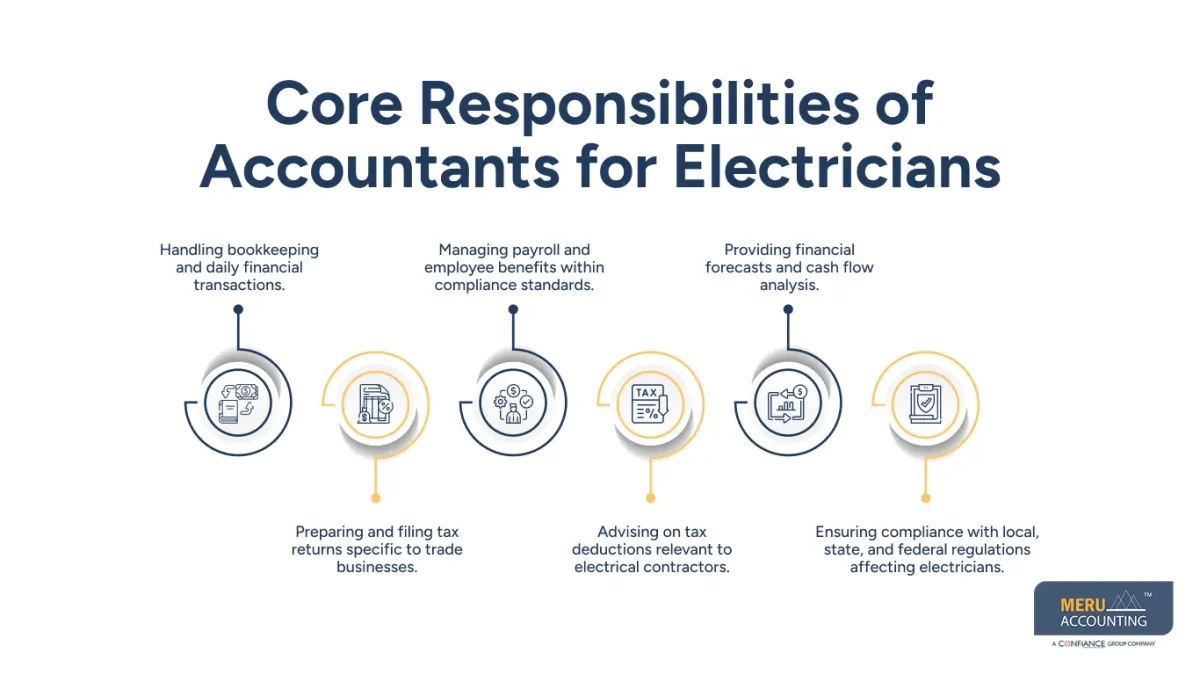
- Handling bookkeeping and daily financial transactions.
- Preparing and filing tax returns specific to trade businesses.
- Managing payroll and employee benefits within compliance standards.
- Advising on tax deductions relevant to electrical contractors.
- Providing financial forecasts and cash flow analysis.
- Ensuring compliance with local, state, and federal regulations affecting electricians.
Industry-Specific Challenges Accountants Must Address
- Understanding material costs and job-specific expenses unique to electrical work.
- Handling project-based accounting and job costing effectively.
- Managing contractor licensing fees and insurances.
- Navigating tax credits, incentives, and depreciation allowances related to tools and equipment.
- Addressing union and labor regulations where applicable.
Qualifications and Credentials to Seek
Not all accountants are equipped to handle the specifics of electrical business finances. Hiring accountants for electricians requires you to look for certain qualifications and credentials that demonstrate current expertise, ethical practice, and relevant knowledge of the industry.
Educational Background and Professional Certification
A solid educational foundation in accounting, finance, or related fields is essential. Look for candidates with degrees such as:
- Bachelor’s degree in Accounting, Finance, or Business Administration.
- Certified Public Accountant (CPA) designation – highly recommended for tax and audit matters.
- Certified Management Accountant (CMA) for expertise in financial management and strategic planning.
- Additional certifications in construction accounting or industry-related financial management.
Relevant Experience and Industry Familiarity
Experience in the trade sector, particularly serving electrical contractors or similar professions, is invaluable. Accountants should demonstrate:
- Proven track record with electrician clients or construction-related businesses.
- Familiarity with job costing and project-based accounting systems.
- Ability to navigate the complexities of contractor tax codes, licensing, and regulatory compliance.
- Hands-on experience with accounting software suited for trades, such as QuickBooks Contractor Edition or BuilderTREND.
Evaluating Technical Skills and Software Proficiency
The right accountant should be adept at leveraging technology tailored for electrical businesses. Their technical skills and software fluency can significantly improve operational efficiency and financial accuracy.
Accounting Software and Tools Commonly Used by Electricians
- QuickBooks: Most widely used accounting software with customized versions for contractors.
- Xero: Cloud-based accounting that simplifies invoicing and expense tracking.
- Sage 50cloud: Robust software supporting inventory and project costing.
- BuilderTREND: Although primarily project management software, it integrates well with accounting for contractors.
- FreshBooks: User-friendly for smaller trades with invoicing and time tracking features.
Importance of Data Security and Cloud Accounting
With increasing digitization, data security is critical. Accountants for electricians must:
- Use secure, cloud-based platforms for data access and storage.
- Implement protocols to back up financial data frequently.
- Understand compliance standards such as GDPR (if applicable) and data protection principles.
Cost Structures and Pricing Models of Accountants for Electricians
Understanding pricing structures is crucial to select an accountant who offers value while fitting your budget. Accountants may charge based on various models:
| Pricing Model | Description | Advantages | Considerations |
|---|---|---|---|
| Hourly Rate | Charges based on time spent working on your accounts. | Flexibility for ad hoc work. | Costs can add up unpredictably. |
| Fixed Fee | Flat fee for specific services (e.g., tax filing). | Predictable budgeting. | May exclude unforeseen services. |
| Monthly Retainer | Regular monthly payment for ongoing accounting services. | Continuous support and advice. | Requires commitment, possibly higher upfront cost. |
| Project-Based | Fee based on the scope of a particular project, such as audits or financial reporting. | Clearly scoped and budgeted per project. | Less suited for ongoing accounting needs. |
Key Qualities and Soft Skills to Consider
While technical expertise is non-negotiable, soft skills play a pivotal role when hiring accountants for electricians. These qualities ensure the accountant can communicate effectively, provide strategic value, and seamlessly integrate with your team.
Communication and Transparency
- Ability to explain complex financial concepts in layman’s terms.
- Regular updates, transparency in fee structures, and honest advice.
- Accessible and responsive during critical accounting periods such as tax season.
Problem-Solving and Attention to Detail
- Identifying gaps or discrepancies in job costing and invoicing.
- Proactively managing cash flow challenges.
- Spotting potential compliance risks before they become issues.
Trustworthiness and Ethical Standards
Handling confidential financial data requires the highest ethical standards. Confirm that the accountant adheres to codes of conduct from professional bodies and has a stellar reputation for confidentiality and integrity.
Steps to Vet and Interview Accountants for Electricians
The hiring process should be systematic and thorough to ensure you select the best accountant suited for your electrical business.
Initial Screening
- Review qualifications, certifications, and references.
- Verify experience in serving electricians or construction trades.
- Assess technical competencies based on software familiarity.
Interview Questions to Ask
- What accounting challenges specific to electricians have you encountered?
- How do you handle job costing and project accounting?
- Can you walk me through your process for tax planning and compliance?
- What accounting software systems do you recommend for electrical contractors?
- How do you stay current with changes in tax laws and trade regulations?
Practical Assessment
Consider providing a sample of your current accounting data to see how the accountant analyzes and provides insights or recommendations tailored to your business.
How Meru Accounting Supports Electrical Contractors
Meru Accounting specializes in providing accounting and financial consultancy services tailored to trade professionals, including electricians. Their team understands the unique financial intricacies of electrical contracting businesses—from job costing and tax planning to payroll and compliance. Meru Accounting leverages industry-specific accounting software, combined with personalized financial guidance, to help electricians maximize their profitability and maintain smooth financial operations. Their proactive approach ensures electricians stay compliant and make informed decisions that drive business growth.
Maximizing the Partnership with Your Accountant
Hiring accountants for electricians is only the beginning of a collaborative financial management journey. To maximize the partnership, electricians should:
- Maintain open communication and provide timely, accurate financial information.
- Set clear expectations and review financial reports regularly.
- Leverage the accountant’s expertise for strategic planning and business growth.
- Stay engaged in financial education to understand key metrics and performance indicators.
Conclusion: Making an Informed Choice
In today’s competitive trade environment, electricians cannot afford to overlook the importance of specialized accounting support. Hiring accountants for electricians involves identifying professionals with the requisite qualifications, industry-specific experience, technical proficiency, and interpersonal skills to address the nuances of electrical business finances effectively. Through diligent vetting, clear communication, and ongoing partnership, electricians can ensure their financial health is robust, compliant, and positioned for sustainable growth.
FAQs
What qualifications should I look for in accountants for electricians?
Look for accountants with relevant certifications such as CPA, experience in handling electrical contractors’ accounts, and knowledge of industry-specific tax laws.
Why is industry-specific knowledge important when hiring accountants for electricians?
Accountants familiar with the electrical trade understand unique expenses, tax deductions, and compliance requirements, which helps optimize financial management.
Should accountants for electricians be experienced with payroll and subcontractor payments?
Yes, accountants should have experience managing payroll and payments for subcontractors to ensure accurate record-keeping and compliance.
How can accountants help electricians with tax planning?
Accountants can identify eligible tax deductions, plan quarterly tax payments, and advise on financial strategies that minimize tax liabilities specific to electricians.
Is it important for accountants for electricians to offer digital bookkeeping services?
Yes, digital bookkeeping facilitates real-time tracking of finances, easier access to reports, and efficient management of accounts tailored to electricians.


