




Accounting for Lawyers is not only about tracking income and expenses within a law firm. It plays a critical role in safeguarding client funds, meeting ethical obligations, managing steady cash flow, and maintaining long-term financial health.
From solo practitioners to multi-partner firms, accounting for Lawyers helps legal professionals reduce financial risk and maintain compliance. Unlike other businesses, law firms deal with trust accounts, retainers, and strict bar regulations.
This makes accounting for Lawyers a specialized responsibility that every legal professional should understand at a foundational level, even when the work is outsourced. Law firms manage sensitive client funds and financial data, making structured accounting essential for compliance and accuracy.
Lawyers must understand their financial reports to reduce risks, avoid penalties, and make informed decisions. Proper accounting also supports confident planning while meeting bar association requirements.
What You Will Learn From This Blog
- Explains how accounting for Lawyers differs from standard business accounting and focuses on legal-specific financial responsibilities and reporting requirements.
- Covers trust accounting rules and ethical financial obligations that apply to both small practices and large law firms.
- Highlights common accounting mistakes lawyers often make and explains practical ways to avoid these issues.
- Breaks down financial concepts using simple language, making basic accounting principles for Lawyers easier to understand.
- Shows how proper accounting improves billing control, expense management, and stable law firm income.
Understanding The Role Of Accounting In Legal Practice Management
Financial Tracking And Control
Accounting helps law firms track income, expenses, and unpaid client invoices. This ensures accurate records for every legal matter handled.
Budgeting For Legal Operations
Proper accounting supports realistic budgeting for staffing and office expenses. Budgets help law firms avoid overspending and cash shortages.
Cash Flow Visibility
Accounting for Lawyers shows when money is expected and when payments are due. This helps firms manage operating costs without stress.
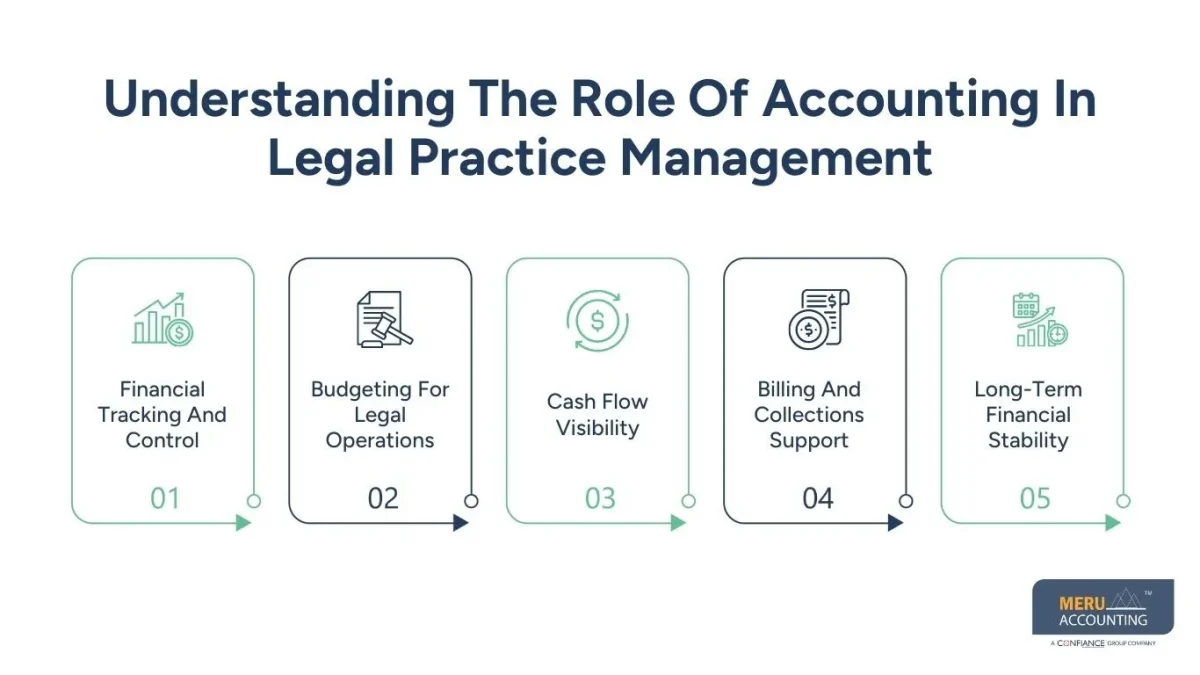
Billing And Collections Support
Accurate accounting supports timely invoicing and payment follow-ups. It also reduces billing disputes with clients.
Long-Term Financial Stability
Consistent accounting practices support steady financial growth. They also help firms prepare for economic changes.
Why Accounting For Lawyers Is Different From Other Businesses
Client Trust Accounts
In accounting for lawyers, law firms must hold client funds separately from business accounts. This separation is strictly enforced by professional rules.
Retainers And Advance Fees
Retainers must be recorded carefully until fees are officially earned. Incorrect handling can cause serious compliance issues.
Ethical And Bar Rules
Accounting for Lawyers must follow professional conduct requirements. These rules are stricter than general business standards.
Matter-Based Accounting
Income and expenses are often tracked by individual legal matters. This provides clarity on case profitability.
Higher Audit Risk
Law firms face higher scrutiny from regulators and bar authorities. Poor records increase the likelihood of audits.
The Importance Of Accounting For Lawyers In Modern Law Firms
Regulatory Compliance
Accurate accounting helps law firms meet state and local bar requirements. Compliance protects the firm’s license and professional standing.
Better Financial Oversight
Accounting for lawyers provides clear reports that help lawyers understand financial performance. This supports smarter operational planning.
Reduced Disputes
Accounting for lawyers plays a key role in reducing disputes related to fees and trust balances. Clients appreciate transparency and accuracy.
Support For Growth
Accounting systems help firms plan expansion responsibly. Growth becomes manageable with financial clarity.
Strong Client Confidence
Following basic accounting principles for Lawyers, transparent handling of client funds builds trust and strengthens long-term professional relationships.
Core Financial Terms Every Lawyer Should Understand
Revenue And Earned Fees
Revenue refers to fees earned from completed legal services. Revenue amounts do not always match actual cash received.
Accounts Receivable
Accounts receivable represent unpaid client invoices awaiting collection. Tracking receivables helps improve billing follow-ups and payment efficiency.
Trust Account Balances
Trust account balances reflect client-owned funds held temporarily. These funds must never be misused or treated as firm income.
Operating Expenses
Operating expenses include rent, salaries, insurance, and technology costs. These expenses directly affect overall law firm profitability levels.
Net Profit
Understanding net profit is a key part of basic accounting principles for Lawyers, showing what remains after expenses and reflecting the firm’s financial health.
IOLTA Compliance And Ethical Responsibilities For Lawyers
IOLTA accounts securely hold specific client funds temporarily. Interest earned supports approved public legal assistance programs.
Proper Recordkeeping
Accounting for lawyers requires that each trust transaction is documented clearly and accurately. Records should always remain complete, organized, and audit-ready.
Monthly Reconciliations
Following basic accounting principles for Lawyers, trust accounts must be reconciled accurately each month, helping identify discrepancies and errors early.
Avoiding Commingling
Client funds must never mix with firm operating money. Commingling represents a serious ethical and compliance violation.
Consequences Of Non-Compliance
Accounting errors can lead to fines, audits, or license suspension. Prevention through proper accounting is always better than correction.
How Accounting Supports Compliance And Profitability In Law Firms
Accurate Financial Reporting
Clear financial reports show income, expenses, and outstanding balances. These reports support regulatory compliance and effective financial planning.
Expense Control
Accounting identifies unnecessary or steadily rising operational costs. Strong cost control directly improves overall law firm profit margins.
Better Fee Management
Tracking billable hours supports accurate and consistent client invoicing. This practice improves payment reliability and reduces billing disputes.
Tax Readiness
Well-maintained accounting books simplify annual tax filing processes. They also reduce tax-related stress for law firms.
Decision Support
Accounting data supports informed and confident business decisions. Lawyers gain stronger financial confidence through clear reporting.
Common Accounting Mistakes Lawyers Should Avoid
Mixing Personal And Business Funds
Mixing funds is a common error in accounting for lawyers and creates serious compliance issues. Separate accounts are always required for proper legal compliance.
Poor Trust Accounting Practices
Trust accounting errors can lead to serious penalties. Accuracy in trust accounting is critical at all times.
Ignoring Account Reconciliations
Unreconciled accounts hide financial errors and discrepancies. They significantly increase compliance and regulatory risks.
Delayed Record Updates
Late accounting entries reduce financial report accuracy. Timely updates are essential for reliable accounting records.
Not Understanding Financial Reports
A fundamental aspect of basic accounting principles for Lawyers is regularly reviewing financial statements to prevent unexpected financial and compliance issues.
Basic Accounting Principles For Lawyers Every Firm Should Follow
Consistent Recordkeeping
Following basic accounting principles for Lawyers, all financial transactions should always follow the same method. Maintaining consistency ensures accuracy and clarity in all records.
Clear Separation Of Accounts
Trust and operating accounts must always remain strictly separate. This separation is essential to meet compliance requirements consistently.
Accurate Expense Categorization
All expenses should be recorded under the correct category. Proper categorization ensures accurate reporting and financial clarity.
Regular Financial Reviews
Monthly financial reviews help identify issues early in time. These reviews also support ongoing compliance and sound decision-making.
Reliable Documentation
Invoices and receipts should always be stored securely and safely. Proper documentation is necessary to support audits and financial reviews.
How Meru Accounting Supports Law Firms
At Meru Accounting, we provide specialized accounting solutions for law firms. Our goal is to simplify financial management while ensuring full compliance.
Specialized Legal Accounting Knowledge
Meru Accounting provides specialized accounting services for Lawyers’ financial needs. We understand complex legal and financial rules clearly and thoroughly.
Trust And IOLTA Support
We help law firms maintain accurate and compliant trust records. Ensuring compliance with ethical standards is always our top priority.
Clear Financial Reporting
Our financial reports are designed to be easy to understand. Lawyers gain complete clarity about their firm’s financial position.
Scalable Support
Our accounting services support both solo and expanding law firms. Service levels adjust easily as your firm continues to grow.
Compliance-Focused Approach
We follow strict ethical and regulatory standards in all work. This approach ensures your law firm stays fully protected.
Key Takeaways
- Law firms must maintain accurate financial records because accounting is a legal requirement. Compliance helps protect professional licenses.
- Understanding basic accounting principles for Lawyers reduces risk and ensures proper financial oversight.
- Client funds require careful handling, and errors in trust accounting can be costly.
- Clear accounting data supports better decision-making and makes profit more predictable.
- Outsourcing accounting work saves time, reduces errors, and adds reliability to financial management.
FAQs
Accounting for Lawyers is the process of managing law firm finances correctly and ethically. It is important because lawyers handle client funds and must follow strict accounting rules.
Accounting and bookkeeping for Lawyers includes trust accounting, retainers, and bar compliance requirements. Regular businesses do not have the same ethical and client fund responsibilities.
Basic accounting principles for Lawyers include proper recordkeeping and account separation. They also include regular reconciliations and accurate expense tracking.
Trust accounting is mandatory to protect client money from misuse. Bar authorities require strict tracking of all trust account transactions.
Yes, law firms can outsource accounting and bookkeeping for Lawyers to experienced professionals. Outsourcing helps ensure compliance, accuracy, and time savings.


