




In any manufacturing firm, maintaining strong relationships with vendors and suppliers is crucial for smooth operations. Accounting for manufacturing businesses plays a key role in achieving this.
Proper accounting not only tracks finances but also builds trust with suppliers, ensures timely payments, and provides transparency that vendors value. By understanding and implementing effective accounting strategies, a manufacturing company can enhance its supplier partnerships and strengthen overall operations.
Effective accounting helps businesses anticipate financial challenges, plan procurement efficiently, and avoid supply chain disruptions. It also allows manufacturers to make informed decisions that benefit both the company and its suppliers.
Ultimately, a structured accounting system creates a foundation for long-term, reliable, and mutually beneficial vendor relationships.
What You Will Learn From This Blog
- How accounting affects vendor and supplier relations in a manufacturing company
- Ways to use financial data to improve trust and collaboration with suppliers
- The role of inventory management, cost control, and reporting in supplier satisfaction
- How timely payments and risk management influence supplier confidence
- Methods to track supplier performance using financial metrics
- How improved accounting processes can lead to long-term strategic partnerships with vendors
Introduction to Accounting for Manufacturing Business
Accounting for manufacturing business is essential for tracking production costs, managing inventory, and analyzing overall financial performance. It provides manufacturers with accurate records that help make informed decisions, control expenses, and ensure smooth operations.
Without proper accounting, businesses may struggle to understand the true cost of production or plan effectively for growth. For any manufacturing company, reliable suppliers are critical for sourcing raw materials on time.
Proper accounting ensures that financial obligations to these suppliers are met promptly, which strengthens trust and encourages better collaboration. When a business maintains clear and organized accounts, suppliers feel confident that the manufacturing company is responsible and dependable.
Tracking production costs and allocating them accurately allows manufacturers to identify inefficiencies and areas where savings can be made. This not only improves internal operations but also provides a basis for negotiating fair and mutually beneficial terms with suppliers.
By understanding the costs involved through accounting for manufacturing business, a manufacturing company can plan purchases and payments more effectively, ensuring a stable supply chain. Moreover, transparent financial records and detailed reporting contribute to long-term business growth.
Accounting helps an industrial manufacturing firm determine which products are most profitable, plan budgets wisely, and manage resources efficiently. All of these factors together support stronger relationships with vendors and suppliers, creating a foundation of trust and reliability that benefits both parties.
The Connection Between Accounting and Vendor Management
Clear Communication With Suppliers
Using accounting for manufacturing business data, a manufacturing firm can provide vendors with accurate information on orders, payments, and projections. This clarity helps suppliers plan their production and delivery schedules efficiently.
Building Trust Through Records
Maintaining precise accounts through accounting for manufacturing business shows suppliers that the industrial manufacturing firm is responsible and reliable.
Consistent and transparent financial reporting through accounting for manufacturing business reinforces confidence in long-term partnerships.
Monitoring Payment Schedules
Accounting allows manufacturers to track when payments are due, ensuring suppliers are paid on time. Timely payments also encourage suppliers to prioritize orders from the business.
Negotiating Better Terms
With detailed financial reports, an industrial manufacturing firm can negotiate favorable payment terms or bulk discounts with vendors. Clear financial insights make it easier to propose mutually beneficial agreements.
Reducing Conflicts
Accurate records prevent disputes with suppliers over invoices, orders, and payments. Proper documentation also provides evidence to resolve any issues quickly and fairly.
How Accounting for Manufacturing Business Strengthens Vendor Trust
Reliable Payment History
Suppliers trust businesses that pay on time. Accounting ensures payment schedules are met. Consistently paying on schedule also improves a company’s reputation and encourages vendors to maintain strong relationships.
Forecasting Financial Needs
Accounting data helps plan future purchases, reducing delays and stockouts. Predicting financial requirements through accounting for manufacturing business ensures that suppliers can meet demand without unexpected interruptions.
Transparency in Transactions
Detailed invoices and reports generated through accounting for manufacturing business show suppliers that the business handles finances responsibly. This transparency makes it easier to address any discrepancies and fosters a sense of accountability.
Consistency in Operations
An industrial firm that tracks accounts consistently signals stability to its suppliers. Stable operations encourage suppliers to invest confidence and resources in the partnership.
Enhancing Long-Term Partnerships
Trust built through reliable accounting encourages suppliers to prioritize the business and offer better deals. Long-term collaboration also opens opportunities for joint planning and mutually beneficial growth.
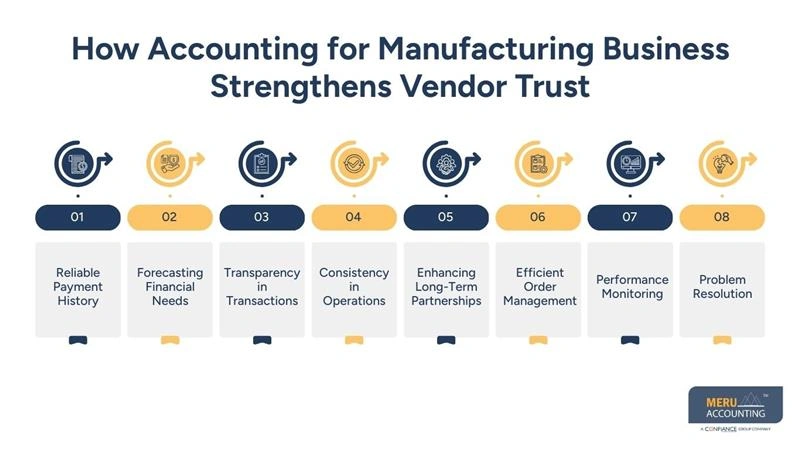
Efficient Order Management
Accurate accounting data helps ensure that orders are placed correctly and fulfilled on time. Suppliers appreciate businesses that minimize errors, which strengthens trust and reliability.
Performance Monitoring
Regular review of financial and operational data highlights supplier performance trends. This helps manufacturers provide constructive feedback and maintain healthy partnerships.
Problem Resolution
With clear accounting records, any payment or order issues can be resolved quickly. Prompt resolution prevents misunderstandings and reinforces supplier confidence in the business.
Why Inventory Management is Critical for Supplier Relations
Accurate Stock Tracking
Accounting for manufacturing business ensures that inventory levels are monitored to avoid shortages. Keeping precise stock records helps prevent production delays and ensures suppliers can meet demand on time.
Optimized Order Planning
Maintaining proper stock records through accounting for manufacturing business allows manufacturers to place orders efficiently and prevent overstocking. This planning reduces storage costs and avoids tying up cash in excess inventory.
Supplier Confidence in Orders
Suppliers appreciate consistent orders based on accurate inventory, improving collaboration. Reliable ordering patterns strengthen trust and encourage suppliers to prioritize your business.
Reducing Waste and Costs
Proper inventory management lowers storage costs and ensures suppliers are only asked for what is needed. It also minimizes losses from expired or unused materials, benefiting both parties financially.
Meeting Customer Demand
Timely product availability strengthens supplier confidence that the industrial manufacturing firm is dependable. Satisfied customers mean consistent demand, which further reassures suppliers about the business’s stability.
How Cost Control in Manufacturing Business Benefits Suppliers
Understanding Production Costs
Accounting for manufacturing business helps manufacturers identify cost drivers, leading to better pricing discussions with suppliers. Knowing the true costs allows businesses to plan efficiently and communicate transparently with vendors.
Efficient Resource Allocation
Controlled costs ensure manufacturers can pay suppliers fairly and on time. Proper allocation of funds reduces delays in payments, improving trust and supplier confidence.
Reducing Unnecessary Expenses
Cost control achieved through accounting for manufacturing business avoids sudden budget cuts that may affect supplier payments. Minimizing waste also ensures suppliers are only asked for necessary materials, saving time and resources.
Planning Bulk Purchases
Lower production costs allow the business to place larger orders, benefiting suppliers. Bulk orders can strengthen supplier relationships and often result in better pricing or priority service.
Strengthening Negotiations
Clear knowledge of costs helps a manufacturing firm negotiate mutually beneficial terms with vendors. Suppliers are more willing to collaborate when discussions are based on accurate financial data.
When Timely Payments Improve Vendor Confidence
Setting Payment Policies
Accounting for manufacturing business allows a manufacturing firm to set clear terms with suppliers, ensuring on-time payments. Clear policies also help suppliers understand expectations and plan their cash flow efficiently.
Tracking Due Dates
With organized accounts, businesses can avoid late payments that may damage supplier relationships. Regular monitoring of invoices ensures that deadlines are met and reduces financial stress for vendors.
Building Credibility
Suppliers view timely payments as a sign of reliability and stability. Consistent payment behavior strengthens trust and encourages long-term collaboration.
Encouraging Supplier Loyalty
Prompt payments can lead to preferential treatment, discounts, and priority services. Suppliers are more likely to accommodate urgent requests or flexible terms for reliable partners.
Avoiding Disputes
Accounting reduces errors in invoicing, preventing conflicts with suppliers. Accurate records also make it easier to resolve any discrepancies quickly and fairly.
Enhancing Supplier Relationships
Timely payments show that the business values its suppliers, fostering mutual respect. Strong relationships can lead to better communication, collaboration, and shared business growth.
What Financial Metrics Reveal About Vendor Performance
Evaluating Order Accuracy
Tracking purchase orders helps assess supplier reliability and consistency. Monitoring accuracy allows manufacturers to spot errors early and work with suppliers to improve fulfillment.
Payment Terms Compliance
Metrics show how well suppliers adhere to agreed-upon timelines. This helps businesses identify dependable suppliers and plan financial commitments accordingly.
Delivery Performance
Accounting data linked to vendor invoices reveals on-time delivery performance. Consistent monitoring encourages suppliers to maintain high standards and timely deliveries.
Cost Variance Analysis
Comparing expected costs vs actual helps identify inefficiencies in supplier pricing. This insight allows manufacturers to negotiate fairer terms and optimize procurement budgets.
Supplier Scorecards
Regular reporting creates insights into supplier performance for better decision-making. Scorecards make it easy to track trends and reward high-performing suppliers.
How Reporting and Analytics Strengthen Supplier Relationships
Regular Financial Reports
Accounting reports provide suppliers with insights into order trends and payment histories. Sharing reports ensures transparency and strengthens mutual understanding.
Forecasting Demand
Analytics helps predict future material needs, allowing suppliers to plan production. Accurate forecasts reduce shortages and ensure timely deliveries.
Identifying Supplier Risks
Reports highlight late deliveries or pricing issues, helping manufacturers act before problems escalate. Early identification prevents operational disruptions and maintains supplier trust.
Data-Driven Discussions
Financial analytics create transparent discussions with suppliers about orders and payments. Both parties can make informed decisions and resolve potential conflicts effectively.
Supporting Strategic Partnerships
Consistent reporting fosters trust and collaboration, strengthening long-term partnerships. Suppliers are more willing to offer favorable terms when they see reliable financial management.
How Risk Management in Accounting Protects Supplier Partnerships
Identifying Financial Risks
Accounting for manufacturing business helps detect cash flow issues before they affect suppliers. Early detection through accounting for manufacturing business allows manufacturers to act and avoid late payments or disrupted orders.
Contingency Planning
Proper accounting enables businesses to maintain backup funds for critical supplier payments. Suppliers feel more secure knowing the business can meet financial obligations even in emergencies.
Reducing Fraud and Errors
Checks and balances in accounting prevent mistakes that may harm supplier relations. Minimizing errors strengthens trust and maintains smooth operations.
Legal Compliance
Accurate accounting ensures contracts and payments comply with regulations, protecting vendor relations. Compliance demonstrates professionalism and reliability to suppliers.
Strengthening Supplier Confidence
Managing financial risks ensures suppliers feel secure doing business with the manufacturing company. Confidence in the business encourages long-term collaboration and better service.
Meru Accounting’s Solutions for Manufacturing Company
Expert Accounting Services
Meru Accounting specializes in accounting for manufacturing business, helping manage finances and supplier relations effectively. Our experts ensure accurate bookkeeping and financial tracking to support smooth operations.
Customized Financial Strategies
Our team tailors accounting solutions to fit your manufacturing company’s needs and industry requirements. This personalized approach helps address unique challenges and improve supplier interactions.
Timely Reporting
We provide accurate and timely reports to keep suppliers informed and maintain trust. Regular reporting also helps management make data-driven decisions and plan ahead.
Inventory and Cost Management
Our services support accounting for manufacturing business by helping track inventory, manage production costs, and plan payments efficiently. Proper management reduces waste, ensures timely orders, and strengthens supplier confidence.
Risk and Compliance Support
Meru Accounting ensures your financial processes meet legal standards and minimize risks with vendors. Compliance reduces the chances of disputes and builds credibility with suppliers.
Global Support
With experienced professionals, we serve manufacturing firms across different regions, enhancing vendor partnerships worldwide. Our global expertise ensures best practices are applied for smooth supplier relations across markets.
Key Takeaways
- Accounting for manufacturing business strengthens trust and collaboration with suppliers
- Timely payments, cost control, and inventory management improve vendor confidence
- Financial reporting and analytics enable informed discussions and strategic partnerships
- Risk management and compliance protect supplier relationships
- Partnering with experts like Meru Accounting ensures efficient accounting processes and strong vendor relations
FAQs
Accurate accounting ensures timely payments, clear order tracking, and transparent financial records, which builds trust with suppliers.
Keeping correct inventory records prevents stockouts or over-ordering, helping suppliers plan better and deliver on time.
Controlling production costs allows manufacturers to pay suppliers on time and negotiate fair pricing for materials.
Regular financial reports provide insights into orders, payments, and forecasts, helping suppliers trust your business decisions.
Paying suppliers on schedule builds credibility and encourages suppliers to prioritize your orders and offer better terms.


