



Accurate financial management is essential for manufacturing businesses to thrive and grow. Accounting for manufacturing companies provides the necessary insights to track costs, monitor resources, and make well-informed decisions that boost efficiency and profitability.
Precise accounting data allows organizations to move beyond assumptions and make choices grounded in financial reality. By focusing on accounting for manufacturing companies, businesses can convert complex numbers into actionable insights, helping management plan operations, control expenses, and forecast future performance.
This blog will explore how manufacturing accounting enables data-driven decision-making and offers practical strategies to implement it effectively.
What You Will Learn From This Blog
- Gain a clear understanding of manufacturing accounting and why it is important for businesses.
- Learn how accurate financial data can guide effective decision-making in manufacturing.
- Explore techniques for managing costs and controlling expenses through accounting.
- Understand how accounting can improve operational efficiency and streamline processes.
- See how data-driven insights help in forecasting and planning for the future.
- Identify common challenges in manufacturing accounting and ways to overcome them.
- Explore best practices for implementing accounting for manufacturing companies effectively.
Understanding Manufacturing Accounting And Its Key Components
Accounting for manufacturing companies involves tracking, analyzing, and reporting financial data related to production activities. It allows businesses to monitor costs, manage inventory, and measure profitability accurately.
By maintaining detailed financial records, manufacturers can understand the true cost of production, identify profit margins, and make informed decisions that support growth. Key components of manufacturing accounting include cost accounting, inventory management, overhead tracking, and production expenses.
Cost accounting helps businesses calculate the total cost of producing goods, while inventory management ensures that stock levels are maintained efficiently. Overhead tracking monitors indirect costs, and detailed reporting of production expenses provides a clear picture of the company’s financial health.
Together, these elements form the foundation for reliable financial analysis and decision-making. Accurate records are critical for the success of any manufacturing business. Errors in accounting can lead to incorrect pricing, higher expenses, or even lost revenue.
By keeping precise financial data, businesses can identify inefficiencies, optimize resources, and implement strategies to reduce waste. Proper records also provide management with confidence in the numbers used for strategic planning and daily operational decisions.
Modern systems used in accounting for manufacturing companies can integrate with other business tools such as payroll software, inventory management systems, and ERP solutions. This integration allows companies to create a unified view of operations, streamline reporting, and ensure compliance with regulatory and tax requirements.
The Role of Accounting for Manufacturing Companies in Decision Making
Identifying Profit Centers
Accounting for manufacturing companies helps identify the most profitable products or departments, allowing better allocation of resources. This ensures that focus and investment are directed toward areas that contribute most to overall profitability.
Supporting Budget Planning
Financial data guides managers in planning budgets for production, marketing, and operations. Accurate accounting allows for realistic forecasts and helps prevent overspending or underfunding critical areas.
Risk Assessment
Accounting provides insights into financial risks, such as overspending, underutilization, or cash flow gaps. By analyzing this data, businesses can develop strategies to minimize losses and maintain financial stability.
Tracking Key Metrics
Metrics like cost per unit, production efficiency, and inventory turnover can be monitored through detailed accounting reports. Regular tracking of these metrics enables timely adjustments to improve operational performance.
Strategic Investment Decisions
Companies can make informed decisions about equipment purchases, facility expansion, or new product lines based on accounting insights. This helps ensure that investments are aligned with financial goals and long-term growth plans.
How Accurate Financial Data Drives Strategic Decisions in Manufacturing
Cost Analysis and Reduction
Detailed accounting highlights unnecessary expenditures and areas where costs can be minimized. This helps management reduce expenses while maintaining production efficiency.
Product Pricing
Accurate production cost data ensures pricing decisions cover costs and achieve desired profit margins. Pricing strategies are aligned to secure consistent profit margins effectively.
Inventory Management
Accounting for manufacturing companies allows firms to track inventory levels, reducing waste and overstocking. Inventory control improves production flow and reduces unnecessary stock costs.
Profit Margin Monitoring
Understanding profitability at every stage of production helps management focus on high-return products. Profit analysis ensures resources are directed toward the most profitable items.
Performance Evaluation
Financial reports assist in evaluating the performance of different departments, teams, or product lines. Evaluations highlight strengths and weaknesses for better operational decisions.
Budget Allocation
Accounting data helps allocate funds effectively across departments and projects. Budgets are optimized to maximize returns on company investments consistently.
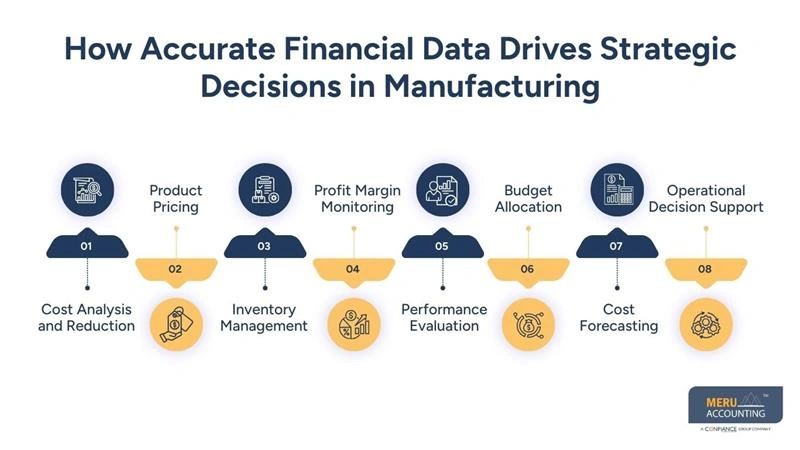
Cost Forecasting
Accurate financial data allows businesses to anticipate future expenses and plan accordingly. Forecasting reduces unexpected costs and supports smooth financial planning.
Operational Decision Support
Accounting insights provide guidance on process adjustments and resource use. Decision-making improves across operations, ensuring better efficiency and output.
The Connection Between Accounting for Manufacturing Companies and Cost Control
Direct and Indirect Cost Tracking
Accounting separates direct costs (materials, labor) from indirect costs (overheads) to manage budgets effectively. This ensures accurate budgeting and control over all company expenses.
Identifying Cost Variances
Variance analysis highlights discrepancies between expected and actual expenses, enabling timely interventions. Early detection of variances helps prevent financial losses efficiently.
Supplier and Vendor Management
Accounting helps negotiate better contracts by tracking supplier costs and payment histories. Better supplier insights lead to improved contracts and lower expenses.
Resource Allocation
Funds can be directed to the most critical areas, improving overall efficiency. Proper allocation ensures optimal use of financial and operational resources.
Reducing Waste
Monitoring expenses allows businesses to identify inefficiencies and minimize wastage in production processes. Waste reduction improves profitability and supports sustainable manufacturing operations.
Using Manufacturing Accounting to Improve Operational Efficiency
Streamlining Production Processes
Financial insights from accounting for manufacturing companies reveal bottlenecks and areas for process improvement. Process adjustments improve efficiency and reduce delays in production.
Workforce Management
Accounting data helps allocate labor efficiently and manage overtime costs. Labor allocation ensures productivity while controlling unnecessary overtime expenses.
Equipment Utilization
Tracking depreciation and maintenance costs ensures assets are used effectively. Optimal equipment use lowers costs and extends asset lifespan.
Inventory Optimization
Manufacturing accounting provides real-time data on stock levels, reducing storage costs and production delays. Better inventory control prevents overstocking and production interruptions efficiently.
Continuous Improvement
Monitoring financial and operational data supports ongoing improvements in efficiency and profitability. Regular review enables smarter decisions and continuous operational gains.
Predictive Analytics in Manufacturing Accounting for Better Forecasting
Sales Forecasting
Historical financial data from accounting for manufacturing companies aids in predicting future sales trends and demands. Accurate forecasts help align production with market demand effectively.
Cost Forecasting
Predictive analysis helps anticipate production costs, labor expenses, and overheads. Forecasting ensures budgets are realistic and prevents unexpected expenses.
Inventory Planning
Future inventory needs can be forecasted accurately, reducing stockouts and overstock situations. Planning maintains optimal stock levels and prevents supply chain issues.
Risk Mitigation
Predictive models identify potential financial risks before they impact operations. Early risk detection allows timely strategies to avoid losses.
Investment Planning
Accounting insights guide investments in new machinery, technology, or workforce expansion. Investments are aligned with financial goals for maximum returns.
Case Study: Companies Benefiting from Accounting for Manufacturing Companies
Company A: Streamlined Production and Improved Profitability
Using accounting for manufacturing companies, Company A was able to track production costs, monitor inventory, and identify inefficiencies in their processes.
Detailed cost analysis revealed areas of material waste and unnecessary expenditures, allowing the company to implement targeted improvements.
By optimizing resource allocation, adjusting product pricing, and planning investments based on accurate financial data, Company A reduced material waste by 15% and improved overall profitability.
Predictive analytics also helped forecast future production costs, ensuring better budgeting and smoother operations. The combined use of manufacturing accounting and data-driven insights enabled smarter decisions and sustained business growth.
Common Challenges in Manufacturing Accounting and How to Overcome Them
Inaccurate Data Entry
Implement automated accounting systems as part of accounting for manufacturing companies to reduce human errors. Automation ensures data accuracy and saves valuable time effectively.
Complex Cost Structures
Use detailed cost breakdowns to manage and understand direct and indirect costs. Clear cost tracking helps identify issues and improve budgeting.
Inventory Mismanagement
Integrate accounting with inventory systems to maintain accurate stock levels. Proper integration prevents stock errors and production delays.
Compliance Issues
Regular audits and adherence to accounting standards ensure compliance and reduce penalties. Consistent compliance avoids fines and maintains regulatory trust.
Limited Financial Visibility
Implement reporting dashboards to provide real-time insights into financial and operational performance. Dashboards improve decision-making by showing clear, up-to-date data.
Best Practices for Implementing Accounting for Manufacturing Companies Effectively
Standardize Processes
Create consistent accounting procedures across all departments for uniform data recording. Standardization ensures accuracy and simplifies financial management tasks.
Regular Reconciliation
Ensure bank statements, inventory records, and financial reports match accurately. Frequent reconciliations prevent errors and financial discrepancies promptly.
Use Accounting Software
Use software specifically designed for manufacturing accounting to track costs and monitor performance. Software streamlines operations and provides reliable financial insights.
Train Staff
Educate employees on accounting processes to minimize errors and improve data reliability. Proper training reduces mistakes and enhances overall financial accuracy.
Continuous Review
Regularly review financial data to identify inefficiencies and make timely adjustments. Ongoing reviews support better decisions and operational improvements consistently.
How Meru Accounting Supports Manufacturing Companies
Customized Solutions
Meru Accounting offers tailored accounting services for manufacturing companies to match unique business needs. Solutions are designed to fit each company’s operations precisely.
Accurate Reporting
Our team ensures precise financial data for informed decision-making and compliance. Reports provide clarity and support timely business decisions.
Cost Control Strategies
We help clients identify cost-saving opportunities through detailed accounting and analysis. Strategies focus on reducing expenses while maintaining efficiency.
Operational Efficiency Support
Meru Accounting aids in streamlining operations using actionable financial insights. Improved efficiency helps companies meet production and financial goals.
Forecasting and Planning
We assist companies in predicting expenses, sales, and resource needs for strategic growth. Accurate forecasts help plan investments and manage resources effectively.
Key Takeaways
- Accounting for manufacturing companies is essential for accurate financial records and data-driven decisions.
- Manufacturing accounting enables better cost control, operational efficiency, and strategic planning.
- Predictive analytics within accounting helps businesses forecast and reduce risks effectively.
- Implementing best practices ensures data accuracy and supports long-term growth.
- Partnering with experts like Meru Accounting allows manufacturers to make smarter financial decisions.
FAQs
Accounting for manufacturing companies tracks production costs, including materials, labor, and overhead. It helps managers make smart decisions on operations and profitability.
Accounting for manufacturing companies controls costs, manages inventory, and improves production efficiency. It helps managers plan better and boost long-term growth.
Tracking direct and indirect costs highlights inefficiencies in production. This reduces waste and lowers expenses, improving profits.
Financial data shows costs, revenue, and product profitability clearly. Managers use it to make decisions on pricing, budgeting, and resources.
Use accounting software, standardize processes, and train staff. Regular report review ensures accurate data for smart decisions.


