



Minimizing machine downtime is essential for manufacturing firms to maintain smooth production and protect profitability. One of the most effective ways to achieve this is through accounting for manufacturing.
By applying predictive insights, companies can detect potential equipment issues before they occur, plan maintenance effectively, reduce repair costs, and avoid lost production time.
A manufacturing accountant plays a key role in this process, analyzing financial and operational data to forecast machine failures and support informed decisions. This blog will explain how predictive accounting can help manufacturing firms manage their machines more efficiently and prevent costly downtime.
What You Will Learn From This Blog
- How accounting for manufacturing helps prevent costly machine downtime by identifying potential equipment issues before they happen.
- The role of a manufacturing accountant in analyzing financial and operational data to improve equipment efficiency and reduce repair costs.
- The key metrics that should be tracked, such as maintenance costs, machine utilization, repair frequency, and spare part usage, to anticipate downtime.
- How predictive accounting integrates with maintenance planning to schedule repairs, prioritize critical equipment, and optimize spare part inventory.
- How technology, including accounting software, IoT devices, and data analytics, helps manufacturing accountants forecast potential equipment issues.
- Practical steps manufacturing firms should take to implement predictive accounting, including collecting historical data, training accountants, and aligning accounting insights with operations.
What Is Accounting for Manufacturing and Why It Matters
Understanding Accounting for Manufacturing
Accounting for manufacturing tracks all costs associated with producing goods, including labor, materials, and overhead.
It helps manufacturers understand where money is spent and how operations impact profitability. This clarity allows firms to control expenses more effectively and plan for growth.
Linking Financial Data to Production
By connecting financial records with machine performance, companies can forecast maintenance costs and plan for equipment upgrades efficiently. This connection also helps prevent operational bottlenecks and ensures smoother production cycles.
Preventing Unexpected Costs
Accounting for manufacturing helps avoid surprise repair bills by highlighting trends in equipment wear and tear. It enables manufacturers to plan repairs in advance, reducing financial strain from emergency fixes.
Supporting Decision Making
It provides management with data to decide when to repair, replace, or optimize machinery. With accurate insights, leaders can make informed choices that balance cost and operational efficiency.
Improving Profit Margins
Accurate accounting ensures manufacturers maintain healthy profit margins by controlling operational expenses and downtime costs. It also highlights areas where cost reductions can be made without affecting quality.
Tracking Resource Efficiency
Accounting for manufacturing allows firms to see which machines, materials, and labor are most efficient, helping reduce waste and unnecessary spending. This insight improves overall production performance and operational sustainability.
Planning for Capital Investments
Data from accounting helps management decide when to invest in new machinery or technology to improve production and reduce downtime. This ensures that investments are made strategically for maximum return.
Monitoring Compliance and Reporting
Proper accounting ensures all financial and operational records are accurate, supporting regulatory compliance and internal reporting requirements. It also helps build trust with stakeholders by maintaining transparent and reliable records.
How Predictive Accounting Helps Reduce Machine Downtime
Identifying Patterns in Machine Failures
Predictive accounting uses historical data to spot patterns in machine breakdowns, allowing proactive maintenance planning. This helps manufacturers anticipate issues before they interrupt production.
Forecasting Maintenance Needs
By analyzing costs and machine performance, an industrial accountant can predict when equipment requires servicing. This ensures repairs are done at the right time, preventing unnecessary delays.
Scheduling Repairs Efficiently
Predictive insights help schedule repairs during low-production periods, minimizing disruptions to workflow. It allows maintenance teams to work without affecting overall output.
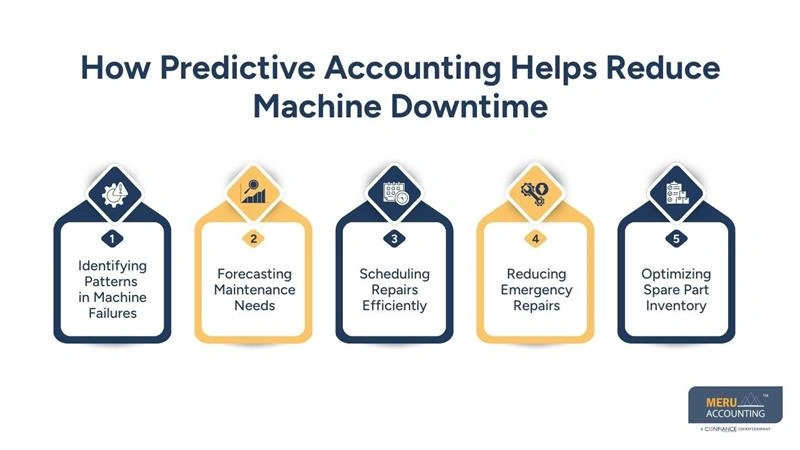
Reducing Emergency Repairs
Planned maintenance based on accounting data lowers the frequency of costly emergency repairs. This also saves money and reduces stress on operations.
Optimizing Spare Part Inventory
Accounting for manufacturing informs which spare parts are needed and when, reducing unnecessary inventory costs. It ensures parts are available when needed without overstocking.
Why Accurate Data Is Key for Accounting for Manufacturing
Collecting Real-Time Machine Data
Real-time data from machines ensures accounting records reflect true production costs. Immediate detection of abnormal machine behavior becomes possible, helping prevent delays.
Ensuring Financial Records Match Production
Accurate data helps reconcile maintenance expenses with overall production costs. This alignment improves budgeting accuracy and cost control across operations.
Detecting Inefficiencies Early
Trends in energy usage, downtime, and repairs can reveal inefficiencies before they escalate. Addressing these issues early keeps production smooth and resource use optimal.
Supporting Predictive Models
Reliable data is necessary for predictive accounting models to forecast machine failures accurately. Stronger predictive models enable more effective maintenance scheduling.
Minimizing Costly Mistakes
Inaccurate data can lead to incorrect maintenance scheduling, causing unplanned downtime. Clean and precise data helps avoid costly disruptions and repair expenses.
How a Manufacturing Accountant Can Improve Equipment Efficiency
Analyzing Repair Costs
A manufacturing accountant examines repair expenses to determine whether maintenance or replacement is more cost-effective. This analysis helps reduce unnecessary spending and extend machine lifespan.
Monitoring Machine Performance
They track machine performance metrics to spot declines in efficiency early. Early detection allows timely intervention before minor issues become major problems.
Linking Financials to Maintenance
Accounting for manufacturing ensures that financial planning includes equipment maintenance budgets. This connection helps balance operational costs with production needs effectively.
Providing Recommendations
By interpreting cost and production data, an industrial accountant can suggest maintenance schedules or upgrades. Their guidance supports smarter decisions that improve overall machine performance.
Supporting Resource Allocation
They help allocate labor, time, and materials efficiently for maintenance and operations. Proper allocation ensures optimal use of resources and minimizes downtime.
What Metrics Should Manufacturing Accountants Track to Prevent Downtime
Mean Time Between Failures (MTBF)
Tracks the average time between equipment breakdowns to plan maintenance schedules. This metric helps identify machines that require more frequent attention and is a key part of accounting for manufacturing operations.
Maintenance Costs
Monitoring repair and servicing costs ensures efficient budgeting and prevents overspending. Tracking these costs also highlights trends that can reduce future expenses.
Machine Utilization Rates
Helps determine how much each machine is used and identify underused equipment. Optimizing utilization ensures machines contribute effectively to production goals.
Production Delays
Tracks instances of downtime that affect production schedules and profitability. Understanding delay patterns allows for better planning and workflow adjustments.
Spare Parts Usage
Ensures inventory levels are optimized to avoid unnecessary purchases or shortages. Proper tracking prevents delays caused by missing critical components.
Energy Consumption
Measures how much energy each machine uses during operation. High energy use may indicate inefficiencies or impending maintenance needs, which can be analyzed through accounting for manufacturing practices.
Repair Frequency
Tracks how often machines require maintenance or repairs. Frequent repairs can signal deeper issues that need strategic attention.
Downtime Cost per Machine
Calculates the financial impact of each hour a machine is idle. This helps prioritize which machines need immediate maintenance to save costs.
How Predictive Accounting Integrates With Maintenance Planning
Coordinating Maintenance Schedules
Accounting data informs when machines should be serviced without disrupting production. Proper coordination ensures maintenance is done during low-impact periods, keeping operations smooth.
Budgeting for Repairs
Predictive insights allow accurate budgeting for maintenance costs. This prevents unexpected financial strain and helps plan for long-term equipment expenses, a core benefit of accounting for manufacturing.
Prioritizing Critical Equipment
High-value or frequently used machines can be maintained first based on accounting data. Prioritization ensures that the most important machines remain operational and productive.
Reducing Unexpected Downtime
By planning maintenance proactively, manufacturers can minimize unplanned stops. Fewer disruptions lead to consistent production and improved profitability.
Aligning Operations and Finance
Integrates production schedules with financial planning to optimize overall efficiency. This alignment ensures resources are allocated effectively to maintain smooth workflows.
Why Investing in Predictive Accounting Pays Off for Manufacturing Firms
Reducing Repair Costs
Early detection of issues prevents expensive emergency repairs. Planned maintenance based on predictions lowers overall repair expenses and keeps budgets under control.
Increasing Production Output
Less downtime means machines are productive for longer periods. Higher machine availability helps meet production targets and fulfill customer orders on time, a key goal of accounting for manufacturing.
Extending Equipment Life
Regular, planned maintenance helps machines last longer. This reduces the need for frequent replacements and protects capital investments.
Improving Cash Flow
Fewer unexpected repairs and downtime reduce financial strain. Predictable maintenance costs make financial planning more reliable and efficient, which is a direct benefit of accounting for manufacturing.
Supporting Strategic Decisions
Accurate accounting data allows manufacturers to plan capital investments wisely. Informed decisions help prioritize upgrades and allocate resources effectively.
How Technology Enables Manufacturing Accountants to Forecast Issues
Using Accounting Software
Modern software tracks machine costs, downtime, and maintenance history in one place. Centralized data helps accountants analyze trends and make informed maintenance decisions.
Data Analytics for Predictions
Analytics tools help a manufacturing accountant identify patterns leading to failures. This enables proactive planning before minor issues escalate into major problems.
Integration With IoT Devices
IoT sensors provide real-time data on machine performance for predictive models. Continuous monitoring allows early detection of irregularities or potential breakdowns.
Reporting Dashboards
Visual dashboards make it easier to spot trends and plan maintenance activities. Dashboards provide quick insights for management to act promptly.
Alerts for Potential Failures
Automated notifications inform accountants and management about potential equipment issues. Timely alerts reduce downtime and improve production reliability.
What Steps Manufacturing Firms Should Take to Implement Predictive Accounting
Evaluate Current Accounting Systems
Assess whether existing systems can track machine costs and performance effectively. Understanding system capabilities ensures predictive accounting can be applied accurately.
Train a Manufacturing Accountant
Ensure a manufacturing accountant understands both financial and operational data. Skilled accountants can interpret data to guide maintenance and operational decisions, a key component of accounting for manufacturing.
Collect Historical Machine Data
Use past repair and production data to create predictive models. Historical trends are essential for identifying recurring issues and planning future maintenance.
Integrate With Maintenance Teams
Work closely with maintenance staff to align accounting insights with real-world schedules. Collaboration ensures predictive data translates into effective maintenance actions, a practical application of accounting for manufacturing.
Monitor and Adjust Models
Regularly review predictive accounting outcomes and adjust as needed for accuracy. Continuous improvement helps refine forecasts and further reduces downtime risk.
Key Takeaways
- Expert manufacturing accountants provide reliable solutions with global experience and insight.
- Customized accounting solutions cater to the specific needs of manufacturing firms.
- Predictive tools are integrated to help prevent downtime and manage costs.
- Assistance is provided in data collection, analysis, and maintenance planning.
- Trusted by multiple firms globally for accurate accounting for manufacturing services.
- Partnership ensures reduced machine downtime, optimized production, and higher profitability.
- Professionals help interpret financial data to make better maintenance decisions effectively.
- Comprehensive reporting ensures managers understand machine performance and production efficiency clearly.
FAQs
Predictive accounting uses financial and machine data to schedule maintenance before failures occur.
Accounting for manufacturing tracks costs and performance, helping plan repairs and avoid unexpected stoppages.
A production accountant monitors machine performance and repair expenses to plan timely maintenance.
Repair costs, downtime frequency, machine utilization, and spare part usage should be closely tracked.
Predictive accounting reduces unplanned repairs, optimizes maintenance schedules, and minimizes lost production time.


