



Accounting for manufacturing plays a critical role in ensuring that production processes are efficient, cost-effective, and environmentally responsible. As manufacturing firms face growing pressure to adopt sustainable practices, accounting becomes a vital tool in tracking and managing both financial and environmental outcomes.
This blog explores how accounting for manufacturing can help firms achieve sustainability, improve resource management, and maintain regulatory compliance.
Accounting for manufacturing also helps firms track resource use and reduce waste, making operations more eco-friendly. By including sustainability in financial decisions, companies can save costs while supporting long-term environmental goals.
What You Will Learn From This Blog
- How accounting for manufacturing supports sustainable production.
- Practical green accounting methods for manufacturing firms.
- The role of technology in eco-friendly accounting practices.
- Cost management strategies that align with sustainability.
- Real-life examples of successful sustainable accounting in manufacturing firms.
Introduction To Sustainable Accounting Practices In Manufacturing
Definition of Sustainable Accounting
Sustainable accounting refers to the process of integrating environmental and social considerations into financial reporting and decision-making. For manufacturing firms, this means tracking both costs and environmental impact.
Importance for Manufacturing Firms
Manufacturing firms often consume significant energy and resources. Sustainable accounting helps monitor these factors to reduce waste and environmental harm while maintaining profitability.
Environmental Reporting
By including environmental data in reports, accounting for manufacturing firms allows stakeholders to see how operations affect the environment.
Alignment With Business Goals
Sustainable accounting aligns financial goals with eco-friendly initiatives, helping firms achieve both cost efficiency and corporate responsibility.
Long-Term Benefits
Accounting for manufacturing that incorporates sustainability practices leads to better resource management, reduced costs, and stronger brand reputation.
Understanding The Role Of Accounting In Sustainable Manufacturing
Tracking Resource Usage
Accounting for manufacturing helps firms measure the consumption of materials, energy, and water, highlighting areas for improvement. This data allows companies to identify inefficiencies and adopt strategies to use resources more responsibly.
Monitoring Waste Production
It identifies where waste occurs in the production process and estimates the cost of waste, helping firms make changes.
By tracking waste, firms can implement reduction programs that save money and reduce environmental impact.
Evaluating Supplier Practices
Accounting for manufacturing firms can include assessments of suppliers’ environmental practices, encouraging responsible sourcing. This ensures that the entire supply chain aligns with the company’s sustainability goals.
Cost-Benefit Analysis
Sustainable accounting allows manufacturers to analyze whether eco-friendly initiatives reduce costs over time. It helps justify investments in green technologies by showing tangible financial and environmental returns.
Decision-Making Support
Manufacturing managers can use data from accounting for manufacturing firms to make informed decisions about sustainability investments. Accurate accounting insights help prioritize initiatives that offer the greatest benefit for both cost and the environment.
Implementing Green Accounting Practices For Manufacturing Firms
Eco-Friendly Inventory Management
Accounting for manufacturing firms can track raw materials in ways that minimize waste and promote recycling. This ensures that inventory is managed efficiently while reducing environmental impact.
Energy Cost Tracking
Monitoring energy usage in production allows firms to identify areas where consumption can be reduced. Reducing energy waste also lowers operational costs and supports sustainability goals.
Carbon Footprint Accounting
Manufacturing firms can calculate their carbon emissions and integrate this data into financial reports. This helps in setting targets to reduce greenhouse gas emissions over time.
Green Procurement
Accounting for manufacturing helps firms make purchasing decisions that favor eco-friendly materials and suppliers. It encourages collaboration with suppliers who follow sustainable practices.
Sustainable Budgeting
Firms can allocate funds to sustainability projects while maintaining control over overall production costs. This allows for a balance between financial health and environmental responsibility.
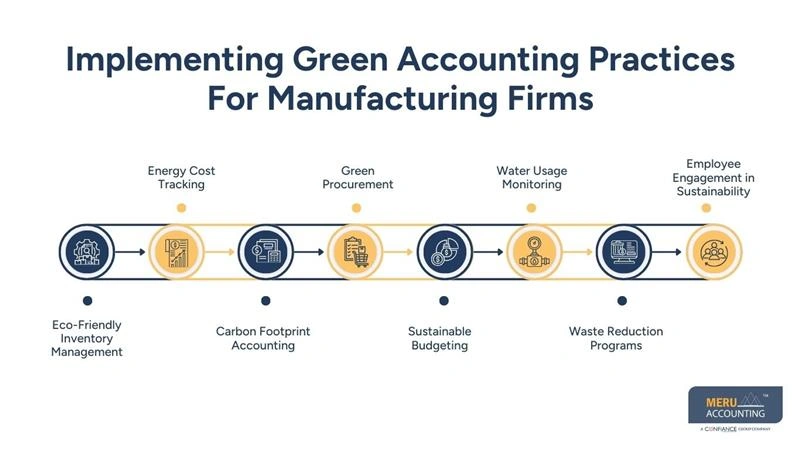
Water Usage Monitoring
Accounting for manufacturing firms can track water consumption during production. Identifying high-usage areas helps reduce waste and preserve this vital resource.
Waste Reduction Programs
Sustainable accounting can highlight areas where waste can be minimized. Implementing these programs lowers disposal costs and supports eco-friendly manufacturing.
Employee Engagement in Sustainability
Accounting reports can include data that educates employees on environmental impact. Involving staff helps create a culture of sustainability throughout the firm.
Cost Management And Efficiency In Sustainable Manufacturing
Identifying Cost Savings
Accounting for manufacturing can reveal areas where sustainable practices also reduce expenses, such as energy efficiency. This helps firms invest in eco-friendly solutions that also improve the bottom line.
Process Optimization
Firms can use accounting and bookkeeping for manufacturing firms to track process efficiency and find opportunities to reduce resource use. Streamlined processes minimize waste and increase overall production productivity.
Reducing Material Waste
Detailed cost tracking shows where material wastage occurs, allowing for corrective measures. Reducing waste lowers costs and supports environmentally responsible manufacturing practices.
Lifecycle Costing
Accounting for manufacturing evaluates costs over a product’s entire life, including disposal, to encourage sustainable choices. It helps firms choose materials and methods that reduce environmental impact while being cost-effective.
Performance Metrics
Sustainable accounting establishes benchmarks for both cost efficiency and environmental impact, guiding improvement efforts. These metrics allow managers to measure progress and make informed decisions for continuous improvement.
Technology-Driven Sustainable Accounting For Manufacturing Firms
Automation of Environmental Data
Software solutions for accounting for manufacturing firms can automatically capture resource usage and environmental metrics. This reduces manual errors and ensures accurate tracking of sustainability data.
Cloud-Based Reporting
Cloud accounting platforms make it easier to track sustainability data in real time across multiple sites. It allows managers to access reports anytime, improving decision-making and transparency.
Integration With ERP Systems
Accounting for manufacturing integrates with production systems to provide accurate cost and sustainability information. This ensures that financial and environmental data are aligned across all departments.
Predictive Analysis
Advanced accounting tools help forecast the impact of sustainability measures on costs and production. Firms can anticipate resource needs and make proactive adjustments to reduce waste.
Reporting Dashboards
Dashboards provide visual insights into both financial and environmental performance, making sustainable practices easier to manage. Clear visuals help managers quickly identify trends and areas for improvement.
Mobile Accounting Access
Manufacturing firms can use mobile apps to track sustainability metrics on the go. This ensures real-time data collection even from remote production sites.
Data Security and Compliance
Technology-driven accounting protects sensitive financial and environmental data. Secure systems help manufacturing firms meet compliance requirements and maintain stakeholder trust.
Regulatory Compliance And Reporting For Eco-Friendly Manufacturing
Understanding Environmental Regulations
Accounting for manufacturing firms ensures compliance with local and international environmental standards. It helps firms stay updated on changing laws and avoid legal complications.
Emissions Reporting
Firms can track emissions and include them in financial statements to meet regulatory requirements. This allows for accurate reporting to authorities and supports environmental accountability.
Audit Preparedness
Sustainable accounting makes it easier for firms to prepare for audits and inspections. Organized records reduce stress during audits and ensure transparency in reporting.
Transparency For Stakeholders
Reports on sustainability practices enhance trust with investors, customers, and employees. Sharing clear environmental data strengthens the company’s reputation and credibility.
Penalty Avoidance
By using accounting for manufacturing to track regulatory compliance, firms can avoid fines and legal issues. Proactive compliance also reduces the risk of operational disruptions and costly penalties.
Case Study: Successful Sustainable Accounting In Manufacturing Firms
Company Overview: A mid-sized manufacturing firm implemented accounting for manufacturing to track both costs and environmental impact.
Green Initiatives: The firm introduced energy-efficient machinery, improved waste management, and sourced eco-friendly materials.
Accounting Practices: The accounting for manufacturing firms included detailed tracking of energy consumption, material usage, and sustainability costs.
Results Achieved: The firm reduced production costs by 12%, cut emissions by 20%, and improved its corporate image.
Lessons Learned: This case shows that sustainable accounting for manufacturing firms benefits both the environment and the bottom line.
How Meru Accounting Helps Manufacturing Firms
Expertise in Sustainable Practices
Meru Accounting specializes in accounting for manufacturing and helps firms integrate sustainability into their accounting systems. Our experts guide firms in adopting eco-friendly practices while maintaining accurate financial records.
Customized Accounting Solutions
We provide accounting for manufacturing firms tailored to their unique production processes and sustainability goals. This ensures that every firm receives solutions that fit their specific operational needs and environmental objectives.
Technology Integration
Our team uses advanced software to automate sustainability tracking and reporting for manufacturing firms. Automation reduces manual work, improves accuracy, and makes real-time reporting easier for management.
Compliance Support
Meru Accounting ensures that all environmental and regulatory requirements are accurately reported and met. We help firms avoid penalties while keeping their operations aligned with current laws and standards.
Cost and Efficiency Optimization
We help manufacturing firms identify cost-saving opportunities through sustainable accounting practices. By combining sustainability with financial insights, firms can achieve long-term efficiency and profitability.
Key Takeaways
- Accounting for manufacturing is essential for both financial and environmental management.
- Sustainable accounting practices help reduce costs, waste, and carbon footprint.
- Technology can simplify accounting for manufacturing firms and improve reporting.
- Regulatory compliance is easier with structured sustainable accounting practices.
- Partnering with experts like Meru Accounting ensures accuracy, efficiency, and sustainability.
FAQs
Sustainable accounting in manufacturing tracks financial data along with environmental impact, helping firms reduce waste, save costs, and operate responsibly.
Accounting for manufacturing helps firms monitor resource use, energy consumption, and waste production, which makes it easier to adopt eco-friendly practices.
Green accounting practices include tracking energy and material costs, calculating carbon emissions, using eco-friendly inventory methods, and budgeting for sustainability projects.
Accounting software can automatically record resource usage, monitor environmental metrics, and generate reports, making sustainable accounting faster and more accurate.
Firms measure success by tracking reductions in energy use, material waste, carbon emissions, and overall cost savings, while ensuring compliance with environmental regulations.


