




Introduction to Accounting for Medical Practice
Accounting for medical practice plays a crucial role in ensuring the financial stability and operational efficiency of healthcare providers. In an industry often marked by complex billing processes, regulatory compliance, and the need for precise financial management, accounting serves as the backbone for sound business decisions. Healthcare professionals, including physicians, specialists, and clinic managers, must not only focus on patient care but also understand how effective accounting practices impact their bottom line. This article explores how accounting for medical practice shapes financial stability through various dimensions including revenue cycle management, cost control, compliance, and strategic planning.
The Unique Financial Landscape of Medical Practices
Unlike other industries, medical practices operate under a unique financial landscape influenced by factors such as insurance reimbursements, government regulations, tax considerations, and patient billing complexities. Understanding this environment is essential for implementing accounting systems that align with the specific needs of healthcare providers.
Insurance and Reimbursement Complexities
Most medical practices rely heavily on insurance payments, including private insurance companies, Medicare, and Medicaid. Each payer has its own reimbursement schedule, claim submission requirements, and auditing processes. Accounting for medical practice requires meticulous tracking of claim statuses, denials, and appeals to ensure timely payment and cash flow management.
Regulatory and Compliance Requirements
Health care providers must adhere to numerous regulations such as the Health Insurance Portability and Accountability Act (HIPAA), the Affordable Care Act (ACA), and the Stark Law. Compliance not only affects patient privacy but also influences billing practices and financial reporting standards. Proper accounting helps maintain compliance by integrating audit trails, documentation, and reporting features into financial systems.
Key Components of Accounting for Medical Practices
Implementing an effective accounting system within a medical practice involves several critical components specifically tailored to the healthcare environment. These components ensure accuracy, efficiency, and transparency in financial management.
Revenue Cycle Management
Revenue cycle management (RCM) is the process of managing claims, payments, and revenue generation from patient services. It encompasses patient registration, insurance verification, coding, billing, collections, and financial reporting. Efficient RCM reduces delays in payments, minimizes write-offs, and improves overall practice profitability.
Expense Tracking and Cost Control
Medical practices face numerous costs, including staffing, equipment, supplies, rent, and insurance. Accounting systems categorize and monitor expenses to identify cost-saving opportunities and optimize expenditures without compromising patient care quality.
Payroll and Tax Management
Medical practices must manage payroll for physicians, nurses, administrative staff, and contractors, ensuring compliance with tax laws and employment regulations. Accurate payroll accounting shields the practice from legal penalties and fosters employee satisfaction.
Financial Reporting and Analysis
Regular financial reporting provides insights into the practice’s financial health. Reports such as profit and loss statements, balance sheets, and cash flow analyses enable managers and physicians to make informed decisions on resource allocation, investment, and growth strategies.
Benefits of Effective Accounting in Medical Practice
Adopting robust accounting processes in medical practices offers several benefits beyond basic record-keeping. These benefits contribute directly to enhanced financial stability and operational resilience.
- Improved Cash Flow Management: Timely billing and collections reduce delays in revenue realization.
- Regulatory Compliance: Meeting federal and state requirements minimizes the risk of fines and audits.
- Informed Decision-Making: Access to real-time financial data supports strategic planning and budgeting.
- Enhanced Profitability: Identification of cost inefficiencies and revenue leakages leads to improved margins.
- Risk Mitigation: Accurate accounting reduces issues related to fraud, errors, and financial mismanagement.
Common Challenges in Accounting for Medical Practices and How to Overcome Them
Medical practices face unique challenges in maintaining accurate and efficient accounting records. Recognizing these difficulties and proactively addressing them enables sustained financial health.
Complex Billing Procedures
The vast number of insurance providers and various billing codes make billing a complicated and error-prone process. Employing experienced billing specialists or utilizing specialized medical billing software can minimize errors.
Managing Denied Claims
Claims may be denied due to coding mistakes, missing documentation, or insurance policy changes. Setting up a dedicated team to follow up on denied claims, analyze reasons for denial, and resubmit corrected claims can significantly improve revenue recovery.
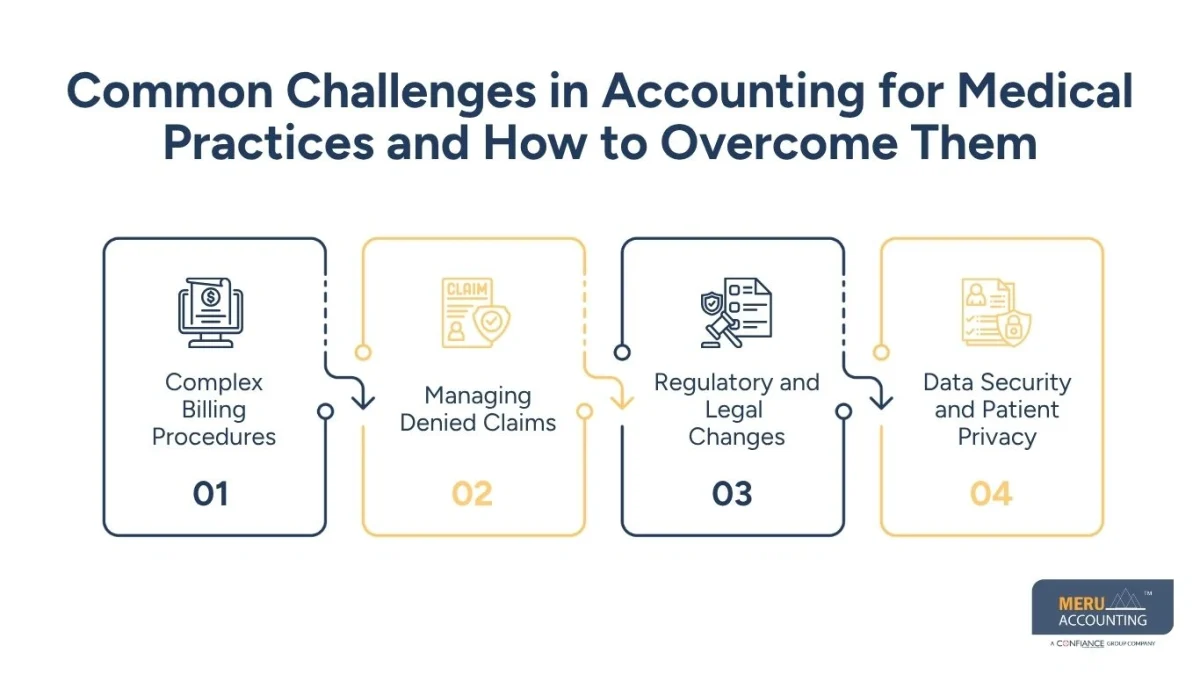
Regulatory and Legal Changes
Healthcare regulations evolve frequently, affecting billing practices and reimbursement rates. Staying current with regulatory changes, participating in industry forums, and ongoing staff training help practices remain compliant and avoid costly penalties.
Data Security and Patient Privacy
Integrating accounting with patient data systems necessitates stringent security measures. Deploying encrypted software solutions and strictly limiting access to sensitive information mitigate both financial and legal risks.
The Role of Technology in Modern Medical Accounting
Technological advances have transformed accounting for medical practices, offering tools that streamline workflows, enhance accuracy, and improve financial visibility.
Electronic Health Records (EHR) Integration
Integration of accounting software with EHR systems automates data sharing between patient care and billing functions, reducing manual errors and speeding up claim submissions.
Cloud-Based Accounting Solutions
Cloud technology enables real-time access to financial data from any location, facilitates collaboration between staff and accountants, and creates secure backup solutions.
Automated Billing and Coding Software
Automation of billing and coding processes reduces human error, ensures compliance with the latest coding standards such as ICD-10, and accelerates reimbursement cycles.
Analytics and Business Intelligence Tools
Advanced analytics enable medical practices to identify trends, forecast revenues, monitor expenses, and evaluate provider productivity through customizable dashboards and reports.
Financial Planning and Strategic Growth Through Accounting
Accounting for medical practice not only supports day-to-day operations but also provides the foundation for long-term financial planning and strategic growth.
Budgeting and Forecasting
Accurate budgeting, based on historical accounting data and market trends, helps medical practices allocate resources effectively, plan for expansion, and manage working capital.
Investment in Technology and Infrastructure
Understanding the financial impact of investments in medical equipment, facility improvements, and software platforms ensures sustainable growth and maintains competitive advantage.
Mergers, Acquisitions, and Partnerships
Strategic decisions such as joining group practices or acquiring other specialties require detailed financial due diligence and integration of accounting systems to ensure synergy and financial viability.
Risk Management and Contingency Planning
Accounting data plays a pivotal role in assessing financial risks, establishing reserves, and preparing contingencies to protect against unforeseen disruptions such as regulatory changes or economic downturns.
Comparative Overview of Accounting Methods in Medical Practice
Different accounting methods offer varying advantages to medical practices, depending on size, service complexity, and regulatory requirements. Here is a comparative table outlining key characteristics:
| Accounting Method | Description | Advantages | Disadvantages |
|---|---|---|---|
| Cash Basis Accounting | Records transactions when cash is received or paid | Simple to implement, easy to track cash flow | Does not match income and expenses in the period incurred, may misrepresent financial health |
| Accrual Basis Accounting | Records revenue and expenses when incurred, regardless of cash flow | Provides accurate financial picture, complies with GAAP | More complex, requires tracking receivables and payables |
| Modified Cash Basis | Combination of cash and accrual methods | Balances simplicity with accuracy | Can be confusing, not fully compliant with GAAP |
| Fund Accounting | Tracks resources by fund, often used in non-profit entities | Ensures funds are used for intended purposes | More complex record-keeping required |
Meru Accounting: Supporting Medical Practices in Financial Excellence
Meru Accounting specializes in delivering tailored accounting solutions specifically designed for medical practices. With extensive expertise in healthcare financial management, Meru Accounting helps providers navigate complex billing processes, regulatory compliance, and strategic financial planning. Their comprehensive service portfolio—from revenue cycle optimization to tax advisory—empowers medical professionals to focus on patient care while ensuring their financial operations are efficient, transparent, and sustainable. By leveraging cutting-edge technology and healthcare industry knowledge, Meru Accounting is a trusted partner in shaping the financial stability of medical practices.
Conclusion
Accounting for medical practice is a multifaceted discipline that fundamentally shapes the financial stability and operational success of healthcare providers. Recognizing the unique challenges of medical billing, regulatory compliance, and cost management is essential for developing robust accounting systems. By leveraging technology, engaging in proactive financial planning, and adhering to best practices, medical practices can improve cash flows, control expenses, and position themselves for sustainable growth. Collaborative partnerships with specialized accounting firms, such as Meru Accounting, further enhance financial management capabilities, allowing healthcare professionals to deliver exceptional patient care backed by sound financial foundations.
FAQs
What is accounting for medical practice?
Accounting for medical practice involves tracking and managing all financial transactions, including billing, expenses, payroll, and revenue, to ensure accurate financial reporting and compliance.
How does accounting impact the financial stability of a medical practice?
Proper accounting helps maintain financial stability by providing clear insights into cash flow, expenses, and profitability, allowing for informed decision-making and efficient resource allocation.
What are common accounting challenges faced by medical practices?
Common challenges include managing patient billing and insurance claims, dealing with fluctuating revenue cycles, and ensuring compliance with healthcare regulations.
Why is accurate bookkeeping important in medical practice accounting?
Accurate bookkeeping ensures all financial data is up-to-date and correct, which is essential for regulatory compliance, tax reporting, and making strategic business decisions.
How can medical practices improve their accounting processes?
Medical practices can improve accounting by adopting specialized accounting software, training staff, outsourcing to professional accountants, and regularly reviewing financial reports for accuracy.


