




Introduction to Accounting for Medical Practices
Accounting for medical practices requires a nuanced approach due to the unique operational, regulatory, and financial complexities inherent in healthcare services. Unlike general businesses, medical practices face specific challenges such as managing patient billing, insurance reimbursements, compliance with healthcare laws, and tracking costs related to medical equipment and supplies. This article explores the distinctive features that make accounting for medical practices different from other businesses, providing valuable insights for healthcare administrators, accountants, and medical professionals involved in financial management.
The Unique Financial Environment of Medical Practices
Medical practices operate within a complex financial environment shaped by diverse revenue streams, heavy regulatory oversight, and varying payment structures. Understanding these factors is crucial for accurate accounting and financial planning.
Multiple Revenue Streams
Medical practices generate income from numerous sources, including:
- Patient consultations and treatments
- Insurance reimbursements from private and government payers
- Government healthcare programs such as Medicare and Medicaid
- Laboratory and diagnostic testing services
- Pharmaceutical sales and medical supplies
- Ancillary services like physical therapy or counseling
The complexity of revenue streams requires detailed accounting processes to ensure each income source is properly recorded and reconciled.
Regulatory Compliance and Reporting
Healthcare providers must comply with strict financial regulations and reporting standards, such as the Health Insurance Portability and Accountability Act (HIPAA) and the Affordable Care Act (ACA). These regulations influence how revenue and expenses are documented and require confidentiality in handling patient information related to billing and payments.
Key Differences in Accounting Practices
Accounting for medical practices diverges from other industries in several critical ways, driven by healthcare’s unique operational needs.
Revenue Cycle Management in Medical Practices
Revenue Cycle Management (RCM) encompasses the entire process of managing patient service revenue, from appointment scheduling to final payment collection. This cycle is more complex in healthcare due to insurance claim submissions, denials, and follow-ups.
- Patient Insurance Verification: Confirming patients’ insurance coverage before services are rendered.
- Claim Submission: Preparing and submitting claims to insurers in compliance with regulations.
- Payment Posting: Accurately applying payments received from insurance companies and patients.
- Denial Management: Identifying and addressing denied or delayed insurance claims.
- Patient Billing: Managing patient statements and collections for balances not covered by insurance.
Cost Allocation and Expense Tracking
Unlike many businesses that primarily track operational costs, medical practices must allocate costs across various departments and services such as surgical procedures, diagnostic imaging, and outpatient care. Expense tracking includes staff salaries, medical supplies, insurance premiums, and equipment depreciation, all requiring detailed categorization for accurate financial insight.
Accounting Software and Tools Tailored for Medical Practices
Due to the specialized needs of medical accounting, many practices utilize software specifically designed to handle healthcare finance complexities.
Features of Medical Accounting Software
- Integration with Electronic Health Records (EHR) for seamless patient billing.
- Automated claim submission and tracking.
- Compliance with healthcare laws regarding data privacy and financial reporting.
- Real-time financial dashboards and analytics focused on practice profitability and cash flow.
- Management of payer contracts and fee schedules.
Popular Medical Accounting Software Solutions
Some widely adopted options include:
- Practice management systems like Kareo and Athenahealth
- Accounting-focused platforms such as QuickBooks integrated with medical billing software
- Specialized medical practice software like AdvancedMD and Medisoft
Reporting and Financial Analysis in Medical Practices
Accurate and comprehensive reporting is vital for the financial health of medical practices. The nature of healthcare services demands specialized reports that differ from traditional business financial statements.
Essential Financial Reports for Medical Practices
| Report | Description | Purpose |
|---|---|---|
| Accounts Receivable Aging Report | Breaks down outstanding patient and insurance payments by time overdue. | Helps manage cash flow and identify collection issues. |
| Profit and Loss Statement (P&L) | Summarizes revenues, expenses, and net income over a period. | Tracks overall practice profitability. |
| Cost Per Patient Report | Details average cost incurred per patient visit or treatment. | Assists in pricing and cost control. |
| Revenue by Payer Report | Shows income distribution across different insurance providers and patient categories. | Evaluates revenue mix and payer performance. |
| Compliance and Audit Reports | Documents adherence to healthcare regulations and audit readiness. | Ensures regulatory compliance and reduces risk of penalties. |
Financial Analysis Techniques
Analysts use various techniques such as trend analysis, benchmarking against industry standards, and ratio analysis to assess operational efficiency and financial stability. Key metrics tailored for medical practices include average revenue per visit, claim denial rates, and net collection percentages.
Challenges in Accounting for Medical Practices
Medical practices face multiple challenges that complicate their accounting processes.
Complex Insurance Reimbursement Processes
Negotiating fee schedules and navigating delayed insurance payments greatly affect cash flow. The detailed scrutiny required to ensure claims are correctly processed and paid demands specialized accounting knowledge and persistence.
Regulatory and Compliance Burdens
Constantly evolving healthcare regulations impact billing practices, patient privacy, and tax treatment of medical income. Non-compliance can result in costly fines and reputational damage.
Managing Staff and Payroll
Medical practices often employ a variety of healthcare professionals and administrative staff with differing pay structures, including salary, hourly, commissions, and bonuses, necessitating sophisticated payroll accounting.
Inventory and Asset Management
Tracking the usage and depreciation of expensive medical equipment and inventory management for supplies is critical yet complex, as it involves maintaining detailed records to ensure financial accuracy and regulatory compliance.
Best Practices for Accounting in Medical Practices
Medical practices can improve financial accuracy and operational efficiency by implementing several best practices.
Maintain Clear Separation of Financial Accounts
Separating business accounts from personal finances and establishing clear accounts for different departments or services helps in accurate tracking and reporting.
Implement Regular Financial Audits
Conducting periodic audits ensures accuracy, uncovers discrepancies, and reinforces compliance with healthcare laws and accounting standards.
Utilize Professional Healthcare Accountants
Specialized accountants familiar with healthcare billing, coding, and regulations provide significant advantages in managing complex financial data.
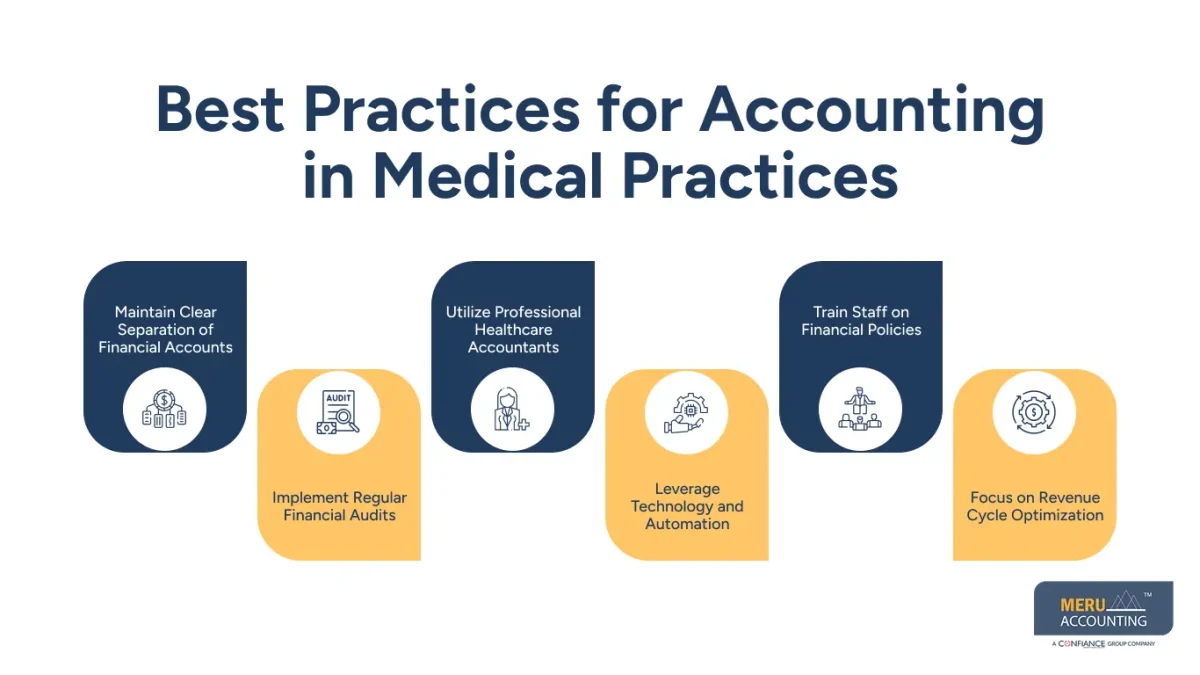
Leverage Technology and Automation
Investing in integrated accounting and practice management systems reduces manual errors, streamlines workflow, and enhances reporting capabilities.
Train Staff on Financial Policies
Ensuring that administrative and clinical staff understand billing procedures, insurance processes, and compliance requirements minimizes costly mistakes.
Focus on Revenue Cycle Optimization
Improving patient intake procedures, insurance verification, and timely claim submission can accelerate cash flow and reduce bad debt.
Meru Accounting: Expertise in Medical Practice Financial Management
Meru Accounting specializes in providing comprehensive accounting services tailored to medical practices. Their expertise in healthcare financial management ensures practices maintain compliance, optimize revenue cycles, and responsibly manage expenses. By leveraging advanced technology and deep industry knowledge, Meru Accounting delivers actionable financial insights and supports the growth and sustainability of medical practices through meticulous bookkeeping, tax planning, and financial reporting services designed specifically for healthcare providers.
Conclusion
Accounting for medical practices differs significantly from accounting for other types of businesses due to the unique financial environment, regulatory requirements, and operational intricacies involved in healthcare service delivery. Understanding these differences is vital for medical practice administrators and accountants to ensure accurate financial management, regulatory compliance, and overall business success. By implementing best practices, utilizing specialized tools, and partnering with knowledgeable financial professionals like Meru Accounting, medical practices can navigate the complexities of healthcare accounting and maintain a healthy financial standing in an ever-evolving industry.
FAQs
What are the unique challenges in accounting for medical practices?
Accounting for medical practices involves handling complex billing systems, insurance claims, patient payments, and compliance with healthcare regulations, which differ significantly from other businesses.
How does revenue cycle management impact accounting in medical practices?
Revenue cycle management in medical practices includes tracking patient services from appointment scheduling to final payment, requiring specialized accounting practices to manage claims, reimbursements, and adjustments.
Why is compliance important in accounting for medical practices?
Medical practices must comply with healthcare laws such as HIPAA and Medicare regulations, which affect how financial data is recorded, reported, and protected, making accounting more complex than in other sectors.
How do medical practice expenses differ from other businesses?
Medical practices incur specific expenses like medical supplies, equipment maintenance, and staff certifications, requiring tailored accounting methods to accurately track and allocate these costs.
Can standard accounting software be used for medical practices?
While some standard accounting software can be adapted, medical practices often require specialized software that integrates patient management, billing, and compliance features unique to healthcare accounting.


