




Introduction to Accounting for Medical Professionals
Accounting for medical professionals involves more than just keeping track of salaries and straightforward income. Medical professionals often have diversified income streams that include private practice earnings, consulting fees, royalties, investments, and other sources. Effective accounting for medical professionals needs to address the complexities of managing these various income streams, complying with tax regulations, and planning for financial growth and stability.
In this article, we will explore comprehensive accounting strategies and practices tailored specifically for medical practitioners who manage income beyond their salaried employment. By understanding the key financial principles and adopting best practices, medical professionals can optimize their financial health and maintain compliance with relevant laws.
Understanding Income Sources for Medical Professionals
Medical professionals often receive income from multiple channels beyond their regular employment salaries. Properly accounting for these sources is essential to ensure accurate financial reporting and tax compliance.
Primary Income Sources
- Employment Salary: The fixed income paid by hospitals, clinics, or healthcare institutions where the medical professional is employed.
- Private Practice Revenues: Income generated from direct patient care in privately owned or partnered practices.
- Consulting Fees: Earnings obtained from advising healthcare companies, pharmaceutical firms, or law firms.
Secondary and Passive Income Streams
- Royalties: Earnings from medical publications, patents, or licensing of medical devices and software.
- Investment Income: Returns from stocks, bonds, real estate, or medical startups.
- Speaking Engagements and Workshops: Fees received from industry conferences or training sessions.
Key Accounting Principles for Medical Professionals
Adhering to fundamental accounting principles helps medical professionals systematically manage and report their finances. Here are some essential considerations.
Accrual vs Cash Basis Accounting
Cash basis accounting records income and expenses when money is physically exchanged, suitable for simple practices. Accrual accounting, however, records income when it is earned and expenses when incurred, regardless of cash flow timing, offering a clearer financial picture for complex medical businesses.
Segmentation of Income and Expenses
Medical professionals should categorize income and expenses based on their source and nature. This includes segregating clinical practice income from investment income and distinguishing operational costs from personal expenses to streamline tax preparation and financial analysis.
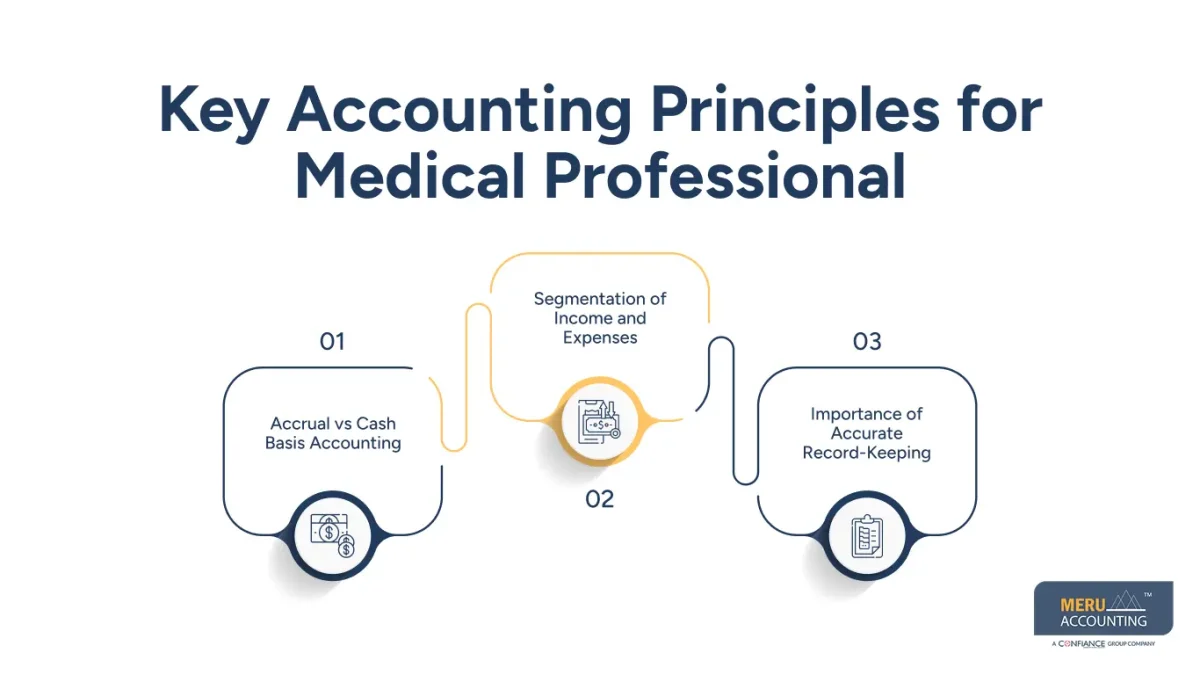
Importance of Accurate Record-Keeping
Maintaining detailed financial records reduces errors, ensures compliance with regulatory requirements, and provides data for better decision-making. Examples include invoices, receipts, bank statements, and contracts.
Tax Considerations for Medical Professionals with Diverse Income
Medical professionals face unique tax challenges due to their multi-source income. Understanding these considerations is vital for tax planning and minimizing liabilities.
Self-Employment Taxes
Income from private practices or consulting often subjects medical professionals to self-employment tax obligations, which encompass Social Security and Medicare taxes. Planning for these taxes is crucial to avoid surprises.
Deductions and Allowances
- Professional expenses like medical equipment, office rent, and subscription fees
- Continuing education and professional development costs
- Travel expenses related to business activities
- Home office deductions for practitioners who work remotely
Retirement and Tax-Advantaged Accounts
Contributions to retirement plans such as 401(k), SEP IRA, or Solo 401(k) can reduce taxable income and provide long-term financial security. Medical professionals should maximize these contributions where possible.
Best Practices for Managing Financial Records in Medical Careers
Medical professionals must adopt effective financial management techniques to handle their complex income streams efficiently.
Using Accounting Software
Modern accounting software tailored for healthcare professionals can automate bookkeeping, generate financial reports, and facilitate tax filing. Popular options include QuickBooks, Xero, and specialized platforms designed for healthcare.
Working with Professional Accountants
Collaboration with accountants experienced in medical accounting is beneficial. They provide insights into industry-specific strategies, compliance, and financial planning.
Regular Financial Reviews
Periodic evaluations of financial statements help identify trends, detect inaccuracies, and guide investment and spending decisions.
Expense Management for Medical Professionals
Proper expense tracking and management help optimize profitability and maintain economic health.
Identifying Allowable Business Expenses
Examples of deductible expenses include medical supplies, office leasing, staff salaries, malpractice insurance, and advertising.
Implementing Expense Control Measures
- Setting and adhering to budgets for different expense categories
- Regularly auditing expense records for accuracy
- Negotiating contracts with suppliers and service providers
- Leveraging group purchasing organizations for cost savings
Financial Planning and Investment Guidance for Medical Professionals
Medical professionals who manage income streams beyond salaries benefit from robust financial planning to secure their future and grow wealth.
Building a Diversified Investment Portfolio
Diversification reduces risk by spreading investments across various asset classes such as stocks, bonds, real estate, and private equity.
Planning for Long-Term Financial Goals
- Retirement savings and pension planning
- Funding children’s education
- Estate planning and wealth transfer
- Business expansion or practice acquisition
Insurance Considerations
Appropriate insurance policies such as disability insurance, malpractice insurance, and life insurance protect against financial risks.
Accounting Challenges Specific to Medical Practice Ownership
Owning a medical practice introduces additional accounting complexities including payroll management, revenue cycle management, and compliance with healthcare regulations.
Payroll and Staff Management
Accounting for employee salaries, benefits, taxes, and bonuses requires diligence and adherence to labor laws.
Revenue Cycle and Billing Accuracy
Efficient management of patient billing, insurance claims, and collections is essential to maintain cash flow.
Regulatory Compliance
Medical practices must comply with HIPAA, IRS regulations, and other laws impacting record security and financial reporting.
Case Study: Effective Accounting System Implementation in a Multi-Income Medical Practice
| Aspect | Before Implementation | After Implementation |
|---|---|---|
| Income Tracking | Manual spreadsheets with frequent errors | Automated software integration tracking all income streams |
| Expense Management | Lack of detail, missed deductions | Detailed, categorized expenses enabling tax optimization |
| Tax Filing | Late and inaccurate filings, penalties incurred | Timely and accurate filings with tax savings |
| Financial Reporting | Infrequent, generalized reports | Monthly detailed reports tailored for medical practice insights |
The Role of Meru Accounting in Supporting Medical Professionals
Meru Accounting specializes in providing expert accounting services tailored to medical professionals who navigate income beyond standard salaries. Their team understands the unique challenges and opportunities within the healthcare sector, offering customized bookkeeping, tax planning, and financial advisory services. Leveraging technology and industry expertise, Meru Accounting helps medical practitioners optimize their financial management and achieve long-term growth and compliance.
Conclusion
Accounting for medical professionals who manage income beyond salaries requires an in-depth understanding of diverse revenue streams, proper tax strategies, accurate record-keeping, and comprehensive financial planning. By employing best accounting practices, utilizing tailored software and professional advice, medical professionals can ensure their financial health, compliance, and readiness for future opportunities. Strategic financial management empowers healthcare providers to focus on their primary mission—delivering quality care—while maintaining robust and sustainable finances.
FAQs
What types of income beyond salaries do medical professionals typically need to account for?
Medical professionals may need to account for income such as consultation fees, bonuses, investment returns, rental income from medical offices, and revenue from private practices.
How can medical professionals effectively track multiple income streams?
Using specialized accounting software designed for healthcare professionals or working with an accountant experienced in medical finances can help track and manage multiple income streams accurately.
Are there specific tax considerations for medical professionals managing income beyond salaries?
Yes, medical professionals must be aware of self-employment taxes, possible deductions related to their practice, and the need to report income from all sources to remain compliant with tax regulations.
What accounting methods are suitable for medical professionals with diverse income sources?
Accrual accounting is often recommended as it records income and expenses when they are incurred, providing a clearer financial picture for professionals managing various income streams.
Can hiring a professional accountant benefit medical professionals managing income beyond salaries?
Yes, a professional accountant can help ensure accurate income reporting, optimize tax benefits, maintain compliance, and provide strategic financial planning tailored to medical professionals.


