




In the complex environment of law practices operating across multiple states, maintaining a secure and compliant attorney trust account is crucial. These accounts are designed to hold client funds separately from the law firm’s operational funds, ensuring transparency and compliance with state bar regulations.
For multi-state law practices, the intricacies of managing these accounts multiply, making it essential to adopt efficient systems like trust accounting software for attorneys.
Proper management of an attorney trust account not only ensures compliance but also builds client trust and reduces the risk of penalties.
In this blog, we will explore the nuances of managing these accounts for multi-state law practices, the benefits of using specialized software, and best practices to streamline your trust account management.
What You Will Learn From This Blog
- Understanding the role and importance of an attorney trust account in multi-state law practices.
- Key regulations and compliance requirements across different states.
- Common challenges law firms face while managing trust accounts.
- How trust accounting software for attorneys can simplify operations.
- Features to consider while choosing attorney trust accounting software.
- Best practices for maintaining and monitoring attorney trust accounts.
- Tips to select the right software to manage multi-state compliance efficiently.
By the end of this blog, law firms will have a clear roadmap for managing multi-state trust accounts with accuracy and compliance.
Introduction to Attorney Trust Accounts in Multi-State Law Practices
An attorney trust account is a specialized bank account used to hold funds that belong to clients or third parties. These funds must be kept completely separate from the law firm’s operational money to ensure transparency and compliance with legal requirements.
The primary purpose of such accounts is to protect client funds, making sure they are available for their intended use while preventing any misuse by the law firm.
For multi-state law practices, managing these accounts can be particularly complex. Each state has its own rules and regulations regarding the handling of client funds, and law firms operating across multiple jurisdictions must navigate these differences carefully to avoid penalties or disciplinary actions.
Maintaining a compliant lawyer trust account is not only a legal requirement but also reinforces client trust. Clients are more confident when they know their money is secure and handled responsibly.
An effective trust account management system also integrates smoothly with a law firm’s billing, invoicing, and accounting processes, reducing errors and improving operational efficiency. In today’s environment, technology plays a crucial role in managing these accounts.
Trust accounting software for attorneys simplifies record-keeping, reporting, and compliance management, making it far easier for law firms with multi-state operations to maintain accurate and reliable trust accounts.
Key Regulations for Attorney Trust Accounts in Multiple States
State Bar Rules
Each state’s bar association defines rules for attorney trust accounts, including how funds are deposited, tracked, and disbursed. Following these rules is essential to maintain credibility and avoid violations.
Deposit Requirements
Most states mandate that client funds be deposited immediately into an lawyer trust account and kept separate from law firm funds. Prompt deposits ensure funds are always protected and properly accounted for.
Interest Handling
Some states require interest earned in a trust account to be reported and, in certain cases, directed to charitable foundations or specific programs. Proper handling of interest demonstrates transparency and adherence to legal standards.
Record-Keeping Obligations
Law firms must maintain detailed ledgers for each client, documenting deposits, withdrawals, and balances. Consistent record-keeping helps quickly resolve disputes and simplifies audits.
Audits and Examinations
Regular audits are often required to ensure the attorney’s trust account complies with state rules. Being prepared for audits prevents unexpected penalties and reinforces trustworthiness.
Penalties for Non-Compliance
Violating trust account regulations can result in severe consequences, including fines, suspension, or disbarment for attorneys. Compliance safeguards both the law firm’s reputation and its ability to practice law.
Fund Segregation Rules
Some states have specific rules on how different types of client funds must be segregated in the attorney trust account. Segregating funds properly ensures transparency and avoids mixing with operating accounts.
Reporting and Disclosure Requirements
Certain states require periodic reporting to clients or state authorities about the status of funds in the lawyer trust account. Meeting these requirements maintains trust and avoids regulatory issues.
Common Challenges in Managing Attorney Trust Accounts
Multi-State Compliance
Law firms operating in multiple states face the challenge of complying with different rules and regulations for trust accounts. Navigating these varying requirements can be confusing and time-consuming without proper systems in place.
Manual Record-Keeping Errors
Relying on spreadsheets or manual ledgers increases the likelihood of mistakes, which can result in regulatory penalties. Even small errors can lead to major compliance issues and client distrust.
Client Fund Tracking
Tracking multiple client funds across various matters is challenging, especially when dealing with numerous transactions. Without clear tracking, funds may be misallocated or overlooked.
Reconciling Accounts
Frequent reconciliations are necessary to ensure the attorney’s trust account balance matches client records and bank statements. Missing reconciliations can lead to discrepancies and potential audit problems.
Time-Consuming Processes
Manual management of trust accounts is labor-intensive, consuming significant time and resources from law firm staff. This reduces the time available for serving clients and managing other essential tasks.
Risk of Misappropriation
Without proper tracking and reporting, there is a risk of accidental or intentional misappropriation of client funds. Strong systems and checks are essential to protect client money and maintain trust.
Benefits of Using Trust Accounting Software for Attorneys
Automation of Transactions
Trust accounting software for attorneys automates deposits, withdrawals, and transfers, reducing human errors. This ensures transactions are processed quickly and consistently.
Improved Accuracy
Automated systems ensure all transactions are properly recorded in the attorney trust account ledger. Accurate records help prevent compliance issues and errors.
Compliance Assurance
Software includes features that align with state regulations, helping law firms remain compliant across jurisdictions. This reduces the risk of penalties during audits.
Real-Time Reporting
Law firms can generate reports of client funds, balances, and transactions, enhancing transparency. Immediate access to information allows better decision-making.
Simplified Audits
With records digitally stored and organized, audits are quicker and less stressful. Auditors can verify transactions easily without manual intervention.
Cost Efficiency
Reducing manual labor and errors saves law firms money while improving efficiency. It also frees staff to focus on client services.
Features to Look for in Attorney Trust Accounting Software
Multi-State Compliance Tools
The software should support different state bar rules and provide alerts for compliance updates. This ensures your practice stays compliant in all jurisdictions.
Client Fund Tracking
Tracking each client’s funds ensures transparency and accuracy in the attorney trust account. It also helps resolve disputes quickly if they arise.
Automated Reconciliation
Built-in reconciliation features help match the bank statement with internal records easily. Reconciliations are faster and reduce human error.
Reporting and Analytics
Generate statements and analytics to monitor account health for clients and internal purposes. These insights make financial management more efficient.
Security Features
Robust protocols, including encryption and access controls, protect sensitive client data. Strong security also builds client confidence in your practice.
Integration Capabilities
Software should integrate with billing, case management, and accounting systems. This eliminates duplicate work and ensures consistency across platforms.
Best Practices for Maintaining Attorney Trust Accounts
- Maintain separate accounts for states with differing regulations to simplify compliance.
- Regularly reconcile bank statements with the attorney trust account ledger to catch discrepancies early.
- Every deposit, withdrawal, or transfer must be documented and linked to a specific client.
- Ensure staff handling trust accounts understand regulatory requirements and follow proper procedures.
- Conduct periodic internal reviews of the attorney trust account to identify issues and maintain compliance.
- Implement trust accounting software for attorneys to reduce errors and streamline management tasks.
How Trust Accounting Software for Attorneys Simplifies Multi-State Compliance
Compliance Templates
Prebuilt templates in software align with each state’s trust account regulations. Templates save time and ensure consistency across accounts.
Alerts and Reminders
Automated notifications for deadlines, reconciliations, and updates reduce the risk of non-compliance. Timely alerts prevent missed obligations.
Audit Trail
Detailed audit trails document every action in the attorney trust account, simplifying inspections. They provide a clear record of all transactions for accountability.
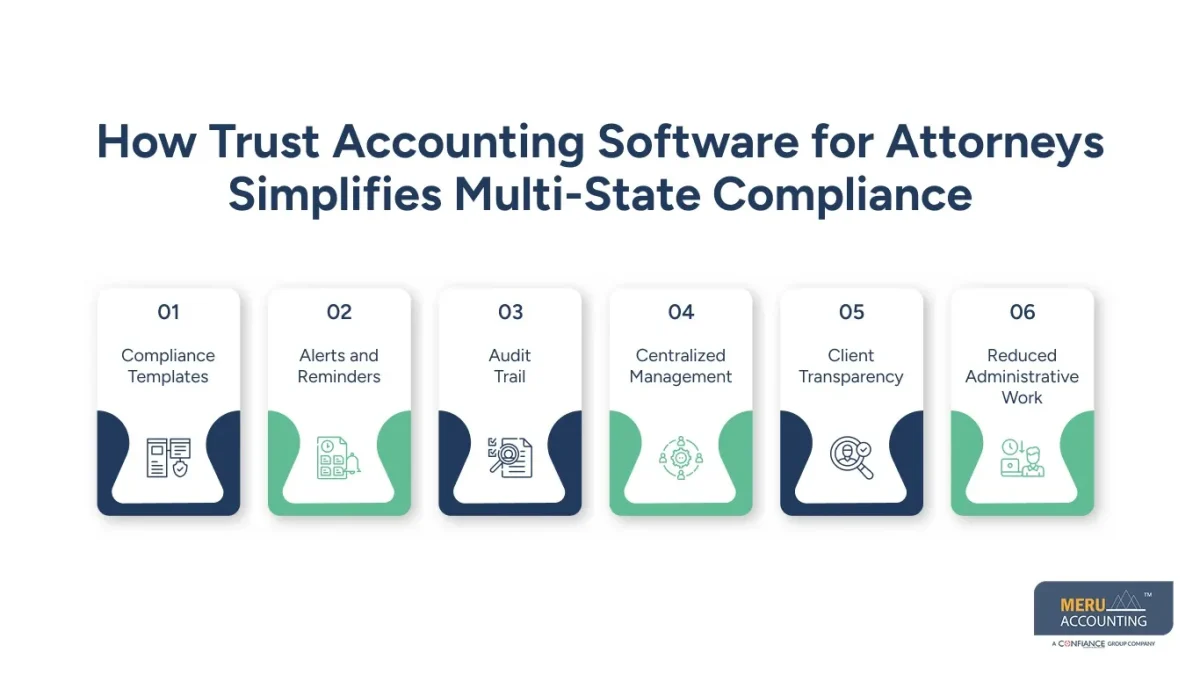
Centralized Management
Software allows managing multiple accounts across states from a single platform. Centralization reduces confusion and administrative effort.
Client Transparency
Generate client statements quickly and accurately, enhancing trust. Clients appreciate clear and timely reporting of their funds.
Reduced Administrative Work
Automating routine tasks frees up time for attorneys to focus on legal work. Less administrative work also reduces human error.
Tips for Selecting the Right Trust Accounting Software for Your Law Practice
Evaluate Compliance Features
Check if the software supports compliance for all states where your law practice operates. This prevents regulatory issues in multi-state practices.
Assess Ease of Use
User-friendly interfaces reduce training time and minimize errors. Easy navigation ensures all staff can use the software efficiently.
Check Reporting Capabilities
Ensure the software can generate detailed client and account reports efficiently. Reliable reporting supports audits and internal reviews.
Security Measures
Verify encryption, user permissions, and secure data storage to protect client funds. Security safeguards sensitive client and firm information.
Integration with Existing Systems
Choose software that integrates well with billing, case management, and accounting tools. Integration reduces duplicate data entry and improves accuracy.
Cost and Support
Consider pricing, customer support, and update frequency for long-term reliability. Good support ensures smooth operation and quick resolution of issues.
Meru Accounting’s Attorney Trust Account Services
Expertise in Multi-State Practices
Meru Accounting specializes in helping law firms manage attorney trust accounts across multiple states, ensuring full compliance. Our team has extensive knowledge of differing state regulations to guide your practice effectively.
Trust Accounting Software Implementation
We assist law practices in selecting and implementing trust accounting software for attorneys tailored to their needs. This ensures a smooth transition and accurate management of client funds.
Ongoing Support
Meru Accounting provides continuous support to monitor, reconcile, and maintain trust accounts efficiently. We also address any questions or issues promptly to keep your accounts in order.
Regulatory Updates
Our team keeps law firms informed about state-specific changes and regulatory updates affecting trust accounts. Staying updated prevents compliance risks and potential penalties.
Custom Reporting
We generate accurate client and internal reports, simplifying audits and reviews. Detailed reports also provide clear insights into fund allocation and account activity.
Key Takeaways
- Attorney trust accounts are essential for managing client funds separately and securely.
- Multi-state law practices face unique challenges in compliance, record-keeping, and reporting.
- Common issues include tracking client funds, reconciling accounts, and meeting regulatory requirements.
- Trust accounting software for attorneys simplifies management, improves accuracy, and ensures compliance.
- Key features include multi-state compliance, client fund tracking, automated reconciliation, reporting, and security.
- Meru Accounting provides specialized services to manage trust accounts efficiently for law firms operating in multiple states.
FAQs
An attorney trust account is a bank account used to hold client funds separately from the law firm’s money. Multi-state law practices must follow each state’s rules to ensure compliance.
Each state has its own regulations for deposits, withdrawals, record-keeping, and audits. Understanding these rules is critical for law firms with clients in multiple states.
Yes, trust accounting software for attorneys can track client funds, generate reports, and ensure compliance with the rules of all states where the law firm operates.
Reconciliation should be done at least monthly, or more frequently if there are many transactions, to ensure accuracy and compliance with each state’s rules.
Look for software that supports multi-state compliance, tracks client funds, provides automated reconciliations, generates detailed reports, and offers strong security features.


