

An attorney trust account is one of the most important safeguards in legal practice. It keeps client money safe, separate, and properly tracked. When managed the right way, it protects clients, supports ethical duties, and helps law firms avoid serious accounting errors.
When handled poorly, it can lead to audits, penalties, and even license suspension. This blog explains how an attorney trust account works, why it matters, and how law firms can manage it correctly without breaking rules.
You will also learn how online trust accounting for attorneys can reduce mistakes and improve compliance when used the right way. Every law firm handles client funds at some point. Retainers, settlements, and filing fees must be managed with care.
An attorney trust account exists to make sure this money is never mixed with firm funds. Clear rules govern how these accounts must be handled, and mistakes can be costly. With proper systems and online trust accounting for attorneys, firms can stay compliant and protect their clients.
What You Will Learn From This Blog
- How an attorney trust account keeps client funds safe and separate.
- How ethical and legal rules govern trust account management.
- Common mistakes that can lead to compliance violations.
- How online trust accounting for attorneys reduces manual errors.
- Best practices to manage trust accounts accurately.
- Key features to look for in online trust accounting solutions.
- Steps to implement online trust accounting in your law firm.
- How proper trust account management builds client trust and prevents penalties.
What Is An Attorney Trust Account And Why It Matters For Client Protection
An attorney trust account is a special bank account used exclusively for holding client funds, and these funds must always remain separate from the law firm’s own money to prevent misuse or confusion.
Keeping client money separate protects clients if the firm faces disputes, debts, or unexpected financial issues. It ensures that client funds are always available for their intended purpose and cannot be accidentally used for firm expenses.
Funds commonly placed into an attorney trust account include retainers, settlements, and advance fees.
The law requires that these funds can only be withdrawn when they are earned by the firm or when expenses are properly paid on behalf of the client. Mishandling these funds, even accidentally, can lead to serious compliance violations, penalties, and damage to the firm’s reputation.
Proper management of an attorney trust account also helps build client confidence. When clients see that their money is handled ethically, transparently, and according to legal requirements, it strengthens trust in the law firm.
Maintaining accurate records and following all trust account rules ensures that client funds are protected while demonstrating the firm’s professionalism and commitment to ethical standards.
Ethical And Legal Rules Governing Attorney Trust Accounts
State Bar Regulations
Each state has clear rules on how an attorney trust account must be maintained. Following these regulations helps law firms stay compliant and avoid penalties.
Recordkeeping Requirements
Firms must keep detailed records of every transaction involving client funds. Accurate records make it easier to track funds and resolve any client questions quickly.
No Commingling Rule
Mixing firm money with client money is strictly prohibited. This separation protects client funds and prevents ethical violations that could harm the firm.
Regular Reconciliation
Monthly reconciliation is required to confirm balances are accurate. Performing regular checks ensures discrepancies are caught and corrected promptly.
Audit Readiness
Well-kept records make audits less stressful and easier to pass. Being prepared for audits also builds trust with clients and regulatory authorities.
Proper Handling of Client Funds
All client funds must be deposited promptly and disbursed only for authorized purposes. Following this practice ensures funds are used correctly and reduces the risk of errors.
Common Attorney Trust Account Mistakes That Lead To Compliance Violations
Poor Record Updates
Late or missing entries often cause balance errors. Inaccurate records can create confusion and increase the risk of compliance issues.
Accidental Overdrafts
Incorrect withdrawals can create negative balances in an attorney trust account. Overdrafts may lead to penalties and damage the firm’s credibility.
Using Trust Funds For Firm Costs
Even temporary use of client funds can trigger violations. Misusing funds violates ethical rules and can result in serious legal consequences.
Infrequent Reconciliation
Skipping monthly checks increases the chance of hidden errors. Regular reconciliation ensures all client funds are accounted for and discrepancies are caught early.
Manual Tracking Issues
Spreadsheets and paper logs often lead to mistakes that online trust accounting for attorneys can reduce. Manual methods also make audits more complicated and time-consuming.
How Attorney Trust Accounts Protect Client Funds And Build Trust
Clear Ownership Of Funds
Clients can be confident that their money is never being used improperly, as an attorney trust account ensures all funds are strictly separated from the firm’s personal or operational finances, giving full clarity on ownership.
Accurate Tracking Of Balances
Every client’s balance is carefully tracked within the attorney trust account, allowing the firm to maintain precise financial records that prevent errors, discrepancies, and confusion over the allocation of funds.
Faster Issue Resolution
Any errors or discrepancies can be identified quickly and corrected before they cause serious financial or ethical problems, which protects both the client’s interests and the law firm’s professional reputation.
Strong Ethical Standing
By managing client funds in accordance with ethical guidelines, law firms demonstrate a strong commitment to professional responsibility, which enhances their credibility with clients, peers, and regulatory authorities.
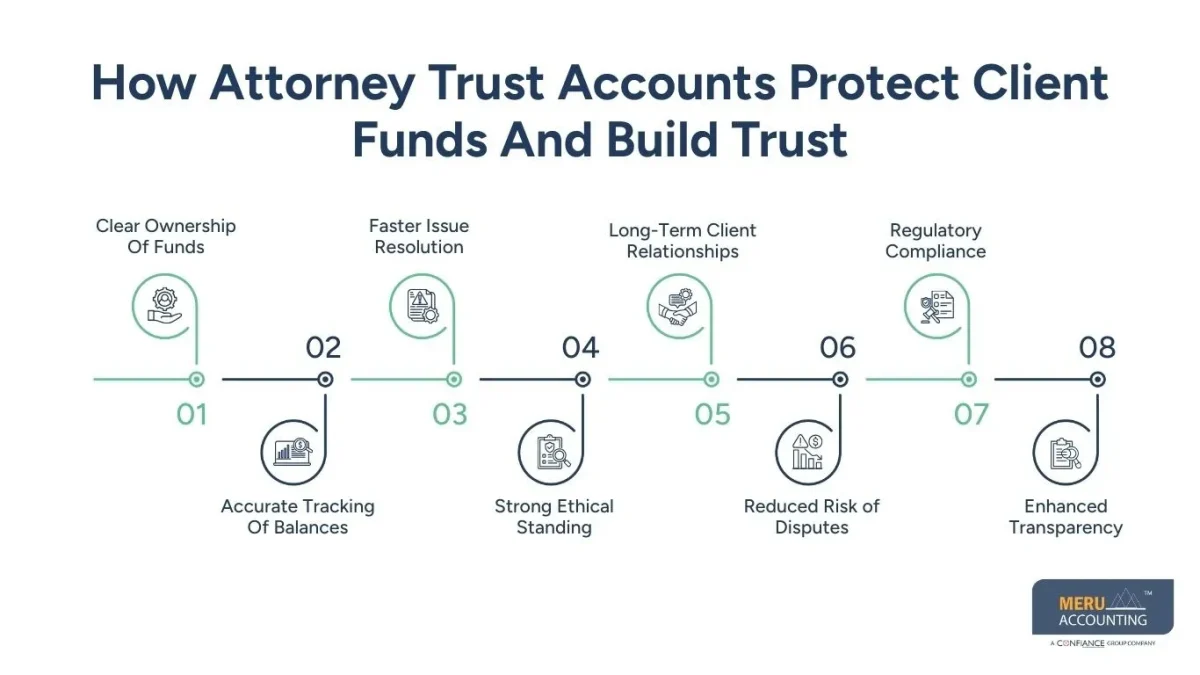
Long-Term Client Relationships
Proper financial handling and consistent transparency foster lasting trust with clients, encouraging repeat business, positive referrals, and a solid professional relationship built on confidence.
Reduced Risk of Disputes
Effective trust account management minimizes misunderstandings or conflicts regarding client funds, reducing the likelihood of disputes and ensuring smoother, more professional interactions with clients.
Regulatory Compliance
Strict adherence to state and federal rules governing attorney trust accounts ensures full regulatory compliance, helping the firm avoid fines, audits, or disciplinary actions that could harm its reputation.
Enhanced Transparency
Clients can clearly see how every dollar of their funds is handled, creating full transparency in transactions and giving them reassurance that their money is being used only for its intended purpose.
Best Practices For Managing An Attorney Trust Account Without Errors
Written Trust Account Policies
Clear internal policies guide staff to follow proper trust account procedures. Documented rules ensure consistency and prevent mistakes or unauthorized fund usage.
Separate Roles For Handling Funds
Dividing responsibilities among staff reduces the risks of mistakes or fund misuse. Assigning duties clearly improves accountability and strengthens internal financial controls.
Monthly Reconciliation Process
Regular monthly reconciliations ensure that all balances remain accurate and correct. Timely reconciliation helps identify errors before they escalate into compliance issues.
Ongoing Staff Training
Staff handling funds must receive consistent training on trust account rules. Regular training updates help employees remain compliant with changing regulations.
Use Of Reliable Systems
Reliable tools for online trust accounting for attorneys improve transaction accuracy. Automation reduces human errors and ensures accurate, audit-ready records consistently.
How Online Trust Accounting For Attorneys Reduces Risk And Human Error
Automated Transaction Records
Automation ensures transactions are recorded accurately without missing or duplicate entries. This reduces manual workload and improves accuracy across all client accounts.
Built-In Compliance Checks
Systems with compliance checks prevent errors and potential rule violations automatically. They alert staff immediately to transactions that may violate trust regulations.
Real-Time Balance Tracking
Law firms can monitor accurate client balances at any moment efficiently. Instant visibility allows firms to detect discrepancies before they become problems.
Reduced Manual Math
Less manual calculation reduces the chances of errors and discrepancies significantly. Automation ensures calculations are consistent and minimizes errors caused by fatigue.
Secure Data Storage
Online trust accounting for attorneys ensures data is stored safely securely. Encrypted storage protects sensitive client information from unauthorized access.
Key Features To Look For In Online Trust Accounting For Attorneys
Client-Level Ledger Tracking
Each client’s funds should be tracked separately to prevent any commingling. This provides full transparency and simplifies account reconciliation and reporting.
Automatic Reconciliation Tools
Automated tools help maintain accurate balances while saving staff valuable time. They quickly identify differences between ledgers and bank balances for correction.
Audit-Ready Reports
Reports should comply fully with attorney trust account audit requirements professionally. Ready-to-use reports reduce time spent preparing documents for regulatory audits.
Controlled User Access
Only authorized personnel should access funds to maintain trust account security. Limiting access protects funds and reduces the risk of internal fraud or errors.
Clear Transaction History
Every transaction must be clearly visible for accountability and future review. Detailed history improves transparency and helps resolve client questions quickly.
How Proper Attorney Trust Account Management Prevents Audits And Penalties
Accurate Records At All Times
Maintaining precise records reduces audit risks and potential compliance penalties. Up-to-date records also allow easy verification of all client account activity.
Proof Of Ethical Handling
Ethical recordkeeping demonstrates compliance with trust account rules effectively. Documented proof protects the firm during audits or regulatory reviews.
Early Error Detection
Early detection of errors prevents serious financial or ethical problems quickly. Immediate correction helps maintain both client trust and firm credibility.
Lower Risk Of Client Disputes
Clear and accurate records reduce disputes with clients over fund usage. Transparency reassures clients that their funds are managed responsibly and fairly.
Steps To Implement Online Trust Accounting For Attorneys In Your Law Firm
Review Current Trust Processes
Analyze existing trust account workflows to identify gaps or inefficiencies accurately. Understanding current processes helps plan for smooth and successful system implementation.
Choose A Compliant Software
Select a reliable system designed specifically for online trust accounting. Software should meet all regulatory requirements and support accurate recordkeeping.
Migrate Data Carefully
Ensure all historical balances and transaction records transfer correctly and completely. Double-checking data accuracy prevents errors during the transition process.
Train Staff Properly
Provide thorough training so staff can use the new system efficiently. Staff confidence improves accuracy and reduces mistakes when handling client funds.
Monitor And Adjust Regularly
Review reports regularly to identify issues and improve processes continuously. Ongoing monitoring ensures the system functions correctly and meets compliance standards.
How Meru Accounting Supports Law Firms With Trust Accounting
Legal Accounting Expertise
Meru Accounting has extensive experience managing attorney trust accounts professionally. Our knowledge ensures firms follow rules and avoid costly compliance mistakes.
Customized Trust Solutions
Services are tailored according to each law firm’s size and needs. Solutions are designed to simplify trust account management and reduce risks.
Support For Software Setup
At Meru Accounting, we assist with implementing online trust accounting for attorneys effectively. Proper setup ensures accurate recordkeeping and smooth software operation.
Ongoing Compliance Support
Regular reviews help maintain compliance and prevent mistakes or penalties. Continuous guidance keeps the firm aligned with changing regulations over time.
Clear And Simple Reporting
Meru Accounting provides reports that are easy to read and understand. Reports allow firms to review client accounts quickly and ensure accuracy.
Key Takeaways
- An attorney trust account keeps client funds safe and properly separated.
- Following trust account rules carefully prevents small mistakes from becoming serious issues.
- Manual tracking systems increase the risk of human error and discrepancies.
- Using online trust accounting for attorneys improves accuracy, control, and transparency.
- Professional guidance and expert support strengthen compliance and build client confidence.
FAQs
An attorney trust account keeps client funds separate from the firm’s money. Clients are protected and lawyers can follow ethical and legal rules.
Online trust accounting for attorneys uses software to track client funds automatically. Manual errors are reduced, and trust account records stay accurate.
Mixing client and firm money, late reconciliation, and wrong withdrawals are common mistakes. These errors often lead to compliance violations and penalties.
Accurate tracking and regular reconciliation keep an attorney trust account compliant. Using online trust accounting for attorneys lowers audit risks and penalties.
Trust accounts should be reconciled at least once a month to avoid errors. Monthly checks ensure balances match client funds accurately.


