

Meru Accounting

How to Manage Law Firm Trust Accounting: Best Practices & Tips

Contents
Want to learn more?
Subscribe for business tips, tax updates, financial fundamental and more


    How to Manage Law Firm Trust Accounting: Best Practices & Tips

    Managing finances is an essential part of any law firm. One of the most critical areas is law firm trust accounting, which ensures that client funds are handled accurately and ethically. Proper trust accounting not only protects your clients but also keeps your firm compliant with legal regulations.

    In this blog, we will guide you through everything you need to know about law firm trust accounting, from its principles to best practices, tips for compliance, and how technology like trust accounting software for law firms can make the process smoother.

    What You Will Learn From This Blog

    • Understanding law firm trust accounting and its key principles.

    • The importance of accurate accounting for client funds.

    • Best practices for managing trust accounts effectively.

    • Tips to stay compliant and avoid penalties.

    • How to integrate trust accounting with billing and refunds.

    • How professional services like Meru Accounting can help.

    What Is Law Firm Trust Accounting?

    Law firm trust accounting is the process of managing client funds separately from a firm’s operating accounts. These funds typically include retainers, settlements, or advance payments and must be handled with strict care to ensure ethical and legal compliance.

    A key aspect of trust accounting is client fund segregation, which means client money should never be mixed with the law firm’s business funds. Keeping accounts separate helps prevent misuse and maintains client confidence in the firm’s financial practices.

    Trust accounting is also governed by legal regulations. Non-compliance can result in penalties, license suspension, or other legal consequences. To manage funds effectively, law firms use different types of accounts, such as IOLTA accounts (Interest on Lawyers’ Trust Accounts), general client trust accounts, and escrow accounts for real estate or specific transactions.

    The primary purpose of law firm trust accounting is to protect client funds while maintaining accurate and clear records. This ensures transparency, simplifies audits, and helps law firms demonstrate compliance during regulatory reviews.

    Importance Of Accurate Trust Accounting In Legal Practice

    Protecting Client Funds

    Accurate trust accounting ensures that clients’ money is used only for its intended purpose. It also prevents accidental misuse or misallocation of funds, keeping client relationships strong.

    Maintaining Reputation

    Errors in trust accounting can damage a firm’s reputation and erode client trust. Maintaining accurate records demonstrates professionalism and reliability to both clients and regulators.

    Regulatory Compliance

    Law firms are required to follow strict accounting rules. Proper trust accounting helps avoid fines, sanctions, or legal issues that could affect the firm’s standing.

    Simplifying Audits

    Well-organized law firm trust accounting records make audits faster and less stressful. Clear documentation ensures that auditors can easily verify transactions without extensive back-and-forth.

    Financial Clarity

    Accurate records provide a clear view of the firm’s financial health, helping lawyers make informed decisions. It also allows firms to manage cash flow effectively and plan for future growth.

    Key Principles Of Law Firm Trust Accounting

    Separate Accounts

    Always maintain separate accounts for client funds and firm funds to avoid confusion. This separation helps prevent accidental mixing and protects the firm from legal issues.

    Accurate Record-Keeping

    Track all deposits, withdrawals, and transactions with precision, as required in law firm trust accounting. Detailed records make it easier to monitor client balances and respond to any inquiries.

    Regular Reconciliation

    Reconcile accounts regularly to catch errors early. Frequent reconciliation ensures that discrepancies are identified and resolved before they become bigger problems.

    Clear Documentation

    Maintain supporting documents such as invoices, retainer agreements, and receipts for all transactions. Proper documentation also provides proof of compliance during audits.

    Ethical Use Of Funds

    Client funds should only be used for their intended purpose, never for the firm’s operational expenses. Following ethical standards builds trust with clients and safeguards the firm’s reputation.

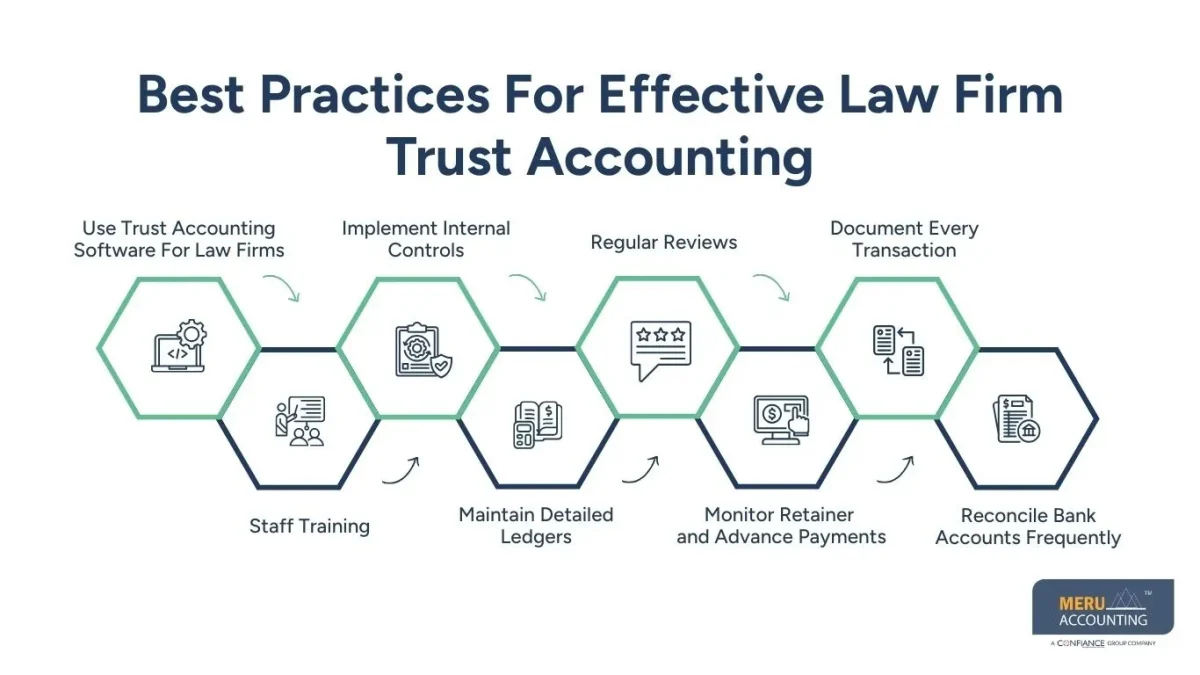
    Best Practices For Effective Law Firm Trust Accounting

    Use Trust Accounting Software For Law Firms

    Adopting trust accounting software for law firms can automate calculations, reduce errors, and provide clear reports. It also helps maintain real-time visibility of client balances, making law firm trust accounting more efficient.

    Staff Training

    Train staff on trust accounting rules, procedures, and trust accounting software for law firms to ensure accuracy. Well-trained staff are less likely to make mistakes and more confident in handling client funds.

    Implement Internal Controls

    Set up approval workflows and access restrictions to prevent unauthorized transactions, a recommended practice in law firm trust accounting. Internal controls also help detect suspicious activities early.

    Maintain Detailed Ledgers

    Keep individual ledgers for each client to track their funds accurately. Detailed ledgers simplify reconciliation and reporting for audits.
    law firm trust accounting

    Regular Reviews

    Conduct periodic internal reviews to ensure compliance and detect discrepancies early. Reviews also allow the firm to improve processes over time.

    Monitor Retainer and Advance Payments

    Regularly track client retainers and advance payments to ensure funds are applied correctly. This prevents disputes and ensures transparency with clients.

    Document Every Transaction

    Record all deposits, withdrawals, and transfers with proper supporting documents. Clear documentation reduces errors and simplifies audits.

    Reconcile Bank Accounts Frequently

    Perform reconciliations for trust accounts at least monthly to identify mistakes or discrepancies quickly. Frequent checks reduce the risk of errors accumulating over time.

    Tips For Ensuring Compliance And Avoiding Penalties

    Know State Regulations

    Each jurisdiction has specific trust accounting rules. Staying informed ensures your firm follows local laws and avoids costly violations.

    Reconcile Monthly

    Monthly reconciliations help identify and correct errors promptly. Regular reconciliation also provides a clear picture of client fund balances.

    Maintain Backups

    Store digital and physical copies of records to avoid loss of critical information. Backups protect the firm in case of technical failures or audits.

    Avoid Personal Use

    Never use client funds for personal or firm expenses. Following this rule is essential for ethical compliance and maintaining client trust.

    Seek Professional Help

    If unsure about compliance, consult accounting professionals experienced in law firm trust accounting. Expert guidance can prevent mistakes and ensure all regulations are met.

    Keep Detailed Transaction Logs

    Maintain a record of every transaction, including deposits, withdrawals, and transfers. Detailed logs simplify audits and improve transparency.

    Implement Internal Checks

    Introduce checks and approval workflows for large transactions. Internal checks reduce the risk of errors or unauthorized use of client funds.

    Regular Staff Updates

    Provide ongoing training and updates to staff about any changes in regulations or internal policies. Well-informed staff helps maintain consistent compliance.

    Integrating Law Firm Trust Accounting With Billing And Invoicing

    Sync With Billing Systems

    Integrate trust accounts with billing systems to accurately track earned and unearned fees. This helps avoid errors and ensures client funds are applied correctly.

    Automate Invoices

    Use software to automate client billing, linking invoices directly to trust account transactions. Automation saves time and reduces manual mistakes in record-keeping.

    Track Retainers

    Monitor retainer funds to ensure they are applied correctly to invoices. Proper tracking prevents disputes and ensures clients are billed accurately.

    Separate Earned And Unearned Fees

    Clearly distinguish between funds held in trust and funds earned by the firm. This provides transparency for clients and simplifies financial reporting.

    Regular Reporting

    Generate reports regularly to provide transparency for clients and internal management. Regular reporting also helps identify any discrepancies early.

    How To Handle Client Refunds And Advance Payments

    Timely Refunds

    Process refunds promptly to maintain client trust. Quick refunds also prevent misunderstandings or complaints from clients.

    Accurate Records

    Record every refund in the client ledger and bank account. Accurate documentation ensures all transactions can be verified during audits.

    Clear Policies

    Set clear policies for advance payments and refunds to avoid disputes. Written policies provide clarity for both clients and staff.

    Reconcile Refunds

    Ensure that all refunds are reflected correctly in law firm trust accounting records. Reconciliation confirms that client balances are accurate at all times.

    Communication With Clients

    Inform clients about fund usage and remaining balances regularly. Transparent communication strengthens client confidence in your firm’s financial practices.

    Monitor Advance Payments

    Keep track of all client advance payments separately from other funds. This ensures that advance payments are applied properly and prevent accidental misallocation.

    How Professional Accounting Services Can Support Law Firm Trust Accounting

    Expertise in Trust Accounting

    Professional accounting services provide specialized knowledge in law firm trust accounting, ensuring that all client funds are handled accurately and in compliance with regulations. This expertise helps minimize errors and maintain ethical standards.

    Customized Accounting Solutions

    Accounting professionals can offer tailored solutions for your firm, including ledger management, reconciliations, and setup of trust accounts. 

    Custom solutions fit the size and structure of your firm, making processes more efficient.

    Experienced and Trained Staff

    Experienced accountants are trained to manage client trust accounts efficiently and ethically. Our knowledge ensures accurate record-keeping and reduces the risk of compliance violations.

    Technology and Software Support

    Experts can help implement trust accounting software for law firms to automate tasks, track client funds, and generate clear reports. Technology integration simplifies daily operations and improves accuracy.

    Ongoing Monitoring and Support

    Professional services provide continuous monitoring and support to ensure your trust accounting is always accurate and audit-ready. Regular updates and checks help prevent discrepancies and maintain compliance.

    Key Takeaways

    1. Law firm trust accounting is crucial for managing client funds responsibly.


    2. Accurate record-keeping and regular reconciliations prevent errors and compliance issues.


    3. Internal controls and staff training improve trust account management.


    4. Trust accounting software for law firms can automate tasks and provide clear reports.


    5. Professional assistance from firms like Meru Accounting ensures compliance and peace of mind.

    FAQs

    Law firm trust accounting manages client funds separately from firm money. It protects clients and keeps the firm compliant with legal rules.

    Firms use separate trust accounts and record all transactions accurately. Trust accounting software for law firms can make this process easier.

    Mixing client and firm funds, late reconciliations, and poor record-keeping are common mistakes. These errors can cause penalties or audits.

    It automates record-keeping, tracks client balances, and generates accurate reports. This reduces errors and saves time for staff.

    Reconcile accounts regularly, keep clear ledgers, and follow state rules. Experts like Meru Accounting can help ensure compliance.