




Hiring the right financial expert is crucial for the success of your startup or growing company. When you hire financial analyst, you are not just adding a number cruncher to your team; you are investing in someone who can provide clarity on cash flow, budgeting, and financial strategy.
Choosing the right professional when you hire financial analyst can save your business time, resources, and potential financial mistakes.
A skilled financial analyst brings more than just accounting expertise—they offer insights that help your startup plan for growth, make informed decisions, and avoid costly financial errors.
By hiring a financial analyst, you ensure your business stays financially organized, prepared for challenges, and ready to seize opportunities with confidence.
What You Will Learn From This Blog
- Understand why startups need to hire financial analysts.
- Learn the key responsibilities when you hire financial analyst.
- Recognize signs that indicate your startup should hire a financial analyst.
- Get step-by-step guidance on how to hire financial analyst successfully.
- Explore options between full-time, part-time, or freelance financial analysts.
- Discover recruitment platforms to hire financial analyst efficiently.
- Avoid common mistakes when hiring a financial analyst.
- Learn how Meru Accounting can assist in hiring and managing financial analysts.
Why Startups Need to Hire Financial Analysts
Improved Financial Planning
When you hire financial analyst, they help your startup plan budgets, forecast revenues, and manage expenses accurately. This ensures your funds are used effectively.
Better Investment Decisions
When you hire a financial analyst, they can evaluate investment opportunities and suggest strategies that match your business goals. Their insights reduce the risk of poor investment choices.
Risk Management
Financial analysts identify risks in your financial operations and provide solutions to minimize potential losses. They help implement safeguards to protect your startup’s assets.
Performance Tracking
Hiring a financial analyst allows your business to track key financial metrics, ensuring you stay on the right growth path. This also helps in measuring the success of business strategies.
Strategic Insights
A financial analyst provides data-driven insights, helping you make informed business decisions. These insights can uncover hidden opportunities for growth and efficiency.
Support for Fundraising
If your startup plans to raise capital, a financial analyst prepares reports and projections that attract investors. They make your financial story clear and convincing to potential backers.
Key Responsibilities When You Hire a Financial Analyst
Financial Reporting
A financial analyst creates detailed reports on your company’s financial performance for internal and external use. They also help simplify complex financial data for easy understanding by the team.
Budgeting and Forecasting
They prepare budgets and predict future financial outcomes to guide business planning. This ensures your startup stays on track with spending and growth goals.
Data Analysis
Analyzing financial data helps your startup understand trends, costs, and opportunities. It also enables smarter decision-making based on factual insights.
Risk Assessment
Financial analysts assess potential financial risks and develop mitigation strategies. This helps your business avoid costly mistakes before they occur.
Investment Evaluation
They examine potential investments to determine profitability and alignment with business goals. Their guidance ensures you invest resources wisely for maximum returns.
Supporting Management Decisions
Financial analysts provide insights that help management make informed strategic choices. They also offer recommendations that improve overall business efficiency.
Signs Your Startup Should Hire Financial Analyst
Inconsistent Financial Records
Frequent errors in your accounts or financial confusion indicate it’s time to hire a financial analyst. Regular oversight ensures your financial data stays accurate and reliable.
Difficulty in Budgeting
If budgeting becomes a challenge and forecasts are inaccurate, a financial analyst can help. They provide clear guidance to allocate funds effectively and avoid overspending.
Rapid Business Growth
Startups expanding quickly need financial oversight to manage funds efficiently. A financial analyst helps scale your finances in line with your growth trajectory.
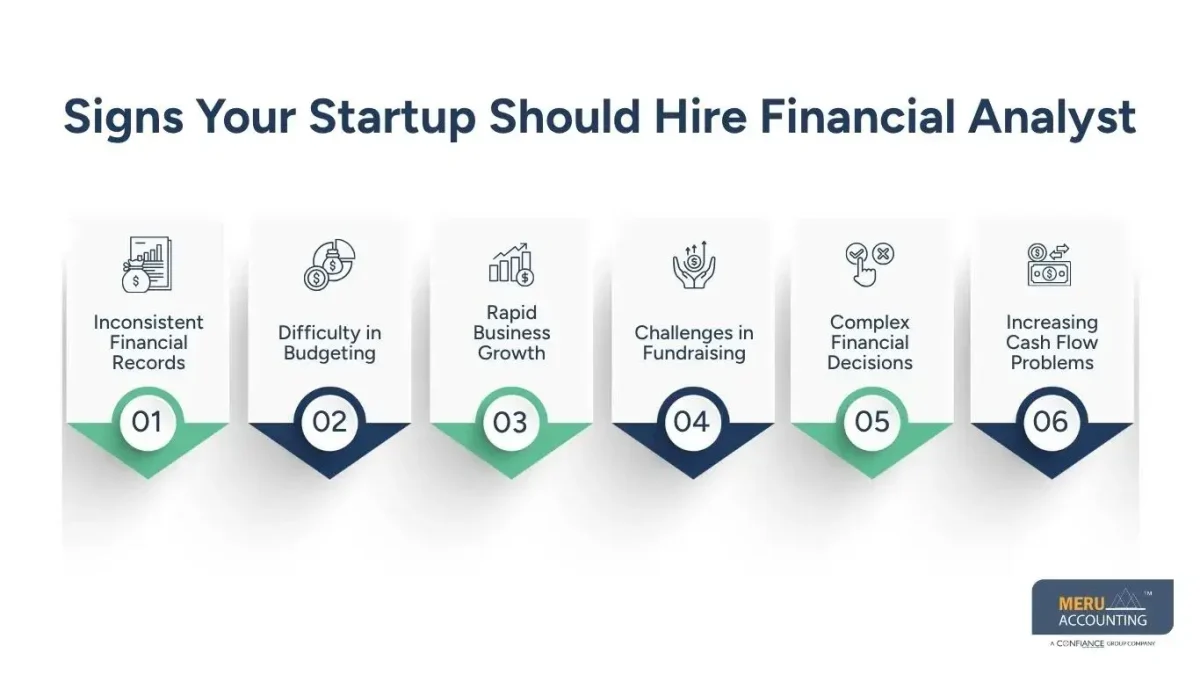
Challenges in Fundraising
Struggling to impress investors or secure funding may indicate the need for a financial analyst. They prepare precise financial reports that make your startup more attractive to investors.
Complex Financial Decisions
When business decisions require deep financial insights, a financial analyst adds value. They break down complex scenarios to help you choose the best path forward.
Increasing Cash Flow Problems
Persistent cash flow issues are a clear sign to hire a financial analyst. They develop strategies to maintain a steady flow of funds for smooth operations.
Step-by-Step Guide: How to Hire a Financial Analyst Successfully
Define Your Requirements
Determine the specific skills, experience, and industry knowledge required when you hire financial analyst. This helps you attract candidates who match your startup’s unique needs.
Create a Job Description
Clearly outline responsibilities, qualifications, and expectations for candidates when you plan to appoint a financial analyst. A clear job description reduces confusion and increases quality applications.
Use Professional Networks
Reach out to financial networks, LinkedIn, or industry groups to find potential candidates. Networking often brings referrals from trusted professionals.
Screen and Interview
Evaluate resumes, conduct interviews, and test candidates thoroughly when you hire financial analyst. This ensures only qualified professionals move forward in the hiring process.
Check References
Verify past work experience and credibility before making a hiring decision. References provide insights into the candidate’s work ethic and reliability.
Make the Offer
Provide a competitive salary and benefits package to secure the right talent. A well-structured offer helps prevent losing top candidates to competitors.
Assess Cultural Fit
Ensure the candidate aligns with your startup’s values and team culture. A good fit improves collaboration and long-term retention.
Set Clear Expectations
Communicate short-term and long-term goals for the financial analyst role. Clear expectations help them deliver results efficiently.
Plan Onboarding
Prepare an onboarding plan to integrate the analyst into your startup smoothly. A structured introduction ensures they understand workflows and responsibilities.
Establish Performance Metrics
Define KPIs to evaluate their performance from the start. Measurable goals help track effectiveness and identify areas for improvement.
Choosing Between Full-Time, Part-Time, or Freelance Financial Analysts
Full-Time Analysts
Ideal for startups with consistent financial needs and long-term projects. Full-time analysts provide continuity and a deeper understanding of your business finances.
Part-Time Analysts
Suitable for startups needing periodic financial support without a full-time commitment. They offer expert guidance without the overhead of a full-time salary.
Freelance Analysts
Best for specific tasks or short-term projects; offers flexibility and cost savings. Freelancers can quickly step in for urgent projects or specialized tasks.
Hybrid Approach
Some startups choose to hire financial analyst on a combination of part-time and freelance basis to cover all needs. This approach provides both flexibility and consistency.
Cost Considerations
Evaluate your budget before deciding between full-time, part-time, or freelance options. Consider hidden costs like training, benefits, and management time.
Scalability
Choose a model that can grow with your company’s financial demands. This ensures your financial support adapts as your startup expands.
Common Mistakes to Avoid When You Hire a Financial Analyst
Vague Job Descriptions
Not specifying responsibilities or qualifications when you hire financial analyst can lead to mismatched candidates. Clear descriptions attract applicants who truly meet your needs.
Ignoring Cultural Fit
Skills matter, but when you hire financial analyst, cultural fit with your company is equally important. A good cultural match improves teamwork and long-term retention.
Overlooking References
Skipping reference checks can result in hiring someone with a poor performance history. Verifying references ensures reliability and work ethic.
Underestimating Costs
Low salaries or unclear benefits can drive away top talent. Considering competitive compensation helps secure the best candidates.
Rushing the Process
Hiring too quickly may result in a poor selection; take time to evaluate candidates. Thorough evaluation increases the likelihood of long-term success.
Not Defining KPIs
Without clear goals, it’s hard to measure performance after you hire financial analyst. KPIs provide a clear framework to assess effectiveness and impact.
Why Choose Meru Accounting to Hire a Financial Analyst
- Meru Accounting specializes in helping startups hire financial analysts and match them with the right financial talent.
- We assist in defining financial roles and responsibilities clearly to set proper expectations.
- Our team provides full support in screening candidates, conducting interviews, and guiding the hiring process.
- We advise on the best fit for your startup, whether it’s full-time, part-time, or freelance financial analysts.
- Meru Accounting ensures smooth onboarding and compliance with financial and regulatory standards.
Key Takeaways
- Hiring a financial analyst is essential for startups aiming for sustainable growth.
- Clear role definitions and proper recruitment channels improve hiring success.
- Recognize the signs that indicate your startup needs a financial analyst.
- Full-time, part-time, or freelance analysts offer flexible solutions for startups.
- Avoid common hiring mistakes by planning, screening, and verifying candidates carefully.
- Partnering with experts like Meru Accounting simplifies the hiring process.
FAQs
You can define your requirements, post job descriptions on platforms like LinkedIn, and screen candidates carefully to hire a financial analyst.
Look for expertise in budgeting, forecasting, data analysis, and financial reporting to ensure the analyst fits your startup’s needs.
It depends on your startup’s workload and budget; full-time is good for ongoing work, freelance for short-term projects.
Costs vary by experience, location, and employment type, but startups can manage with part-time or freelance options to reduce expenses.
The hiring process can take a few weeks, depending on sourcing, interviews, and verifying candidate references.


