




Running an ecommerce business can be exciting, but managing the numbers behind it can be overwhelming. Without proper bookkeeping, it’s easy for revenue to get mixed up with expenses, taxes to pile up, and financial decisions to be based on guesswork. This is where bookkeeping for ecommerce business becomes crucial. Proper accounting allows business owners to track their income, monitor expenses, manage inventory, and make informed decisions that drive growth. Whether you sell physical products or digital services, keeping your financial records organized will save time, reduce errors, and help you focus on scaling your business.
Ecommerce businesses often face unique accounting challenges, such as tracking multiple sales channels, handling payment processors, and managing shipping and returns. Standard accounting practices alone might not be enough. Integrating ecommerce-specific bookkeeping for ecommerce business strategies ensures you maintain accurate records and stay compliant with tax requirements. In this blog, we will walk you through the essentials of ecommerce business accounting and provide actionable steps to simplify your bookkeeping for ecommerce business.
What You Will Learn From This Blog
By reading this blog, you will gain a clear understanding of how to manage your ecommerce finances efficiently. Specifically, you will learn:
- The basics of ecommerce business accounting and why it is critical for business growth.
- How to set up a structured accounting system tailored for your online store.
- Methods to manage income, track expenses, and reconcile your accounts accurately using bookkeeping for ecommerce business techniques.
- Inventory management strategies and how they impact your accounting.
- How professional bookkeeping for ecommerce business services, like Meru Accounting, can streamline your ecommerce finances.
With these insights, you will be able to confidently handle your business finances, make informed decisions, and reduce financial stress.
Understanding Ecommerce Business Accounting Basics
Before diving into bookkeeping tools and processes, it’s important to understand the fundamentals of ecommerce business accounting. Accounting is essentially the practice of recording, analyzing, and reporting financial transactions. For an ecommerce business, this includes tracking revenue from sales, monitoring operational expenses, managing inventory costs, and calculating taxes.
Ecommerce businesses often deal with multiple sales platforms such as Shopify, Amazon, or Etsy. Each platform can have different payment methods, fee structures, and reporting formats. Without proper accounting, it becomes difficult to reconcile payments, track returns, and manage refunds.
Key components of bookkeeping for ecommerce business include:
- Revenue Tracking: Record all sales from every channel, including product sales, shipping fees, and any discounts applied.
- Expense Tracking: Monitor all business-related expenses such as website hosting, marketing campaigns, shipping costs, and vendor payments.
- Inventory Accounting: Keep track of the cost of goods sold (COGS), stock levels, and inventory adjustments.
- Tax Compliance: Calculate and record applicable sales tax, VAT, or other taxes based on your region and customer locations.
- Financial Reporting: Generate reports that provide insights into profitability, cash flow, and overall financial health.
Understanding these basics ensures that you have a foundation for accurate and reliable financial management, which is the backbone of a successful ecommerce business and efficient bookkeeping for ecommerce business.
Setting Up Your Ecommerce Accounting System
Once you understand the basics, the next step is to set up an accounting system that works for your ecommerce business. A well-structured system simplifies bookkeeping for ecommerce business and minimizes errors.
Here are the key steps:
Choose the Right Accounting Software: Modern accounting tools like QuickBooks, Xero, or Zoho Books can integrate with your ecommerce platforms. These tools automate data entry, sync sales, and categorize expenses automatically. Choosing software that fits your business needs will save you time and reduce manual errors, which is essential for smooth bookkeeping for ecommerce business.
Separate Business and Personal Finances: Open a dedicated business bank account and credit card. Keeping business finances separate from personal ones makes bookkeeping easier and ensures you can accurately track all transactions.
Create a Chart of Accounts: A chart of accounts is a list of financial categories that your business uses to organize transactions. Include categories like revenue, shipping income, advertising expenses, software subscriptions, and inventory costs. This will help you generate detailed reports for decision-making.
Integrate Payment Processors: Connect your accounting software with payment gateways such as PayPal, Stripe, or Square. This allows automatic tracking of incoming payments, refunds, and processing fees.
Set Up Regular Reconciliation: Reconciling your accounts ensures that the numbers in your accounting system match your bank statements. Regular reconciliation helps identify errors early, prevents fraud, and provides an accurate picture of your finances.
A solid accounting system forms the backbone of your business and reduces stress during tax season. With the right system in place, bookkeeping for ecommerce business becomes much more manageable.
Managing Income and Expenses in Ecommerce
Managing income and expenses is a critical part of bookkeeping for ecommerce business. Accurate tracking ensures you understand your profitability, control costs, and plan for growth.
Income Management: Ecommerce income comes from multiple sources, including product sales, shipping fees, subscription services, and promotional discounts. Keeping track of each source helps you identify which products or services are performing best. Use your accounting software to record all sales automatically and categorize them accurately. Effective bookkeeping for ecommerce business ensures no income source is overlooked.
Expense Management: Operational expenses can quickly accumulate in an ecommerce business. These include:
- Advertising and marketing costs for campaigns on Google, Facebook, or Instagram.
- Software and app subscriptions for ecommerce platforms, inventory management, or analytics tools.
- Packaging and shipping costs for delivering products to customers.
- Employee salaries, freelancer fees, or outsourced services.
Tracking these expenses allows you to identify areas where you can reduce costs, negotiate better rates with suppliers, or optimize your marketing budget.
Bank Reconciliation and Cash Flow Management: Regular reconciliation ensures that your recorded income and expenses match your bank account statements. Maintaining a positive cash flow is essential for meeting obligations, investing in growth, and avoiding financial stress.
By actively managing income and expenses, you gain a clear understanding of your business’s financial health, making it easier to plan for expansion and manage risks. This is why consistent bookkeeping for ecommerce business is critical.
Inventory Management and Its Impact on Ecommerce Accounting
Inventory is often the most significant asset for an ecommerce business. Mismanaging inventory can lead to inaccurate financial statements, cash flow issues, and lost revenue.
Understanding Inventory Costs: Inventory costs include the purchase price of products, shipping charges, storage fees, and handling costs. Properly accounting for inventory ensures accurate calculation of the cost of goods sold (COGS) and profit margins.
Inventory Tracking Systems: Using inventory management tools integrated with your accounting software helps track stock levels in real time. This prevents stockouts or overstocking, which can impact both cash flow and profitability.
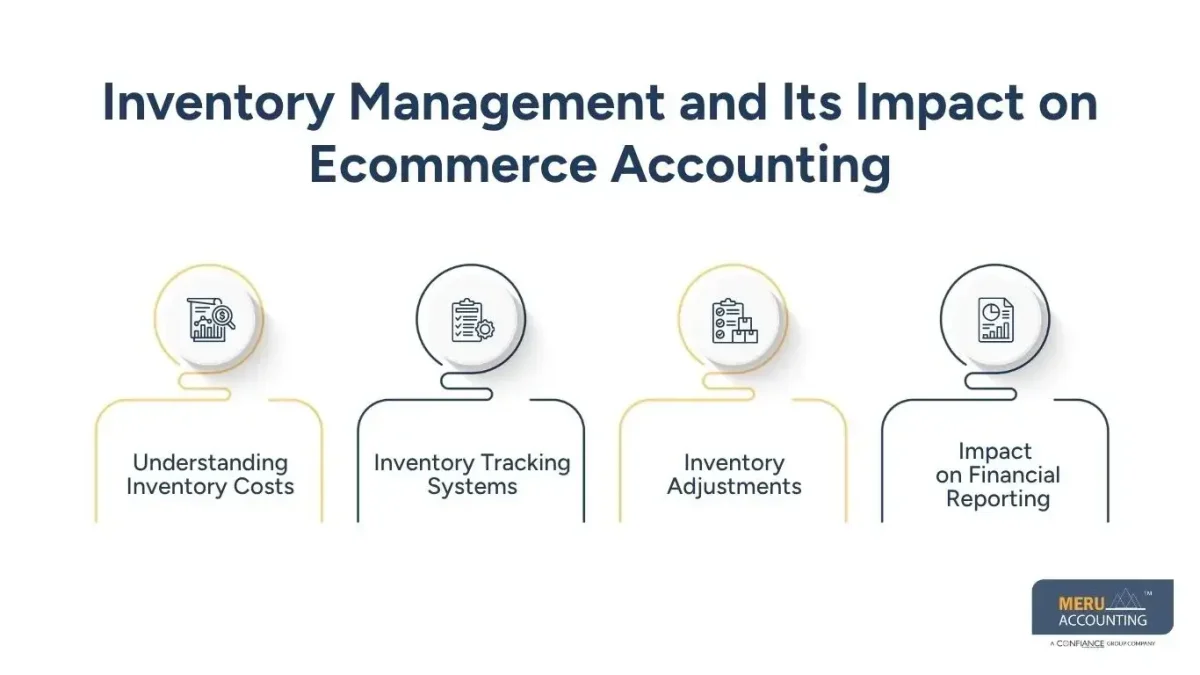
Inventory Adjustments: Regularly update your records to account for damaged, returned, or lost items. These adjustments ensure that your financial statements reflect the true value of your inventory.
Impact on Financial Reporting: Accurate inventory management directly affects your balance sheet and income statement. Misstated inventory can lead to incorrect profit calculations, tax errors, and poor business decisions.
By integrating inventory management with ecommerce business accounting, you ensure that your financial reports are accurate and reflective of your actual business performance. Proper bookkeeping for ecommerce business includes maintaining precise inventory records.
Meru Accounting’s Bookkeeping for Ecommerce Business
Managing all aspects of ecommerce accounting can be time-consuming, especially for growing businesses. This is where professional bookkeeping services, such as Meru Accounting, can make a significant difference.
Meru Accounting specializes in bookkeeping for ecommerce business, providing comprehensive solutions tailored to your unique needs. Here’s how Meru Accounting helps:
- Automated Transaction Recording: We connect your ecommerce platforms and payment processors to ensure all sales, refunds, and fees are recorded automatically.
- Expense Categorization: Every business expense, from shipping costs to software subscriptions, is categorized correctly, allowing for easy financial analysis.
- Inventory Accounting: We track inventory costs and stock levels accurately, helping you calculate COGS and maintain proper records.
- Financial Reporting: Our team generates detailed reports on revenue, profitability, cash flow, and expenses, giving you insights to make informed business decisions.
- Tax Compliance: Meru Accounting ensures all applicable taxes are calculated and filed accurately, reducing the risk of errors and penalties.
Partnering with Meru Accounting allows you to focus on growing your ecommerce business while we manage your accounting with precision and efficiency. Professional bookkeeping for ecommerce business saves time and reduces financial stress.
Key Takeaways
- Bookkeeping for ecommerce business is essential for accurate financial tracking, tax compliance, and growth planning.
- Proper ecommerce business accounting involves managing income, expenses, inventory, and taxes.
- Setting up the right accounting system simplifies daily operations and reduces errors.
- Inventory management directly impacts your financial statements and profitability.
- Professional bookkeeping for ecommerce business services like Meru Accounting can streamline your ecommerce finances and save time.
FAQs
Bookkeeping is essential for tracking sales, expenses, and inventory while ensuring tax compliance. Effective bookkeeping for ecommerce business reduces errors, saves time, and provides a clear view of your finances.
Update your books at least weekly to reconcile accounts and track cash flow. High-volume businesses may need daily updates for accurate bookkeeping for ecommerce business.
Small businesses with few transactions can manage accounting using software. As your business grows, professional bookkeeping for ecommerce business ensures accuracy and saves time.
QuickBooks, Xero, Zoho Books, and Wave are popular choices. Choose software that integrates with your platforms for smooth bookkeeping for ecommerce business.
Inventory impacts COGS and profitability. Proper inventory management ensures accurate records and is key to effective bookkeeping for ecommerce business.


