


A strong bookkeeping process in construction is the foundation of accurate job costing and steady financial control. Construction businesses handle many costs at once, including labor, materials, subcontractors, and equipment. If these costs are not tracked correctly, it becomes hard to know whether a project is profitable or losing money.
A well-planned bookkeeping process in construction helps contractors understand project costs in real time, avoid billing errors, and maintain clean financial records. It also supports clear reporting and long-term planning, which are critical for construction companies of all sizes.
This blog explains how to build a reliable bookkeeping process in construction and how construction in process accounting plays a key role in accurate job costing.
What You Will Learn From This Blog
- Construction bookkeeping is different because finances are tracked by individual projects, not only by months or years. This project-based method needs careful planning and regular updates.
- Job costing shows how daily expenses like labor, materials, and equipment affect the final result of each project. It helps you see where money is being spent.
- Construction in process accounting explains how costs are recorded for work that is still in progress. This helps keep financial reports accurate while projects are ongoing.
- You will learn step-by-step how to build a reliable bookkeeping system that supports job costing and clear financial reporting.
- Common bookkeeping mistakes in construction can lead to lost profits. This blog explains how to identify these errors early and avoid them.
Understanding The Basics Of A Bookkeeping Process In Construction
A bookkeeping process in construction is designed to track income and expenses for each project separately rather than treating the business as one single unit. Since every project has its own budget, timeline, and costs, this project-based tracking helps contractors understand the true financial performance of each job.
Construction bookkeeping also relies on clear cost categories. Expenses are grouped into labor, materials, equipment, subcontractors, and overhead. This detailed breakdown makes it easier to control spending, compare estimated costs with actual costs, and identify problem areas early.
Another key part of construction bookkeeping is ongoing cost monitoring. Expenses should be recorded as they occur instead of waiting until the project is finished. This helps maintain accurate job cost reports and allows timely decisions when costs begin to rise.
Supporting records such as invoices, timesheets, and receipts play a major role in accuracy. These documents connect daily job activity to financial reports, ensuring that each project’s data flows correctly into overall financial statements for clear visibility.
What Is Construction In Process Accounting?
Construction in process accounting is used to record costs for construction projects that are still in progress. Since many construction jobs take months or even years to complete, expenses must be tracked before the project is finished. This method ensures that ongoing work is reflected correctly in the financial records.
The primary goal of work-in-progress accounting is to show how much money has been spent on unfinished projects at any given time. Recording these costs in a separate account helps businesses clearly see the value of work still underway and not yet billed or completed.
Work-in-progress accounting is closely connected to job costing. All labor, material, and other expenses are assigned to the correct project, preventing costs from being mixed between jobs and supporting accurate project-level reporting.
Another important benefit is proper revenue and cost matching. Income and expenses are recorded in the same period, which helps avoid early profit recognition. As a result, financial statements remain accurate, reliable, and useful for decision-making.
Key Elements Of A Reliable Bookkeeping Process In Construction
Job Cost Codes
Each job needs clear cost codes for proper expense tracking. These codes help separate labor, materials, and other costs so job reports stay organized and easy to review.
Labor Cost Allocation
Employee hours must be recorded and assigned correctly to each project. Accurate labor tracking helps control payroll costs and shows the true cost of work performed.
Material Cost Tracking
Material purchases must be linked to the correct project. This prevents materials from being charged to the wrong job and improves cost accuracy.
Equipment Usage Records
Equipment costs should reflect actual job usage. Tracking equipment hours or rental costs helps ensure fair cost distribution across projects.
Overhead Cost Allocation
Indirect costs such as office expenses and utilities should be shared properly among projects. This provides a more complete view of true project costs.
Regular Job Cost Reviews
Job cost reports should be reviewed on a regular basis. Frequent reviews help identify cost overruns early and support better project decisions.
Use Of Construction In Process Accounting
Work-in-progress accounting keeps unfinished projects accurate on the books. Ongoing costs are recorded correctly until the project is completed.
Step-By-Step Process To Build A Bookkeeping Process In Construction
Step 1: Create A Job Cost Structure
Setting up cost categories is a foundational part of the bookkeeping process in construction, helping track labor, materials, and other expenses accurately.
Step 2: Record Costs Regularly
Maintaining a disciplined bookkeeping process in construction ensures that daily or weekly entries reflect real-time project spending. Timely recording reduces errors and keeps job cost reports up to date.
Step 3: Track Project Progress
Measure how much work has been completed. Progress tracking helps match costs with the correct stage of the project.
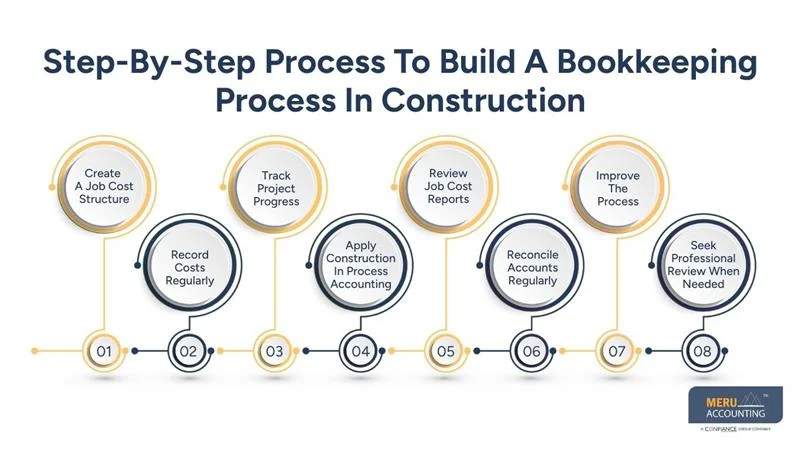
Step 4: Apply Construction In Process Accounting
Use construction in process accounting to record ongoing work costs. This ensures unfinished projects are reflected correctly in financial records.
Step 5: Review Job Cost Reports
Compare estimated and actual costs to spot issues early. Regular reviews help prevent small problems from turning into major losses.
Step 6: Reconcile Accounts Regularly
Match bank statements, supplier invoices, and payroll records with your books. Regular reconciliation helps catch errors and missing entries.
Step 7: Improve The Process
Adjust your bookkeeping process in construction as projects change. Continuous improvement keeps the system effective as your business grows.
Step 8: Seek Professional Review When Needed
Periodic review by a construction accounting expert adds accuracy. It also helps ensure compliance and reliable reporting.
How A Strong Bookkeeping Process In Construction Improves Profitability
Better Cost Awareness
Knowing costs early helps reduce waste across all projects. Regular cost tracking improves spending control and planning accuracy.
Accurate Job Pricing
Historical job data supports better bidding and pricing decisions. Accurate estimates help protect margins on future construction projects.
Improved Cash Flow
Clear billing and collections reduce payment delays from clients. Timely invoices help maintain steady cash flow throughout projects.
Early Issue Detection
Cost overruns are seen before they grow into losses. Early visibility allows quick action to correct project spending.
Reliable Use Of Construction In Process Accounting
Work-in-progress accounting supports honest profit reporting throughout projects. Revenue and costs are aligned with the actual work completed.
Tools And Software For Construction Bookkeeping And CIP Accounting
Job Costing Software
These tools are essential for any bookkeeping process in construction, helping track project costs accurately and efficiently. They provide clear reports for monitoring job-level spending.
Accounting Platforms
General accounting systems support financial reporting and compliance needs. They help manage income, expenses, and overall business finances.
Time Tracking Tools
Accurate labor tracking improves job costing and payroll accuracy. They ensure employee hours are assigned to correct projects.
Cloud-Based Systems
Teams can update records from job sites easily. Cloud access improves coordination between field and office teams.
CIP Accounting Support
Choose software that handles construction in process accounting correctly. It ensures ongoing project costs are reported without errors.
Common Mistakes In Construction Bookkeeping And How To Avoid Them
Poor Cost Categorization
Wrong categories lead to unclear reports and mismanaged costs. Accurate classification helps track spending and improves job-level clarity.
Late Expense Recording
Without a proper bookkeeping process in construction, delayed entries can compromise the accuracy of financial reports. Timely entries ensure up-to-date data for better decision-making.
Ignoring Job Reports
Unreviewed reports hide problems and can increase project losses. Regular review helps detect overspending or unexpected cost changes.
Weak Documentation
Missing records increase errors and create compliance issues. Proper storage of invoices, receipts, and timesheets improves accuracy.
Skipping Construction In Process Accounting
Not using construction in process accounting leads to incorrect profits. Applying CIP accounting ensures ongoing projects reflect real costs correctly.
Why Meru Accounting Is The Right Partner For Construction Bookkeeping
Construction Industry Knowledge
Meru Accounting understands construction-specific bookkeeping needs very well. We provide accurate advice tailored for contractor and project requirements.
Custom Job Costing Systems
We build a bookkeeping process in construction that fits projects. Our systems track labor, materials, and equipment costs effectively.
Strong CIP Accounting Support
Our experts manage construction in process accounting accurately every time. This ensures unfinished projects are reflected correctly in financial statements.
Clear Financial Reporting
You receive simple, accurate, and timely financial reports consistently. Reports are designed for quick understanding and decision-making.
Scalable Accounting Services
Our solutions grow efficiently with your business size and needs. We provide support as projects increase in complexity and volume.
Take control of your construction project finances with expert support. Contact Meru Accounting to build a reliable bookkeeping process in construction. Get accurate job costing and clear financial reports for every project today.
Key Takeaways
- A bookkeeping process in construction tracks costs by individual projects, making it easier to monitor spending accurately.
- Accurate job cost data helps improve planning, pricing, and overall project decisions.
- Construction in process accounting ensures ongoing project costs are recorded correctly and financials remain accurate.
- Clear bookkeeping systems reduce errors, prevent overspending, and lower financial risks.
- Professional support from experts adds value and ensures long-term accounting accuracy.
FAQs
A bookkeeping process in construction records all project-related income and expenses. This helps track costs for accurate project profitability.
Work-in-progress accounting tracks costs of unfinished projects and matches them with work completed. This ensures precise job costing.
Start by creating job cost codes, recording expenses regularly, and tracking project progress. Apply construction in process accounting and review reports for accuracy.
Accurate job costing shows true project costs and profitability. This supports better pricing, expense control, and financial decisions.
Delaying entries, mixing personal and business costs, ignoring job reports, and skipping construction in process accounting. Avoiding these keeps records accurate.


