




Introduction to Choosing the Right Small Business Bookkeeping Service
The backbone of any successful small business lies in its financial management, and at the heart of that is bookkeeping. Proper bookkeeping helps track income, expenses, payroll, and tax obligations, ensuring business owners have a clear picture of their financial health. However, the task of bookkeeping can be complex and time-consuming, making it essential for small business owners to choose the right bookkeeping service. This comprehensive guide will explore how to select the most suitable small business bookkeeping service tailored to your business needs.
Understanding Small Business Bookkeeping Services
Bookkeeping services involve the systematic recording, organizing, and managing of financial transactions for a business. For small businesses, efficient bookkeeping is critical as it enables accurate tax filing, improved budgeting, and informed decision-making. Bookkeeping services may vary widely, offering different levels of support based on business size, industry, and budget.
Key Functions of a Bookkeeping Service
- Recording daily financial transactions
- Managing accounts payable and receivable
- Reconciling bank accounts
- Preparing financial reports
- Assisting with payroll processing
- Ensuring compliance with tax laws
Types of Bookkeeping Services
- In-house Bookkeeping: Managed by an employee within the company, suitable for larger small businesses with steady transaction volumes.
- Outsourced Bookkeeping: Contracting external professionals or agencies to maintain records, popular among small businesses to save costs and access expertise.
- Cloud-based Bookkeeping: Utilizing online software platforms, sometimes coupled with virtual bookkeeping services, to keep real-time financial records accessible anywhere.
Factors to Consider When Choosing a Small Business Bookkeeping Service
Selecting the right bookkeeping service requires careful consideration of multiple factors. Below is an in-depth look at critical aspects to evaluate before making your decision.
Experience and Expertise
Look for bookkeeping services with a proven track record in supporting small businesses similar to yours. Industry-specific knowledge can be valuable for niche sectors requiring specialized attention to accounting rules.
Range of Services
Determine the scope of services offered and assess whether they align with your current and future needs. Some businesses may require basic bookkeeping, while others may seek more comprehensive solutions including tax preparation and payroll management.
Technology and Software Compatibility
Ensure that the bookkeeping provider uses modern accounting software compatible with your existing systems. Integration with popular platforms like QuickBooks, Xero, or FreshBooks can streamline workflows and improve data accuracy.
Cost Structure
Understand how the service charges—whether by hourly rates, flat monthly fees, or per transaction basis—and ensure the pricing fits your budget without sacrificing quality.
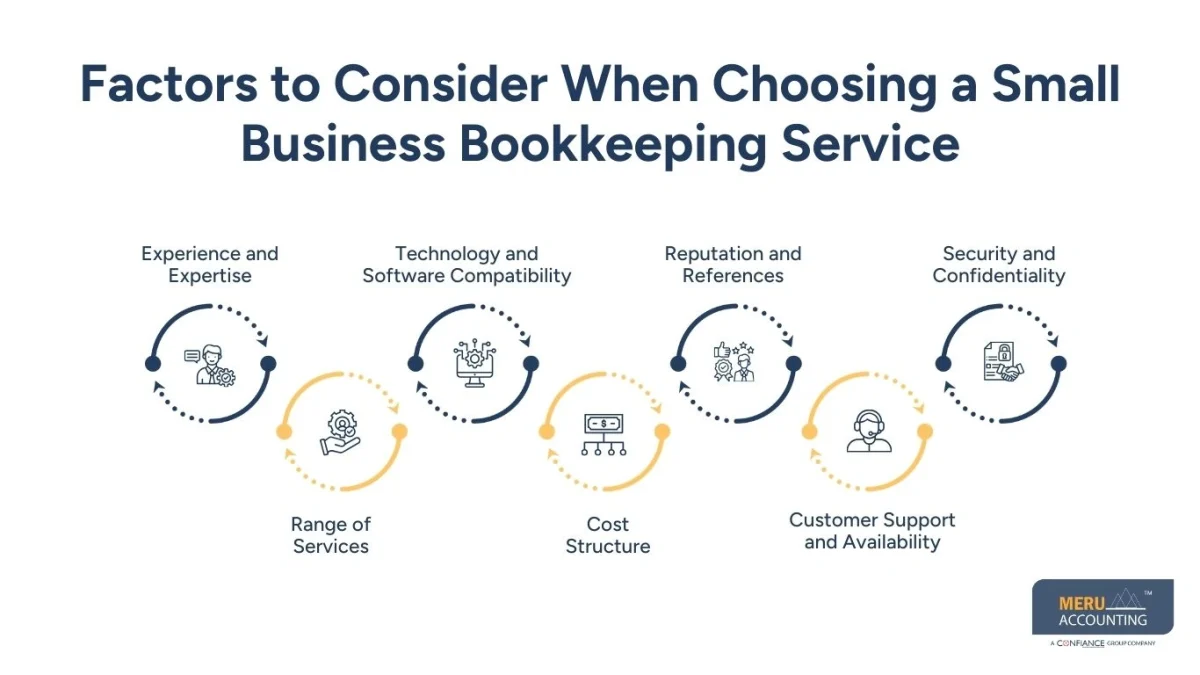
Reputation and References
Research reviews, testimonials, and ask for references. Positive feedback and referrals offer insight into the reliability and professionalism of the bookkeeping service.
Customer Support and Availability
A responsive bookkeeping provider who offers timely support can save you from costly delays and mistakes, especially during tax season.
Security and Confidentiality
Financial data is sensitive, so confirm that the bookkeeping service follows strict data security protocols, including encryption, secure servers, and privacy policies.
Step-by-Step Process to Find the Perfect Bookkeeping Service
Follow a systematic approach to evaluate and select the optimal bookkeeping service for your small business.
1. Identify Your Bookkeeping Needs
Assess your business size, transaction volume, and the complexity of your financial operations to determine the level of bookkeeping support required.
2. Research Potential Providers
Use online directories, referrals from business networks, and local professional associations to compile a list of bookkeeping services.
3. Verify Credentials and Expertise
Check certifications such as Certified Bookkeeper (CB) or affiliations with organizations like the American Institute of Professional Bookkeepers (AIPB).
4. Request Proposals and Quotes
Contact shortlisted providers to receive detailed proposals outlining services, pricing, and turnaround times.
5. Conduct Interviews
Meet or speak with bookkeeping representatives to understand their approach, communication style, and willingness to customize services.
6. Check References and Reviews
Speak with previous and current clients to gauge satisfaction and potential red flags.
7. Evaluate Contract Terms
Carefully review service agreements for clauses related to termination, confidentiality, pricing changes, and liability.
8. Begin with a Trial Period
Consider starting with a short-term contract to test compatibility before committing long-term.
Benefits of Hiring a Professional Small Business Bookkeeping Service
Outsourcing bookkeeping offers multiple advantages that directly impact your business efficiency and growth.
- Accuracy: Experts reduce errors in financial records, avoiding costly mistakes.
- Time-Saving: Frees up your time to focus on core business activities instead of financial record-keeping.
- Cost-Effective: Avoids the expense of hiring full-time bookkeeping staff, especially for small businesses.
- Financial Insights: Access to detailed reports helps in making better business decisions and forecasting.
- Tax Compliance: Keeps your business compliant with ever-changing tax laws and deadlines.
- Scalability: Bookkeeping services can adjust to your business growth and evolving needs.
Comparing Popular Small Business Bookkeeping Software and Services
The right bookkeeping service often includes or supports specific software tools. Below is a comparison table of popular accounting software frequently used by bookkeeping providers for small businesses.
| Software | Main Features | Pricing (Starting) | Best For |
|---|---|---|---|
| QuickBooks Online | Invoicing, expense tracking, payroll, tax support | $25/month | Varied small business sizes, ease of use |
| Xero | Bank reconciliation, multi-currency, inventory management | $13/month | Businesses needing global transactions |
| FreshBooks | Time tracking, invoicing, expense management | $15/month | Service-based small businesses and freelancers |
| Wave | Free invoicing, expense tracking, receipt scanning | Free | Very small businesses or startups on a budget |
Common Challenges When Working with Bookkeeping Services and How to Avoid Them
Though bookkeeping services provide substantial advantages, several challenges may arise. Awareness and proactive steps can mitigate potential issues.
Data Entry Errors
Inaccurate input can cause discrepancies. Mitigate by choosing a provider who uses double-check systems and offers transparent reporting.
Communication Gaps
Misunderstandings between clients and bookkeepers can delay financial processing. Regular updates and clear communication protocols help overcome this.
Security Concerns
Outsourcing financial data demands trust. Confirm providers have robust security measures and ensure non-disclosure agreements are in place.
Lack of Customization
One-size-fits-all services may not suit your unique needs. Look for providers willing to tailor services according to your business model.
How Meru Accounting Supports Small Business Bookkeeping Needs
Meru Accounting is a trusted bookkeeping service provider specializing in small business financial management. They offer personalized bookkeeping solutions designed to simplify financial tasks and support business growth. With a focus on accuracy, compliance, and insightful reporting, Meru Accounting leverages the latest technology combined with expert knowledge to deliver top-tier service. Their flexible service packages cater to diverse industries and business sizes, ensuring every client receives tailored assistance suited to their unique financial environment.
Conclusion: Making the Final Decision for Your Small Business
Choosing the right small business bookkeeping service is a strategic investment that can yield substantial returns in operational efficiency, financial clarity, and business growth. By thoroughly understanding your needs, researching providers, considering key selection factors, and establishing clear expectations, you can partner with a bookkeeping service that adds value and peace of mind to your business operations. Remember that this decision plays a crucial role in your company’s success, so take the time to make an informed choice that aligns with your business vision.
By prioritizing quality, trustworthiness, and technology, your small business will be well-positioned for financial health and long-term prosperity.
FAQs
What should I look for in a small business bookkeeping service?
Look for experience with small businesses, accurate record-keeping, knowledge of accounting software, and good communication skills.
How important is industry experience when choosing a bookkeeping service?
Industry experience is important because it ensures the bookkeeper understands specific financial needs and regulations relevant to your business.
What are the benefits of hiring a professional bookkeeping service for my small business?
A professional service can save time, improve accuracy, help with tax compliance, and provide financial insights to support business growth.
Should I choose a local bookkeeping service or an online provider?
Choosing between local and online services depends on your preference for face-to-face interaction versus convenience and potentially lower costs.
How do I evaluate the cost-effectiveness of a bookkeeping service?
Compare pricing models, services offered, and the potential return on investment through accurate financial management and time savings.


