




Introduction to Bookkeeping Services Business
In the contemporary business landscape, accurate financial record-keeping is fundamental to the success and stability of any company. The bookkeeping services business plays a critical role in providing organizations with the foundation for sound financial management. This article explores the multifaceted aspects of bookkeeping services and how these services support companies across diverse industries.
Understanding Bookkeeping: Definition and Importance
Bookkeeping involves the systematic recording, organizing, and management of financial transactions for a business. It serves as the backbone for financial accounting and reporting, ensuring that all monetary activities are logged correctly and transparently. Efficient bookkeeping enables companies to monitor revenue, track expenses, prepare for audits, and comply with tax regulations.
Without robust bookkeeping, businesses risk financial mismanagement, regulatory penalties, and impaired decision-making. A bookkeeping services business offers specialized expertise to maintain accurate financial records, allowing companies to focus on their core competencies while safeguarding their financial integrity.
The Role of Bookkeeping Services in Supporting Companies
Bookkeeping services support companies in several critical ways, including:
- Accurate Financial Record Keeping: Maintaining up-to-date and error-free records of all financial transactions.
- Expense Management: Tracking and categorizing business expenses to optimize budgeting and cost control.
- Cash Flow Monitoring: Providing insights into cash inflows and outflows to maintain healthy liquidity.
- Compliance and Reporting: Ensuring adherence to accounting standards and regulatory requirements.
- Financial Analysis: Offering data that helps management make informed business decisions.
By outsourcing these tasks to a bookkeeping services business, companies gain access to professional knowledge and technology that can streamline their financial operations and reduce the potential for errors.
Key Services Offered by a Bookkeeping Services Business
Bookkeeping services businesses typically provide a comprehensive suite of offerings tailored to the needs of diverse organizations:
- Transaction Recording: Logging sales, purchases, receipts, and payments in a timely manner.
- Bank Reconciliation: Matching company records with bank statements to verify transactions and detect discrepancies.
- Payroll Processing: Managing employee compensation, tax withholding, and benefit deductions.
- Accounts Receivable and Payable: Tracking incoming and outgoing payments to maintain cash flow efficiency.
- Financial Statement Preparation: Assisting with the generation of balance sheets, income statements, and cash flow statements.
- Tax Preparation Assistance: Supporting tax filings with accurate and organized financial data.
- Software Integration and Management: Implementing accounting software to automate and enhance bookkeeping processes.
How Bookkeeping Services Enhance Business Growth and Sustainability
Engaging with a bookkeeping services business can positively impact a company’s growth and sustainability in multiple ways:
- Improved Financial Accuracy: Professional bookkeepers reduce errors, minimizing costly financial discrepancies.
- Better Decision-Making: Timely and accurate financial reports provide insights essential for strategic planning.
- Increased Efficiency: Automating bookkeeping functions frees up internal resources to focus on core business activities.
- Cost Savings: Outsourcing bookkeeping can be more cost-effective than maintaining an in-house accounting team.
- Regulatory Compliance: Expert knowledge of tax laws and financial regulations helps avoid legal penalties.
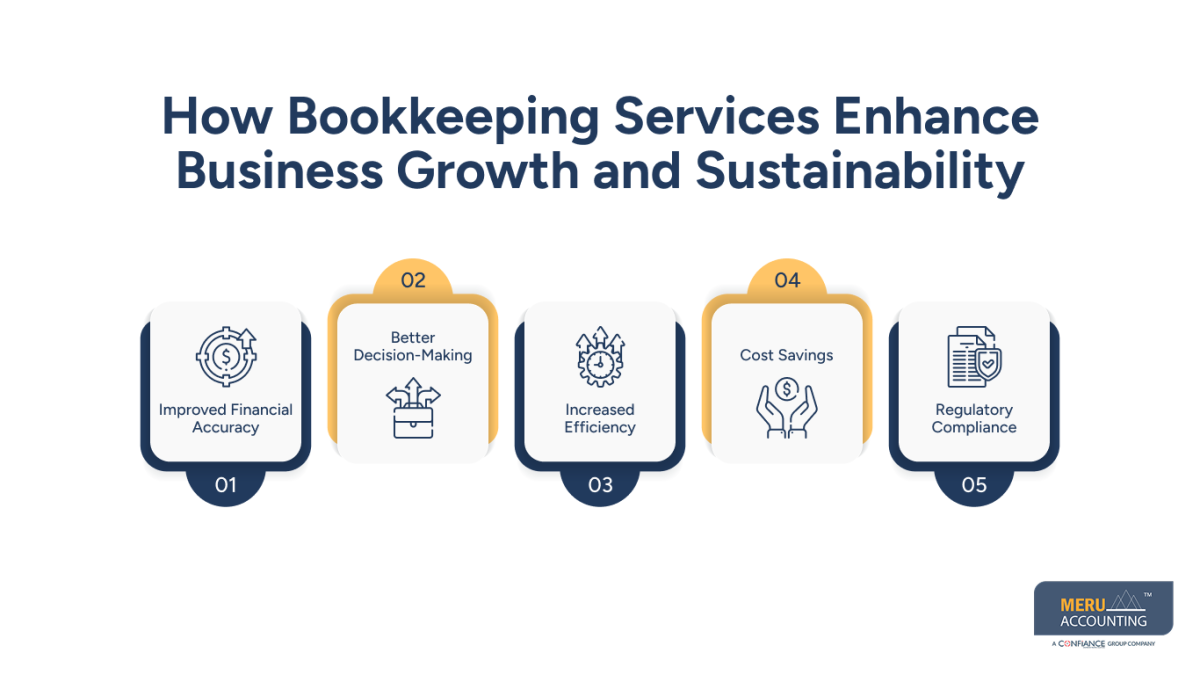
These benefits collectively enable companies to scale operations, enter new markets, and improve profitability with confidence.
Technological Innovations in Bookkeeping Services Business
Technology has transformed the bookkeeping services business by introducing automation, cloud computing, and artificial intelligence. The integration of these innovations offers several advantages:
- Cloud-Based Accounting Software: Allows real-time data access, collaboration, and secure storage of financial information.
- Automated Transaction Categorization: Reduces manual data entry and minimizes human error.
- Advanced Reporting Tools: Generate detailed financial reports quickly for analysis and compliance.
- AI-Powered Reconciliation: Streamlines the matching of bank statements and records through intelligent automation.
- Mobile Access: Enables business owners to monitor finances remotely for greater flexibility.
These technology-driven solutions empower bookkeeping services businesses to deliver faster, more accurate, and scalable services.
Industry-Specific Bookkeeping Services and Customization
Different industries have unique bookkeeping requirements. A competent bookkeeping services business customizes its offerings to match the nuances of various sectors, such as:
- Retail: Managing inventory, sales tax collection, seasonal fluctuations, and point-of-sale reconciliation.
- Healthcare: Tracking insurance claims, patient billing, and regulatory compliance with health data standards.
- Construction: Handling job costing, subcontractor payments, and project-based financial management.
- Nonprofits: Fund accounting, donor reporting, and grant tracking for accountability.
- Hospitality: Managing payroll for tipped employees, reservation deposits, and multi-location accounting.
Customization ensures companies receive bookkeeping services tailored to their operational workflows and compliance obligations.
Key Metrics and Performance Indicators Used in Bookkeeping
Bookkeeping is instrumental in tracking several key performance indicators (KPIs) that aid in business analysis and financial health assessment:
| Metric | Description | Importance |
|---|---|---|
| Current Ratio | Compares current assets to current liabilities. | Measures liquidity and short-term financial health. |
| Gross Profit Margin | Ratio of gross profit to revenue. | Indicates efficiency in production and pricing strategy. |
| Accounts Receivable Turnover | Frequency of collecting receivables over a period. | Assesses credit policies and cash flow effectiveness. |
| Expense Ratio | Operating expenses as a proportion of revenue. | Helps monitor cost management and profitability. |
| Net Profit Margin | Net income divided by total revenue. | Measures overall profitability after all expenses. |
Tracking these metrics accurately requires meticulous bookkeeping, which forms the foundation for strategic financial planning and forecasting.
Challenges Faced by Bookkeeping Services Business and How They Address Them
Despite its importance, the bookkeeping services business encounters a series of challenges that must be managed effectively:
- Data Security and Privacy: Handling sensitive financial information demands stringent security protocols to prevent breaches and ensure confidentiality.
- Changing Regulations: Constant updates to tax laws and financial regulations require ongoing education and adaptation.
- Accuracy and Attention to Detail: Errors can lead to significant financial repercussions for clients, necessitating rigorous review processes.
- Complex Client Needs: Diverse business models require customized bookkeeping solutions and scalability of services.
- Technology Integration: Implementing and maintaining up-to-date accounting software to maximize efficiency and accuracy.
To overcome these challenges, bookkeeping services businesses invest in staff training, adopt advanced security measures, and deploy adaptable software platforms tailored to client requirements.
How to Choose the Right Bookkeeping Services Business for Your Company
Selecting a bookkeeping partner is a critical decision impacting your business financial health and compliance. Key considerations include:
- Expertise and Experience: Verify the provider’s experience in your industry and familiarity with relevant regulations.
- Service Range: Ensure the business offers comprehensive services that align with your financial management needs.
- Technology Utilization: Confirm the use of modern accounting software and technology to enhance efficiency.
- Reputation and References: Seek testimonials, case studies, or referrals to assess reliability and performance.
- Cost Structure: Understand pricing models to ensure transparency and alignment with your budget.
- Communication and Support: Choose a provider that offers responsive customer service and clear communication channels.
These criteria help businesses partner with the right bookkeeping services to support sustainable growth and operational excellence.
Meru Accounting: A Trusted Name in Bookkeeping Services Business
Meru Accounting is a reputable bookkeeping services business known for delivering customized, accurate, and timely financial record-keeping solutions. Serving a diverse portfolio of clients, Meru Accounting leverages the latest technology and industry best practices to enhance financial management outcomes. Their professional team prioritizes data security, compliance, and client satisfaction, making them a trusted advisor for businesses seeking reliable bookkeeping support. Through personalized service models, Meru Accounting helps companies of all sizes streamline their financial processes and focus on core business growth.
Conclusion
Bookkeeping services business entities play an indispensable role in supporting companies by maintaining precise financial records, ensuring regulatory compliance, and providing insights for strategic decision-making. By outsourcing bookkeeping to specialized providers, businesses can improve efficiency, reduce errors, and focus resources on expanding their operations. Technological advances and industry-specific customization have further enhanced the value of professional bookkeeping services. Whether a small startup or a large corporation, partnering with a dependable bookkeeping services business, such as Meru Accounting, can provide the financial foundation necessary for long-term success.
FAQs
What are bookkeeping services in a business context?
Bookkeeping services in a business context involve recording, organizing, and managing a company’s financial transactions to ensure accurate and up-to-date financial records.
How do bookkeeping services support company growth?
Bookkeeping services support company growth by providing accurate financial data that helps businesses make informed decisions, manage cash flow, and maintain compliance with tax regulations.
Can bookkeeping services help small businesses save time and money?
Yes, bookkeeping services help small businesses save time by handling financial record-keeping efficiently and reducing errors, which in turn can save money by avoiding costly mistakes and penalties.
What types of businesses benefit most from bookkeeping services?
Small to medium-sized businesses, startups, and companies with complex financial transactions benefit most from bookkeeping services as they ensure accurate financial management and reporting.
Are bookkeeping services customizable to specific business needs?
Yes, bookkeeping services can be tailored to meet specific business needs, including industry-specific requirements, frequency of reporting, and integration with accounting software.


