




Introduction to Bookkeeping Services for Small Businesses
Bookkeeping services for small businesses are essential financial practices that ensure accurate recording, organizing, and management of all financial transactions. For entrepreneurs and small business owners, maintaining clear and timely financial records is crucial for operational efficiency, regulatory compliance, and strategic decision-making. Bookkeeping encompasses a broad range of tasks, from tracking income and expenses to preparing financial statements and managing payroll.
This comprehensive guide dives deep into the world of bookkeeping services tailored specifically for small businesses. It explores the various types of bookkeeping methods, tools, professional services, and practical tips to help small enterprises maintain financial health, reduce errors, and optimize their accounting processes.
Understanding the Importance of Bookkeeping for Small Businesses
Bookkeeping for small businesses is more than just a routine task; it’s the backbone of effective financial management. The accuracy of bookkeeping directly impacts a business’s ability to analyze performance, plan budgets, and meet tax obligations. Here are key reasons why bookkeeping is vital for small business owners:
- Financial insight: Proper bookkeeping provides an up-to-date picture of the business’s financial health, enabling informed decision-making.
- Tax compliance: Organized records simplify tax preparation and minimize the risk of audits or penalties by tax authorities.
- Cash flow management: Tracking receivables and payables helps small businesses maintain adequate cash flow and avoid liquidity issues.
- Funding and loans: Clear financial records enhance credibility when applying for loans or attracting investors.
- Business planning: Historical data from accurate bookkeeping reveals trends and informs future strategic plans.
Without effective bookkeeping services tailored to small businesses, owners risk financial disorganization, missed opportunities, and costly compliance issues.
Types of Bookkeeping Services Available for Small Businesses
Bookkeeping services for small businesses come in various forms, each catering to different needs, budgets, and levels of complexity. Understanding these services helps entrepreneurs choose the right option for their business operations and growth stage.
1. In-House Bookkeeping
Many small businesses handle bookkeeping internally by assigning responsibilities to an employee or the owner. In-house bookkeeping can be cost-effective, but requires dedication and knowledge of accounting principles and software. This option offers direct control but may lack the expertise or scalability for growing businesses.
2. Outsourced Bookkeeping
Outsourcing bookkeeping to a professional service provider is a popular choice for small businesses seeking expert assistance without the overhead of a full-time staff member. These services typically offer flexible packages based on transaction volume and specific needs.
3. Cloud-Based Bookkeeping Services
Cloud bookkeeping services combine automation technology with professional expertise. These platforms allow real-time access to financial data, easy collaboration with accountants, and integration with other business tools. They provide convenience and accuracy, especially for businesses with remote teams or multiple locations.
4. Full-Service Accounting Firms
Full-service accounting firms offer bookkeeping as part of a broader suite of financial services, including tax preparation, auditing, payroll, and advisory. This comprehensive approach benefits small businesses looking for end-to-end financial management.
- In-House Bookkeeping: Self-managed, cost-effective, but requires expertise
- Outsourced Bookkeeping: Professional, scalable, flexible pricing
- Cloud-Based Bookkeeping: Automated, accessible, tech-driven solutions
- Full-Service Accounting: End-to-end financial management, including bookkeeping
Key Bookkeeping Tasks Essential for Small Business Success
The scope of bookkeeping services for small businesses covers a variety of essential tasks that help maintain financial clarity and compliance. Understanding these key functions enables business owners to appreciate the value of professional bookkeeping or manage their own accounting more effectively.
1. Recording Financial Transactions
Every sale, purchase, receipt, and payment must be recorded accurately and promptly. This includes maintaining ledgers for accounts receivable (money owed to the business) and accounts payable (money the business owes).
2. Bank Reconciliation
Matching the business’s internal records with bank statements to ensure accuracy and identify discrepancies is a critical monthly process. Reconciliation prevents fraud, errors, and missed transactions.
3. Payroll Management
Proper bookkeeping services handle payroll calculations, tax withholdings, employee benefits administration, and timely salary disbursements while keeping detailed records for compliance.
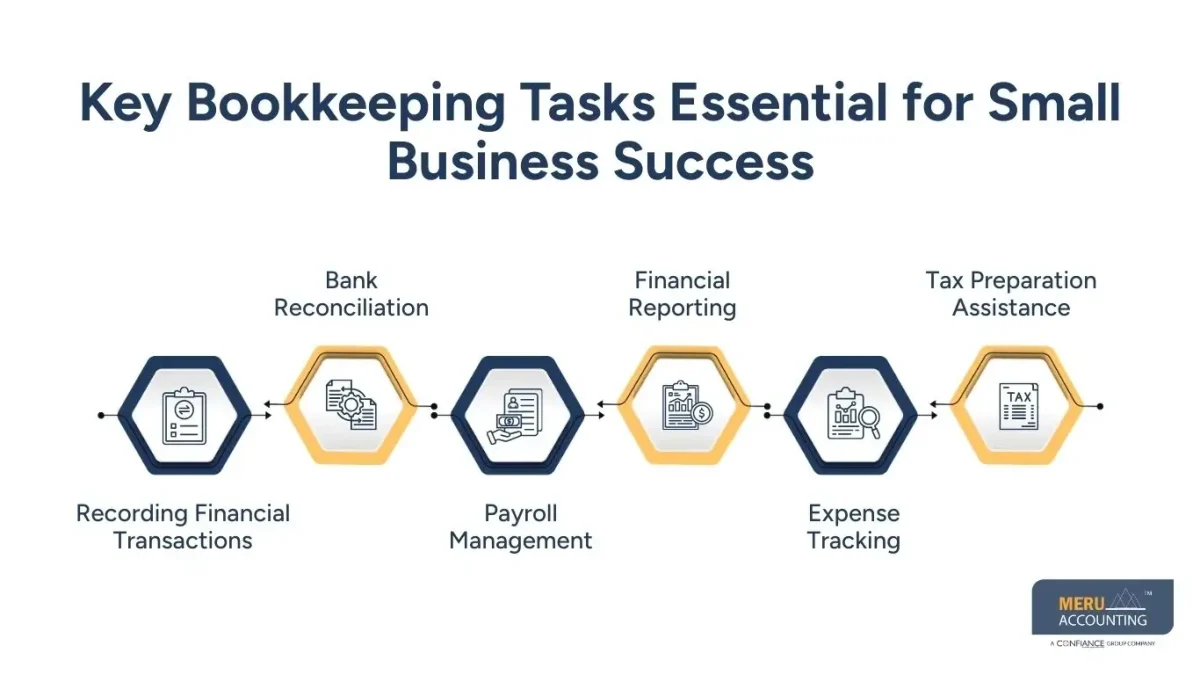
4. Financial Reporting
Bookkeepers prepare regular financial statements like income statements, balance sheets, and cash flow reports. These reports provide insights into profitability, liquidity, and overall financial stability.
5. Expense Tracking
Monitoring and categorizing expenses allows small businesses to control costs and maximize tax deductions.
6. Tax Preparation Assistance
Maintaining organized financial data simplifies tax filing, reduces errors, and ensures business owners take full advantage of available credits and deductions.
Popular Bookkeeping Methods and Tools for Small Businesses
Choosing an appropriate bookkeeping method and the right software is fundamental to effective financial management. Advances in technology have introduced various tools designed to streamline bookkeeping services for small businesses.
Bookkeeping Methods
Primarily, businesses choose between two bookkeeping systems:
| Method | Description | Best For |
|---|---|---|
| Single-Entry | A simple method recording one transaction per entry, typically cash inflows and outflows. | Very small businesses or sole proprietors with uncomplicated finances. |
| Double-Entry | Records transactions using two entries (debit and credit) to maintain accounting equation balance. | Most small businesses, especially those needing detailed financial statements. |
Popular Bookkeeping Software Tools
- QuickBooks Online: Widely used cloud-based software offering invoicing, expense tracking, and reporting.
- Xero: Known for user-friendliness and powerful integrations with third-party apps.
- FreshBooks: Ideal for freelancers and service-based small businesses with time-tracking features.
- Wave Accounting: Free software with essential bookkeeping features for startups and small entrepreneurs.
- Zoho Books: Comprehensive accounting suite with automation and compliance tools.
Benefits of Hiring Professional Bookkeeping Services for Small Businesses
Many small businesses find significant advantages in partnering with professional bookkeeping services. These experts bring specialized knowledge, reduce administrative burdens, and improve financial accuracy. Key benefits include:
- Time savings: Business owners can focus on core activities while professionals handle financial records.
- Accuracy and compliance: Certified bookkeepers minimize errors and ensure adherence to tax laws and standards.
- Financial insights: Professional reports and analyses support strategic growth decisions.
- Cost-effectiveness: Outsourcing bookkeeping often costs less than hiring full-time staff and investing in expensive software.
- Scalability: Services can be adjusted as the business evolves, accommodating increased transaction volume or complexity.
How to Choose the Best Bookkeeping Service for Your Small Business
Selecting the right bookkeeping service requires careful consideration of your business needs, budget, and preferences. Here are factors to evaluate during the decision-making process:
1. Understanding Your Business Needs
Determine the volume of transactions, complexity of accounts, and whether you require additional services like payroll or tax filing assistance.
2. Experience and Credentials
Choose bookkeepers with certifications (e.g., Certified Bookkeeper) and relevant industry experience to ensure reliability and professionalism.
3. Technology and Software Usage
Confirm the provider uses up-to-date, compatible software that integrates smoothly with your existing systems.
4. Pricing Structure
Assess fees and billing methods—hourly rates, fixed monthly packages, or per-transaction pricing—and select what aligns with your budget.
5. Communication and Support
Reliable and accessible support is critical. Look for services offering timely responses, explanations, and financial advice.
6. Security and Confidentiality
Financial data is sensitive. Ensure the bookkeeping service follows stringent data protection protocols.
Meru Accounting: Trusted Bookkeeping Services Tailored for Small Businesses
Meru Accounting specializes in offering personalized bookkeeping services for small businesses, combining expert knowledge with modern technology to streamline financial management. Known for their dedication to accuracy, compliance, and transparency, Meru Accounting supports entrepreneurs by simplifying complex bookkeeping processes, enabling them to focus on growing their businesses. Their professionals employ best practices to ensure that every transaction is reconciled and every report is insightful, enhancing overall financial stability for clients.
Step-by-Step Process of Engaging a Bookkeeping Service
Understanding the typical workflow helps small business owners prepare for a smooth collaboration with bookkeeping service providers. The process generally involves:
Step 1: Initial Consultation
The service provider assesses your business size, needs, and financial situation to recommend suitable bookkeeping solutions.
Step 2: Agreement and Onboarding
After agreement on terms and pricing, you provide access to financial documents and software platforms. The bookkeeper sets up accounts and customizes systems.
Step 3: Data Collection and Entry
The bookkeeper gathers bank statements, receipts, invoices, and categorizes all financial transactions accurately.
Step 4: Regular Bookkeeping Maintenance
Ongoing entry of transactions, bank reconciliations, payroll, and expense tracking are conducted on a daily, weekly, or monthly basis.
Step 5: Review and Reporting
Periodic financial reports and insights are provided to business owners with recommendations for improvement and growth.
Step 6: Tax Preparation Support
Bookkeepers collaborate with tax professionals or handle tax filings directly to ensure compliance and optimize deductions.
Common Challenges Faced by Small Businesses in Bookkeeping and How to Overcome Them
Small businesses often encounter specific bookkeeping challenges that can hinder their financial management capabilities. Recognizing these issues and solutions promotes better bookkeeping practices:
Challenge 1: Limited Financial Knowledge
Many small business owners lack formal accounting training, leading to errors. Overcome this by hiring expert bookkeepers or taking bookkeeping courses.
Challenge 2: Time Constraints
Juggling multiple roles leaves little time for bookkeeping. Outsourcing or using automated software tools can save significant time.
Challenge 3: Disorganized Records
Failure to maintain receipts and documents causes confusion. Implement an organized filing system and digital document management.
Challenge 4: Cash Flow Problems
Poor bookkeeping can mask cash flow issues. Regular financial monitoring and professional advice can improve liquidity management.
Challenge 5: Compliance and Tax Issues
Small businesses sometimes miss deadlines or misreport figures. Use professional services to stay updated with regulations and maintain compliance.
Future Trends in Bookkeeping Services for Small Businesses
The bookkeeping landscape continues to evolve rapidly, driven by technological innovations and changing business needs. Small businesses should be aware of emerging trends that will shape the future of bookkeeping services:
Automation and Artificial Intelligence
Increasing automation of data entry, reconciliation, and report generation reduces human error and processing time. AI tools will enable predictive financial analysis and anomaly detection.
Integration with Business Platforms
Bookkeeping software will increasingly integrate with other business tools such as CRM, inventory management, and e-commerce platforms, providing seamless financial data synchronization.
Remote and Cloud Services Expansion
Cloud-based bookkeeping and remote bookkeeping services offer flexibility, accessibility, and collaboration capabilities for distributed teams and multi-location businesses.
Emphasis on Financial Advisory
Bookkeeping services will increasingly include strategic advisory roles, helping small businesses interpret financial data to drive growth and operational improvements.
Conclusion: Maximizing the Value of Bookkeeping Services for Small Businesses
Bookkeeping services for small businesses form the foundation upon which sustainable financial success is built. From ensuring accurate records, managing cash flow, and supporting tax compliance to delivering critical business insights, effective bookkeeping empowers small enterprises to thrive in competitive markets. Entrepreneurs who invest in professional bookkeeping—whether through in-house management, outsourcing, or cloud-based platforms—gain peace of mind and strategic advantage.
By understanding the types of bookkeeping services, key tasks, challenges, and technological trends, small business owners can make informed choices that align with their unique needs and growth goals. Partnering with trusted providers like Meru Accounting further enhances financial management, helping small businesses navigate complexities and seize opportunities for advancement.
FAQs
What are bookkeeping services for small businesses?
Bookkeeping services for small businesses involve recording and organizing financial transactions to maintain accurate financial records essential for business management.
Why is bookkeeping important for small businesses?
Bookkeeping is important for small businesses because it helps track income and expenses, ensures tax compliance, supports financial decision-making, and improves overall business efficiency.
What types of bookkeeping services are commonly offered to small businesses?
Common bookkeeping services for small businesses include recording daily transactions, managing accounts payable and receivable, bank reconciliations, payroll processing, and financial reporting.
Can I do my own bookkeeping or should I hire a professional service?
While small business owners can do their own bookkeeping using software, hiring a professional bookkeeping service ensures accuracy, saves time, and helps in maintaining compliance with tax laws.
How do I choose the right bookkeeping service for my small business?
Choose a bookkeeping service based on their experience with small businesses, understanding of your industry, pricing, software compatibility, and ability to provide customized financial reports.


