




Introduction to Bookkeeping Services for Small Businesses
Managing the financial records of a small business is critical to its long-term success and sustainability. Bookkeeping services for small business owners provide an organized and systematic approach to tracking income, expenses, assets, and liabilities, ensuring that financial data is accurate and compliant with regulations. Whether a startup or an established company, small businesses often face challenges balancing operational duties with maintaining up-to-date financial records. Outsourcing bookkeeping services can alleviate these challenges and allow entrepreneurs to focus on growth and strategic planning.
In this comprehensive guide, we will explore the numerous benefits of bookkeeping services for small business owners, describe what to expect when engaging these services, and provide insights on selecting the right bookkeeping partner tailored to your business needs.
Understanding Bookkeeping Services for Small Businesses
Bookkeeping is the process of recording daily transactions in a consistent and organized manner. For small businesses, bookkeeping services typically include recording sales, purchases, receipts, and payments. These services ensure that financial data is both accurate and easily accessible for reporting and analysis purposes.
Small business bookkeeping goes beyond simple record-keeping. It often involves reconciling bank statements, generating financial reports, managing payroll records, and ensuring compliance with tax regulations. Proper bookkeeping is the foundation for effective financial management, enabling entrepreneurs to make informed decisions about their business.
Key Components of Small Business Bookkeeping
- Transaction Recording: Capturing sales, purchases, cash receipts, and payments.
- Bank Reconciliation: Comparing company records with bank statements to ensure accuracy.
- Accounts Receivable and Payable Management: Tracking incoming payments and outgoing bills.
- Payroll Management: Recording employee salaries, wages, bonuses, and tax deductions.
- Financial Reporting: Preparing profit and loss statements, balance sheets, and cash flow reports.
- Tax Preparation Support: Organizing taxable income and deductible expenses for filings.
Benefits of Bookkeeping Services for Small Businesses
Engaging professional bookkeeping services offers multiple advantages for small businesses. These benefits contribute significantly to operational efficiency, regulatory compliance, and overall financial health.
1. Time and Resource Savings
Small business owners often juggle numerous responsibilities, from sales and marketing to product development. Outsourcing bookkeeping frees valuable time, allowing business owners and staff to focus on core business activities rather than administrative bookkeeping tasks.
2. Accuracy and Compliance
Professional bookkeeping services apply standardized accounting principles and utilize advanced software to maintain accurate records. This reduces the likelihood of errors and ensures compliance with tax laws and financial regulations, which is essential for avoiding penalties or audits.
3. Real-Time Financial Insights
Accurate bookkeeping provides up-to-date financial data, enabling small business owners to monitor cash flow, profitability, and financial trends. Real-time insights facilitate timely decision-making and strategic planning that can improve business performance.
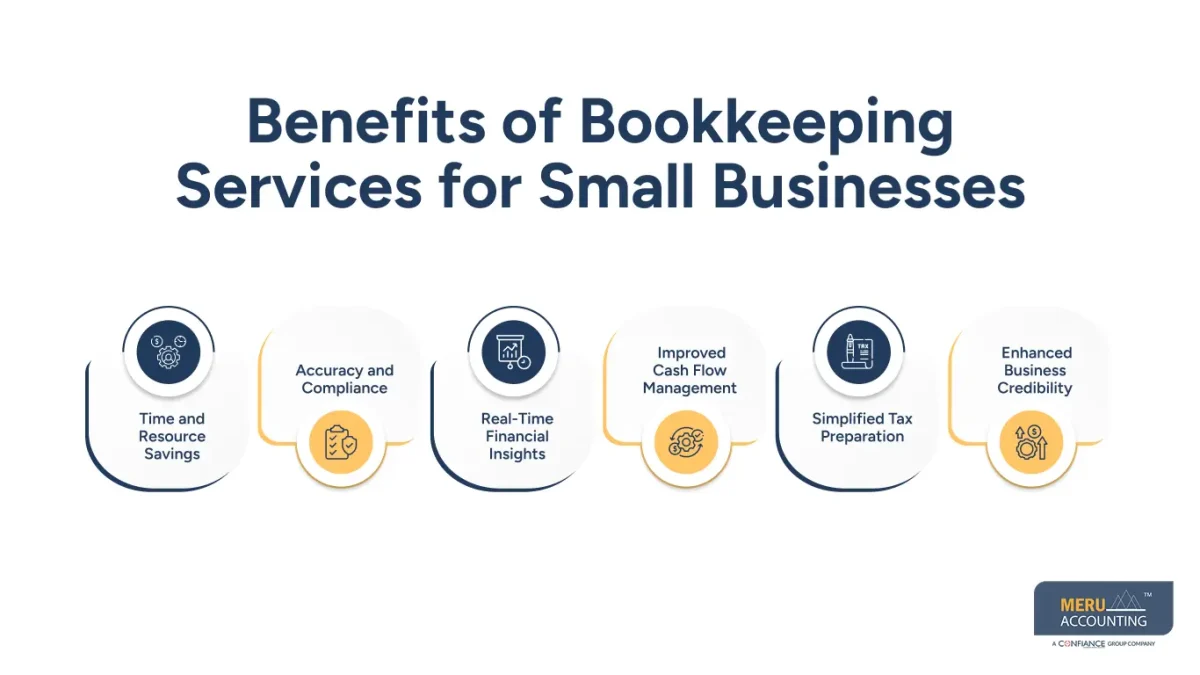
4. Improved Cash Flow Management
By maintaining clear records of accounts receivable and payable, bookkeeping services help small businesses optimize cash flow, ensuring they have sufficient funds to meet operational needs and invest in growth.
5. Simplified Tax Preparation
Efficient bookkeeping organizes financial data systematically, which significantly simplifies the tax preparation process. This organization can reduce the time and cost associated with tax filings and decrease the risk of missing deductions or credits.
6. Enhanced Business Credibility
Proper bookkeeping demonstrates professionalism and financial responsibility to potential investors, lenders, and partners, which can improve business credibility and open opportunities for funding or collaboration.
What to Expect from Professional Bookkeeping Services
When engaging bookkeeping services for a small business, it’s important to understand the typical deliverables and service scope to ensure alignment with business needs and expectations.
Initial Assessment and Onboarding
The bookkeeping provider will typically begin by reviewing existing financial records and accounting practices. This assessment helps identify any inconsistencies, outdated processes, or gaps. Once reviewed, the provider will recommend customized bookkeeping solutions tailored to the business’s industry, size, and growth stage.
Daily, Weekly, or Monthly Transaction Recording
Depending on the client’s preference and transaction volume, bookkeeping services can be scheduled on a daily, weekly, or monthly basis to record all financial transactions accurately and promptly.
Bank and Credit Card Reconciliation
Regular reconciliation of bank and credit card statements ensures that all transactions are captured correctly and any discrepancies are identified and resolved quickly.
Financial Reporting
Clients generally receive detailed financial reports, which may include:
- Income Statements (Profit & Loss Reports)
- Balance Sheets
- Cash Flow Statements
- Custom reports based on specific business metrics
These reports provide valuable insights regarding the financial health and performance of the business.
Tax Filing Preparation and Support
Many bookkeeping service providers assist with preparing and organizing necessary documents for tax filings, including sales tax returns, payroll tax reports, and income tax returns, working closely with accountants or tax professionals as needed.
Software Integration and Automation
Modern bookkeeping services often integrate cloud-based software platforms such as QuickBooks, Xero, or FreshBooks. This integration supports automation of transaction entry, invoicing, and reporting, increasing efficiency and reducing errors.
How to Choose the Right Bookkeeping Services for Your Small Business
Selecting the right bookkeeping service involves careful consideration of factors to ensure the partner meets your business’s unique requirements.
Evaluate Experience and Expertise
Choose bookkeeping providers with demonstrated experience working with small businesses in your industry. Understanding specific industry needs and regulatory requirements is essential for accurate bookkeeping.
Assess Range of Services
Determine whether the provider offers comprehensive services aligned with your needs, from transaction recording to payroll and tax support.
Technology and Software Compatibility
Verify that the bookkeeping provider uses software platforms that integrate well with your existing business tools and offer cloud accessibility for real-time updates.
Transparency and Pricing
Request clear information on service fees and ensure there are no hidden costs. Pricing models can vary based on transaction volume, frequency of service, and additional service requirements.
Communication and Reporting
Effective communication and timely reporting are crucial. Ensure your bookkeeping partner offers regular financial updates and is accessible to answer questions or provide advice.
- Check for client testimonials and references.
- Request sample reports to assess data clarity.
- Confirm responsiveness and support availability.
Common Bookkeeping Tools and Software for Small Businesses
The efficiency of bookkeeping services increasingly relies on leveraging robust accounting software tailored for small business needs. Here is an overview of popular bookkeeping tools that streamline financial management:
| Software | Key Features | Ideal For |
|---|---|---|
| QuickBooks Online | Cloud-based, invoicing, bank reconciliation, payroll integration, tax calculations | Small to mid-sized businesses seeking comprehensive accounting |
| Xero | Multi-currency support, real-time collaboration, invoice tracking, mobile app | Businesses with international operations or remote teams |
| FreshBooks | Invoice management, time tracking, expense organization, reporting | Freelancers and service-based businesses |
| Wave Accounting | Free core accounting, invoicing, receipt scanning, payroll add-ons | Startups and very small businesses with tight budgets |
| Zoho Books | Cloud accounting, inventory management, tax compliance, client portal | Growing businesses requiring integrated CRM and accounting |
Common Challenges in Small Business Bookkeeping and How to Overcome Them
Small businesses often face obstacles in maintaining accurate and consistent bookkeeping. Being aware of these challenges helps in proactively addressing them.
Limited Financial Knowledge
Many small business owners lack formal accounting training, which can lead to errors or incomplete records. Hiring professional bookkeeping services bridges this gap and offers expert guidance.
Keeping Up with Regulatory Changes
Tax laws and financial regulations frequently change, making compliance difficult without ongoing monitoring. Professional bookkeepers stay updated with these changes and apply them to your records accordingly.
Managing Cash Flow Variability
Irregular income and spikes in expenses can complicate record-keeping. Consistent bookkeeping provides visibility into cash flow and helps manage financial fluctuations.
Data Security and Backup
Financial data security is critical. Using cloud-based bookkeeping services ensures data backups and reduces risks associated with data loss or theft.
Integration with Other Business Systems
Bookkeeping data needs to integrate with payroll, inventory management, and invoicing. Selecting bookkeeping services and software that support integration prevents data silos and duplication.
Meru Accounting: A Trusted Partner for Small Business Bookkeeping Services
Meru Accounting is a reputable provider specializing in bookkeeping services for small businesses. With a focus on accuracy, transparency, and personalized service, Meru Accounting supports small business owners by managing their financial records meticulously. Leveraging state-of-the-art technology and deep industry knowledge, Meru Accounting helps clients optimize their financial operations, prepare for tax season seamlessly, and maintain compliance with all regulatory requirements. Their commitment to client success makes them a valuable partner in navigating the complexities of small business bookkeeping.
Conclusion
Bookkeeping services for small businesses represent a vital component in ensuring financial clarity, compliance, and operational efficiency. By outsourcing bookkeeping, small business owners gain access to expert support, advanced technology, and timely financial insights that empower better decision-making and promote business growth.
Understanding the scope, benefits, and challenges of bookkeeping equips entrepreneurs to select suitable providers and implement processes that align with their unique business needs. Whether managing day-to-day transactions or preparing for tax season, reliable bookkeeping forms the backbone of a successful small business.
Choosing trusted partners like Meru Accounting can make a significant difference in achieving financial organization and long-term business success while freeing owners to focus on what they do best—growing their business.
FAQs
What are bookkeeping services for small businesses?
Bookkeeping services for small businesses involve recording and organizing all financial transactions, including sales, purchases, receipts, and payments, to maintain accurate financial records.
How can bookkeeping services benefit my small business?
Bookkeeping services help small businesses maintain accurate financial records, improve financial planning, ensure tax compliance, save time, and provide better insights into business performance.
What should I expect when hiring bookkeeping services for my small business?
You can expect regular financial record updates, organized transaction documentation, financial reporting, tax preparation assistance, and expert advice tailored to your small business needs.
Are bookkeeping services expensive for small businesses?
The cost of bookkeeping services varies depending on the size and complexity of your business, but many providers offer affordable packages and scalable solutions suitable for small business budgets.
Can bookkeeping services assist with tax preparation?
Yes, bookkeeping services often help small businesses prepare financial statements and organize records needed for accurate and timely tax filing.


