




Introduction to Business and Accounting Services
In today’s complex economic environment, businesses face numerous challenges relating to financial management, compliance, and strategic planning. Company accounting services play a critical role in ensuring organizations maintain accurate financial records, adhere to regulatory requirements, and optimize their financial performance. Understanding the scope, benefits, and best practices associated with business and accounting services is essential for any business aiming for sustainable growth and operational efficiency.
This comprehensive article explores various facets of business and accounting services, focusing on their importance to businesses of all sizes and industries. It provides in-depth insights into the functions, advantages, technological integrations, and how to choose the right accounting service provider.
Understanding Company Accounting Services
Company accounting services encompass a wide range of financial management functions provided by specialized accounting firms or in-house accounting departments. These services are tailored to meet the unique needs of each business, ensuring transparency, accuracy, and compliance with legal and fiscal regulations.
Core Functions of Company Accounting Services
- Bookkeeping: Recording daily financial transactions such as sales, purchases, receipts, and payments.
- Financial Reporting: Preparing periodic financial statements including balance sheets, income statements, and cash flow statements.
- Tax Preparation and Filing: Calculating tax liabilities and ensuring timely submission of tax returns in accordance with local and international tax laws.
- Payroll Management: Handling employee salaries, benefits, tax deductions, and compliance with employment laws.
- Budgeting and Forecasting: Creating financial plans to manage cash flow and predict future financial performance.
- Audit and Assurance: Conducting internal and external audits to ensure accuracy and compliance with accounting standards.
Importance of Accurate Accounting for Businesses
Accurate accounting enables businesses to make informed decisions, maintain investor confidence, avoid legal penalties, and streamline operations. It also facilitates access to financing, supports tax efficiency strategies, and improves overall organizational transparency.
Types of Business Accounting Services
Accounting requirements vary widely depending on the industry, size, and operational complexity of a business. Below are major categories of business accounting services typically offered:
1. Financial Accounting
Focuses on the preparation of financial statements that reflect an organization’s financial position and performance. These statements are used by external stakeholders such as investors, regulators, and creditors.
2. Managerial Accounting
Also known as cost accounting, this service supports internal management by providing detailed insights into operational costs, profitability analysis, and budget management.
3. Tax Accounting
Ensures businesses remain compliant with tax laws, optimize tax payments, and take advantage of available deductions and credits. Tax accounting also involves strategic planning to minimize future tax liabilities.
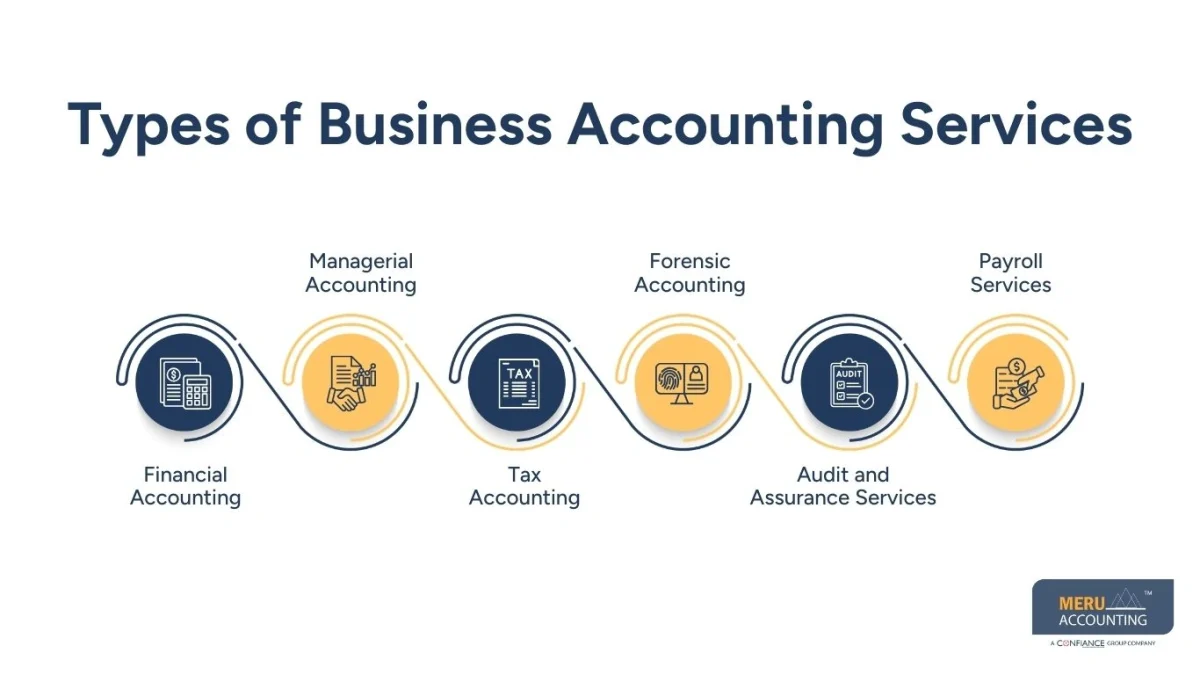
4. Forensic Accounting
Enables the detection and prevention of fraud, financial misrepresentation, and embezzlement. Forensic accountants investigate suspicious financial activities and support legal proceedings.
5. Audit and Assurance Services
Provide independent verification of financial information, enhancing credibility and trust among stakeholders. Audits can be statutory or voluntary depending on regulatory requirements and business needs.
6. Payroll Services
Manage salary dispensation, tax withholdings, employee benefits, and regulatory compliance related to workforce management.
Key Benefits of Engaging Professional Company Accounting Services
Partnering with expert accounting service providers presents significant benefits that contribute to business efficiency and growth. These benefits include but are not limited to:
- Accurate Financial Records: Minimizes errors and discrepancies in financial data.
- Regulatory Compliance: Ensures adherence to tax codes, labor laws, and financial regulations.
- Time and Cost Savings: Outsourcing accounting tasks reduces the need for in-house resources and avoids costly mistakes.
- Expert Financial Insights: Provides high-level analysis and advice for budgeting, investing, and strategic planning.
- Improved Cash Flow Management: Ensures liquidity to meet ongoing operational needs and strategic initiatives.
- Risk Management: Identifies financial risks and implements controls to mitigate them.
- Scalability: Accounting services can adapt as a business expands, including handling complex transactions and multi-jurisdictional issues.
Technology and Tools in Modern Accounting Services
The advancement of technology has revolutionized the way company accounting services are delivered. Business owners and accountants leverage powerful software and cloud-based platforms to enhance efficiency, accuracy, and accessibility.
Accounting Software Solutions
Popular accounting software solutions used by companies and accounting professionals include QuickBooks, Xero, Sage, and Zoho Books. These platforms streamline bookkeeping, invoicing, tax filing, and financial reporting.
Cloud Accounting
Cloud accounting provides businesses with real-time access to their financial data from anywhere, facilitating collaboration between accountants and clients. It reduces the need for physical storage and improves data security.
Automation and AI Integration
Automation of routine tasks such as data entry, invoice processing, and reconciliation saves time and reduces human error. Artificial Intelligence (AI) enhances predictive analytics, fraud detection, and personalized financial recommendations.
Data Analytics and Business Intelligence
Advanced data analytics tools help businesses gain deeper insights into financial trends and operational performance, aiding in strategic decision-making.
Choosing the Right Accounting Service Provider for Your Business
Selecting an accounting service provider is an important decision that can impact your business’s financial health. Consider the following factors when choosing a provider:
- Industry Expertise: Ensure the provider understands your industry’s specific accounting requirements and regulatory frameworks.
- Range of Services: Look for a provider offering comprehensive services tailored to your business needs.
- Technology Capabilities: Evaluate if they use updated technology that integrates seamlessly with your business systems.
- Reputation and References: Check reviews, testimonials, and client references to assess reliability and professionalism.
- Compliance Knowledge: Confirm they stay updated on local and international tax laws and compliance requirements.
- Communication and Accessibility: Opt for a provider with effective communication channels and timely support.
- Cost and Value: Assess pricing structures and ensure the services provide good value for your investment.
Meru Accounting: A Trusted Partner for Business Excellence
Meru Accounting is a leading accounting services firm dedicated to providing comprehensive financial solutions tailored to the unique needs of businesses ranging from startups to established enterprises. With a strong commitment to accuracy, compliance, and strategic financial planning, Meru Accounting assists businesses in maintaining sound financial practices while navigating regulatory landscapes with confidence. Their expert team leverages advanced technology to deliver seamless bookkeeping, tax preparation, payroll management, and audit services that empower clients to focus on growth and innovation. Choosing Meru Accounting means partnering with professionals who prioritize your business’s financial health and long-term success.
Detailed Comparison of Standard Business and Accounting Services
This table highlights the main features, objectives, and typical deliverables of different accounting service types to help businesses understand what each entails.
| Service Type | Main Objective | Typical Deliverables | Target Users |
|---|---|---|---|
| Financial Accounting | Prepare accurate financial statements | Balance Sheets, Income Statements, Cash Flow Statements | External stakeholders (Investors, Creditors, Regulators) |
| Managerial Accounting | Provide internal financial insights | Cost reports, Budgets, Financial forecasts | Management teams and department heads |
| Tax Accounting | Ensure tax compliance and planning | Tax returns, Tax payment schedules, Tax saving plans | All types of businesses and individuals |
| Forensic Accounting | Investigate financial fraud and discrepancies | Fraud reports, Evidence documentation for legal cases | Legal professionals, Companies suspecting fraud |
| Audit and Assurance | Verify accuracy of financial information | Audit reports, Compliance certifications | Regulatory bodies, Investors, Company Boards |
| Payroll Services | Manage employee compensation and compliance | Payroll records, Tax withholdings, Benefits administration | HR departments and business owners |
Conclusion: The Strategic Role of Company Accounting Services in Business Success
Company accounting services are foundational to building a transparent, compliant, and financially sound business operation. From small startups to large enterprises, effective accounting practices enable organizations to monitor their financial health, comply with legal frameworks, and pursue opportunities for growth with confidence. Embracing technological innovations within accounting further enhances accuracy and efficiency, reducing operational burdens and fostering strategic insights.
Ultimately, selecting the right accounting partner—such as the trusted professionals at Meru Accounting—ensures that businesses receive expert guidance tailored to their specific goals and challenges. By investing in quality company accounting services, businesses empower themselves to make data-driven decisions, secure stakeholder trust, and achieve long-term success in a competitive marketplace.
FAQs
What are company accounting services?
Company accounting services refer to the professional management of financial records, including bookkeeping, payroll, tax filing, and financial reporting for businesses.
Why are accounting services important for businesses?
Accounting services help businesses maintain accurate financial records, ensure compliance with tax laws, manage cash flow effectively, and make informed financial decisions.
How do company accounting services benefit small businesses?
They provide small businesses with expert financial management, help avoid costly errors, optimize tax obligations, and offer insights that can drive business growth.
What should businesses consider when choosing accounting services?
Businesses should consider the service provider’s experience, range of services, pricing, ability to handle industry-specific requirements, and the technology they use.
Can accounting services help with tax preparation and filing?
Yes, accounting services typically include tax preparation and filing, ensuring compliance with tax regulations and helping minimize tax liabilities.


