

Meru Accounting

Is It Possible for Financial Accounting for Lawyers to Improve Legal Business Performance?

Contents
Want to learn more?
Subscribe for business tips, tax updates, financial fundamental and more


    Is It Possible for Financial Accounting for Lawyers to Improve Legal Business Performance?

    Financial Accounting for Lawyers is not just about keeping records or filing taxes. It is a powerful tool that can help law firms and individual lawyers improve profitability, reduce stress, and make smarter decisions. When lawyers understand their financial data clearly, they can spot trends, control costs, and plan for growth.

    With clear financial data, lawyers can also identify which services bring the highest returns and which ones drain resources. This helps them focus on the most profitable work, adjust pricing strategies, and make informed decisions about hiring, marketing, and expansion. 

    In short, Financial Accounting for Lawyers helps turn financial information into practical actions that directly improve legal business performance.

    In this blog, we will explore how financial accounting can support law firms in making better business decisions, improving cash flow, and achieving long-term growth. We will also discuss the role of financial planning for lawyers and how outsourcing accounting can provide the support law firms need to succeed.

    What You Will Learn From This Blog

    In this blog, you will learn:

    • What Financial Accounting for Lawyers really means

    • How it improves legal business performance

    • Why financial planning for lawyers is essential for growth

    • How accounting helps manage cash flow better

    • The benefits of outsourced financial accounting for lawyers

    • Common mistakes lawyers make in financial accounting

    • How Meru Accounting can help lawyers improve performance

    Understanding Financial Accounting for Lawyers

    Financial Accounting for Lawyers refers to the process of recording, analyzing, and reporting financial transactions related to a law practice. This includes income from clients, expenses, salaries, rent, utilities, software subscriptions, and more. It also includes tracking billable hours, accounts receivable, and client trust accounts.

    Law firms often operate with multiple revenue streams such as hourly billing, fixed fees, and retainers. Each of these needs accurate accounting to ensure correct billing, correct reporting, and correct tax planning. 

    Without proper accounting, a law firm may appear profitable but may actually be losing money due to hidden costs, delayed payments, or poor cash flow management.

    The goal of Financial Accounting for Lawyers is to provide a clear picture of the financial health of the law firm. When the financial picture is clear, lawyers can make better business decisions. 

    This helps improve legal business performance by boosting profitability, improving efficiency, and supporting long-term growth.

    How Financial Accounting Improves Legal Business Performance

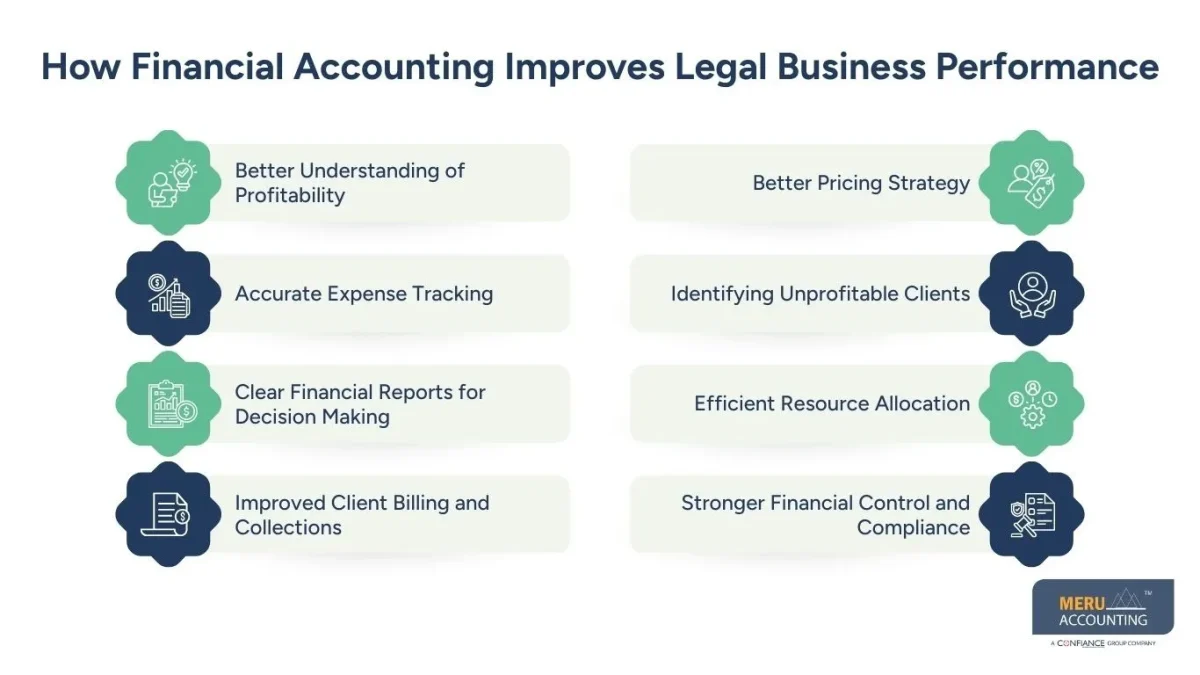
    Financial Accounting for Lawyers improves legal business performance in many ways:

    1. Better Understanding of Profitability

    Financial accounting helps lawyers know which clients and case types are most profitable. It shows the real value of each service by comparing revenue and time spent. This helps lawyers focus on the most rewarding work.

    2. Accurate Expense Tracking

    Every expense is recorded and categorized correctly, preventing hidden losses. This helps law firms control costs and reduce unnecessary spending with accurate financial accounting for lawyers.

    3. Clear Financial Reports for Decision Making

    Financial reports like profit and loss statements and balance sheets provide a clear financial view. Lawyers can make better decisions on hiring, expansion, and investments. This reduces risky choices and improves stability.

    4. Improved Client Billing and Collections

    Accounting tracks invoices, due dates, and payment status accurately. Lawyers can follow up on unpaid bills before they become a problem with financial accounting for lawyers. This improves cash flow and reduces debt.
    financial accounting for lawyers

    5. Better Pricing Strategy

    Financial accounting reveals the true cost of providing each service. Lawyers can set fees that cover costs and earn a profit. This prevents underpricing and improves revenue when financial accounting for lawyers is applied correctly.

    6. Identifying Unprofitable Clients

    Accounting helps spot clients who consume more time than they pay for. Lawyers can then change billing terms or stop working with such clients. This improves overall business performance.

    7. Efficient Resource Allocation

    Financial accounting shows where time and resources are being used most effectively. This helps lawyers assign staff and budget more wisely. It improves productivity and reduces waste.

    8. Stronger Financial Control and Compliance

    Accurate accounting ensures all transactions are recorded legally and correctly. It helps maintain proper audit trails and meet compliance requirements. This reduces the risk of penalties and legal issues.

    The Role of Financial Planning for Lawyers in Business Growth

    Financial planning for lawyers is the next step after accounting. While financial accounting provides the data, financial planning helps lawyers use that data to build a strong future.

    1. Setting Realistic Goals

    Financial planning for lawyers helps set realistic revenue goals based on past performance and future expectations. It helps law firms plan for growth without risking stability.

    2. Managing Cash Flow Better

    A lawyer may earn high revenue but still face cash shortages if payments are delayed. Financial planning for lawyers helps forecast future cash flow and plan for shortfalls. This ensures the law firm always has enough cash for salaries, rent, and other expenses.

    3. Planning for Taxes

    Lawyers often face high tax obligations. Financial planning for lawyers ensures the right amount of taxes is set aside throughout the year. This prevents surprises during tax season.

    4. Investing in Growth

    Financial planning for lawyers helps allocate money for marketing, hiring, technology, or new office space. When planned properly, these investments lead to better performance and higher revenue.

    How Financial Accounting Supports Better Cash Flow Management

    Cash flow is the most important factor for a law firm’s survival. Even profitable firms can face cash flow problems if payments are delayed or expenses rise unexpectedly.

    Financial Accounting for Lawyers helps manage cash flow by:

    1. Tracking Receivables and Payables

    Financial accounting tracks which clients owe money and when payments are due. It also tracks expenses and payment deadlines. This helps lawyers plan cash flow accurately.

    2. Forecasting Cash Flow

    Financial accounting helps create cash flow forecasts based on past trends and upcoming payments. This helps lawyers plan ahead and avoid sudden shortages.

    3. Identifying Cash Shortfalls Early

    With clear financial reports, lawyers can identify potential cash shortfalls before they become critical. This allows time to negotiate payments, reduce expenses, or plan financing.

    4. Better Budgeting

    Financial accounting helps create accurate budgets for salaries, office rent, and operational costs. When expenses are controlled, cash flow improves.

    How Outsourced Financial Accounting Can Benefit Lawyers

    Outsourcing financial accounting is a smart choice for many law firms. Lawyers focus on legal work, while accounting experts handle the finances. This improves legal business performance in multiple ways:

    1. Saves Time

    Lawyers spend most of their time on clients and cases. Outsourcing financial accounting frees up time so lawyers can focus on their core work.

    2. Ensures Accuracy

    Accounting experts use the correct methods and tools to record and report finances. This reduces errors and ensures accurate financial data.

    3. Provides Expert Financial Advice

    Outsourced accounting teams can provide guidance on improving profitability, reducing costs, and planning for growth.

    4. Improves Compliance

    Law firms must follow strict accounting and tax rules. Outsourced accounting ensures compliance and reduces the risk of penalties.

    5. Helps with Financial Planning for Lawyers

    Outsourced accounting can help with financial planning for lawyers by creating budgets, forecasting cash flow, and preparing tax plans.

    Common Mistakes Lawyers Make in Financial Accounting

    Many law firms make mistakes that reduce their business performance. Common mistakes include:

    1. Not Tracking Billable Hours Properly

    Without proper tracking, lawyers may lose billable time and revenue. Financial Accounting for Lawyers ensures every billable hour is recorded.

    2. Ignoring Expense Tracking

    Small expenses can add up. Not tracking expenses leads to poor profitability and hidden losses.

    3. Poor Client Billing and Collections

    Delayed invoices and late payments harm cash flow. Proper accounting ensures timely billing and collections.

    4. Mixing Personal and Business Finances

    Many lawyers mix personal and business expenses. This causes confusion and tax issues. Financial Accounting for Lawyers helps separate personal and business finances clearly.

    5. Not Using Financial Reports

    Some lawyers avoid financial reports because they seem complex. But these reports are essential for improving legal business performance.

    How Meru Accounting Helps Lawyers Improve Business Performance

    Meru Accounting understands the unique financial needs of law firms and lawyers. We offer specialized Financial Accounting for Lawyers services that help improve legal business performance through:

    1. Accurate Financial Reporting

    Meru Accounting provides clear financial reports that help lawyers understand profitability, costs, and cash flow.

    2. Financial Planning for Lawyers

    Our experts help create budgets, cash flow forecasts, and tax plans tailored to law firms.

    3. Better Billing and Collections

    We help law firms track billable hours, manage client invoicing, and improve collections.

    4. Expense Tracking and Cost Control

    We help law firms track every expense and identify areas to reduce costs.

    5. Outsourced Accounting Support

    Meru Accounting offers outsourced financial accounting services so lawyers can focus on legal work while we handle finances.

    If you want to improve your law firm’s performance, reduce financial stress, and plan for growth, Meru Accounting can help.

    Key Takeaways

    • Financial Accounting for Lawyers is essential for understanding profitability and cash flow.

    • Financial planning for lawyers helps law firms grow and stay stable.

    • Proper accounting improves billing, collections, and expense control.

    • Outsourced financial accounting saves time and improves accuracy.

    • Meru Accounting provides specialized financial accounting services for lawyers.

    FAQs

    Financial Accounting for Lawyers is the process of recording and tracking money coming in and going out of a law firm. It helps lawyers understand profits, costs, and cash flow.

    Financial planning for lawyers helps plan for taxes, cash flow, and growth. It helps lawyers make better decisions and avoid money problems.

    Yes. Financial accounting shows which clients and services are profitable, and helps control expenses and improve billing.

    Yes. Outsourcing saves time, improves accuracy, and provides expert financial advice.

    Financial accounting tracks invoices, payments, and expenses. It helps lawyers know when money will come in and go out, so they can plan better.