




Introduction to Cash Flow Statements
Understanding the financial health of a business is essential for stakeholders, investors, and management alike. One of the most critical financial documents that shed light on a company’s liquidity and cash management practices is the cash flow statement. This statement provides insights into how cash is generated, utilized, and retained during a specific period.
A cash flow statement is a financial report that summarizes the amount of cash and cash equivalents entering and leaving a company. This document reveals how a company manages its operating, investing, and financing activities, providing transparency that balance sheets and income statements alone cannot offer.
For anyone learning about finance or running a business, understanding and preparing an accurate cash flow statement is indispensable. In this comprehensive article, we will delve deeply into the concept of cash flow, outline a detailed sample statement, and showcase a real-world example along with the standard format used globally. By mastering this, you can better interpret cash flow data and make informed decisions.
What is a Cash Flow Statement?
The cash flow statement, also known as the statement of cash flows, is one of the three primary financial statements used by businesses, the other two being the balance sheet and income statement. It focuses explicitly on cash transactions, providing a detailed account of cash inflows and outflows across various categories.
The primary objective of the cash flow statement is to highlight the liquidity position of the business during an accounting period. Liquidity refers to how easily a company can convert assets into cash to meet short-term obligations.
The cash flow statement is divided into three main components:
- Operating Activities: This section covers cash generated or used during the company’s core business operations, including revenue collection and payment for expenses.
- Investing Activities: Details cash flows from buying or selling long-term assets, such as property, equipment, or investments.
- Financing Activities: Chronicles cash movements related to funding the company, such as issuing stock, borrowing, or repaying debts.
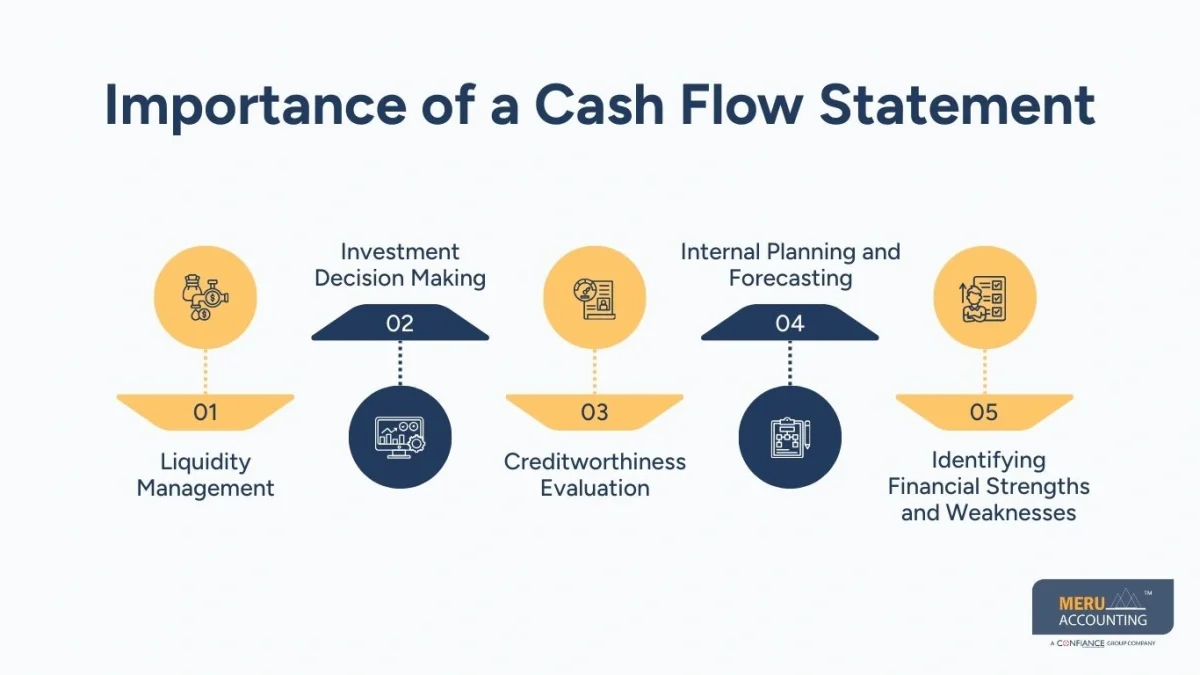
Importance of a Cash Flow Statement
A cash flow statement is essential for several reasons and plays a significant role in financial management and analysis:
- Liquidity Management: It helps businesses assess whether they have enough cash to pay bills, salaries, debts, and other expenses.
- Investment Decision Making: Investors use cash flow statements to determine the financial health and the risk-return profile before investing.
- Creditworthiness Evaluation: Banks and creditors rely on cash flow information to decide on lending funds to a company.
- Internal Planning and Forecasting: Management uses cash flow data for budgeting and planning future financial strategy.
- Identifying Financial Strengths and Weaknesses: It reveals how well a company generates cash compared to its expenses and investments.
Basic Format of a Cash Flow Statement
While formats may vary slightly depending on accounting standards like GAAP or IFRS, the underlying structure of a cash flow statement remains consistent globally. Below is a simple cash flow statement template that businesses commonly use for reporting:
| Section | Description | Amount |
|---|---|---|
| Operating Activities | Cash receipts and payments from daily business operations | $XXX,XXX |
| Less: Operating Expenses | Payments related to operational costs | ($XXX,XXX) |
| Net Cash from Operating Activities | Net inflow/outflow from operations | $XX,XXX |
| Investing Activities | Purchases and sales of long-term assets or investments | ($XX,XXX) |
| Net Cash from Investing Activities | Net inflow/outflow from investing | ($XX,XXX) |
| Financing Activities | Cash flow from funds raised or repaid | $XX,XXX |
| Net Cash from Financing Activities | Net inflow/outflow from financing | $XX,XXX |
| Net Increase (Decrease) in Cash | Total net cash movement during the period | $XX,XXX |
| Cash at Beginning of Period | Cash and cash equivalents at start of period | $XX,XXX |
| Cash at End of Period | Cash and cash equivalents at end of period | $XX,XXX |
Detailed Real-World Example of a Cash Flow Statement
To bring clarity to the abstract format shared above, consider the hypothetical company “XYZ Technologies,” a mid-sized software development business. Below is their detailed cash flow statement for the fiscal year ending December 31, 2023.
Operating Activities
The core business operations generated significant cash inflows primarily through software sales and subscription fees. Expenses paid included salaries, rent, utilities, and office supplies.
| Description | Amount (USD) |
|---|---|
| Cash Receipts from Customers | 1,500,000 |
| Payments to Suppliers and Employees | (900,000) |
| Other Operating Expenses Paid | (150,000) |
| Net Cash Provided by Operating Activities | 450,000 |
Investing Activities
XYZ Technologies invested in new computer equipment and sold off obsolete software licenses during the year.
| Description | Amount (USD) |
|---|---|
| Purchase of Computer Equipment | (100,000) |
| Proceeds from Sale of Software Licenses | 20,000 |
| Net Cash Used in Investing Activities | (80,000) |
Financing Activities
The company acquired additional financing to expand operations and repaid part of an existing loan.
| Description | Amount (USD) |
|---|---|
| Loan Proceeds | 200,000 |
| Repayment of Loan | (100,000) |
| Net Cash Provided by Financing Activities | 100,000 |
Summary of Cash Flows
| Category | Amount (USD) |
|---|---|
| Net Cash from Operating Activities | 450,000 |
| Net Cash Used in Investing Activities | (80,000) |
| Net Cash from Financing Activities | 100,000 |
| Net Increase in Cash | 470,000 |
| Cash at Beginning of Period | 150,000 |
| Cash at End of Period | 620,000 |
From this example, it is evident how the cash flow statement provides transparency about where XYZ Technologies’ cash came from and where it was spent. This knowledge allows users to understand liquidity changes and overall financial sustainability.
How to Prepare a Cash Flow Statement
Creating a reliable cash flow statement requires meticulous record-keeping and understanding of accounting principles. The direct method and indirect method are the two standard approaches, each with its own advantages.
Direct Method
The direct method lists all major operating cash receipts and payments during the reporting period. This method is straightforward because it presents actual cash inflows and outflows along with their specific sources or uses.
Indirect Method
The indirect method starts with net income from the income statement and adjusts for non-cash expenses, changes in working capital, and other items to reach net cash from operating activities. This approach is more commonly used in practice due to fewer data requirements and better linkage with the accrual accounting system.
Step-by-Step Guide for Preparation
- Collect financial data from the income statement and balance sheet.
- Decide on the reporting period for which cash flow is to be prepared.
- Adjust net income for non-cash items such as depreciation, amortization, and provisions.
- Analyze changes in working capital accounts, including inventory, receivables, and payables.
- Record cash flows from investing activities, including asset purchases and disposals.
- Record cash flows from financing activities, such as loans, repayments, dividends, and equity transactions.
- Calculate the net increase or decrease in cash and reconcile it with the cash balance at the beginning and end of the period.
Common Challenges When Preparing Cash Flow Statements
Although cash flow statements are vital for financial analysis, businesses may face difficulties during preparation due to a variety of factors. Some typical challenges include:
- Data Accuracy: Incomplete or inaccurate transaction records can lead to incorrect cash flow figures.
- Timing Differences: Matching timing of cash receipts and expenses to the correct period is sometimes complicated.
- Distinguishing Cash vs Non-Cash Transactions: Not all financial transactions involve cash, and differentiating these accurately is crucial.
- Complex Investing and Financing Flows: Tracking long-term asset purchases, loans, and equity activities demands careful analysis.
- Compliance with Accounting Standards: Adhering to GAAP, IFRS, or other standards requires specialized knowledge.
How Meru Accounting Supports Cash Flow Management
Meru Accounting is a trusted financial solutions provider offering expert assistance in accounting, bookkeeping, and financial statement preparation. With a team of experienced accountants and financial analysts, Meru Accounting helps businesses prepare accurate cash flow statements tailored to their unique operational needs.
They provide comprehensive services including cash flow forecasting, budgeting, and analysis to optimize liquidity management and enhance decision-making processes. Utilizing the latest software tools and industry best practices, Meru Accounting ensures reliable financial reporting and empowers companies to maintain strong cash flow health for sustainable growth.
By partnering with Meru Accounting, organizations can reduce errors, improve cash management, and focus on strategic priorities backed by solid financial data.
Conclusion
The cash flow statement is an indispensable financial document that provides a transparent view of a company’s cash inflows and outflows over a particular period. This article outlined the fundamentals, importance, and format of a cash flow statement and provided a detailed real-world example for better understanding.
Preparing an accurate cash flow statement requires a systematic approach, whether you choose the direct or indirect method. By mastering this process, stakeholders can make well-informed decisions based on liquidity and operational efficiency insights. Organizations such as Meru Accounting offer invaluable support in this endeavor, ensuring accuracy and compliance.
For businesses, routine analysis of cash flow statements is crucial to maintain financial stability, plan future investments, and achieve long-term success. Familiarity with this essential report enhances corporate transparency and promotes smart financial management.
FAQs
What is a cash flow statement?
A cash flow statement is a financial report that shows the inflows and outflows of cash within a business over a specific period.
Why is an example of cash flow statement important?
An example of cash flow statement helps in understanding the format and how to categorize cash activities such as operating, investing, and financing activities.
What are the main sections of a cash flow statement?
The main sections of a cash flow statement are cash flows from operating activities, investing activities, and financing activities.
How can I create a cash flow statement for my business?
To create a cash flow statement, you start by recording all cash receipts and payments, categorizing them into operating, investing, and financing activities, and then calculating the net change in cash.
Can you provide a real-world example of cash flow statement format?
A real-world example of cash flow statement format includes listing cash receipts from customers under operating activities, purchases or sales of assets under investing activities, and loan repayments or dividends under financing activities.


