


Commercial property is a long term investment. It is not built for quick wins. Office space, retail sites, and large buildings need years of steady care to reach full value. While rent and location matter, numbers matter just as much. This is where Commercial Property Accounting becomes essential.
Many owners believe that strong rent income means strong results. This is not always true. If costs are not tracked well, profit can shrink. If records are not clear, planning becomes guesswork. Over time, weak accounting hurts both cash flow and asset value.
Commercial Property Accounting gives owners control. It shows how much a property earns, how much it spends, and how well it performs year after year. It also supports smart choices that protect value in the long run. In this blog, we explain what Commercial Property Accounting is, how it shapes long term asset performance, and why it is vital for daily work.
What Is Commercial Property Accounting?
Commercial Property Accounting is the method used to record and manage all money linked to a commercial building. This includes rent, costs, taxes, loans, and long term spend. It applies to offices, shops, malls, plants, and mixed use sites.
It is more complex than home or small business accounting. A single site may have many tenants. Each tenant may follow a different lease rule. Some pay fixed rent. Some share costs. Some pay extra charges.
The role of Commercial Property Accounting is to make sure every rule is followed and every amount is correct.
Key parts of Commercial Property Accounting include:
- Rent setup and billing
- Shared cost tracking
- Vendor and service bills
- Repair and upkeep spend
- Tax and loan payments
- Monthly and yearly reports
- Owner and investor data
Commercial property management accounting works side by side with this process. It connects the numbers to daily site work. This helps managers handle billing, repairs, and vendor pay with ease.
When Commercial Property Accounting is done right, owners gain trust in their data. When it is weak, errors grow and value fades over time.
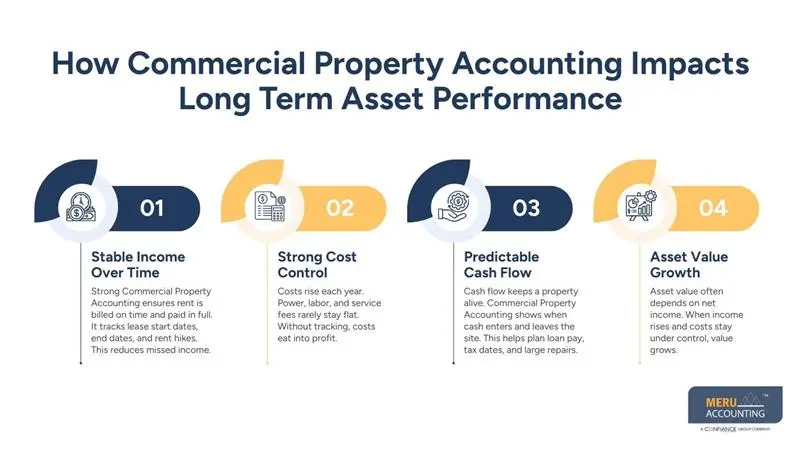
How Commercial Property Accounting Impacts Long Term Asset Performance
Long term asset performance depends on control, planning, and clear insight. Commercial Property Accounting supports all three.
Stable Income Over Time
Strong Commercial Property Accounting ensures rent is billed on time and paid in full. It tracks lease start dates, end dates, and rent hikes. This reduces missed income.
Late payments are spotted early. Follow ups are quicker. Over time, this keeps income stable.
Commercial property management accounting also helps apply rent changes on time. This protects income growth.
Strong Cost Control
Costs rise each year. Power, labor, and service fees rarely stay flat. Without tracking, costs eat into profit.
Commercial Property Accounting tracks every cost line. This helps owners compare costs across time and sites. High spending areas become clear.
This leads to better deals, vendor changes, or cost cuts. Over time, this improves net income.
Predictable Cash Flow
Cash flow keeps a property alive. Commercial Property Accounting shows when cash enters and leaves the site. This helps plan loan pay, tax dates, and large repairs.
With clear cash data, owners avoid sudden expenses. They can plan months ahead.
Commercial property management accounting supports this by matching pay dates with income cycles.
Asset Value Growth
Asset value often depends on net income. When income rises and costs stay under control, value grows.
Commercial Property Accounting helps raise net income by reducing leaks and waste. Clean records also build trust with buyers, banks, and partners.
A well kept set of books can raise sale value and speed up deals.
The Role of Commercial Property Management Accounting in Daily Operations
While Commercial Property Accounting looks at the full picture, commercial property management accounting handles daily money tasks. These tasks keep the site running without stress.
Accurate Tenant Billing
Each tenant has a lease with clear rules. Some pay base rent only. Some pay extra charges. Property management accounting ensures bills match lease terms.
Clear billing reduces disputes. Tenants trust the numbers. Managers save time.
Rent Tracking and Follow Ups
Late rent hurts cash flow. Property management accounting tracks who paid and who did not. This allows fast follow ups.
Over time, this builds strong payment habits.
Vendor and Service Payments
Every site uses many services. Cleaning, lift care, power, water, and more. Property management accounting tracks vendor bills and pay outs.
This avoids late fees, double pay, and service breaks.
Repair and Upkeep Planning
Daily repair costs tell a story. Rising repair spend may mean old gear. Commercial Property Accounting helps compare repair costs with replacement costs.
This supports smart long term choices that protect the asset.
Rule and Tax Support
Sites face tax rules and checks. Clean records help pass reviews with ease. Property management accounting keeps files ready and clear.
Key Financial Reports Used in Commercial Property Accounting
Reports turn data into insight. Commercial Property Accounting relies on clear reports to guide action.
Income Statement
The income statement shows income, costs, and profit for a set time. It helps owners see how the site performs month by month.
It is a core report in this type of accounting.
Balance Sheet
The balance sheet shows what the site owns and owes. It lists assets, debt, and equity. This report helps track loan levels and net worth.
Cash Flow Report
This report tracks real cash movement. It shows if the site can pay its bills on time. Cash flow is a key focus of property management accounting.
Rent Roll
The rent roll lists tenants, rent, lease dates, and pay status. It shows income strength and lease risk.
Budget vs Actual Report
This report compares planned spend with real spend. It shows where costs run high. It supports better future budgets.
Best Practices for Aligning Accounting With Property Management Goals
To gain full value from Commercial Property Accounting, it must align with site goals.
Keep Systems Simple
Simple systems reduce errors. One clear setup helps teams work faster and smarter.
Review Reports Often
Monthly review helps spot issues early. Waiting too long allows problems to grow.
Separate Cost Types
Daily costs and long term spend must stay apart. This shows true site health.
Plan With Data
Good accounting looks ahead. Past data guides future plans.
Use Skilled Teams
Experts understand lease rules, cost splits, and tax needs. This saves time and lowers risk.
How Commercial Property Accounting Supports Smarter Investment Decisions
Every commercial property choice carries risk. Buy, hold, sell, or upgrade decisions shape long term results. Commercial Property Accounting plays a key role in reducing that risk by turning raw data into clear insight.
Better Buy and Sell Timing
Strong Commercial Property Accounting shows true site performance. It reveals real income, true costs, and stable cash flow. This helps owners know when a site is ready to sell or when it needs more time to grow.
Buyers also trust clean books. Clear records speed due work and improve deal value.
Clear View of Return on Spend
Owners often invest in upgrades such as lifts, parking, or energy gear. Commercial Property Accounting tracks these costs and links them to income growth.
This helps measure return on spend. Poor return plans can be stopped early.
Risk Control Through Data
Vacancy risk, rent risk, and cost risk can hurt asset value. Commercial Property Accounting helps spot these risks early.
Commercial property management accounting tracks tenant trends, payment gaps, and rising costs. Early signals allow fast action.
Support for Loan and Refinance Plans
Banks and lenders rely on clean data. Commercial Property Accounting provides clear reports that support loan and refinance plans.
How Meru Accounting Supports Commercial Property Management Accounting
Meru Accounting offers complete commercial property management accounting support for property owners and managers. Our main focus is on providing clear data and simple reports.
Our services include:
- Rent billing and tracking
- Tenant charge setup
- Vendor bill control
- Monthly financial reports
- Budget and cash flow plans
- Clean and audit ready records
Our team aligns accounting with your daily needs. This helps property managers focus on growth, not paperwork. Property management accounting being our core expertise, we can make sure that your commercial property management accounting remains clear, accurate, and reliable.
Key Takeaways
- Commercial Property Accounting supports long term asset value
- Clear books protect income and cash flow
- Commercial property management accounting handles daily financial tasks
- Strong reports guide smart decisions
- Expert support adds control and trust
FAQs
It helps in tracking income, costs, and value over time. It also supports planning and growth.
Commercial property management accounting handles rent billing, daily costs, vendor pay, and cash flow.
Income statements, balance sheets, cash flow reports, rent rolls, and budget reports are most used.
Yes. Weak Commercial Property Accounting hides income loss and cost leaks. This lowers value over time.
Meru Accounting provides expert property management accounting services. We keep your books clean and useful.


