



Large scale construction projects are complex by nature. They involve long timelines, high capital investment, multiple vendors, and continuous cost movement. Without a proper accounting structure, even well planned projects can face budget overruns, reporting confusion, and financial risk.
This is where this accounting approach plays a vital role. It allows construction companies to track costs while the project is still ongoing, instead of waiting until completion. For projects that span several months or years, this accounting approach provides financial clarity and control.
In this blog, we will explore how this accounting approach supports better management of large scale projects, why it is essential, and how businesses can benefit from maintaining a well managed construction in process account.
What You Will Learn From This Blog
By the end of this blog, you will understand:
- The meaning and purpose of this accounting approach
- How a CIP account works in real projects
- Why this accounting method is critical for large scale construction
- Step by step guidance to manage this accounting approach
- Key benefits for financial control and reporting
- How Meru Accounting can support your construction accounting needs
This blog is designed for construction business owners, project managers, finance teams, and decision makers involved in large projects.
What Is Construction in Process Accounting?
This accounting approach is an accounting method used to record costs related to construction projects that are still in progress. Instead of expending these costs immediately, they are recorded as assets until the project is completed.
All project related expenses are accumulated in a construction in process account, often referred to as a CIP account. This account reflects the total investment made in the project so far.
What Costs Are Included in Construction in Process Accounting?
A CIP account may include:
- Direct material costs
- Labor and workforce expenses
- Equipment and machinery usage
- Subcontractor payments
- Engineering and design fees
- Permits and inspection costs
- Project specific overheads
This accounting approach ensures these costs are properly capitalized rather than distorting profit and loss statements.
Why Construction in Process Accounting Is Essential for Large Scale Projects
Supports Long Term Project Tracking
Large scale construction projects often span multiple accounting periods. Without this accounting approach, costs may appear as sudden losses or inconsistencies in financial statements. A construction in process account allows costs to be tracked continuously, offering a true picture of project progress.
In large projects, work is completed in phases, not all at once. Tracking costs over time helps match financial data with actual construction activity. This makes it easier to evaluate progress against timelines and milestones. It also helps management understand how much of the project is complete from a financial perspective.
Improves Financial Accuracy
Construction in process accounting prevents premature expense recognition. Costs remain on the balance sheet as assets until the project is completed, ensuring accurate financial reporting.
This approach avoids sharp fluctuations in profit and loss statements during long construction cycles. Financial reports remain stable and meaningful even when spending is high. As a result, decision makers can rely on the numbers to assess true business performance.
Enhances Cash Flow Visibility
With a clear CIP account, businesses can see:
- Total investment to date
- Remaining budget
- Capital tied up in ongoing projects
This visibility is crucial for managing cash flow in large developments.
When capital is tied up for long periods, cash flow planning becomes critical. Clear visibility helps businesses plan funding requirements in advance. It also supports better coordination between project teams and finance teams when releasing payments or arranging financing.
Ensures Compliance and Audit Readiness
Many accounting standards require capitalizing construction costs. Construction in process accounting helps meet these requirements and reduces audit risks.
Well maintained records make audits smoother and less time consuming. Supporting documents are easier to trace and verify. This reduces stress during audits and builds confidence with lenders, investors, and regulatory bodies.
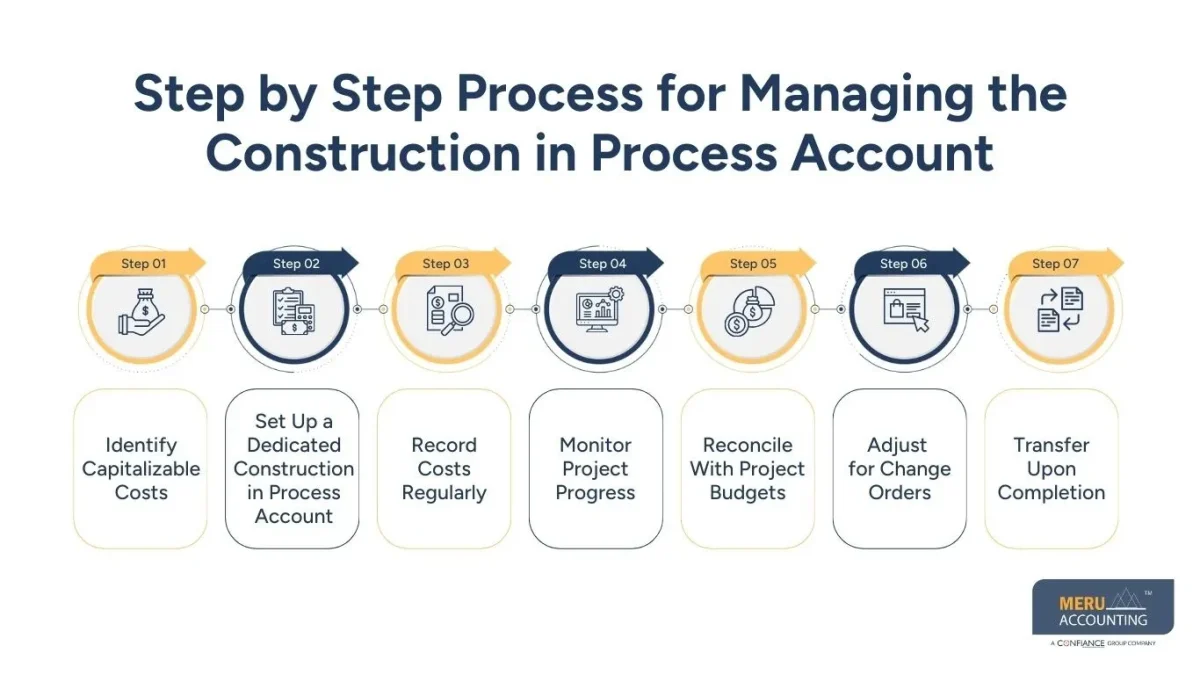
Step by Step Process for Managing the Construction in Process Account
Step 1: Identify Capitalizable Costs
Not all costs qualify under construction in process accounting. Only costs directly related to building the asset should be included in the CIP account.
Examples include construction labor, materials, and project specific overheads.
Step 2: Set Up a Dedicated Construction in Process Account
Create a separate CIP account for each major project. This ensures clean tracking and avoids mixing costs across projects.
Step 3: Record Costs Regularly
Timely recording is critical in construction in process accounting. All eligible costs should be posted to the CIP account as they occur.
This prevents delays, missing entries, and reporting errors.
Step 4: Monitor Project Progress
Regular reviews of the CIP account help align financial data with on site progress.
This step supports better forecasting and early identification of cost overruns.
Step 5: Reconcile With Project Budgets
Compare actual costs in the CIP account against approved budgets.
This allows project managers to take corrective action before costs spiral out of control.
Step 6: Adjust for Change Orders
Scope changes and project modifications are common in large scale construction. Construction in process accounting must reflect these changes accurately in the CIP account.
Step 7: Transfer Upon Completion
Once the project is complete and ready for use:
- The total balance in the CIP account is transferred to a fixed asset account
- Depreciation begins as per accounting rules
Benefits of Construction in Process Accounting for Large Scale Projects
Better Cost Control
Construction in process accounting provides real time insight into project spending, helping control costs before they exceed limits.
Accurate Financial Statements
By keeping costs in the construction in process account, businesses avoid distorted profit reports during long construction phases.
Improved Decision Making
Clear construction in process accounting data helps management decide:
- Whether to continue or pause projects
- When to release funds
- How to allocate resources
Reduced Compliance Risk
Maintaining a proper construction in process account ensures compliance with accounting standards and lender requirements.
Increased Stakeholder Confidence
Investors, lenders, and partners trust businesses that follow structured construction in process accounting practices.
How Meru Accounting Helps With Construction in Process Accounting
Specialized Construction Accounting Expertise
At Meru Accounting, we specialize in this accounting approach for small, mid sized, and large construction companies. Our team understands the practical challenges faced on active project sites. We work closely with internal teams to reduce confusion and delays. Every process is designed to support smoother operations and clearer communication.
Structured Construction in Process Account Setup
We help set up accurate CIP account structures tailored to your project needs. Each setup follows a clear and organized framework. This makes it easier to track progress over time. It also reduces dependency on manual adjustments later.
Ongoing Cost Tracking and Review
Our team ensures all eligible costs are recorded correctly under this accounting approach, reducing errors and rework. Regular reviews help catch issues early before they grow larger. Reports are checked for consistency and accuracy. This creates confidence in the numbers shared with stakeholders.
Budget Monitoring and Reporting
We provide regular reports that link CIP account balances with project budgets and timelines. These reports are easy to read and practical to use. They help teams understand where money is being spent. This supports timely and informed decisions.
Compliance and Audit Support
Meru Accounting ensures your accounting approach aligns with accounting standards, making audits smoother and stress free. Documentation is maintained in a clear and organized manner. Supporting records are always audit ready. This reduces last minute pressure during reviews.
Key Takeaways
- Construction in process accounting is essential for managing large scale construction projects
- A well maintained CIP account improves financial accuracy and control
- This method supports cash flow planning, compliance, and decision making
- Professional support simplifies construction in process accounting and reduces risk
- Meru Accounting helps construction businesses manage projects with confidence
FAQs
The purpose of construction in process accounting is to track construction costs as assets until the project is completed and ready for use.
A CIP account remains open until the project is completed and transferred to a fixed asset account.
Yes, certain project specific overhead costs can be included in the CIP account if they directly relate to construction.
While requirements vary, construction in process accounting is a best practice and often expected for large scale projects and audits.
Meru Accounting provides end to end support, from setting up CIP accounts to ongoing tracking, reporting, and compliance.


