



In the construction industry, staying on top of project costs and timelines is crucial for profitability. Construction in process accounting is a powerful method that helps builders track project expenses, monitor progress, and ensure financial accuracy.
By maintaining a detailed record of costs incurred and work completed, builders can make informed decisions and avoid unexpected overruns.
Using construction in process accounting not only helps builders keep financial records organized but also provides a clear picture of how each project is progressing. It allows project managers to spot potential issues early, such as cost overruns or delays, and take corrective action before they become major problems.
With this approach, builders gain better control over resources, timelines, and overall project profitability, ensuring that every construction project stays on track from start to finish.
What You Will Learn From This Blog
- How construction in process accounting helps builders track project costs and monitor progress.
- The Purpose and Benefits of Maintaining Project Cost and Progress Records.
- Key components of construction in process accounting, including materials, labor, subcontractor costs, overhead, and progress measurement.
- Step-by-step guidance on setting up project cost and progress tracking for accurate project management.
- How to analyze project performance by comparing estimated vs actual costs and tracking milestones.
- Techniques to evaluate labor efficiency and monitor material usage.
- Common mistakes builders make in construction in process accounting and how to avoid them.
Introduction to Construction in Process Accounting
Construction in process accounting is a method that involves tracking the costs and progress of construction projects while they are still ongoing, rather than waiting until the project is completed.
This approach allows builders to record all expenses, including materials, labor, subcontractor payments, and overhead, as they occur.
By maintaining detailed project cost and progress records, builders can closely monitor project performance, manage cash flow, and ensure that each project stays within budget. Unlike traditional accounting, which focuses on finished projects, this approach emphasizes recording costs and progress in real time.
The role of construction in process accounting in financial management is significant for builders. It enables them to maintain accurate financial statements, assess project profitability, and plan resources efficiently.
With timely and accurate information, builders can make informed decisions, prevent cost overruns, and improve the overall financial health of their construction business. By monitoring ongoing project costs and progress, builders gain better control over each project, ensuring that work is completed efficiently and profitably.
Key Components of Construction in Process Accounting
Direct Material Costs
Materials used in construction, such as cement, steel, and wood, are tracked through project cost records to ensure accurate cost allocation. Accurate tracking of material costs helps prevent waste and keeps the project within budget.
Direct Labor Costs
Labor expenses, including wages for workers and supervisors, are carefully recorded to monitor project expenditures. This allows builders to evaluate workforce efficiency and control labor-related costs effectively.
Subcontractor Expenses
Costs paid to subcontractors are captured through project cost and progress tracking, helping builders identify potential overspending. Tracking subcontractor payments ensures timely payments and avoids disputes or project delays.
Overhead Allocation
Indirect costs like site management, equipment depreciation, and utilities are included to provide a complete view of project expenses. Including overhead ensures that total project costs reflect both direct and indirect spending for accurate budgeting.
Progress Measurement
Builders use percentage completion methods or milestone tracking to record the value of work completed on a project. Regular progress measurement allows for timely adjustments to resources and schedules, keeping projects on track.
Benefits of Using Construction in Process Accounting for Builders
Accurate Cost Tracking
Construction in process accounting ensures that every expense is recorded accurately, reducing the risk of overspending. This helps builders maintain precise budgets and avoid unexpected financial surprises.
Better Cash Flow Management
By monitoring ongoing project costs and progress, builders can plan for cash needs and avoid liquidity issues during project execution. This allows for smoother financial planning and timely payments to workers and suppliers.
Improved Project Planning
Detailed financial records allow builders to schedule resources efficiently and forecast project timelines. This ensures projects stay on track and meet deadlines without unnecessary delays.
Identifying Profit Opportunities
Builders can determine which projects or activities are more profitable and adjust their focus accordingly. It highlights areas where efficiency can be increased and costs minimized for better returns.
Enhanced Decision-Making
Real-time insights from construction in process accounting help builders make informed operational and financial decisions. Builders can quickly respond to issues and optimize strategies for each ongoing project.
How to Set Up Work-in-Progress Tracking for Construction Projects
Choose an Accounting Method
Decide whether to use completed contract or percentage of completion methods based on your project size and accounting standards. Selecting the right method ensures that project costs and revenues are recognized accurately.
Create a Separate Account
Set up a dedicated project cost and progress tracking system in your accounting software or ledger to track ongoing projects. A separate structure keeps all project expenses organized and easy to monitor.
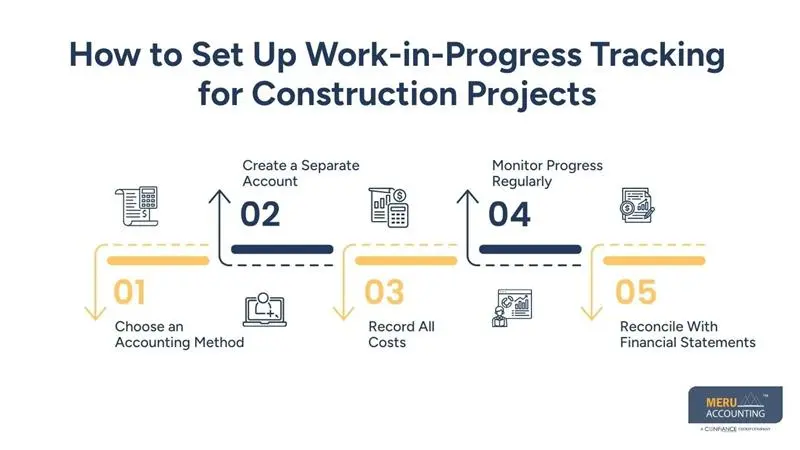
Record All Costs
Capture direct materials, labor, subcontractor payments, and allocated overhead accurately in the account. Proper cost recording helps prevent errors and provides a clear view of project spending.
Monitor Progress Regularly
Update project progress and cost records at regular intervals to reflect the actual work completed. Frequent updates allow timely adjustments to schedules, resources, and budgets.
Reconcile With Financial Statements
Ensure that project cost and progress records align with the general ledger to maintain accurate financial reporting. Regular reconciliation prevents discrepancies and keeps financial records reliable.
Using Construction in Process Accounting to Analyze Project Performance
Compare Estimated vs Actual Costs
Builders can identify cost overruns or savings by comparing budgeted amounts with actual expenses recorded in project cost and progress records. Timely adjustments based on these comparisons help keep the project on budget.
Track Milestone Completion
Milestone tracking measures project progress and shows whether deadlines are being met. Regular tracking ensures projects stay on schedule and resources are allocated efficiently.
Evaluate Labor Efficiency
Labor costs can be analyzed against project progress to determine if workforce productivity is on target. Identifying inefficiencies allows better labor deployment and reduces unnecessary costs.
Monitor Material Usage
Material consumption can be checked against project plans to prevent wastage and manage supply costs effectively. Proper tracking of materials prevents delays caused by shortages or over-ordering.
Identify Financial Risks
Construction in process accounting helps detect financial risks early, allowing builders to take corrective measures. Early detection ensures problems do not escalate into costly project delays or overruns.
Review Subcontractor Performance
Subcontractor contributions and expenses can be assessed to ensure work quality and timeliness. Reliable partners can be identified and project dependencies managed more effectively.
Assess Project Profitability
Total costs and revenue recognition can be compared to evaluate project margins. Understanding profitability helps builders focus on the most lucrative projects.
Adjust Resource Allocation
Data from project cost and progress tracking allows resources to be reassigned where needed. Optimal utilization of labor, materials, and equipment improves overall project efficiency.
Forecast Future Project Needs
Trends from ongoing projects can be used to anticipate cash flow and material requirements for upcoming projects. Accurate forecasting supports better planning and reduces last-minute disruptions.
Common Mistakes Builders Make in Construction in Process Accounting
Incomplete Cost Recording
Failing to record all project expenses can distort project cost records and impact decision-making. Missing costs may lead to understated budgets and unexpected overruns later in the project.
Ignoring Overhead Allocation
Some builders overlook indirect costs, which can result in underestimating total project expenses. This creates an incomplete view of profitability and weakens long-term pricing strategies.
Not Updating Progress Regularly
Delays in updating project progress and cost records can lead to inaccurate financial reporting. Outdated information also makes it harder to identify schedule delays and cost issues early.
Mixing Multiple Projects
Tracking costs from several projects in a single cost record can cause confusion and reporting errors. It reduces visibility into individual project performance and complicates audits.
Poor Reconciliation Practices
Neglecting to reconcile project cost records with the general ledger can create discrepancies and misreporting. Over time, these inconsistencies undermine the reliability of financial statements and management reports.
How Meru Accounting Can Help Builders With Construction in Process Accounting
Expert Setup of Work-in-Progress Tracking Systems
Meru Accounting helps builders establish clear and accurate project cost and progress tracking systems tailored to their project needs. A well-structured setup ensures smooth tracking of costs and progress from the start of each project.
Accurate Cost Recording
Our team ensures all direct and indirect costs are recorded properly, preventing errors and oversights. Accurate records provide builders with a clear understanding of actual project expenses.
Regular Progress Monitoring
We provide builders with consistent updates on project progress, keeping financial records accurate and up to date. Ongoing monitoring supports timely decisions and keeps projects aligned with budgets and timelines.
Performance Analysis
Meru Accounting analyzes your project cost and progress records to identify areas of improvement and optimize profitability. Detailed analysis helps builders understand cost trends and improve project outcomes.
Compliance and Reporting Support
Builders receive professional assistance in adhering to accounting standards and preparing reports for stakeholders and auditors. Proper reporting enhances transparency and supports confident financial decision-making.
Take control of your project finances with expert support in construction in process accounting. Contact Meru Accounting today to strengthen cost tracking, reporting accuracy, and project oversight.
Key Takeaways
- Construction in process accounting is essential for builders to track project costs and performance accurately.
- Maintaining dedicated project cost and progress records ensures transparency and financial clarity.
- Builders benefit from improved cash flow management, better project planning, and higher profitability.
- Regular monitoring and accurate cost recording prevent financial mistakes and project delays.
- Partnering with accounting experts like Meru Accounting simplifies the setup and management of project cost and progress tracking systems.
FAQs
Construction in process accounting shows how much work is completed and how much cost has been recorded. This helps builders compare progress with the budget and timeline.
Ongoing project cost and progress records include material costs, labor costs, subcontractor charges, and related overhead for active construction projects.
Yes, construction in process accounting helps small builders control costs, avoid surprises, and understand project performance even on smaller jobs.
Once the project is completed, the accumulated balance in the project cost and progress records is transferred to the completed project or fixed asset account.
Builders should review construction in process accounting records monthly or at major project stages to ensure costs and progress are accurate.


