



Manufacturing businesses operate in an environment where controlling costs and improving financial efficiency are essential for long-term success. A cost accountant plays a critical role in helping these businesses achieve their financial goals by monitoring production costs, analyzing expenses, and providing insights that enhance profitability.
By combining industry knowledge with precise accounting techniques, cost accountants ensure that manufacturers can make informed decisions, maintain operational efficiency, and optimize resources.
What You Will Learn From This Blog
- Understand the responsibilities of a cost accountant in manufacturing and how they influence financial health.
- Learn how accounting for manufacturing practices improves operational efficiency and helps reduce unnecessary expenses.
- Discover practical methods that cost analysts use to manage and control production costs effectively.
- Gain insights into how cost analysts create accurate budgets and predict future financial needs.
- Identify common financial challenges in manufacturing and understand how cost accountants provide solutions.
What Is A Cost Accountant And Why They Are Vital In Manufacturing
A cost accountant is a financial professional who focuses on recording, analyzing, and reporting all costs related to production. They carefully track material, labor, and overhead expenses to calculate the total cost of manufacturing products.
This detailed monitoring ensures that financial statements are accurate, which is essential for manufacturers who rely on precise data for pricing and profit calculations.
Beyond accuracy, cost accountants play a key role in supporting management decisions. By preparing detailed cost reports, they provide insights that help in pricing strategies, procurement choices, and production planning.
They also analyze production workflows to identify areas where efficiency can be improved, which directly impacts profitability and resource utilization. In addition, cost analysts help manufacturers navigate complex tax and accounting regulations.
Through accounting for manufacturing, they link financial data with operational processes, giving management a clear view of cost distribution and ensuring compliance with all legal requirements.
This combination of financial oversight and operational insight makes financial analysts vital for maintaining both efficiency and profitability in manufacturing businesses.
How Cost Accountants Streamline Manufacturing Finances
Tracking Raw Material Costs
Cost accountants maintain detailed records of raw material usage, helping manufacturers minimize waste and reduce expenses. This ensures that purchasing decisions are data-driven and cost-effective.
Labor Cost Analysis
They monitor workforce costs, ensuring that labor is utilized efficiently and overtime or unnecessary expenses are kept in check. This helps prevent overspending while maintaining productivity.
Overhead Allocation
Financial analysts distribute indirect costs like utilities and maintenance appropriately, preventing miscalculated product costs. Proper allocation gives a more accurate picture of product profitability.
Identifying Cost-Saving Opportunities
By reviewing financial data regularly, cost analysts spot areas where spending can be reduced without affecting product quality. This allows manufacturers to invest savings into growth or process improvements.
Enhancing Financial Reporting
Accurate financial reports prepared by financial analysts help manufacturers track performance, measure profitability, and make better business decisions. Clear reporting also builds trust with stakeholders and investors.
Integration With Production Planning
They coordinate with production teams to align financial goals with operational activities, ensuring that budgets and production plans match. This alignment reduces financial surprises and improves overall efficiency.
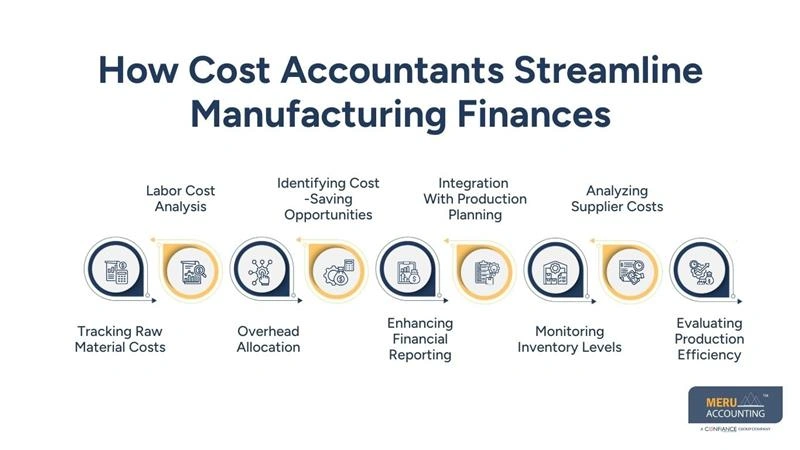
Monitoring Inventory Levels
Cost accountants track inventory to avoid overstocking or shortages. Efficient inventory management reduces holding costs and ensures smooth production flow.
Analyzing Supplier Costs
They review supplier pricing and contracts to identify cost-effective options. This helps manufacturers get the best value without compromising quality.
Evaluating Production Efficiency
Cost analysts assess production workflows to pinpoint inefficiencies. By recommending improvements, they help reduce wasted resources and improve overall operational performance.
The Role Of Accounting For Manufacturing In Operational Efficiency
Understanding Manufacturing Costs
Accounting for manufacturing provides a detailed breakdown of all costs, from raw materials to labor and overhead, giving management a clear financial picture. Hidden costs across production stages can be uncovered to optimize spending.
Cost Control and Management
Enables manufacturers to control expenses by highlighting high-cost areas and suggesting ways to reduce unnecessary spending. Proper resource allocation improves profit margins and operational efficiency.
Inventory Management
Accurate accounting ensures that inventory levels are optimized, avoiding overstocking or stock shortages. Carrying costs are minimized and losses from obsolete stock are reduced.
Pricing Strategy Support
With proper cost data, manufacturers can set competitive prices while maintaining healthy profit margins. Quick response to market changes becomes possible without hurting profitability.
Streamlining Processes
A manufacturing accountant helps identify inefficient production processes, allowing for workflow improvements and better resource utilization. Bottlenecks and redundancies can be addressed to support continuous improvement initiatives.
Financial Transparency
By using proper accounting practices, manufacturers gain transparency into their finances, which helps in securing loans or attracting investors. Stakeholders can trust the financial records, aiding in long-term strategic planning.
Key Techniques Cost Accountants Use To Reduce Production Costs
Standard Costing
Cost accountants assign standard costs to materials and labor, comparing them with actual costs to identify variances and reduce overspending. This approach highlights inefficiencies and prevents unnecessary cost escalation.
Variance Analysis
This technique helps pinpoint where actual production costs differ from estimates, enabling corrective actions. Identifying variances early allows for timely adjustments in processes and budgeting.
Activity-Based Costing
By analyzing costs per activity, a cost analyst can determine which processes consume the most resources and find ways to reduce them. This ensures resources are focused on high-value activities that improve profitability.
Budget Monitoring
Regularly reviewing budgets ensures that departments stay within their financial limits, avoiding unexpected overspending. Monitoring budgets continuously helps prevent financial surprises and maintain operational control.
Waste Reduction Initiatives
Financial analysts track material usage and production inefficiencies, helping manufacturers minimize waste and improve profitability. Reducing waste also improves environmental sustainability and overall efficiency.
Supplier Cost Analysis
They assess vendor pricing to negotiate better deals or choose more cost-effective suppliers. Evaluating supplier performance can lead to long-term cost savings and stronger partnerships.
How Cost Accountants Improve Budgeting And Forecasting For Manufacturers
Historical Data Analysis
Cost analysts use past financial records to identify trends and make accurate predictions for future costs. Historical insights provide a foundation for reliable decision-making.
Setting Realistic Budgets
They create budgets based on detailed cost data, ensuring that departments have clear financial targets. Realistic budgets guide production planning and resource allocation effectively.
Predicting Production Expenses
Forecasting enables manufacturers to anticipate costs for materials, labor, and overhead, reducing the risk of financial surprises. Proactive forecasting supports strategic planning and avoids operational bottlenecks.
Cash Flow Management
Cost accountants ensure that cash inflows and outflows are monitored, maintaining sufficient liquidity for operations. Strong cash flow management allows smooth operations and timely payments to suppliers.
Scenario Planning
They develop multiple budget scenarios to prepare for unexpected changes in production or market conditions. Scenario planning enhances flexibility and reduces financial risk in uncertain environments.
Supporting Strategic Decisions
By providing reliable forecasts, financial analysts help management make long-term decisions with confidence. Accurate data empowers leaders to invest wisely and drive growth.
Utilizing Accounting For Manufacturing Software For Accurate Reporting
Automation of Data Entry
Modern accounting software reduces manual data entry, minimizing errors and saving time for cost accountants. Automation allows accountants to focus on analyzing data rather than recording it.
Real-Time Financial Updates
Manufacturers can access up-to-date financial information, enabling timely decision-making. Real-time insights help managers respond quickly to changes in production or costs.
Detailed Cost Tracking
Accounting for manufacturing software allows tracking of each expense, from raw materials to finished goods, improving reporting accuracy. Precise tracking identifies areas where costs can be controlled or optimized.
Integration With Inventory Systems
Financial analysts can monitor inventory costs, linking stock levels to financial performance. Integration prevents overstocking and reduces capital tied up in unused inventory.
Custom Reporting Features
Software enables tailored reports, helping management focus on critical financial metrics. Custom reports make complex data easier to understand and act upon.
Enhanced Forecasting Tools
Advanced features support budgeting and forecasting, allowing for better planning and financial control. Forecasting tools help anticipate future trends and guide resource allocation effectively.
Common Challenges In Manufacturing Finances And How Cost Accountants Solve Them
Fluctuating Material Costs
Financial analysts monitor market trends and adjust budgets to minimize the impact of material price changes. Proactive planning reduces the risk of unexpected spikes affecting production.
Labor Cost Overruns
They track labor expenses closely and recommend scheduling or staffing changes to control costs. Efficient labor management improves productivity and reduces unnecessary overtime costs.
Inefficient Production Processes
By analyzing cost data, cost accountants identify bottlenecks and suggest workflow improvements. Improved processes enhance throughput and reduce operational delays.
Inventory Mismanagement
Financial analysts use accounting for manufacturing tools to maintain optimal stock levels and prevent losses. Proper inventory oversight minimizes storage costs and avoids production halts.
Compliance Issues
They ensure adherence to tax laws and accounting standards, avoiding legal or financial penalties. Maintaining compliance strengthens the company’s reputation and investor confidence.
Limited Financial Visibility
With accurate reports, cost accountants provide management with clear insights into the company’s financial health. Transparent finances help in securing funding and making informed strategic decisions.
Top Skills And Qualifications Of An Effective Cost Accountant
Strong Analytical Skills
Cost accountants must be able to analyze large volumes of financial data to identify trends and cost-saving opportunities. Analytical skills enable quick identification of problem areas and solutions.
Attention To Detail
Precision in recording costs and preparing reports ensures accurate financial information. Careful scrutiny prevents errors that could lead to financial losses.
Understanding Of Manufacturing Processes
Knowledge of production workflows helps in connecting financial data with operational performance. This understanding supports recommendations that align with production realities.
Proficiency In Accounting Software
Familiarity with tools for accounting for manufacturing improves efficiency and accuracy. Software skills allow faster reporting and more reliable financial analysis.
Effective Communication
Financial analysts must explain complex financial information in simple terms to managers and staff. Clear communication ensures everyone understands financial implications and acts accordingly.
Problem-Solving Ability
They need to identify financial issues and provide practical solutions to control costs. Creative problem-solving enhances operational efficiency and profitability.
Why Hiring A Cost Accountant Is A Strategic Move For Manufacturing Businesses
Cost Efficiency
A cost accountant helps manufacturers identify areas to reduce expenses, improving overall profitability. Controlled costs give the company a competitive edge in pricing and production.
Accurate Financial Data
With precise reporting, businesses can make better decisions and maintain transparency. Reliable data builds trust with investors, partners, and stakeholders.
Better Budgeting
Financial analysts create realistic budgets and forecasts, minimizing financial risks. Well-planned budgets support sustainable growth and resource optimization.
Improved Operational Efficiency
Linking accounting for manufacturing with production processes allows for optimized workflows. Efficient operations enhance product quality and reduce time-to-market.
Compliance Assurance
They ensure all accounting practices meet regulatory standards, avoiding legal issues. Consistent compliance protects the business from fines and reputational damage.
Support For Business Growth
A financial analyst provides insights that help manufacturers plan expansion and manage resources effectively. Data-driven guidance ensures that growth initiatives are financially viable.
How Meru Accounting Supports Manufacturing Businesses
Expertise In Cost Accounting
Meru Accounting has a team of professionals skilled in cost accounting and accounting for manufacturing, providing accurate financial insights. Advanced analysis ensures manufacturers make informed decisions that enhance profitability.
Customized Financial Solutions
Services are tailored based on each manufacturer’s production scale and financial requirements. Flexible solutions address unique challenges and improve overall financial management.
Software Integration
The team helps implement and manage manufacturing accounting software for real-time reporting and analysis. Integration streamlines data flow between production and finance for faster, accurate reporting.
Budgeting And Forecasting Services
Meru Accounting assists in creating precise budgets and forecasts to guide financial decisions. Forecasts help plan resources efficiently and prepare for future production needs.
Ongoing Support And Consultation
Continuous support is provided, helping manufacturers address challenges and improve financial efficiency. Regular consultations ensure that financial strategies remain aligned with business goals.
Global Experience
Serving clients worldwide, Meru Accounting brings international best practices to manufacturing finance management. Experience with diverse markets allows the adoption of strategies that optimize global operations.
Key Takeaways
- A financial analyst is essential for tracking production costs, improving efficiency, and ensuring financial accuracy.
- Accounting for manufacturing provides a clear picture of operational costs and supports effective budgeting.
- Cost accountants use techniques like standard costing, variance analysis, and activity-based costing to reduce expenses.
- Implementing accounting for manufacturing software enhances reporting, inventory management, and forecasting.
- Hiring a skilled financial analyst is a strategic investment for long-term profitability and business growth.
FAQs
A cost accountant tracks production costs, analyzes expenses, and provides insights that help reduce waste and improve profitability.
Accounting for manufacturing gives a clear view of material, labor, and overhead costs, helping businesses make informed pricing and budgeting decisions.
By monitoring material usage, labor efficiency, and overhead expenses, a cost analyst identifies areas to reduce costs without affecting product quality.
They use specialized accounting for manufacturing software to track costs, manage inventory, and generate accurate financial reports.
Hiring a cost analyst is useful when a business wants better control over costs, accurate budgeting, reliable forecasting, and improved financial decision-making.


