



In every manufacturing company, maintaining accurate financial records and understanding production costs is essential. A cost accountant plays a key role in ensuring that the company controls expenses, tracks resources, and improves profitability.
Working closely with production teams, a cost accountant bridges the gap between numbers and manufacturing processes. Their work helps managers make informed decisions about production schedules, resource allocation, and cost efficiency.
By analyzing data and monitoring costs, a cost analyst ensures that manufacturing operations run smoothly while staying within budget. This blog explains how a cost accountant works with production teams and why their role is vital for success in accounting for manufacturing.
What You Will Learn From This Blog
- The responsibilities of a cost accountant in manufacturing.
- How accounting for manufacturing affects production efficiency.
- Methods used by cost analysts to track material costs.
- Collaboration strategies between cost accountants and production managers.
- Overhead allocation and cost analysis techniques.
- Benefits of involving a cost accountant in production planning.
What Is The Role Of A Cost Accountant In A Manufacturing Company
Planning And Budgeting
A cost accountant prepares budgets for production operations, ensuring that material and labor costs are tracked accurately. They help prevent overspending and plan resources efficiently.
Recording Production Costs
They maintain detailed records of costs associated with raw materials, labor, and overhead, ensuring that every expense is accounted for properly. This makes it easy to track production efficiency.
Monitoring Cost Variances
A cost analyst identifies discrepancies between estimated and actual costs, helping production teams adjust processes to control expenses. These insights allow quick corrective actions.
Supporting Pricing Decisions
By analyzing manufacturing costs, a cost analyst helps management set competitive prices without compromising profit margins. This ensures profitability stays on track.
Financial Reporting
They generate reports showing the cost of production and profitability of products, which is essential for decision-making in accounting for manufacturing. Management gains clarity on profitable products and cost-saving opportunities.
Why Accounting For Manufacturing Is Critical For Production Efficiency
Cost Visibility
Accounting for manufacturing provides visibility into all production-related expenses, allowing management to make informed decisions. This clarity helps teams prioritize spending and focus on high-impact areas.
Resource Optimization
Accounting for manufacturing identifies areas where resources like materials, labor, or machinery are underutilized or overused. Optimizing resources reduces idle time and improves overall productivity.
Waste Reduction
A cost analyst tracks losses and wastage in production, helping teams minimize unnecessary costs. Lower waste directly contributes to higher profit margins and sustainability.
Process Improvement
Detailed cost tracking highlights inefficiencies and potential improvements in production processes. Streamlining operations ensures smoother workflows and faster production cycles.
Profitability Analysis
Understanding the full cost of production ensures that the company focuses on the most profitable products and projects. This allows better decision-making on which products to scale or discontinue.
How A Cost Accountant Tracks Material Costs In Manufacturing
Material Purchase Tracking
They record all purchases of raw materials, ensuring invoices and delivery notes match actual usage. Accurate purchase tracking helps prevent overpayment and ensures proper budgeting.
Inventory Management
A cost accountant monitors inventory levels to prevent shortages or excess stock, which can affect production flow. Maintaining optimal inventory supports continuous production without unnecessary delays.
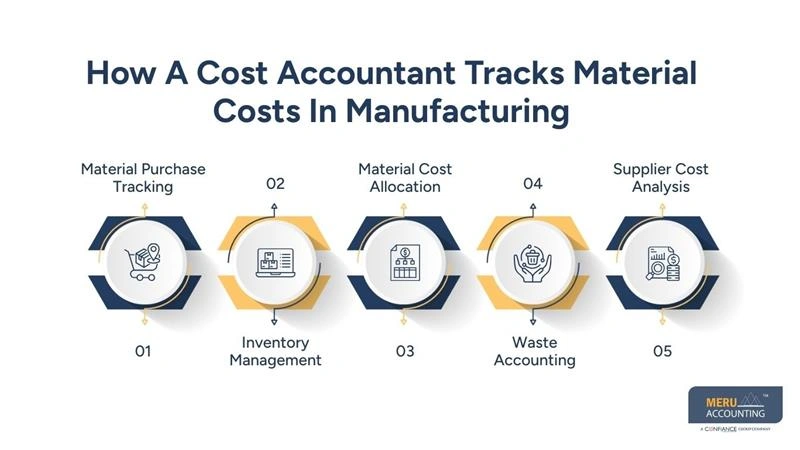
Material Cost Allocation
They assign costs to specific production batches, enabling accurate calculation of the cost per unit. Precise allocation helps management understand the true cost of each product.
Waste Accounting
Any scrap or unusable material is recorded, allowing the production team to minimize wastage. Tracking waste highlights areas for process improvement and cost reduction.
Supplier Cost Analysis
By tracking supplier prices and delivery times, cost accountants help negotiate better rates for raw materials. Evaluating suppliers regularly ensures the company gets the best value for purchases.
Collaboration Between Cost Accountants And Production Managers
Joint Planning Meetings
Cost analysts attend production meetings to discuss budgets, schedules, and cost-saving measures. These meetings help align financial goals with production targets for smoother operations.
Real-Time Cost Tracking
They provide production managers with up-to-date cost data, helping make immediate operational decisions. Quick access to accurate information prevents overspending and supports timely decisions.
Resource Allocation Guidance
A cost analyst advises production teams on the most cost-effective use of labor and materials. Proper allocation ensures maximum productivity without unnecessary expenses.
Problem-Solving Together
When production delays or cost overruns occur, they work jointly to find solutions and prevent recurrence. Collaborative problem-solving reduces errors and keeps projects on schedule.
Performance Reviews
They analyze production efficiency and cost-effectiveness, offering insights to improve future operations. Reviewing performance regularly helps identify trends and plan improvements.
Process Coordination
Cost accountants and production managers coordinate workflows to ensure resources are used efficiently. Better coordination minimizes bottlenecks and increases overall output.
Forecasting And Planning
They collaborate to forecast future production costs based on historical data and upcoming projects. Accurate forecasting helps management plan budgets and resource needs effectively.
Risk Management
Cost analysts help production managers identify financial risks in manufacturing processes. Addressing risks early reduces potential losses and supports stable operations.
What Is Overhead Allocation And How Cost Accountants Handle It
Understanding Overhead
Overhead includes indirect costs like electricity, machinery maintenance, and factory rent. Knowing these costs helps the company plan budgets more effectively and avoid surprises.
Identifying Cost Drivers
A cost accountant determines which factors drive overhead costs in manufacturing. Recognizing these drivers allows teams to control unnecessary spending and optimize operations.
Allocating Overhead Accurately
They assign overhead costs to different products or production units fairly, ensuring precise product costing. Accurate allocation ensures each product reflects its true cost for better pricing decisions.
Monitoring Overhead Variances
Any differences between allocated and actual overhead are analyzed to improve budget planning. Tracking variances helps detect inefficiencies and reduce unnecessary expenses.
Reporting And Recommendations
They provide insights to management on overhead management and suggest cost-cutting measures. Reports guide leadership in making informed decisions to enhance overall production profitability.
How Cost Accountants Perform Cost Analysis For Better Manufacturing Decisions
Analyzing Direct Costs
A cost accountant examines direct costs such as materials and labor for each product line. This analysis ensures accurate costing and helps identify areas to reduce unnecessary expenses.
Studying Indirect Costs
They review indirect expenses and find ways to optimize spending without affecting production quality. Reducing indirect costs improves overall profitability and operational efficiency.
Cost Comparisons
By comparing costs across products or periods, they identify trends and areas for improvement. Comparisons highlight which products or processes need attention for better results.
Profit Margin Evaluation
They calculate the profitability of each product to guide production priorities and pricing strategies. Understanding profit margins helps focus on the most financially valuable products.
Supporting Strategic Decisions
Cost analysis helps management decide on expanding product lines or reducing unprofitable operations in accounting for manufacturing. These insights allow for smarter planning and better allocation of resources.
Benefits Of Involving A Cost Accountant In Manufacturing Planning
Improved Cost Control
A skilled accountant ensures that every aspect of production is monitored to avoid overspending. Controlling costs helps maintain budgets and supports financial stability.
Better Forecasting
They provide accurate cost data to predict future production expenses and revenue. Reliable forecasts help plan for growth and reduce unexpected financial challenges.
Efficient Resource Usage
Collaboration with production teams ensures materials and labor are used optimally. Efficient usage reduces waste and maximizes output from available resources.
Reduced Waste
Tracking costs allows the company to minimize scrap and inefficient practices. Lower waste leads to higher profitability and more sustainable production.
Enhanced Decision-Making
Cost accountants provide clear insights that help management make informed operational and financial decisions. Data-driven decisions improve production planning and overall business performance.
How Meru Accounting Supports Manufacturing Companies
Expert Cost Accountants
Understanding the complexities of accounting for manufacturing is our specialty. At Meru Accounting, we provide accurate cost tracking and actionable insights for production teams.
Customized Solutions
Financial tracking, budgeting, and reporting are tailored to the specific needs of a manufacturing operation. Our custom solutions help address challenges efficiently and improve overall operational performance.
Real-Time Reporting
Up-to-date insights on material costs, overhead, and labor expenses support better production management. Access to real-time data allows us to make quicker decisions and maintain cost control.
Process Improvement Guidance
Production teams receive guidance to optimize resource usage and reduce waste. Our approach helps streamline operations and increase profitability.
Compliance And Accuracy
Accounting processes are maintained accurately and in compliance with industry standards. This ensures smooth audits and reduces financial risks through our careful oversight.
Key Takeaways
- A cost accountant is essential for accurate production cost tracking and financial management in manufacturing.
- Accounting for manufacturing ensures better resource usage, waste reduction, and profitability.
- Collaboration between financial analysts and production managers enhances operational efficiency.
- Overhead allocation and cost analysis help companies make smarter manufacturing decisions.
- Meru Accounting provides expert support to help manufacturers control costs, plan efficiently, and improve profits.
FAQs
A cost accountant provides detailed cost data on materials, labor, and overhead. This helps production teams manage resources efficiently and control expenses.
Accounting for manufacturing tracks every production cost, identifies waste, and ensures resources are used effectively. This leads to smoother and more cost-efficient operations.
They monitor inventory levels, record purchases, allocate costs to batches, and track material wastage. This ensures accurate costing for each product.
They share real-time cost reports, attend planning meetings, and solve budget or production issues together. This improves decision-making on the shop floor.
Yes, a cost analyst analyzes production costs and overhead, helping management make better pricing, budgeting, and planning decisions.


