



Cost accounting is a vital tool that every manufacturing accountant should master to ensure efficient financial management, accurate pricing, and better decision-making. Understanding cost accounting principles allows accounting professionals to track, control, and reduce production costs, ultimately contributing to a company’s profitability and sustainability.
Moreover, cost analysis provides production accountants with actionable insights into resource utilization, production efficiency, and overhead management.
By analyzing cost data in detail, accountants can identify areas of improvement, prevent unnecessary expenses, and ensure that the company remains competitive in the market. This proactive approach makes cost accounting a cornerstone of effective manufacturing management.
What You Will Learn From This Blog
- A clear understanding of cost accounting, including its definition, scope, and application in manufacturing operations.
- Insights into why mastering cost analysis is essential for manufacturing accountants to manage daily financial activities efficiently.
- Practical techniques and tools for tracking production costs, controlling expenses, and improving profitability.
- Ways to integrate cost accounting with manufacturing processes, ensuring financial management aligns with production systems for better decision-making.
- Common challenges in cost analysis and practical solutions that manufacturing accountants can implement to overcome them.
This blog will equip industrial accountants with insights that make cost analysis not just a reporting tool but a strategic advantage.
What Is Cost Accounting? A Comprehensive Overview
Cost accounting is the process of recording, analyzing, and reporting all costs associated with the production of goods. It allows manufacturing accountants to track expenses accurately, evaluate efficiency, and gain a clear picture of where resources are being used. By understanding cost behavior, accountants can identify areas for improvement, control waste, and ensure that production processes remain cost-effective.
The main purpose of cost accounting is to control costs, improve profitability, and provide reliable data for informed decision-making. It considers different types of costs, including direct costs, indirect costs, fixed costs, and variable costs.
By analyzing these components, industrial accountants can pinpoint exactly where money is being spent and take steps to optimize resource allocation and reduce unnecessary expenses.
Unlike financial accounting, which focuses on reporting to external stakeholders, cost analysis is primarily used internally. It helps skilled accountants make operational decisions, set accurate product pricing, and plan budgets effectively.
By providing detailed insights into production costs and cost drivers, cost analysis supports better decision-making and ensures that the manufacturing process is both efficient and profitable.
Why Cost Accounting Matters for Manufacturing Accountants
Accurate Cost Tracking
Cost accounting allows detailed tracking of every expense, from raw materials to labor, ensuring precise cost calculations. This monitoring prevents overspending and keeps production within budget.
Pricing Decisions
Understanding production costs enables businesses to set competitive yet profitable product prices. Accurate cost data ensures pricing reflects both market conditions and internal expenses.
Profitability Analysis
Cost Analysis helps determine which products are profitable and which are not. These insights guide decisions on product focus and process improvements to maximize returns.
Expense Control
It highlights unnecessary expenses and provides opportunities to reduce costs. Effective expense control strengthens overall financial health and operational efficiency.
Budgeting and Forecasting
Cost analysis supplies the information needed for accurate budgeting and resource planning. Reliable forecasts help anticipate cost changes and prepare for future financial challenges.
The Role of a Manufacturing Accountant in Cost Management
Monitoring Production Costs
Direct and indirect production costs are monitored closely to ensure resources are used efficiently. Keeping track of these costs helps prevent budget overruns and supports better operational planning.
Evaluating Material Usage
Raw material consumption is analyzed to reduce waste and control overhead. Understanding how materials are used helps improve production efficiency and lower overall costs.
Labor Cost Management
Labor expenses are calculated accurately to avoid underpayment or overpayment. This ensures fair compensation while maintaining payroll within the budget.
Overhead Allocation
Overheads are assigned correctly to different production units to determine the true cost of manufacturing. Proper allocation provides insights into which products or processes are most resource-intensive.
Reporting and Analysis
Regular cost reports provide visibility into trends and variances, enabling proactive cost control. These analyses help identify areas for improvement and support strategic decision-making.
Role of Industrial Accountants
Professionals managing financial operations use cost accounting to track expenses, allocate resources effectively, and ensure production remains profitable.
Essential Cost Accounting Techniques Every Manufacturing Accountant Should Know
Standard Costing
Setting a standard cost for materials, labor, and overhead allows comparison of actual costs against benchmarks. This helps identify variances, control expenses, and improve operational efficiency.
Job Costing
Costs are calculated for specific jobs or batches to analyze individual product profitability. This technique ensures resources are allocated properly and production remains cost-effective.
Activity-Based Costing (ABC)
ABC allocates overhead based on actual activities, providing precise cost data. It helps identify high-cost processes and opportunities to streamline operations.
Marginal Costing
Focusing on variable costs allows better short-term production decisions. This method helps prioritize profitable products and manage resources efficiently.
Budgetary Control
Budgets are used to monitor performance and control costs throughout the production cycle. Regular comparisons between budgeted and actual costs help prevent overspending.
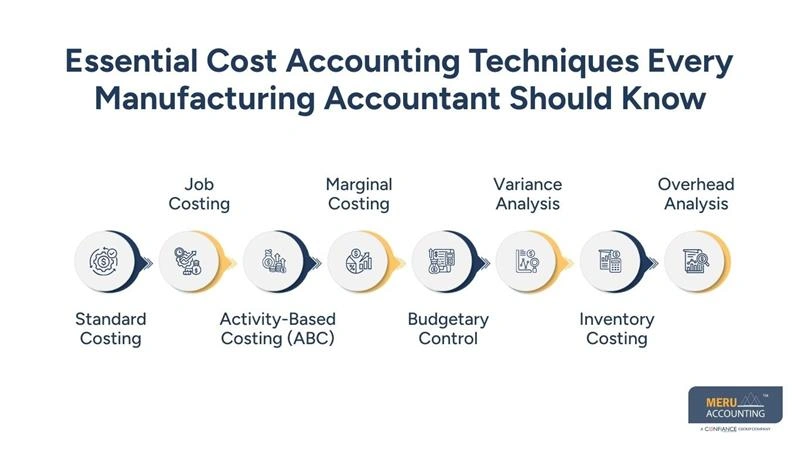
Variance Analysis
Analyzing differences between planned and actual costs highlights inefficiencies. This technique helps managers take corrective actions to reduce unnecessary expenses.
Inventory Costing
Proper costing of raw materials, work-in-progress, and finished goods ensures accurate financial reporting. It also helps manage inventory levels and reduce carrying costs.
Overhead Analysis
Breaking down overheads by department or production line provides insight into cost drivers. This allows management to allocate resources more effectively and improve profitability.
How Cost Accounting Helps Reduce Expenses
Identifying Waste
Cost analysis highlights areas where resources are being wasted, allowing businesses to take corrective measures. By identifying inefficiencies, production processes can be streamlined, reducing unnecessary expenses.
Optimizing Inventory
Analyzing inventory costs helps reduce storage expenses and prevents overstocking. Cost analysis ensures materials are available when needed without tying up excessive capital in unused stock.
Improving Process Efficiency
Using cost data, businesses can refine production workflows to save time and money. Efficient processes reduce scrap, rework, and downtime, boosting overall profitability.
Negotiating Supplier Costs
Understanding material and component costs allows companies to negotiate better rates with suppliers. Cost accounting provides the data needed to make informed purchasing decisions.
Reducing Labor Costs
Tracking labor efficiency and overtime ensures payroll expenses are kept under control. By analyzing labor-related costs, businesses can optimize staffing and scheduling without compromising productivity.
Integrating Cost Accounting With Manufacturing Systems
ERP Integration
Cost analysis can be linked with manufacturing software to provide real-time cost data. This integration helps managers track production expenses accurately.
Automated Reporting
Automation reduces manual errors and speeds up reporting. With accurate cost reports, businesses can make timely adjustments to control spending.
Workflow Alignment
Integrating cost analysis with production schedules ensures a clear view of expenses at each stage. This alignment supports efficient resource allocation and reduces bottlenecks.
Inventory Management Systems
Linking inventory management with cost accounting allows for precise tracking of materials, labor, and overhead. Accurate data helps prevent overstocking and material shortages.
Common Challenges Manufacturing Accountants Face in Cost Accounting
Inaccurate Cost Allocation
Improper allocation of costs can misrepresent product profitability. Accurate cost analysis ensures expenses are assigned correctly.
Data Management
Handling large volumes of production data can be challenging. Cost accounting systems help organize and analyze this data efficiently.
Complex Production Processes
Multiple production lines make cost tracking difficult. Cost analysis provides clarity by breaking down costs for each product or process.
Changing Material Prices
Fluctuating raw material costs require constant updates in cost calculations. Maintaining accurate cost data is essential for pricing and budgeting.
Regulatory Compliance
Adhering to accounting standards and tax regulations adds complexity. Cost analysis ensures compliance while providing transparent financial records.
Best Practices for Manufacturing Accountants in Cost Accounting
Maintain Accurate Records
All expenses and transactions should be tracked meticulously. Accurate records form the foundation of reliable cost analysis and help prevent errors in financial reporting.
Regular Cost Reviews
Frequent analysis of costs helps identify trends and control spending. Reviewing cost data regularly allows businesses to detect inefficiencies early and make timely adjustments.
Use Standardized Procedures
Standard costing and consistent reporting improve accuracy and comparability. This ensures that cost analytics practices are applied uniformly across all production units.
Invest in Training
Continuous learning ensures staff stay updated with the latest cost analysis principles and techniques. Training enhances the ability to analyze data and make informed financial decisions.
Collaborate With Production Teams
Close cooperation with production managers enhances cost efficiency and resource utilization. Sharing insights from cost analysis enables better coordination and improved operational performance.
How Meru Accounting Supports Manufacturing Accountants
Expert Guidance
Meru Accounting provides expert advice for implementing effective cost accounting methods. Guidance is tailored to address the specific challenges of each manufacturing operation.
Customized Accounting Solutions
Services are designed based on the size and complexity of operations, ensuring relevant and practical solutions. Customized approaches help optimize costs and improve financial decision-making.
Accurate Reporting
Meru Accounting delivers precise cost reports that give businesses a clear picture of performance. Accurate reporting supports better budgeting, forecasting, and strategic planning.
Cost Control Strategies
The team identifies areas to reduce waste and optimize resources. These strategies help improve profitability while maintaining production quality.
Ongoing Support
Continuous consultation ensures that cost management practices remain accurate and up-to-date. Ongoing support helps businesses adapt to changes in production costs and market conditions.
Key Takeaways
- Cost accounting is essential for controlling expenses and improving profitability.
- Manufacturing accountants play a critical role in applying cost accounting principles.
- Techniques like standard costing, ABC, and job costing help industrial accountants track and manage costs efficiently.
- Integration with manufacturing systems simplifies cost tracking and reporting.
- Following best practices ensures accurate, consistent, and actionable cost data.
FAQs
Cost accounting helps manufacturing accountants track production costs and improve profitability. Accurate pricing and expense control become easier.
Methods like standard costing and activity-based costing give industrial accountants clear insights into material, labor, and overhead costs.
Analyzing production processes identifies waste and inefficiencies. Companies can save money and optimize resources effectively.
Software provides real-time cost tracking and automated reports. Managers can make informed financial decisions faster.
Managing complex data and fluctuating material costs often creates challenges. Applying proper techniques and tracking solves most issues.


