



Estate and trust tax preparation can seem complex, but with the right guidance, the process becomes manageable. Understanding how to organize documents, report income accurately, and maximize deductions is essential to avoid costly mistakes.
This blog will help you through every step of estate and trust tax preparation, making the process clear and actionable for trustees, executors, and beneficiaries alike. Proper planning and careful attention to detail can help reduce tax liability and prevent errors that may lead to penalties.
Whether you are handling a simple trust or a large estate, having a clear roadmap ensures smoother filing and better compliance with IRS requirements. By the end of this blog, you will feel confident in navigating estate and trust taxes efficiently.
What You Will Learn From This Blog
- Learn why estate and trust tax preparation matters for compliance and avoiding penalties.
- Understand the sequential steps involved to ensure accuracy and completeness in tax preparation.
- Get insights on what documents and tax forms are essential for filing estates and trusts.
- Learn how to report estate and trust income properly to meet IRS guidelines.
- Explore why hiring a professional can simplify the process and reduce errors.
Introduction To Estate And Trust Tax Preparation
An estate includes all the assets owned by an individual at the time of their death, while a trust is a legal arrangement designed to manage and distribute assets for the benefit of designated beneficiaries. Both estates and trusts require careful attention to estate and trust tax preparation to ensure that all income is reported accurately and obligations are met.
Proper planning helps avoid errors, reduces the risk of penalties, and ensures that beneficiaries receive their intended inheritance without unnecessary complications.
Accurate filing is essential in estate and trust tax preparation. Executors and trustees play a crucial role in gathering necessary documents, reporting income, and distributing assets according to the will or trust terms.
Filing deadlines for estates and trusts differ, so timely preparation is important to prevent late fees and interest charges. Choosing the right approach, whether handling the process personally, using tax software, or hiring professionals, can make a significant difference in accuracy and efficiency.
Estates and trusts may have various tax obligations, including income tax, capital gains tax, and in some cases, federal or state estate taxes.
Understanding these obligations early in the process allows for better planning and ensures that all necessary forms and filings are completed correctly. With proper guidance, estate and trust tax preparation becomes a structured process rather than an overwhelming task.
Essential Documents Needed For Tax Preparation
Death Certificate
Required to prove the decedent’s passing and to initiate estate tax filings. It also helps verify identity for legal and financial institutions.
Last Will And Testament
Helps identify beneficiaries and guides asset distribution for accurate reporting. This ensures the estate is managed according to the decedent’s wishes.
Trust Agreement
Specifies the terms of the trust and is essential for trust tax return preparation. It clarifies who can make decisions and how assets should be handled.
Financial Statements
Bank statements, investment reports, and asset valuations help calculate income and deductions. Accurate records reduce errors and support IRS compliance.
Prior Year Tax Returns
Previous returns provide a reference point for income reporting and deductions. They also help identify carryovers and other tax benefits.
Receipts And Expense Records
Maintain all receipts for deductible expenses like funeral costs, legal fees, and administrative costs. Organized records make it easier to claim all eligible deductions.
Which Tax Forms Are Required For Estates And Trusts?
Form 1041 – U.S. Income Tax Return
Used for both estates and trusts to report income, deductions, and credits. Filing this form is a critical part of estate and trust tax preparation and ensures compliance with federal tax laws.
Schedule K-1
Reports income, deductions, and credits distributed to beneficiaries for their individual tax returns. It helps beneficiaries accurately report their share of estate or trust income.
Form 706 – Estate Tax Return
Required for estates exceeding the federal estate tax exemption threshold. This form calculates any federal estate tax owed and documents asset transfers.
State-Specific Forms
Some states have their own estate or trust tax forms, so check local requirements. Filing the correct state forms prevents penalties and ensures full compliance.
Additional Supporting Forms
Forms for charitable deductions, depreciation, and other special items may be required. Including these forms maximizes deductions and ensures accurate reporting of complex transactions.
Filing Deadlines
Generally, Form 1041 is due April 15, with extensions available; Form 706 is due nine months after death. Meeting deadlines avoids late fees and interest charges from the IRS.
How To Maximize Deductions And Credits For Estates And Trusts
Administrative Expenses
Expenses like attorney fees, accounting costs, and executor fees are deductible in estate and trust tax preparation. Keeping detailed records ensures all eligible expenses are claimed accurately.
Funeral Expenses
Some funeral costs can be deducted if they are paid from the estate. Proper documentation of these expenses is necessary to qualify for deductions.
Charitable Contributions
Donations made by the estate or trust can reduce taxable income. Ensure contributions are properly documented to claim the maximum allowable deduction.
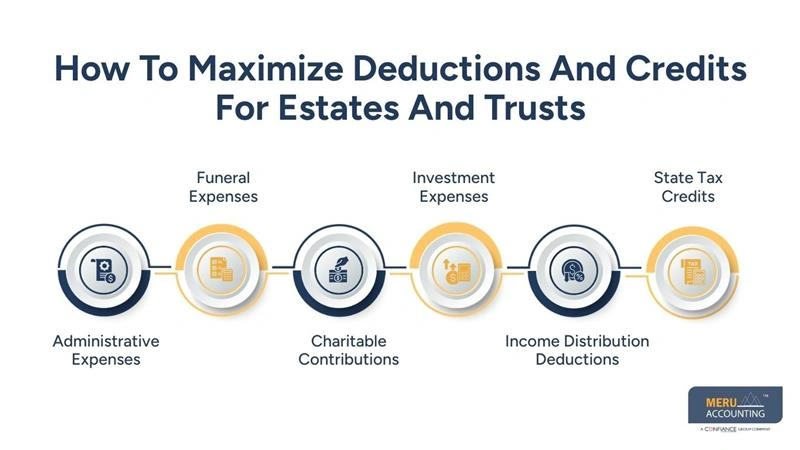
Investment Expenses
Expenses related to producing income, such as interest and investment fees, are deductible. Tracking these costs carefully helps reduce the estate or trust’s overall tax burden.
Income Distribution Deductions
Distributing income to beneficiaries may allow the estate or trust to claim deductions on distributed amounts. Planning distributions strategically can optimize tax benefits.
State Tax Credits
Check for available state-level credits to minimize overall tax liability. Understanding your state’s specific rules ensures you do not miss potential savings.
How To Report Income For Estates And Trusts Accurately
Interest Income
Report all interest earned from bank accounts, bonds, and other sources. Accurate reporting ensures compliance and avoids IRS penalties.
Dividend Income
Include dividends from stocks or mutual funds in the estate and trust tax preparation. Proper documentation helps in claiming deductions and credits correctly.
Rental Income
Rental properties owned by the estate or trust must have income reported accurately. Tracking rental income prevents underreporting and future audits.
Capital Gains And Losses
Track sales of assets to report gains or losses properly. Correct calculations help minimize tax liability and support accurate filings.
Business Income
Income from any business operated by the estate or trust must be documented. Reporting all business revenue ensures transparency and legal compliance.
Proper Record Keeping
Accurate records make estate and trust tax preparation easier and reduce errors in reporting. Well-organized documents also simplify audits and reviews.
When To Distribute Assets To Beneficiaries And Its Tax Implications
Timing Of Distributions
Distribute income within the year to ensure proper deductions and minimize estate taxes. Planning distributions strategically can improve tax outcomes.
Effect On Beneficiaries’ Taxes
Beneficiaries report their share of income via Schedule K-1, which can impact their individual returns. Clear instructions help them file correctly.
Income Accumulation Vs. Distribution
Accumulated income may be taxed at a higher estate or trust rate, so distribution timing is crucial. Distributing income wisely can reduce total taxes owed.
Special Allocations
Certain distributions, such as charitable gifts, may have additional tax benefits. Planning special allocations can maximize deductions for both the estate and beneficiaries.
Communicating With Beneficiaries
Clear communication helps avoid confusion and ensures correct reporting on their returns. Transparency reduces disputes and errors in filings.
Tracking Distributions
Keep detailed records of all distributions to support accurate estate and trust tax preparation and IRS compliance. Documentation supports accurate reporting and protects against challenges.
How To Avoid Common Filing Mistakes In Estate And Trust Taxes
Double Reporting Income
Ensure income is not reported both on the estate or trust return and the beneficiary’s return. Proper cross-checking avoids unnecessary tax payments.
Missing Deductions
Review all eligible deductions to avoid overpaying taxes. Careful attention ensures all deductible expenses are claimed.
Incorrect Beneficiary Information
Check names, addresses, and tax IDs carefully on Schedule K-1. Accurate information prevents IRS rejections and delays.
Late Filings
Submit returns on time to avoid penalties and interest charges. Filing early also allows time to correct any errors.
Improper Form Usage
Use the correct forms, such as 1041, 706, or state forms, to avoid rejection. Choosing the right forms ensures smooth processing of your tax returns.
Professional Review
Having a professional review your filings reduces mistakes and ensures compliance. A second set of eyes can catch issues that are easily overlooked.
Why Hiring A Professional Can Simplify Estate And Trust Tax Preparation
Expertise In Tax Rules
Professionals stay updated on the latest estate and trust tax laws, ensuring accurate filings. They can help navigate complex regulations effectively.
Time Savings
Tax preparation can be time-consuming; a professional handles the process efficiently. This allows trustees and executors to focus on other important responsibilities.
Error Reduction
Mistakes can lead to audits or penalties; professionals minimize these risks. Accuracy in reporting protects both the estate and beneficiaries.
Guidance On Complex Situations
Complex estates, multiple beneficiaries, or unique assets require expert handling. Professionals provide advice tailored to specific circumstances.
Strategic Planning
Professionals can suggest strategies to reduce taxes and maximize deductions. Proper planning can significantly improve financial outcomes for the estate or trust.
Peace Of Mind
Knowing a skilled accountant handles your estate and trust tax preparation provides confidence and security. You can be assured that filings are correct and compliant.
Why Choose Meru Accounting For Estate And Trust Tax Preparation
Experienced Professionals
At Meru Accounting, we have a team of experts specializing in estate and trust tax preparation. Our experience allows us to handle both simple and complex estates efficiently.
Tailored Solutions
We provide personalized strategies based on the unique needs of each estate or trust. This ensures that every plan is aligned with your goals and circumstances.
Comprehensive Services
From document collection to filing and distribution, we manage all aspects efficiently. Our approach saves you time and reduces stress during the process.
Accuracy And Compliance
At Meru Accounting, we ensure every return meets IRS and state requirements, avoiding penalties. We double-check all details to maintain full compliance and precision.
Support For Beneficiaries
We guide beneficiaries on reporting income and claiming deductions correctly. Our assistance helps them understand their responsibilities and prevents errors on their returns.
Trusted Partner
We have a decade of experience helping clients simplify complex tax situations. Our track record ensures reliable support and consistent results for every client.
Key Takeaways
- Estate and trust tax preparation is essential for legal compliance and financial clarity.
- Collect all necessary documents, including wills, trust agreements, and financial statements.
- Use proper forms such as 1041, Schedule K-1, and state-specific tax returns.
- Maximize deductions through administrative, charitable, and investment-related expenses.
- Distribute income strategically to beneficiaries to reduce tax liability.
- Avoid common filing mistakes by double-checking income, deductions, and forms.
- Hiring a professional simplifies the process and ensures accuracy.
FAQs
You file estate and trust taxes using IRS Form 1041 and Schedule K-1 for beneficiaries.
Form 1041 is usually due April 15, with possible extensions if needed.
Essential documents include the trust agreement, financial statements, income records, and prior tax returns.
Yes, administrative costs, funeral expenses, and charitable contributions are typically deductible.
Hiring a professional ensures accurate filing, maximizes deductions, and avoids costly errors.


