



Handling the estate of a loved one or planning your own estate can be emotionally taxing and legally complex. This is where an estate tax preparer becomes invaluable. From filing necessary tax forms to ensuring compliance with IRS rules, these professionals can save you time, reduce errors, and help protect your assets.
They also provide guidance on managing debts, investments, and other estate obligations, ensuring everything is handled correctly.
Proper estate and trust tax preparation helps avoid unnecessary complications and gives you confidence that your estate matters are in capable hands. In this blog, we will discuss when you should hire an estate tax preparer and how they can simplify estate and trust tax preparation.
What You Will Learn From This Blog
- Understand who an estate tax preparer is and why they are important.
- Learn why estate and trust tax preparation matters for executors and beneficiaries.
- Know the key situations when hiring an estate tax preparer is beneficial.
- Discover how these professionals simplify complex tax laws.
- Get guidance on choosing the right estate tax preparer for your needs.
What Is An Estate Tax Preparer And Why They Matter
An estate tax preparer is a professional who specializes in preparing taxes for estates and trusts. Their main role is to ensure that tax returns are accurate, complete, and compliant with federal and state regulations. By handling these complex filings, estate tax preparers help reduce the likelihood of errors that could lead to penalties or delays in the estate settlement process.
Estate tax preparers bring expertise in the latest tax laws and regulations, which can be especially valuable when dealing with deductions, credits, or exemptions that executors might overlook. Executors often face strict deadlines and legal requirements, and having a professional guide them through these obligations ensures that responsibilities are handled efficiently and correctly.
Beyond compliance, an estate tax preparer provides peace of mind. Executors and beneficiaries can focus on managing the estate and supporting loved ones, knowing that an expert is managing the tax aspects. This professional support helps prevent costly mistakes and ensures that both estate and trust tax preparation are completed accurately and on time.
Why Estate And Trust Tax Preparation Is Crucial For Executors And Beneficiaries
Avoiding Legal Complications
Estate and trust tax preparation ensures all legal obligations are met. It helps prevent disputes among beneficiaries over inheritance or assets. Proper preparation also reduces the risk of complications with the IRS.
Accurate Reporting Of Assets
Tax preparation ensures all assets, income, and deductions are reported. This creates transparency between executors and beneficiaries for better trust. Accurate reporting helps prevent disagreements about the estate’s financial records.
Minimizing Tax Liability
Estate tax preparers can identify deductions and credits properly. This reduces the estate’s overall tax burden significantly. Lower taxes mean more assets are preserved for the beneficiaries.
Ensuring Timely Filing
Deadlines for estate and trust tax preparation are strict. Professionals make sure all forms are completed and submitted on time. On-time filing prevents penalties and unnecessary interest charges from the IRS.
Supporting Beneficiary Distribution
Accurate tax preparation allows smoother distribution of estate assets. Executors can transfer inheritance to heirs without delays or errors. Beneficiaries receive the intended inheritance fairly and efficiently.
When Should You Consider Hiring An Estate Tax Preparer
Large Or Complex Estates
Estates with multiple assets, property, or investments can be complex. Hiring an estate tax preparer helps manage all these complexities. Professionals ensure accurate reporting and compliance with tax regulations.
Presence Of Trusts
Estates that include trusts require careful tax planning. A preparer manages both estate and trust tax preparation efficiently. This ensures compliance and reduces errors in reporting financial information.
Multiple Beneficiaries
Estates with many beneficiaries need clear documentation for distribution. An estate tax preparer ensures all heirs receive their fair share. This prevents disputes and confusion among family members.
Out-Of-State Assets
Assets located in multiple states have varying tax rules. Professionals ensure compliance with federal and state tax regulations. This prevents penalties and legal complications across different jurisdictions.
Executors New To The Role
First-time executors may feel overwhelmed by legal and tax responsibilities. An estate tax preparer guides them through filing and compliance. This support helps executors avoid mistakes and delays.
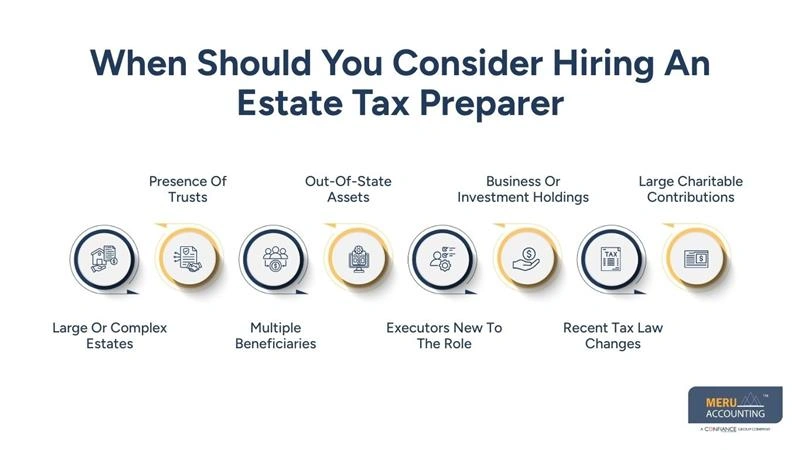
Business Or Investment Holdings
Estates including businesses or investment accounts require specialized knowledge. Tax rules for these holdings are often complicated and changing. A preparer ensures accurate valuation and proper reporting for taxes.
Recent Tax Law Changes
Frequent changes in tax laws can affect estate filings. An estate tax preparer stays updated on new rules and regulations. This ensures the estate remains compliant with current tax requirements.
Large Charitable Contributions
Estates planning significant donations need careful tax handling. A preparer can apply deductions and credits correctly. This maximizes tax benefits for both the estate and beneficiaries.
How An Estate Tax Preparer Simplifies Complex Tax Laws
Understanding IRS Forms
Estate tax preparers know which forms to use, including Form 706. They also ensure all state-specific forms are completed correctly and timely.
Navigating Deductions And Exemptions
They can apply deductions such as debts, expenses, and charitable contributions. This reduces the estate’s taxable value and preserves more assets.
Coordinating With Financial Advisors
Preparers work with accountants and financial advisors for accuracy. They ensure all financial statements match tax filings properly.
Explaining Tax Implications
They help executors and beneficiaries understand taxes on asset distribution. This guidance prevents misunderstandings and costly mistakes during inheritance.
Handling Audits Or Queries
If the IRS audits the estate, the preparer represents it professionally. They respond accurately to inquiries and help resolve any disputes.
What Services Do Estate Tax Preparers Typically Offer
Estate Tax Return Filing
Preparing and filing all necessary tax returns accurately and on time. They ensure forms are complete and submitted before strict IRS deadlines.
Trust Tax Return Preparation
Handling trust income, distributions, and tax reporting under IRS rules. This ensures compliance and proper reporting of all trust activities.
Asset Valuation Support
Assisting in evaluating estate assets like property, investments, and businesses. Accurate valuations help calculate taxes correctly and prevent disputes.
Tax Planning Advice
Providing guidance on minimizing taxes for the estate and beneficiaries. They suggest strategies that preserve assets and reduce overall tax liability.
Ongoing Compliance
Helping maintain records and ensure ongoing compliance with tax laws. This keeps the estate prepared for audits and future tax reporting.
Communication With Beneficiaries
Keeping heirs informed about tax-related matters and timelines consistently. Clear communication prevents misunderstandings and ensures smoother inheritance distribution.
How To Choose The Right Estate Tax Preparer For Your Needs
- Look for certifications like CPA, EA, or specialized estate tax training.
- Choose someone experienced in estate and trust tax preparation similar to yours.
- A preparer should explain processes clearly and answer all your questions.
- Understand their fee structure, whether flat fee or hourly, before hiring.
- Ask previous clients for references to check reliability and performance.
- Ensure the preparer can handle your estate’s size, complexity, and uniqueness.
What Questions To Ask Before Hiring An Estate Tax Preparer
- Ask if they have handled estates with similar assets and complexity.
- Verify their knowledge of trust tax preparation if your estate involves trusts.
- Confirm they can manage your estate efficiently during busy tax seasons.
- Ask how they help reduce estate taxes for beneficiaries effectively.
- Check if they provide support for audits, amendments, or follow-ups.
- Ensure they use secure tools to manage sensitive estate documents safely.
When DIY Estate Tax Preparation Works And When It Doesn’t
Simple Estates
DIY may work for small estates with minimal assets and no trusts. It is suitable when the estate has straightforward finances and income.
Basic IRS Forms
If only standard forms are required, DIY can be feasible. You must fully understand IRS instructions and filing requirements.
Complex Estates
DIY is risky for estates with multiple assets, trusts, or high value. Mistakes can lead to penalties, delays, and legal complications.
Multiple Jurisdictions
Managing assets in several states or countries is very complicated. Professional help ensures compliance with all local and federal tax laws.
Executors Lacking Tax Knowledge
Inexperienced executors may struggle to meet deadlines and filing rules. Hiring an estate tax preparer prevents costly errors and stress.
Meru Accounting: Your Trusted Estate Tax Preparer
- We specialize in estate and trust tax preparation for all types of estates.
- Our team of certified professionals ensures accurate filings and full compliance.
- We help reduce overall tax liability through proper deductions and credits.
- We guide executors and beneficiaries through complex estate processes smoothly.
- Our services are tailored to meet each estate’s unique needs.
- We provide timely guidance to meet deadlines and avoid penalties.
- Choosing Meru Accounting gives peace of mind with professional tax handling.
Key Takeaways
- An estate tax preparer simplifies complex tax rules, filing forms, and reporting.
- Hiring a professional is crucial for estates with trusts, multiple beneficiaries, or high-value assets.
- Proper estate and trust tax preparation reduces tax liability and prevents legal disputes.
- Executors and beneficiaries benefit from accurate reporting, timely filing, and expert guidance.
- Meru Accounting offers comprehensive estate tax services with experience, reliability, and personalized support.
FAQs
An estate tax preparer prepares and files taxes for estates, ensuring compliance with IRS rules.
Hiring is recommended when the estate has multiple assets, trusts, or several beneficiaries.
Professional guidance identifies deductions and exemptions, helping reduce overall tax liability.
DIY works for small, simple estates, but complex estates require expert help.
Look for experience, proper credentials, and knowledge of estate and trust tax preparation.


