



Introduction to Liabilities on a Balance Sheet
In the realm of accounting, understanding the balance sheet is critical for both business owners and financial professionals. A balance sheet provides a snapshot of a company’s financial position at a given point in time, detailing its assets, liabilities, and shareholders’ equity. While assets represent what a company owns, liabilities show what the company owes. This article focuses on liabilities—specifically examples of liabilities on a balance sheet—and provides a comprehensive understanding of current and long-term liabilities.
By gaining deeper insights into liabilities, you will be better equipped to interpret financial statements, support decision-making, and enhance financial planning and analysis. Whether you are studying accounting, managing a business, or working in finance, mastering the classification and examples of liabilities is essential.
Understanding the Basics: What Are Liabilities?
Liabilities represent financial obligations or debts that a business owes to outside parties. They arise from past transactions and entail future sacrifices of economic benefits, usually in the form of cash payments or the delivery of goods or services. Unlike assets, which provide future economic benefits, liabilities reflect claims against the company’s resources.
On a balance sheet, liabilities are listed alongside assets and equity, following the fundamental accounting equation:
Assets = Liabilities + Equity
This relationship underpins all double-entry accounting and ensures that every transaction affects both sides of the equation.
Classification of Liabilities: Current and Long-Term
Liabilities are broadly classified into two categories based on their maturity or settlement period:
- Current Liabilities: Debts or obligations due within one year or the company’s operating cycle, whichever is longer.
- Long-Term Liabilities: Obligations that are payable beyond one year or operating cycle.
This classification provides stakeholders with insight into a company’s liquidity and financial stability. Current liabilities indicate the company’s short-term financial commitments, while long-term liabilities show its future debt structure and financing strategy.
Examples of Current Liabilities on a Balance Sheet
Current liabilities are crucial for assessing a company’s short-term liquidity and ability to meet immediate obligations. Common examples include the following:
- Accounts Payable: Amounts a company owes to suppliers for goods or services received but not yet paid for.
- Short-Term Loans and Notes Payable: Loans or promissory notes due within one year.
- Accrued Expenses: Expenses incurred but not yet paid, such as wages payable, interest payable, and taxes payable.
- Unearned Revenue: Money received from customers for services or products not yet delivered.
- Current Portion of Long-Term Debt: The portion of long-term debt that is due within the coming year.
- Dividends Payable: Dividends declared by the company that have yet to be paid to shareholders.
Each of these items represents a short-term obligation that needs to be managed carefully to maintain a company’s financial health.
Examples of Long-Term Liabilities on a Balance Sheet
Long-term liabilities are indicative of a company’s strategy for financing growth and expansion. These obligations are not due within the next year, allowing for longer-term planning and repayment schedules. Common examples include:
- Long-Term Loans and Bonds Payable: Loans or bond issuances with maturity dates extending beyond one year.
- Mortgage Payable: Debt secured by real estate, often paid over many years.
- Deferred Tax Liabilities: Taxes owed but deferred to future periods, often due to timing differences in accounting methods.
- Lease Liabilities: Long-term lease obligations under capital or finance lease arrangements.
- Pension Liabilities: Obligations related to employee retirement benefits.
- Notes Payable (Beyond 1 Year): Promissory notes with maturities exceeding one year.
These long-term liabilities reflect the company’s capital structure and influence its creditworthiness and financial strategy.
Common Accounting Assets and Liabilities Balance Sheet Structure
While this article focuses on liabilities, it’s important to recognize their relationship with assets on the balance sheet. A typical balance sheet is structured into three sections:
- Assets: Current assets and non-current assets.
- Liabilities: Current liabilities and long-term liabilities.
- Equity: Owners’ equity, retained earnings, and other equity reserves.
The assets side lists resources owned by the company, whereas the liabilities and equity side shows claims against those resources.
A simplified balance sheet layout might look like this:
| Assets | Liabilities and Equity |
|---|---|
|
|
The Importance of Understanding Liabilities for Financial Analysis
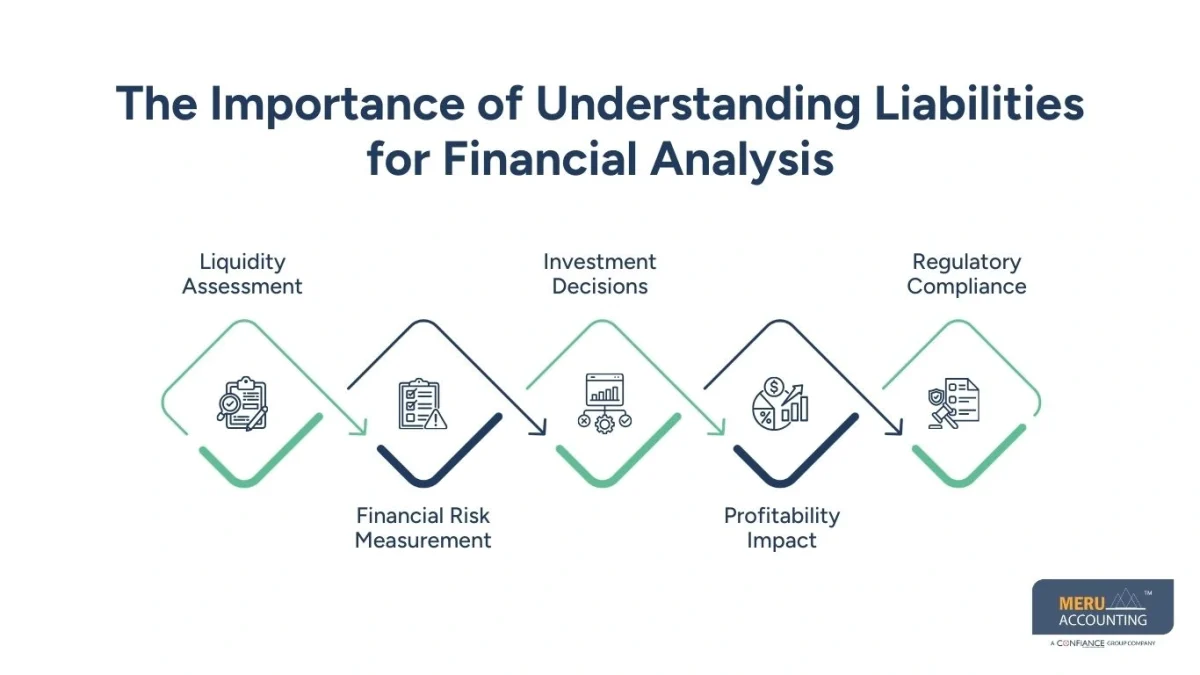
Understanding liabilities is essential for comprehensive financial analysis. Here’s why:
- Liquidity Assessment: Current liabilities indicate a company’s short-term liquidity needs and help analyze whether it can meet its immediate obligations.
- Financial Risk Measurement: High levels of debt (liabilities) increase financial risk, affecting credit ratings and borrowing capacity.
- Investment Decisions: Investors evaluate liability levels to determine the company’s financial health and risk profile.
- Profitability Impact: Interest and principal payments on liabilities affect cash flows and net profit.
- Regulatory Compliance: Proper classification and reporting of liabilities ensure compliance with accounting standards like GAAP and IFRS.
Financial analysts use ratios such as the debt-to-equity ratio, current ratio, and quick ratio to assess liabilities in context with assets, providing insights into business performance and stability.
Examples of How Liabilities Affect Business Decisions
Liabilities do more than just appear on financial statements—they influence a wide range of business decisions. Examples include:
- Financing Decisions: Choosing between debt and equity financing depends on a company’s existing liabilities and cost of debt.
- Investment Planning: Companies with high current liabilities may delay capital investments to conserve cash.
- Credit Management: Understanding liabilities helps in negotiating favorable credit terms with suppliers and lenders.
- Operational Budgeting: Knowing accrued expenses and payroll liabilities helps in accurate cash flow budgeting.
- Risk Management: Managing long-term liabilities impacts credit risk and interest rate exposure.
Effective liability management can enhance business flexibility and ensure sustainable growth.
Accounting Principles for Recording and Reporting Liabilities
Accurately recording liabilities involves adhering to generally accepted accounting principles (GAAP) or international financial reporting standards (IFRS). Key principles include:
- Recognition Criterion: Liabilities must be recognized when it is probable that an outflow of resources will occur and the amount can be reliably measured.
- Measurement: Liabilities are generally recorded at their present value or contractual amount.
- Classification: Liabilities must be classified as current or long-term based on maturity dates to provide clarity to users of financial statements.
- Disclosure: Significant liabilities must be adequately disclosed in notes to the financial statements.
Accounting for liabilities also requires proper adjustments such as interest accruals, amortizations, and impairment assessments.
Meru Accounting: Expertise in Managing Accounting Assets and Liabilities Balance Sheet
Meru Accounting is a reputable accounting firm specializing in comprehensive financial services including balance sheet preparation, asset and liability management, and financial reporting. With a skilled team of professionals, Meru Accounting helps businesses accurately classify, record, and analyze their liabilities, ensuring compliance with applicable accounting standards. Their expertise extends to offering tailored solutions for both current and long-term liabilities, empowering clients to make informed financial decisions and optimize their capital structure for long-term sustainability.
Conclusion: Mastering Liabilities on the Balance Sheet
Mastering the understanding of liabilities on a balance sheet is indispensable for interpreting a company’s financial condition. From current liabilities that reflect immediate financial demands to long-term liabilities shaping future obligations, these figures tell a vital story about a company’s commitments and stability.
Business owners, investors, and accountants alike benefit from distinguishing between different types of liabilities, identifying their components, and analyzing their impact on overall financial health. Accurate classification, recognition, and reporting uphold transparency and support strategic financial management.
As shown through various examples and detailed classifications, liabilities are more than mere numbers—they are key indicators of a company’s risk exposure, liquidity, and long-term viability. Whether you are using accounting software, preparing financial statements, or interpreting data, grasping the nuances of liabilities is fundamental to success in the financial world.
FAQs
What are examples of current liabilities on a balance sheet?
Current liabilities include obligations due within one year such as accounts payable, short-term loans, accrued expenses, and taxes payable.
What are long-term liabilities on a balance sheet?
Long-term liabilities are debts or obligations that are due after one year, including mortgage loans, bonds payable, and long-term lease obligations.
How do liabilities affect the balance sheet?
Liabilities represent claims against a company’s assets and are recorded on the balance sheet alongside assets and equity to show the financial position of the business.
What is the difference between current and long-term liabilities?
The key difference is the time frame for payment: current liabilities are due within a year, while long-term liabilities extend beyond one year.
Why is it important to understand liabilities on a balance sheet?
Understanding liabilities helps assess a company’s financial health, liquidity, and its ability to meet short-term and long-term obligations.


