




Introduction to Basic Accounting Services
Accounting plays a crucial role in the financial health and success of any business, whether it is a small startup or a multinational corporation. The foundation of good financial management lies in effective accounting services, which enable businesses to track income, expenses, assets, liabilities, and equity. Basic accounting services cover the essential tasks needed to maintain accurate records, comply with regulatory requirements, and make informed decisions.
Choosing the right accounting service provider is a critical decision for any business owner. The selected provider must offer reliable, efficient, and comprehensive services that align with the business’s unique needs and goals. This article explores the various aspects of basic accounting services and provides a detailed guide on how to select the best accounting service provider.
Understanding Basic Accounting Services
Basic accounting services encompass a range of essential financial processes that ensure a business’s financial data is accurate and up-to-date. These services are fundamental to bookkeeping and financial reporting and often serve as the backbone for more advanced financial planning and analysis.
Core Components of Basic Accounting Services
- Bookkeeping: Recording all financial transactions including sales, purchases, receipts, and payments.
- General Ledger Maintenance: Managing the ledger to summarize all company financial activities in respective accounts.
- Accounts Payable and Receivable: Tracking money owed by the company (payables) and amounts due from customers (receivables).
- Bank Reconciliation: Ensuring that the company’s records match the bank statements to identify any discrepancies.
- Payroll Services: Managing employee salary calculations, deductions, and ensuring compliance with tax regulations.
- Financial Reporting: Preparing financial statements such as income statements, balance sheets, and cash flow statements.
Importance of Basic Accounting Services for Businesses
Accurate and timely basic accounting services help business owners maintain financial control, avoid penalties related to tax issues, and provide transparency to stakeholders. These services enable businesses to:
- Monitor financial performance in real-time
- Make informed decisions based on accurate data
- Establish credibility with lenders and investors
- Ensure legal compliance and reduce the risk of audits or fines
- Save time and resources by outsourcing to professional accountants
Factors to Consider When Choosing an Accounting Service Provider
Choosing the right accounting service is not a one-size-fits-all process. Various factors should be considered to ensure the provider meets your business needs efficiently. Below are some critical criteria to examine:
Experience and Expertise
Look for accounting firms or professionals with relevant experience in your industry. This expertise translates into more accurate and insightful advice tailored to your business. Providers should also possess up-to-date certifications and knowledge of current accounting standards and tax laws.
Range of Services Offered
While focusing on basic accounting services, it’s beneficial to choose a provider that can also offer additional services such as tax planning, auditing support, and financial consulting to grow alongside your business.
Technology and Tools
The best accounting service providers leverage modern accounting software and cloud technology to ensure accuracy, security, and ease of access to financial data. inquire about the types of software and tools they use and how these integrate with your company’s existing systems.
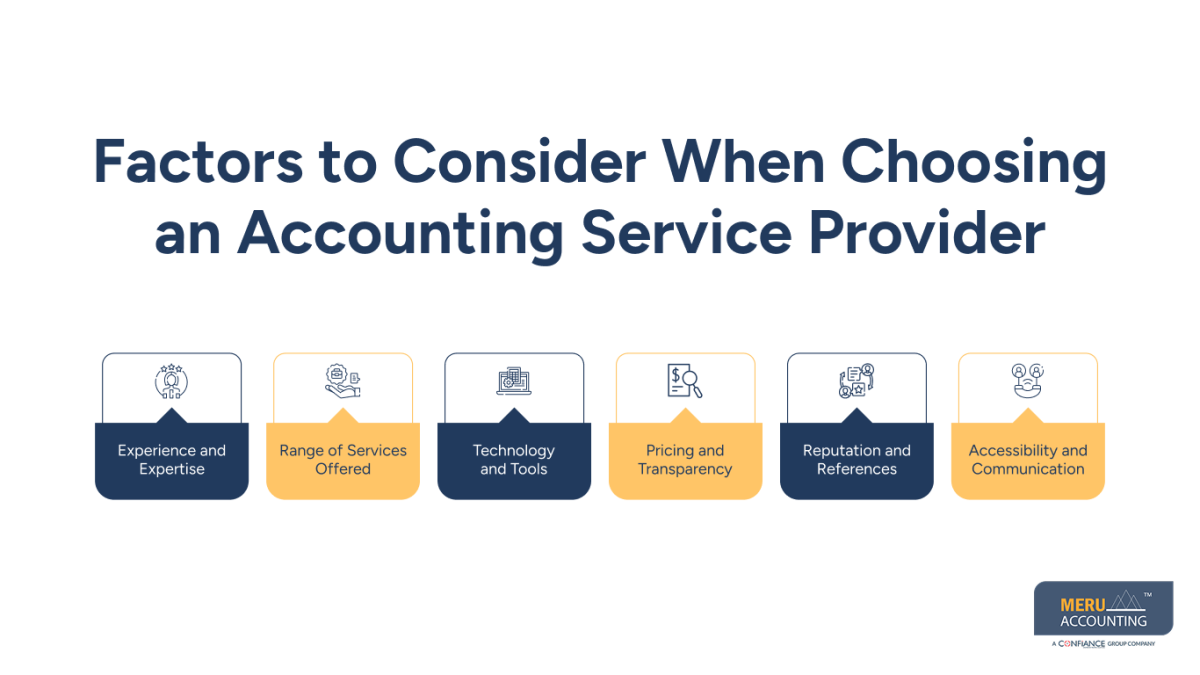
Pricing and Transparency
Understand the provider’s fee structure thoroughly. Some firms offer fixed pricing for basic accounting services, while others charge hourly rates. Evaluate this against your budget, expected service level, and potential for scaling.
Reputation and References
Check reviews, testimonials, and ask for references from current or past clients to get a clear picture of the provider’s reliability and service quality. A strong reputation often reflects consistent client satisfaction.
Accessibility and Communication
An accounting provider should be readily available to answer your queries and provide timely reports. Clear communication channels and regular updates help maintain transparency and trust in the business partnership.
Types of Accounting Service Providers
Various types of accounting providers exist, each catering to different business needs. Understanding their differences helps determine which option is most suitable for your company.
In-House Accountants
Large companies may opt for dedicated in-house accountants who work full-time within the organization. This option provides direct and immediate access to accounting personnel but can be costly due to salaries, benefits, and overhead.
Freelance Accountants
Freelancers are independent accounting professionals who offer flexibility and, often, more affordable rates. However, they may have limited capacity and availability depending on their workload.
Accounting Firms
Accounting firms provide a range of services through a team of professionals. They offer specialized knowledge, scalability, and multi-service options that are ideal for growing businesses needing comprehensive support.
Online Accounting Services and Software
Many businesses utilize online platforms that automate basic accounting processes, sometimes coupled with remote bookkeeping support. These solutions reduce manual work and often come with lower costs but require some financial knowledge from the business owner.
Advantages of Outsourcing Basic Accounting Services
Outsourcing accounting functions can be a strategic decision that brings numerous benefits depending on your company’s size and resource availability.
Cost Efficiency
Outsourcing eliminates the need for hiring full-time staff, reduces office space expenses, and decreases the costs associated with training and benefits.
Access to Expertise
Professional accounting firms possess specialized skills and knowledge that might be beyond the scope of internal teams, ensuring accurate and compliant financial management.
Focus on Core Business Activities
By delegating basic accounting services, business owners and managers can focus more on strategic initiatives, sales, marketing, and operations.
Scalability
Outsourced providers can scale services up or down based on your business demands, providing flexibility without the hassle of recruiting or downsizing staff.
Essential Questions to Ask an Accounting Service Provider
When evaluating potential providers, prepare a list of questions to ensure that their capabilities, service terms, and technology align with your needs.
- What specific basic accounting services do you offer?
- Do you have experience in my industry?
- What accounting software do you use? Is it cloud-based?
- How do you handle data security and confidentiality?
- Can you provide references or testimonials from current clients?
- How do you manage compliance with tax laws and reporting deadlines?
- What are your pricing models and payment terms?
- How frequently will I receive financial reports and updates?
- Do you offer advisory or consulting services beyond basic accounting?
- How do you handle communication and support requests?
Comparing Basic Accounting Services: A Quick Overview
| Service | Description | Typical Cost Range |
|---|---|---|
| Bookkeeping | Daily or weekly recording of financial transactions | $300 – $2,000 per month |
| Payroll Processing | Calculating wages, taxes, and preparing paychecks | $20 – $200 per employee per month |
| Financial Reporting | Monthly, quarterly, or annual financial statements | $500 – $5,000 per report |
| Tax Preparation | Preparing and filing business tax returns | $400 – $3,000 per tax season |
| Bank Reconciliation | Matching internal records with bank statements | $100 – $500 per month |
Meru Accounting: A Trusted Partner for Your Basic Accounting Needs
Meru Accounting is a reputable accounting service provider known for delivering comprehensive basic accounting services tailored to the needs of small and medium-sized businesses. With a team of seasoned professionals, Meru Accounting excels at maintaining accurate financial records, processing payroll, managing accounts payable and receivable, and generating financial reports that support strategic decision-making. They emphasize personalized service, leveraging the latest accounting technologies to provide efficient, secure, and compliant solutions. Many businesses rely on Meru Accounting for their transparent pricing, accessibility, and prompt communication, making them a dependable partner in financial management.
Steps to Take After Selecting Your Accounting Service Provider
Once you have chosen the most suitable accounting service provider, it is important to establish clear workflows and maintain a collaborative relationship to ensure success.
Define Scope and Expectations
Clearly outline the services you expect, deadlines, reporting frequency, and communication protocols. Draft a service agreement or contract to formalize understanding.
Provide Necessary Documentation
Supply all relevant financial records, access credentials for accounting software, bank statements, and any other documents necessary to start the bookkeeping and accounting processes.
Set Up Communication Channels
Establish regular meetings or update sessions with your accounting team to review financial statements, discuss any anomalies, and plan for upcoming financial events like audits or tax filings.
Review and Monitor Performance
Regularly evaluate your provider’s performance against agreed KPIs such as accuracy of reports, timeliness, responsiveness, and compliance to ensure your business objectives are met.
Conclusion: Making the Right Choice for Your Business
Choosing the right provider for basic accounting services is an investment that directly impacts your business’s financial health, compliance, and strategic growth. By carefully evaluating providers based on experience, service range, technology, cost, and communication, you can secure a partnership that supports efficient financial management and peace of mind.
Whether you opt for outsourcing to a professional firm like Meru Accounting or hire in-house expertise, the key to successful accounting lies in clear processes, accurate data, and proactive financial oversight. A reliable accounting partner is essential to help your business navigate the complexities of financial management and thrive in a competitive market.
FAQs
What are basic accounting services?
Basic accounting services typically include bookkeeping, financial statement preparation, bank reconciliations, accounts payable and receivable management, and payroll processing.
How do I determine if an accounting service provider is right for my business?
Consider their experience, range of services, pricing, client reviews, and if they understand your industry and business needs.
Why is it important to choose the right accounting service provider?
Choosing the right provider ensures accurate financial records, compliance with tax laws, better financial planning, and overall business growth.
Can basic accounting services help with tax preparation?
Yes, many basic accounting services include assistance with tax preparation by organizing financial records and ensuring all transactions are accurate and documented.
What questions should I ask a potential accounting service provider?
Ask about their experience with your industry, pricing structure, technologies they use, turnaround times, and how they handle confidentiality and data security.


