



Running a business comes with many responsibilities, and one of the most important is handling taxes efficiently. Goodwill tax preparation is a specialized service designed to help businesses manage their tax obligations accurately while maximizing available benefits.
Whether you are a small business or a large enterprise, understanding goodwill tax preparation can significantly reduce errors, save money, and improve overall financial management.
In this blog, we will explore the concept of goodwill tax preparation, its key components, and why it is essential for your business. We will also discuss tax preparation outsourcing as an effective solution for companies looking to simplify their tax processes.
What You Will Learn From This Blog
- What goodwill tax preparation is and why it is important.
- The main components involved in goodwill tax preparation.
- The benefits of adopting goodwill tax preparation in your business.
- When and why businesses should consider tax preparation outsourcing.
- How tax preparation outsourcing works and its advantages.
- Tips for choosing the right partner for your outsourced tax preparation.
- Key takeaways to help you improve your business tax management.
Introduction To Goodwill Tax Preparation
Goodwill tax preparation is the process of organizing and managing a company’s tax information while properly accounting for intangible assets like goodwill. This ensures all tax filings are accurate, compliant with regulations, and reduces the risk of penalties or audits.
Accurate tax preparation is essential, as neglecting it can lead to fines, interest charges, and legal complications for businesses of all sizes. Goodwill represents a company’s reputation, brand, and customer relationships, making it a critical asset during mergers, acquisitions, or tax reporting.
Proper goodwill tax preparation helps businesses track these intangible assets accurately, improving financial statements and overall business valuation.
By managing goodwill effectively, companies can make informed financial decisions, support sustainable growth, and strengthen long-term business performance.
Why Goodwill Tax Preparation Matters For Your Business
Prevents Costly Mistakes
Proper goodwill tax preparation ensures accurate calculations, preventing costly tax errors or penalties that could affect your business finances. Accurate records also make it easier to resolve discrepancies quickly.
Supports Accurate Business Valuation
Goodwill affects your business’s overall value. Correct tax preparation helps maintain an accurate financial picture for investors, banks, or potential buyers. This builds trust with stakeholders and strengthens financial credibility.
Improves Financial Decision-Making
Knowing your goodwill value allows business owners to make better financial and strategic decisions without guesswork. It helps identify profitable opportunities and avoid financial risks.
Reduces Audit Risks
Accurate goodwill reporting and documentation reduce the chances of audits, giving you peace of mind during tax season. It also provides a clear paper trail for any tax authorities’ inquiries.
Maximizes Tax Benefits
Through proper goodwill accounting, businesses can claim eligible deductions and amortization benefits, improving overall tax efficiency. This can result in significant cost savings over time.
Enhances Long-Term Planning
Goodwill tax preparation provides insights that help plan for future acquisitions, mergers, or business expansion. Businesses can forecast financial outcomes with more confidence.
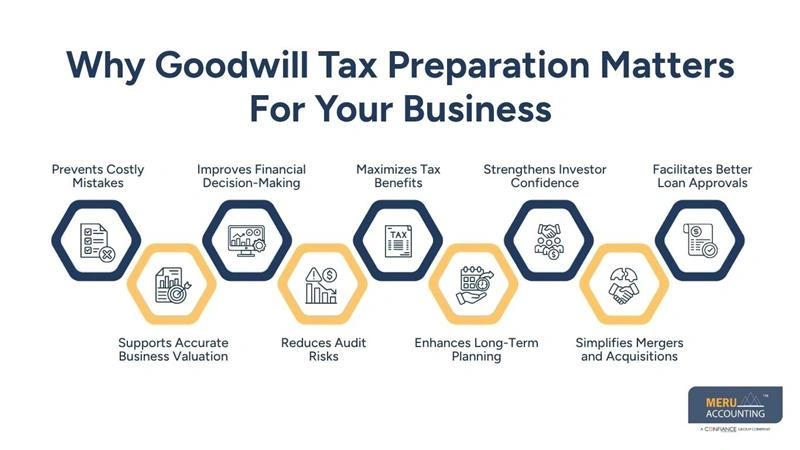
Strengthens Investor Confidence
When financial statements reflect correct goodwill values, investors are more likely to trust your business’s financial health. Accurate reporting can improve chances of funding or partnerships.
Simplifies Mergers and Acquisitions
Businesses involved in mergers or acquisitions benefit from precise goodwill tax preparation. It ensures the transaction value is fair and properly documented.
Facilitates Better Loan Approvals
Banks and financial institutions rely on accurate goodwill reporting when assessing loan eligibility. Proper preparation can help secure financing at favorable terms.
Key Components Of Goodwill Tax Preparation
Identifying Intangible Assets
The first step in goodwill tax preparation is identifying all intangible assets, including brand reputation, customer loyalty, and intellectual property.
Valuation Of Goodwill
Valuing goodwill accurately is crucial. This process often involves professional appraisals and comparing industry standards to determine the asset’s fair market value.
Documentation And Record-Keeping
Maintaining detailed records of all financial transactions related to goodwill is necessary for accurate reporting and audit readiness. Organized documentation simplifies future audits and financial analysis.
Tax Compliance And Filing
Goodwill tax preparation ensures your tax filings adhere to government regulations, avoiding mistakes and potential penalties. Compliance protects your business from legal and financial risks.
Regular Review And Updates
Businesses should regularly review their goodwill records and update them when acquisitions, mergers, or other changes occur. Frequent updates keep financial statements accurate and reliable.
Integration With Accounting Systems
Integrating goodwill records with your accounting software helps track taxes, depreciation, and amortization efficiently. This integration allows for faster reporting and better financial insights.
Benefits Of Goodwill Tax Preparation For Your Business
Reduces Risk Of Errors
Proper goodwill tax preparation minimizes errors in tax filings, reducing the chances of penalties or audits. Accurate preparation builds confidence in your financial reporting.
Saves Time
By organizing financial information, businesses save time during tax season and improve overall efficiency. This allows your team to focus on growth and operations.
Improves Financial Clarity
With accurate goodwill accounting, business owners can better understand their company’s financial health and make informed decisions. Clear records simplify forecasting and budgeting.
Supports Better Business Decisions
Goodwill tax preparation provides insights into intangible assets, helping businesses plan investments and strategies effectively. It ensures resources are allocated wisely.
Ensures Regulatory Compliance
Following proper tax preparation standards ensures your business complies with all tax regulations, avoiding legal complications. Compliance also strengthens your reputation with authorities.
Enhances Credibility
Accurate tax reporting and goodwill management enhance your business’s credibility with investors, partners, and financial institutions. This trust can help attract funding and partnerships.
When To Consider Tax Preparation Outsourcing
High Workload Periods
If your business experiences heavy tax workloads, tax preparation outsourcing can ease the burden and ensure accuracy. It allows your team to focus on daily operations without stress.
Lack Of In-House Expertise
Businesses without experienced tax staff benefit from outsourcing, as professionals handle complex tax rules and regulations. Outsourcing brings specialized knowledge that internal teams may lack.
Cost-Effective Solution
Outsourcing reduces operational costs by eliminating the need for full-time staff and expensive software. It provides professional services without the overhead of hiring internally.
Focus On Core Business
By delegating tax responsibilities, business owners can concentrate on growth and strategic goals rather than tax compliance. This improves efficiency and overall business performance.
Access To Advanced Tools
Outsourced tax services often include advanced software for accuracy, reporting, and tax planning insights. Utilizing these tools ensures faster and more precise tax management.
Handling Complex Transactions
For businesses with acquisitions, mergers, or complicated financials, outsourcing ensures professional handling of goodwill and other assets. Experts manage these complexities with minimal risk.
How Tax Preparation Outsourcing Works
Assessment Of Needs
The first step in tax preparation outsourcing is evaluating your business’s specific tax requirements and challenges. This ensures the outsourced services match your company’s exact needs.
Engaging A Professional Partner
Businesses choose a qualified tax preparation firm to manage all tax-related tasks, from bookkeeping to filing. A trusted partner ensures accuracy and reliability throughout the process.
Data Collection
Outsourcing begins with sharing necessary financial documents, invoices, and records with the outsourced team for analysis. Proper data collection guarantees correct filings and smooth operations.
Preparation And Review
The outsourced team prepares tax returns, evaluates deductions, and reviews transactions for accuracy. A detailed review prevents errors and maximizes potential tax benefits.
Filing And Compliance
Professionals file taxes on behalf of the business, ensuring timely submissions and compliance with regulations. This reduces the risk of penalties and keeps your business in good standing.
Ongoing Support
Outsourced services often include ongoing support, updates on tax changes, and strategic advice for financial planning. Continuous support helps businesses adapt to evolving tax requirements.
Choosing The Right Partner For Tax Preparation Outsourcing
Experience And Expertise
Look for a partner with experience in goodwill tax preparation and knowledge of relevant tax regulations. Experienced professionals ensure accurate and compliant tax filings.
Proven Track Record
A reliable outsourcing partner should demonstrate successful tax management for businesses in your industry. Past performance indicates reliability and trustworthiness.
Transparent Pricing
Choose a firm with clear pricing structures to avoid hidden fees and surprises. Transparent pricing helps you budget accurately for outsourced services.
Technology Integration
Select a partner who can integrate with your accounting systems for efficient data sharing and reporting. Integration improves accuracy and speeds up tax processes.
Personalized Services
Every business has unique needs, so find a partner who provides customized solutions. Personalized services ensure your business receives exactly what it requires.
Communication And Support
Effective communication ensures your business stays informed about tax matters and can resolve issues quickly. Regular updates and guidance keep you confident in your tax strategy.
Meru Accounting’s Goodwill Tax Preparation Services
At Meru Accounting, we specialize in goodwill tax preparation and tax preparation outsourcing for businesses of all sizes. Our team of professionals ensures accurate, compliant, and timely tax filings while maximizing deductions and minimizing risks. Here’s what we offer:
- Experienced tax professionals skilled in handling intangible assets like goodwill.
- Customized solutions for small and large businesses to streamline tax processes.
- Advanced accounting tools to enhance accuracy and reporting.
- Affordable packages for comprehensive tax management.
- Ongoing support and advisory for all tax-related queries and planning.
Partnering with Meru Accounting ensures your tax preparation is handled professionally, saving time and improving financial clarity.
Key Takeaways
- Goodwill tax preparation helps manage intangible assets and ensures accurate tax filing.
- Proper preparation reduces errors, saves time, and improves financial understanding.
- Businesses should consider tax preparation outsourcing to manage high workloads or lack of in-house expertise.
- Outsourcing involves professional evaluation, data management, tax filing, and ongoing support.
- Choosing the right outsourcing partner is crucial for compliance, efficiency, and personalized service.
FAQs
Goodwill is the value of a business’s reputation, brand, and customer relationships.
It ensures accurate tax filings, reduces errors, and complies with tax regulations.
Yes, outsourcing saves time, reduces errors, and provides access to professional expertise.
Look for experience, transparent pricing, technology integration, and personalized services.
No, outsourcing provides support while you retain decision-making authority.


