

Meru Accounting

Step-by-Step Guide: How to Hire a Staff Accountant for Your Business 

Contents
Want to learn more?
Subscribe for business tips, tax updates, financial fundamental and more


    Step-by-Step Guide: How to Hire a Staff Accountant for Your Business

    Hiring the right accounting professional is essential for managing your business finances efficiently. Ensuring accurate bookkeeping, timely financial reporting, and effective budgeting requires knowing how to hire a staff accountant correctly. 

    With the right approach, you can find a skilled accountant who not only keeps your records in order but also supports better financial decision-making and business growth.

    Finding the right staff accountant not only helps in keeping your financial records accurate but also supports strategic decision-making. With the right professional on your team, you can focus on growing your business while having confidence that your accounting, compliance, and financial planning needs are well-managed.

    What You Will Learn From This Blog

    • How to identify the need for a staff accountant in your business
    • The essential skills and qualifications to look for
    • Step-by-step process to find, interview, and hire the right candidate
    • Tips to retain your staff accountant for long-term success
    • Common mistakes to avoid when hiring a staff accountant

    Understanding the Role of a Staff Accountant

    A staff accountant plays a vital role in managing the day-to-day financial operations of a business. They handle tasks such as processing transactions, reconciling accounts, managing payroll, and preparing financial reports. 

    By keeping records accurate and organized, staff accountants help ensure that your business stays compliant with tax regulations and avoids costly errors.

    In addition to routine bookkeeping, staff accountants support budgeting and forecasting. They monitor spending, prepare budgets, and analyze financial trends to help business owners make informed decisions. 

    They also assist with tax preparation by generating necessary reports and documents, reducing the burden on management during tax season.

    Beyond numbers, staff accountants collaborate closely with management to provide insights on cash flow, profitability, and expenses. They ensure that all accounting practices follow regulatory standards and internal policies, creating a strong foundation for financial stability and informed decision-making.

    Why You Should Hire a Staff Accountant

    Professional Expertise

    Hiring a staff accountant brings in trained professionals who understand accounting principles and financial regulations. Their expertise ensures your financial operations are handled correctly and efficiently.

    Time Savings

    Outsourcing financial tasks to a staff accountant frees up time for business owners to focus on growth. You can spend more time on strategy, clients, and expanding your business.

    Accurate Financial Reporting

    With their expertise, you get reliable reports for better decision-making. Accurate reporting helps in identifying opportunities and avoiding potential financial pitfalls.

    Risk Management

    A staff accountant helps prevent errors, fraud, or compliance issues, safeguarding your business. They provide checks and balances to protect your company from financial risks.

    Cost Efficiency

    Hiring a skilled accountant reduces mistakes that could lead to financial losses. In the long run, their work saves money by preventing costly errors and inefficiencies.

    Support for Growth

    A qualified accountant can handle more complex financial operations as your business expands. Their insights and planning enable smoother scaling and better resource management.

    Signs Your Business Needs to Hire a Staff Accountant

    Increasing Financial Complexity

    If your business transactions are growing, you need someone to manage the books efficiently. A professional accountant can organize and track all financial activities without confusion.

    Difficulty Meeting Deadlines

    Late financial reporting and tax filing indicate the need for professional accounting help. A staff accountant ensures reports and filings are always on time.

    Errors in Financial Statements

    Frequent mistakes in records show that an experienced staff accountant is necessary. Correcting these errors can save your business from compliance problems and financial losses.

    Lack of Financial Insights

    Without a detailed financial analysis, making strategic decisions becomes challenging. A staff accountant can provide reports that reveal trends and opportunities for growth.

    Overwhelmed Management

    If you or your team struggles with accounting tasks, it’s time to hire a staff accountant. They take over routine financial work so management can focus on core business priorities.

    Compliance Issues

    Failing to meet tax or legal obligations is a clear sign that expert help is needed. A qualified accountant keeps your business aligned with all regulatory requirements.

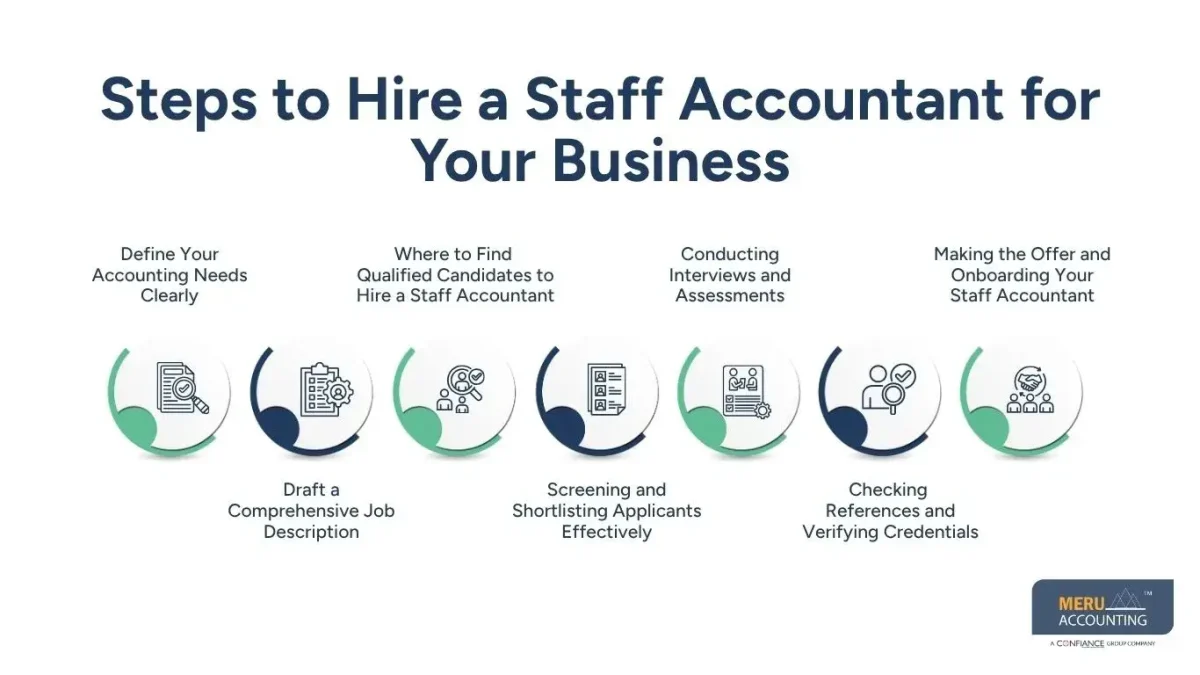
    Steps to Hire a Staff Accountant for Your Business

    Step 1: Define Your Accounting Needs Clearly

    • Assess your business size to determine the level of accounting expertise required when considering how to hire a staff accountant.
    • Identify key duties the accountant will handle, such as payroll, bookkeeping, or reporting.
    • Set expectations for part-time, full-time, or contract-based accounting support.
    • Consider any industry-specific requirements, including regulations or standards.
    • Allocate a budget to hire a staff accountant without straining resources.
    • Plan for future needs and how the role may expand as your business grows.

    Step 2: Draft a Comprehensive Job Description

    • Clearly mention “Staff Accountant” in the job title to attract relevant candidates.
    • Include all essential responsibilities, from bookkeeping to financial reporting.
    • List required skills, including accounting certifications, software proficiency, and experience level.
    • Highlight benefits, compensation, and growth opportunities to attract top talent.
    • Specify location and work hours, whether remote, hybrid, or on-site.
    • Provide a brief company overview, including culture and values, to engage potential candidates.

    Step 3: Where to Find Qualified Candidates to Hire a Staff Accountant

    • Use job portals like LinkedIn, Indeed, and Glassdoor to access a large pool of professionals when learning how to hire a staff accountant.
    • Reach out to accounting associations or local CPA networks for referrals.
    • Ask existing employees for recommendations—they often know reliable candidates.
    • Work with recruitment agencies to find pre-screened accountants quickly.
    • Explore professional groups on social media platforms like LinkedIn and Facebook.
    • Consider college recruitment to hire fresh graduates from reputable accounting programs.
      Hire a Staff Accountant
      Hire a Staff Accountant

    Step 4: Screening and Shortlisting Applicants Effectively

    • Review resumes carefully for relevant experience, certifications, and job stability to ensure you follow best practices in how to hire a staff accountant.
    • Check technical skills, including accounting software knowledge and reporting proficiency.
    • Evaluate soft skills such as communication, problem-solving, and attention to detail.
    • Conduct initial screening via phone or video interviews to gauge suitability.
    • Rank candidates based on experience, skills, and cultural fit.
    • Avoid bias by focusing on qualifications and experience rather than assumptions.

    Step 5: Conducting Interviews and Assessments

    • Prepare questions in advance about past experiences, challenges, and technical knowledge.
    • Include practical tests such as accounting exercises or problem-solving scenarios.
    • Conduct behavioral interviews to understand how candidates handle stress, deadlines, and teamwork.
    • Evaluate cultural fit to ensure alignment with your company’s values and work culture.
    • Discuss responsibilities, growth opportunities, and performance standards clearly.
    • Provide detailed information about the role, so candidates understand expectations.

    Step 6: Checking References and Verifying Credentials

    • Contact previous employers to verify performance, reliability, and integrity—an essential step in how to hire a staff accountant successfully.
    • Confirm accounting certifications and memberships in professional bodies.
    • Verify employment history to ensure resume accuracy.
    • Consider background checks, including criminal and financial checks if needed.
    • Assess professional reputation via online reviews, LinkedIn endorsements, or recommendations.
    • Document all findings for future HR records and compliance purposes.

    Step 7: Making the Offer and Onboarding Your Staff Accountant

    • Prepare an offer letter including salary, benefits, job description, and start date as part of your structured approach to how to hire a staff accountant.
    • Negotiate terms of compensation or work arrangements as needed.
    • Formalize employment by completing all legal and compliance documents.
    • Plan onboarding to introduce the new accountant to your team, systems, and processes.
    • Set initial short-term goals to help the new hire settle into the role.
    • Provide continuous support through mentorship or supervision during the first few months. 

    Tips for Retaining Your Staff Accountant Long-Term

    • Provide growth opportunities through training, certifications, or promotions to encourage professional development.
    • Recognize contributions regularly to build loyalty, motivation, and job satisfaction.
    • Maintain open communication so the accountant feels comfortable discussing challenges and ideas.
    • Offer competitive compensation and review salaries periodically to stay competitive in the market.
    • Foster a positive work environment that supports productivity and employee well-being.
    • Encourage work-life balance with flexible hours or remote work options to reduce burnout. 

    Common Mistakes to Avoid When You Hire a Staff Accountant

    Hiring Without a Clear Job Description

    Candidates may have mismatched expectations, leading to dissatisfaction if you don’t follow proper guidelines for how to hire a staff accountant. Clearly defining roles ensures everyone understands their responsibilities from day one.

    Ignoring Cultural Fit

    Skills are important, but alignment with company values matters too. Hiring someone who fits your team culture promotes collaboration and engagement.

    Rushing the Process

    Taking shortcuts in screening or interviews increases hiring risks. A careful and thorough process helps you select the most qualified candidate.

    Overlooking References

    Failing to check backgrounds can result in hiring unreliable candidates. Verifying past work experience and performance reduces potential issues.

    Underestimating Onboarding Needs

    Without proper guidance, even skilled accountants may struggle to adapt. A structured onboarding plan accelerates learning and integration.

    Focusing Only on Cost

    Prioritizing salary over skills and experience may compromise performance. Investing in the right talent ensures long-term benefits for your business.

    Why Choose Meru Accounting?

    At Meru Accounting, we make finding skilled accounting professionals simple and efficient. Our comprehensive hiring support ensures you get the right fit for your business. Here’s how we help:

    • We leverage years of experience in accounting and bookkeeping to connect you with staff accountants who meet your specific requirements.
    • From drafting accurate job descriptions to screening resumes and verifying credentials, we handle every step of the hiring process.
    • Our structured approach reduces the time and effort you spend on recruitment.
    • We ensure that every candidate we present is thoroughly vetted and qualified.

    Partner with Meru Accounting to streamline your hiring process and secure the accounting talent your business needs.

    Key Takeaways

    • Hiring a staff accountant improves financial management and reporting.
    • Clear job descriptions and defined needs attract qualified candidates.
    • Proper screening, interviews, and reference checks prevent hiring mistakes.
    • Retaining accountants requires recognition, growth opportunities, and fair compensation.
    • Meru Accounting offers expert support in finding and onboarding the right accountant for your business.

    FAQs

    You can hire a staff accountant by defining your accounting needs, posting a clear job description, screening candidates, and checking references before making an offer.

    Look for skills in bookkeeping, financial reporting, tax preparation, accounting software, and attention to detail.

    You can find candidates through job portals, professional accounting networks, referrals, recruitment agencies, and college placements.

    Costs vary based on experience, location, and responsibilities, but salaries are generally higher for certified accountants with several years of experience.

    The hiring process can take 4–6 weeks, including posting the job, shortlisting candidates, interviews, reference checks, and onboarding.