



Hiring the right talent is crucial for businesses aiming to manage finances effectively. If you want to hire financial analysts, understanding their roles, costs, skills, and best practices is essential. With 2026 bringing new trends in remote work and finance management, businesses must make informed choices when recruiting financial professionals.
A skilled financial analyst can provide deep insights into a company’s financial health, helping to identify opportunities for growth, reduce risks, and improve budgeting decisions.
Whether you are a small business looking for basic financial support or a large organization planning complex investments, having the right analyst ensures accurate reporting and strategic guidance.
Additionally, hiring a remote financial analyst allows access to specialized talent beyond local boundaries, giving businesses more flexibility and expertise than ever before.
What You Will Learn From This Blog
- How to identify the right financial analyst for your business needs
- Differences between various types of financial analysts
- Benefits and considerations when hiring a remote financial analyst
- Key skills to look for in a financial analyst
- Cost expectations for hiring financial analysts in 2026
- Best practices for recruitment and onboarding
- Legal and compliance requirements
- Ways to measure the effectiveness of your financial analyst
Understanding The Role Of A Financial Analyst
Financial Data Analysis
A financial analyst examines company data, identifies patterns, and provides insights to improve decision-making. Their work helps businesses forecast trends accurately.
Budget Management
They prepare budgets, monitor spending, and suggest adjustments to maintain financial stability. This ensures resources are allocated effectively and operational costs are controlled.
Risk Assessment
Financial analysts evaluate financial risks associated with investments, loans, and business operations, ensuring informed choices. They also develop strategies to minimize potential losses and protect company assets.
Performance Reporting
They generate reports on financial health, revenue, and expenses to support strategic planning. These reports help stakeholders understand the financial impact of business decisions.
Strategic Recommendations
By analyzing market trends and financial data, analysts guide business leaders in making informed financial decisions. Their recommendations help drive growth, improve profitability, and support long-term business goals.
Types Of Financial Analysts To Hire
Corporate Financial Analysts
Focus on internal financial planning, cost management, and profitability for businesses. When you hire financial analysts, knowing their type helps match the right expertise to your business needs.
Investment Analysts
Specialize in evaluating stocks, bonds, and other investment opportunities to guide financial growth. Expert recommendations from investment analysts help maximize returns while minimizing risks.
Credit Analysts
Assess creditworthiness of clients or partners, helping businesses reduce risk. Credit policies and evaluations by these analysts protect companies from potential defaults.
Risk Analysts
Examine potential threats to financial stability and suggest strategies to minimize them. Continuous monitoring of financial exposures ensures businesses are prepared for uncertainties.
Budget Analysts
Help in planning budgets, monitoring spending, and ensuring alignment with organizational goals. Tracking budget performance identifies areas where costs can be optimized efficiently.
Remote Financial Analyst: Advantages And Considerations
Flexibility In Hiring
A remote financial analyst allows you to hire financial analysts from anywhere globally, expanding your options and expertise. Global access makes it easier to find professionals with the exact expertise your business needs.
Cost Savings
Remote analysts often reduce overhead costs compared to in-house employees. Operational expenses, such as office space and equipment, can be significantly lowered.
Access To Expertise
You can hire analysts with specialized skills that may not be locally available. This ensures high-quality insights without geographic limitations.
Technology Dependence
Ensure your remote analyst can work efficiently with your accounting software and communication tools when you hire financial analysts for remote positions. Proper tools and platforms help maintain workflow efficiency and data accuracy.
Communication And Oversight
Establish regular reporting and check-ins to maintain accountability and productivity. Clear communication protocols ensure tasks are completed on time and expectations are met.
Skills To Look For When You Hire Financial Analysts
Analytical Thinking
The ability to interpret data and provide actionable insights is crucial when you hire financial analysts for your team. Strong analytical skills help identify trends that drive better financial decisions.
Communication Skills
Clear communication helps convey complex financial concepts to non-financial staff and is a key trait to evaluate when you hire financial analysts. Effective communication ensures alignment across teams and smooth decision-making.
Technical Skills
Proficiency in Excel, financial modeling, and accounting software is essential. Advanced technical skills enable accurate reporting and efficient data management.
Attention To Detail
Accurate data analysis prevents errors in budgeting and forecasting. Careful review of financial information reduces risks and improves reliability.
Problem-Solving Ability
A strong analyst identifies issues early and provides solutions to improve financial health. Creative problem-solving supports operational efficiency and strategic planning.
Time Management
Ability to manage multiple tasks and deadlines efficiently is important. Proper time management ensures timely completion of reports and analyses.
Business Acumen
Understanding business operations and market trends adds extra value. Knowledge of industry practices helps make recommendations that align with company goals.
Cost To Hire Financial Analysts In 2026
Entry-Level Analysts
Expect salaries between $50,000 to $70,000 annually, depending on location and industry. These analysts are ideal for handling basic financial reporting and assisting senior staff.
Mid-Level Analysts
Salaries range from $70,000 to $100,000, with experience in specific domains adding value. Mid-level analysts can take on complex financial modeling and budgeting tasks.
Senior Analysts
Highly experienced analysts can cost $100,000 to $150,000 or more per year. They provide strategic guidance and help shape long-term financial planning.
Remote Analysts
Hiring a remote financial analyst may reduce costs by 10-20% while maintaining expertise. Remote options allow access to highly skilled professionals without location constraints.
Freelance And Contract Options
Short-term or project-based analysts can cost $40-$80 per hour, ideal for temporary needs. Freelancers offer flexibility for special projects or peak workload periods.
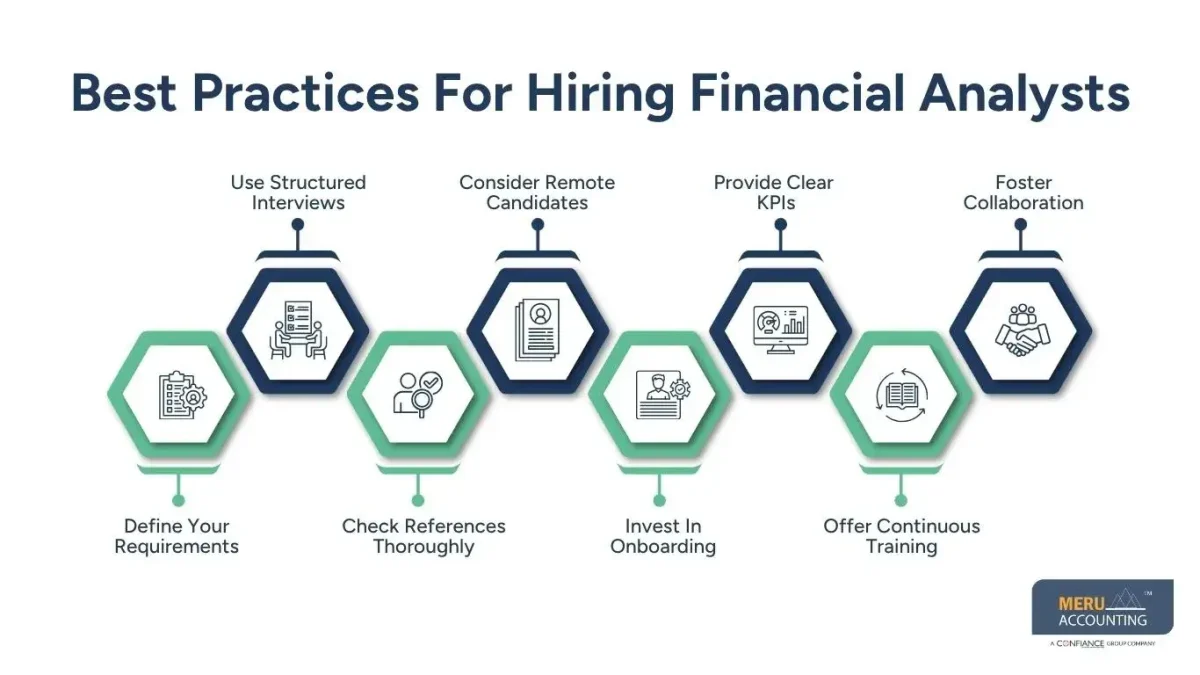
Best Practices For Hiring Financial Analysts
Define Your Requirements
Clarify the responsibilities, skills, and experience needed for the role before you hire financial analysts to ensure a good fit. Clear requirements help attract candidates who are the right fit for your business needs.
Use Structured Interviews
Ask scenario-based questions to assess problem-solving and analytical skills. Structured interviews provide a fair and consistent way to evaluate all candidates.
Check References Thoroughly
Verify past experience and performance through references. References give insight into a candidate’s work ethic and reliability.
Consider Remote Candidates
A remote financial analyst broadens your talent pool and brings diverse expertise. Remote hiring allows businesses to access specialized skills beyond local boundaries.
Invest In Onboarding
Proper onboarding ensures the analyst understands company processes and expectations. A structured onboarding process helps new analysts contribute effectively from day one.
Provide Clear KPIs
Set key performance indicators to measure success early on. KPIs help analysts focus on what matters most to the business.
Offer Continuous Training
Regular training updates skills and knowledge relevant to financial analysis. Ongoing development ensures analysts stay current with industry trends and software tools.
Foster Collaboration
Encourage collaboration between analysts and other teams. Teamwork improves the quality of insights and financial decision-making.
Legal And Compliance Considerations When You Hire Financial Analysts
Employment Laws
Ensure compliance with local labor laws regarding contracts, benefits, and working hours. Following these laws prevents legal issues and maintains a fair workplace.
Tax Regulations
Understand tax obligations for both in-house and remote financial analysts. Proper tax compliance avoids penalties and ensures smooth operations.
Confidentiality Agreements
Protect sensitive financial data with proper agreements and policies when you hire financial analysts, especially remote ones. Clear agreements safeguard company information and build trust with employees.
Licensing And Certifications
Verify required certifications, like CFA or CPA, to ensure credibility. Certified analysts bring recognized expertise and professional accountability.
Data Security Compliance
Remote financial analysts must adhere to company policies for secure handling of financial information. Implementing strong security measures protects against data breaches and financial risks.
KPIs To Measure The Effectiveness Of Your Financial Analyst
Accuracy Of Reports
Track error rates in financial reports to ensure reliability. High accuracy ensures decisions are based on trustworthy data.
Timeliness
Measure how quickly budgets, forecasts, and reports are prepared. Timely reporting helps management respond quickly to financial changes.
Contribution To Decisions
Evaluate how financial insights influence business strategies after you hire financial analysts, ensuring their work drives measurable results. Strong contributions indicate the analyst’s work directly supports growth and profitability.
Cost Management
Assess their effectiveness in controlling costs and optimizing budgets. Effective cost management leads to better resource allocation and higher efficiency.
Process Improvement
Measure initiatives that streamline financial operations or improve reporting quality. Continuous process improvement enhances productivity and reduces errors.
Why Choose Meru Accounting To Hire Financial Analysts
- Meru Accounting offers access to a highly skilled pool of financial analysts with experience serving clients across different industries.
- Businesses can hire either in-house or a remote financial analyst through Meru Accounting, depending on their requirements.
- Our services are cost-effective, giving you professional financial expertise without exceeding your budget.
- Meru Accounting provides ongoing support to ensure your financial operations run smoothly and efficiently.
- Each solution is customized by Meru Accounting to match your business goals, helping you make informed financial decisions with confidence.
Key Takeaways
- Hiring the right financial analyst impacts your business growth and financial health.
- Remote financial analysts offer flexibility and access to global talent.
- Focus on skills, certifications, and experience when hiring financial analysts.
- Costs vary depending on experience level, role, and location.
- Using best practices ensures you hire analysts who add value and support strategic decisions.
FAQs
You can hire financial analysts by defining your business needs, reviewing candidates’ experience, checking skills like budgeting and reporting, and considering remote or in-house options.
A remote financial analyst offers flexibility, access to global talent, cost savings, and the ability to work with specialized skills not available locally.
Costs vary by experience: entry-level $50k–$70k, mid-level $70k–$100k, senior $100k–$150k annually. Hiring a remote financial analyst may reduce costs by 10–20%.
Key skills include data analysis, budgeting, reporting, attention to detail, problem-solving, and knowledge of financial software.
Check KPIs such as report accuracy, timeliness of financial data, contribution to business decisions, cost management, and suggestions for process improvements.


