
Meru Accounting

What Are the Top Factors to Consider When You Hire Financial Systems Analyst

Contents
Want to learn more?
Subscribe for business tips, tax updates, financial fundamental and more


    What Are the Top Factors to Consider When You Hire Financial Systems Analyst

    In today’s fast moving business environment, managing financial data is no longer just about bookkeeping. Companies rely on complex systems to track, analyze, and report financial information. This is where the decision to hire financial systems analyst becomes important. A skilled analyst can bridge the gap between finance and technology, helping businesses make better decisions.

    Many organizations, especially growing ones, struggle with inefficient systems, data errors, or lack of insights. When you bring in a financial systems analyst, you gain expertise that improves both accuracy and efficiency. At the same time, many businesses also choose to outsource financial analysis services to gain flexibility and reduce costs.

    This blog will guide you through everything you need to know before you hire financial systems analyst and how outsourcing can be a smart alternative.

    What You Will Learn From This Blog

    By the end of this blog, you will clearly understand:

    • The role and responsibilities when you hire financial systems analyst
    • The benefits of making this hiring decision
    • When your business actually needs to hire financial systems analyst
    • The top factors to consider before hiring
    • Whether in house hiring or outsourcing is better
    • Why many companies choose to outsource financial analysis services

    What Does a Financial Systems Analyst Do?

    Before you hire financial systems analyst, it is important to understand their role. A financial systems analyst works at the intersection of finance and IT. Their main responsibility is to ensure that financial systems are working efficiently and delivering accurate insights.

    Some of their key tasks include:

    • Evaluating financial software and systems
    • Improving reporting processes
    • Identifying inefficiencies and suggesting solutions
    • Ensuring data accuracy and consistency
    • Supporting budgeting and forecasting processes
    • Integrating different financial tools and platforms

    When you hire financial systems analyst, you are not just hiring someone for technical tasks. You are hiring a professional who can translate financial data into meaningful business insights. Many companies also prefer to outsource financial analysis services to access this expertise without building an in house team.

    Key Benefits When You Hire Financial Systems Analyst

    There are several advantages when you hire financial systems analyst for your business. These benefits go beyond simple system management.

    1. Improved Data Accuracy

    When you hire financial systems analyst, they ensure that your financial data is clean, structured, and reliable. This reduces errors and improves decision making.

    2. Better Financial Insights

    A strong reason to hire financial systems analyst is their ability to analyze data deeply. They turn raw numbers into actionable insights.

    3. Increased Efficiency

    Manual processes slow down operations. With the right analyst in place, repetitive tasks can be automated and workflows streamlined.

    4. Cost Savings in the Long Run

    Although hiring has a cost, a financial systems expert helps reduce inefficiencies and errors that can be expensive.

    5. Scalability

    As your business grows, systems become more complex. These professionals ensure your systems scale smoothly.

    Many businesses combine these benefits by choosing to outsource financial analysis, which provides expertise without long term hiring commitments.

    When Should You Hire Financial Systems Analyst for Your Business?

    Not every business needs to hire financial systems analyst immediately. However, there are clear signs that indicate the right time.

    • Your financial reports are inconsistent or delayed
    • You rely heavily on manual processes
    • Your systems are outdated or disconnected
    • You are scaling quickly and need better financial control
    • You lack insights for decision making

    When these challenges arise, it becomes necessary to hire financial systems analyst. Alternatively, you can outsource financial analysis to address these issues quickly without going through a long hiring process.

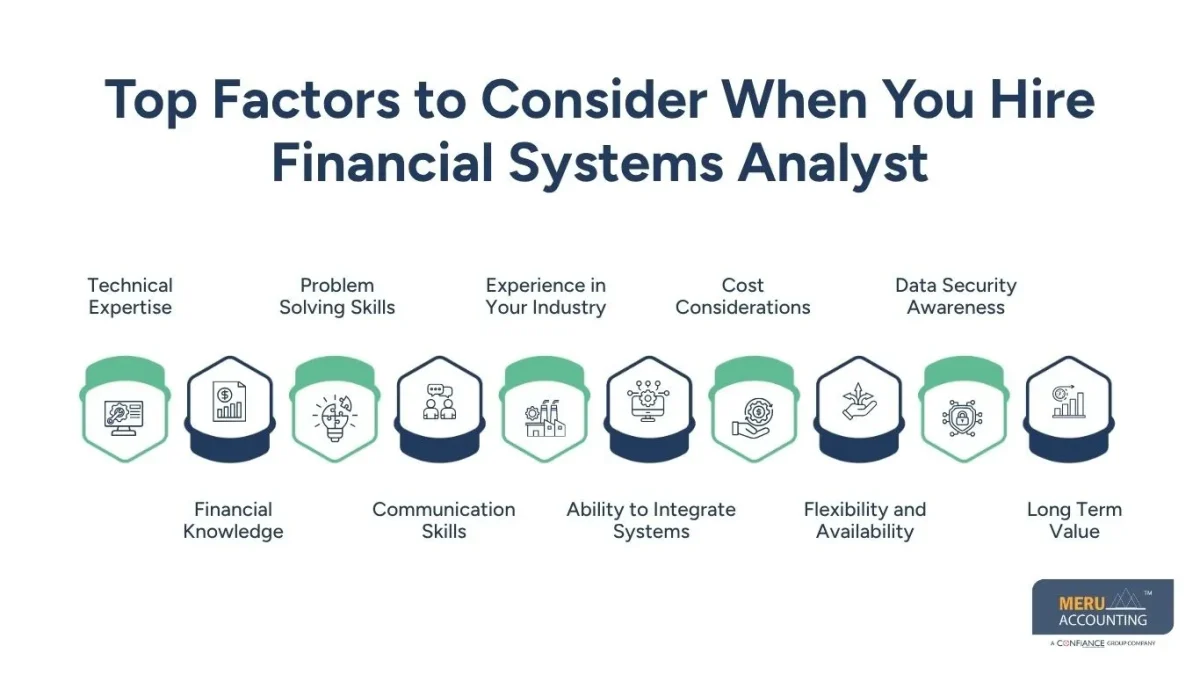
    Top Factors to Consider When You Hire Financial Systems Analyst

    Making the decision to hire financial systems analyst is only the first step. Choosing the right person or service requires careful evaluation.

    1. Technical Expertise

    When you hire financial systems analyst, ensure they are skilled in financial software, ERP systems, and data tools. Technical knowledge is essential for handling complex systems. They should also be familiar with automation tools and emerging technologies that improve efficiency. A strong technical foundation ensures they can quickly adapt to new systems and business needs.

    2. Financial Knowledge

    A good candidate should not only understand systems but also finance. They must be comfortable with accounting principles, reporting standards, and financial analysis. This combination allows them to align systems with real financial goals. It also ensures that the insights generated are accurate and meaningful for decision making.

    3. Problem Solving Skills

    Systems often come with unexpected challenges. Look for someone who can identify problems and provide practical solutions. They should be able to analyze root causes rather than just fixing surface level issues. Strong problem solving skills help prevent recurring errors and improve overall system performance.

    4. Communication Skills

    They need to explain technical concepts to non technical teams. Strong communication is a must. Clear communication helps bridge the gap between finance and IT departments. It also ensures that stakeholders understand system changes and their impact.

    5. Experience in Your Industry

    Industry specific knowledge can make a big difference. Relevant experience helps them understand your business faster. They will already be familiar with common challenges and compliance requirements in your sector. This reduces the learning curve and leads to quicker results.
    Hire Remote Financial Analyst

    6. Ability to Integrate Systems

    Modern businesses use multiple tools. The analyst should be able to integrate systems seamlessly. Proper integration ensures smooth data flow across departments. It also eliminates duplication and reduces the risk of errors.

    7. Cost Considerations

    Hiring full time can be expensive. This is why many companies choose to outsource financial analysis instead of hiring internally. You should evaluate both short term and long term costs before making a decision. A cost effective approach can still deliver high quality results if planned correctly.

    8. Flexibility and Availability

    Your business needs may change. Consider whether they can adapt to evolving requirements. A flexible professional can handle shifting priorities and workloads. This ensures continuity and consistent performance even during periods of growth.

    9. Data Security Awareness

    Financial data is sensitive. They must follow strong data security practices. This includes understanding compliance standards and implementing proper access controls. Strong security awareness helps protect your business from data breaches and financial risks.

    10. Long Term Value

    Think beyond immediate needs. Consider how they will contribute to your long term growth. A good analyst should help improve systems in a sustainable way. Their contribution should support scalability and future business expansion.

    If these factors seem overwhelming, many businesses simplify the process by choosing to outsource financial analysis to experienced providers.

    In-House vs Outsourcing: What’s the Better Choice?

    When deciding to hire financial systems analyst, you also need to choose between in house hiring and outsourcing.

    In House Hiring

    Pros:

    • Full control over the employee
    • Direct communication
    • Deep understanding of your business

    Cons:

    • High salary and benefits cost
    • Time consuming hiring process
    • Limited flexibility

    Outsourcing

    Pros:

    • Access to expert professionals
    • Cost effective solution
    • Scalable based on your needs
    • Faster implementation

    Cons:

    • Less direct control
    • Requires clear communication

    For many small and medium businesses, the better choice is to outsource financial analysis services. It allows them to enjoy the benefits without the burden of full time hiring.

    Outsource Financial Analysis Services to Meru Accounting

    If you are planning to hire financial systems analyst but want a more flexible and cost effective solution, it is a smart decision to outsource financial analysis services to Meru Accounting.

    Meru Accounting provides expert financial professionals who understand both systems and finance. Instead of going through a long hiring process, you can quickly access skilled analysts who can improve your financial operations.

    When you outsource financial analysis services to Meru Accounting, you get:

    • Experienced financial systems analysts
    • Accurate and timely financial reporting
    • System optimization and automation
    • Scalable services based on your business needs
    • Cost effective solutions compared to hiring in house

    Businesses that hire financial systems analyst through outsourcing partners like Meru Accounting often see faster results. It allows them to focus on core operations while experts handle financial systems.

    Key Takeaways

    • Choosing to hire financial systems analyst can significantly improve your financial operations
    • These professionals help bridge the gap between finance and technology
    • You should hire financial systems analyst when your systems become complex or inefficient
    • Key factors like expertise, communication, and cost should guide your decision
    • Many businesses prefer to outsource financial analysis services for flexibility and cost savings
    • Partnering with experts like Meru Accounting can simplify the process and deliver faster results

    FAQs

    You should hire financial systems analyst to improve data accuracy, streamline processes, and gain better financial insights for decision making.

    It depends on your needs. If you want flexibility and cost savings, it is often better to outsource financial analysis services instead of hiring full time.

    You should look for technical expertise, financial knowledge, problem solving ability, and strong communication skills.

    They also help maintain accurate records and reduce workload on your team.

    Yes, even small businesses benefit from hiring a financial systems expert, especially when managing growth and improving financial systems.

    Outsource accounts receivable services is often more affordable than hiring full-time staff.

    When you outsource financial analysis services, you save time and cost while gaining access to experienced professionals without long term commitments.