

Meru Accounting

How to Hire a CFO: A Complete Guide for Startups and Growing Businesses

Contents
Want to learn more?
Subscribe for business tips, tax updates, financial fundamental and more


    How to Hire a CFO: A Complete Guide for Startups and Growing Businesses

    Hiring the right financial leadership is crucial for startups and growing businesses. Knowing how to hire a CFO can help your business manage finances effectively, plan for growth, and make informed strategic decisions. 

    Whether you’re considering a full-time, fractional, or part-time CFO, this guide will provide step-by-step insights to ensure you make the best choice for your organization. 

    A strong CFO can not only oversee your finances but also provide strategic guidance to drive profitability and long-term stability. With the right CFO in place, your business can confidently navigate financial challenges and seize growth opportunities.

    What You Will Learn From This Blog

    • A CFO is not just a finance professional. Learning how to hire a CFO can help you bring on a strategic advisor who guides your business growth, manages risks, and handles complex financial decisions efficiently.


    • You will learn exactly how to hire a fractional CFO or how to hire a part-time CFO if your business does not yet require a full-time executive, helping you make smarter financial decisions without unnecessary costs.


    • This blog provides a step-by-step guide on how to hire a CFO, including how to identify, interview, and select the right candidate for your unique business needs.


    • You will also learn how to hire a fractional CFO or how to hire a part-time CFO and evaluate their performance to ensure your investment drives measurable business growth.


    • The blog shows how experts like Meru Accounting can assist in the CFO hiring process and provide guidance and financial insight specifically for startups and growing businesses.

    Understanding the Importance of a CFO for Your Business

    Strategic Financial Planning

    A CFO creates financial plans that guide your business decisions, and understanding how to hire a CFO ensures you bring the right expertise to develop an effective growth roadmap.

    They also help align financial goals with your overall business strategy, which is why understanding how to hire a CFO becomes critical for long-term planning.

    Budget Management

    With a CFO, your business can maintain clear budgets, monitor cash flow, and prevent unnecessary overspending. This ensures every dollar is used effectively to support business priorities.

    Investor Confidence

    Investor Confidence: Investors prefer businesses with a strong financial leader. Knowing how to hire a CFO ensures you have the right professional to provide credible reports and strategic insights that build trust.

    Their presence reassures investors about the stability and future potential of your company, which is why many startups research how to hire a CFO during funding stages.

    Risk Management

    A CFO identifies potential risks, from market changes to operational issues, helping your business avoid costly mistakes. They also create contingency plans to protect your business from unexpected challenges.

    Growth Guidance

    From mergers to expansion plans, a CFO advises on opportunities that can maximize profitability and long-term success. They provide data-driven recommendations to ensure your growth decisions are financially sound.

    What Does a CFO Do? Key Roles and Responsibilities

    Financial Reporting

    A CFO oversees accurate reporting of income, expenses, and overall financial health. Clear insights are provided to stakeholders to help them understand the company’s performance. Regular reports also support better decision-making across all departments.

    Cash Flow Management

    A CFO manages liquidity to ensure enough cash is available for daily operations. Learning how to hire a CFO can help you bring in the right talent to maintain smooth cash flow.

    Strategic Planning

    CFOs help set long-term business goals, and knowing how to hire a CFO ensures that your financial leader is capable of aligning resources with growth strategies effectively.  

    Planning also includes evaluating risks and preparing for changes in the market, which is why understanding how to hire a fractional CFO or how to hire a part-time CFO can be critical for agile businesses.

    Compliance and Regulations

    A CFO ensures the business meets tax, accounting, and legal regulations. This approach prevents penalties and legal issues. Compliance also builds trust with investors and partners.

    Funding and Investment Decisions

    A CFO assists in securing financing and managing investors. Opportunities to raise capital are evaluated carefully. Decisions are made to maximize returns while minimizing financial risks.

    Performance Analysis

    CFOs monitor key metrics and analyze trends. Informed financial recommendations are provided to support business decisions. Performance reviews also help identify areas for improvement and growth.

    Signs Your Startup or Growing Business Needs a CFO

    Rapid Growth

    If your business is expanding quickly, it’s important to know how to hire a CFO to manage finances strategically and support sustainable growth

    Complex Financial Processes

    When accounting, reporting, and budgeting become overwhelming, it’s important to know how to hire a CFO or how to hire a fractional CFO to simplify and streamline these processes effectively. This creates clarity and reduces the risk of errors.

    Investor Involvement

    Businesses seeking funding require a CFO to create reports that satisfy investor requirements. Accurate financial data helps build investor confidence and credibility.

    Cash Flow Issues

    Frequent cash shortages or overdrawn accounts indicate a need for professional financial oversight, highlighting the importance of knowing how to hire a CFO or how to hire a fractional CFO to manage finances effectively. A CFO ensures that funds are available when needed for operations.

    Strategic Decision Making

    When leadership requires financial guidance for decisions like mergers, acquisitions, or new projects, understanding how to hire a part-time CFO can provide access to expert advice without committing to a full-time salary.

    Business Planning Challenges

    A CFO ensures your growth plan is financially realistic and sustainable. Financial planning helps prepare for future challenges and supports long-term success.

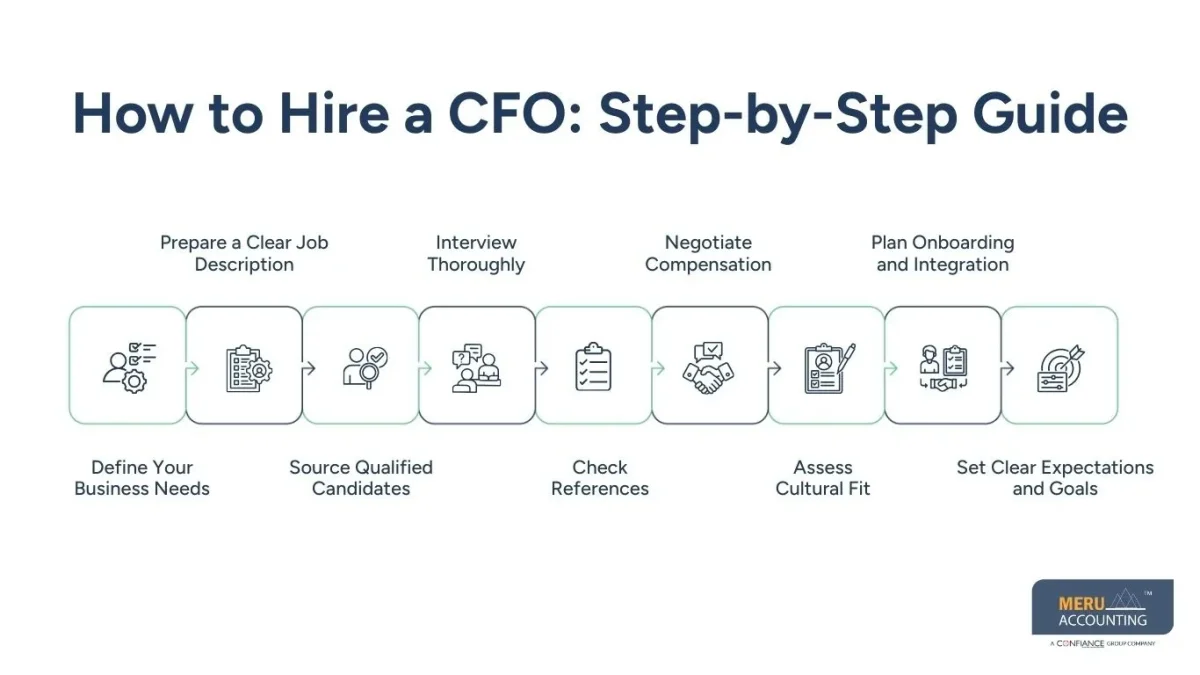
    How to Hire a CFO: Step-by-Step Guide

    Define Your Business Needs

    Start by identifying your business needs and learning how to hire a CFO, including whether a full-time, fractional, or part-time CFO is the best fit based on your company size and growth stage.

    Clear understanding of your needs will guide the hiring process efficiently.

    Prepare a Clear Job Description

    Include responsibilities, required experience, and key performance expectations in the job listing. A detailed description helps attract candidates who are the right fit for your business when following best practices for how to hire a CFO.

    Source Qualified Candidates

    Use professional networks, recruitment agencies, or CFO search platforms to find candidates, ensuring you follow best practices on how to hire a fractional CFO or part-time CFO with proven expertise. Targeted sourcing increases the chances of finding skilled professionals.
    How to Hire a CFO
    How to Hire a CFO


    Interview Thoroughly

    During interviews, focus on financial skills, strategic thinking, and the ability to handle complex business decisions, while keeping in mind the key steps for how to hire a CFO effectively.

     Include scenario-based questions to assess problem-solving and decision-making capabilities.

    Check References

    Contact previous employers or clients to understand the candidate’s past performance and reliability. Ask about their leadership style and ability to manage financial challenges.

    Negotiate Compensation

    Ensure the CFO’s salary, benefits, and incentives align with your budget and business goals. Consider performance-based incentives to motivate results.

    Assess Cultural Fit

    Evaluate how the candidate will fit with your company culture and team dynamics

    Understanding how to hire a CFO helps ensure they align not only with financial goals but also with your company’s values.

    Plan Onboarding and Integration

    Proper onboarding is a critical part of how to hire a CFO or how to hire a part-time CFO, ensuring they quickly integrate and start contributing to growth.

    Set Clear Expectations and Goals

    Define performance metrics, deliverables, and timelines from the start. This ensures accountability and a focused approach to achieving financial objectives.

    How to Hire a Fractional CFO: Benefits and Considerations

    Cost-Effective Solution

    A fractional CFO works part-time, and this blog shows you exactly how to hire a fractional CFO to access high-level financial expertise without the cost of a full-time executive.

    This approach helps manage costs while still gaining expert financial guidance.

    Flexibility

    You can adjust the engagement level based on business needs and financial health. The arrangement can be scaled up or down as the business evolves.

    Experienced Leadership

    Fractional CFOs often have experience in multiple industries and bring valuable insights to your business. Their diverse backgrounds help identify best practices and innovative solutions.

    Focused Expertise

    A fractional CFO can handle specific projects like fundraising, budgeting, or financial strategy without being tied to daily operations. This allows your team to focus on core business activities.

    Quick Onboarding

    A fractional CFO can start immediately, providing financial guidance without lengthy hiring processes. This ensures timely support during critical periods of growth or transition.

    Ideal for Growing Businesses

    Businesses in transition or planning expansion benefit from fractional CFOs to guide strategic decisions effectively. Their guidance can help avoid costly mistakes and capitalize on growth opportunities.

    How to Hire a Part-Time CFO: Flexible Solutions for Growing Businesses

    Understand Your Needs

    Determine which financial functions require oversight and how many hours per week the CFO should work. A clear understanding of responsibilities ensures the right match for your business.

    Utilize Professional Networks

    Part-time CFOs often come through referrals, accounting firms, or specialized staffing services. Using networks helps find experienced professionals faster.

    Assess Skills and Experience

    Check their expertise in budgeting, forecasting, and financial analysis relevant to your industry. Reviewing past projects gives insight into their practical capabilities.

    Set Clear Expectations

    Define goals, deliverables, and performance indicators to measure the effectiveness of part-time engagement. Clear expectations keep both parties accountable.

    Monitor Progress

    Regular check-ins ensure the CFO contributes meaningfully to your business growth. Progress tracking helps adjust priorities as needed.

    Align With Growth Goals

    A part-time CFO should help plan for expansion while optimizing current resources. Their guidance ensures financial decisions support long-term business success.

    Full-Time vs Fractional vs Part-Time CFO: Which Option Fits Your Business?

    Aspect

    Full-Time CFO

    Fractional CFO

    Part-Time CFO

    Employment Type

    Permanent employee

    External financial expert

    Works limited hours for the company

    Working Hours

    Full-time (40+ hours/week)

    Works on specific projects or agreed hours

    Fixed limited hours weekly or monthly

    Cost

    Highest cost with salary and benefits

    Cost-effective and flexible pricing

    Moderate cost compared to full-time

    Flexibility

    Low flexibility

    Highly flexible based on business needs

    Medium flexibility with scheduled hours

    Business Stage Fit

    Best for large or established companies

    Ideal for startups and growing businesses

    Suitable for small businesses needing regular support

    Financial Strategy Support

    Provides full strategic financial leadership

    Focuses on strategy, planning, and growth guidance

    Supports strategy but within limited hours

    Operational Involvement

    Handles all financial operations

    Mainly advisory and strategic involvement

    Manages selected financial tasks

    Commitment Level

    Long-term commitment

    Short-term or project-based engagement

    Ongoing but limited commitment

    Scalability

    Difficult to scale quickly

    Easy to increase or reduce services

    Moderate scalability

    Measuring CFO Performance and ROI for Your Business

    Track Financial Metrics

    Monitor revenue growth, profit margins, and cash flow improvements led by the CFO, while keeping in mind the guidelines for how to hire a CFO to maximize ROI. Regular tracking ensures financial targets are being met.

    Evaluate Strategic Impact

    Assess how the CFO’s guidance influences business decisions and long-term growth. Strategic contributions should align with the company’s goals, reinforcing the value of knowing how to hire a CFO who supports long-term strategy.

    Review Investor Confidence

    CFO contributions often impact investor trust and funding opportunities. Strong performance can attract additional investment and support business expansion.

    Assess Operational Efficiency

    Check if the CFO has streamlined financial processes and improved reporting, which highlights the importance of knowing how to hire a CFO that can deliver measurable results

    Periodic Performance Reviews

    Conduct regular reviews to measure ROI and determine whether your CFO arrangement is effective. Reviews help identify areas for improvement and growth opportunities.

    Meru Accounting’s Expertise in CFO Hiring Support

    Trusted Advisory

    Meru Accounting helps startups and growing businesses understand how to hire a CFO, providing guidance to identify the right fit based on company size and growth plans. 

    This ensures the selected CFO can meet the specific financial needs of the business.

    Fractional and Part-Time Options

    We guide clients on how to hire a fractional CFO or how to hire a part-time CFO, making financial expertise accessible. This approach allows businesses to access top-level financial guidance without a full-time commitment.

    Recruitment Assistance

    Our team helps draft job descriptions, screen candidates, and conduct interviews, making it easier to follow best practices on how to hire a CFO successfully.  This process increases the chances of finding a qualified and suitable CFO quickly.

    Strategic Financial Guidance

    Meru Accounting ensures your CFO aligns with long-term business goals, optimizing performance and ROI. Proper alignment helps businesses make informed and effective financial decisions.

    Ongoing Support

    Beyond hiring, we assist with onboarding and monitoring CFO performance to maximize business impact. Continuous support ensures the CFO contributes to growth and strategic success over time.

    Key Takeaways

    • Hiring the right CFO is crucial for financial stability, growth, and investor confidence.

    • Startups and growing businesses can benefit from full-time, fractional, or part-time CFOs depending on their needs.

    • Define clear responsibilities, evaluate candidates carefully, and align compensation with business goals.

    • Fractional and part-time CFOs provide cost-effective solutions for companies that need expertise without full-time commitments.

    • Meru Accounting offers guidance, recruitment support, and ongoing oversight to help businesses hire the right CFO and achieve financial success.

    FAQs

    Start by identifying your business needs, creating a clear job description, sourcing experienced candidates, and conducting thorough interviews to find the right fit.

    A full-time CFO works exclusively for your company, a fractional CFO works part-time on multiple projects, and a part-time CFO works fewer hours focusing on your business.

    Costs vary based on experience, role, and engagement type. Full-time CFOs are usually salaried, while fractional or part-time CFOs are more cost-effective.

    If your business is expanding, managing complex finances, seeking investors, or facing cash flow issues, it’s a good time to hire a CFO.

    Yes, fractional and part-time CFOs provide expert financial guidance without the expense of a full-time hire, making them ideal for startups and growing businesses.