




Understanding how to hire financial analyst is essential for businesses that want better control over their finances and smarter decision-making. Whether you are scaling operations or managing cash flow, hiring the right expert can make a real difference.
Many companies, especially those searching for a financial analyst for small business, often struggle to choose between skill levels, define job roles, or evaluate performance correctly.
This blog will guide you step by step on how to hire financial analyst, explain daily responsibilities, and help you decide between junior and senior professionals based on your business needs.
Hiring a financial expert improves financial clarity and helps you manage risks, budgets, and growth effectively when you understand how to hire financial analyst. A financial analyst for small business simplifies financial data and provides insights for better decisions.
What You Will Learn From This Blog
- How to hire financial analyst step by step
- Roles and responsibilities of a financial analyst
- Importance of a financial analyst for small business
- Difference between junior and senior analysts
- Daily tasks and performance expectations
- Mistakes to avoid during hiring
- How to measure analyst performance
What Does a Financial Analyst Do? Key Roles and Responsibilities
A financial analyst helps businesses understand their financial position and make better decisions using data. They play an important role in improving profitability, managing risks, and supporting overall business growth.
Financial Data Analysis
A financial analyst studies company data to identify trends and patterns. This helps businesses understand profits, costs, and growth areas.
Budget Planning
They prepare budgets and monitor spending to ensure financial control, a key part of how to hire financial analyst. This helps prevent overspending and keeps operations stable.
Financial Reporting
They create reports that explain financial health clearly. These reports are useful for owners, investors, and stakeholders.
Forecasting And Planning
They predict future revenue and expenses based on past data. This helps in better planning and decision-making.
Risk Assessment
They identify financial risks and suggest ways to reduce them, a factor in how to hire financial analyst. This protects the business from unexpected losses.
Supporting Business Decisions
They provide insights that guide investments and expansion plans. This is why a financial analyst for small business is highly valuable.
Why Businesses Need A Financial Analyst For Small Business Growth
Better Cash Flow Management
A financial analyst for small business ensures that cash inflow and outflow are balanced properly, showing how to hire financial analyst matters. They also track payment cycles and help maintain enough cash for daily operations.
Informed Decision Making
They provide clear data so business owners can make better decisions without guesswork, supporting how to hire financial analyst. This reduces uncertainty and helps in choosing the right financial strategies.
Cost Control
They identify unnecessary expenses and suggest ways to reduce costs. This improves profit margins and keeps the business financially healthy.
Growth Planning
They help businesses plan expansion with proper financial backing. They also evaluate whether the business is ready for scaling operations.
Financial Stability
They ensure consistent monitoring of financial health, reducing risks. This helps avoid sudden financial issues and supports long-term stability.
Investor Confidence
Clear financial reports build trust among investors and partners. This makes it easier to secure funding and build strong business relationships.
How To Hire Financial Analyst: Step-By-Step Hiring Process
Define The Job Role
Start by clearly defining what tasks the analyst will handle. This is the first step in how to hire financial analyst.
Identify Required Skills
Look for skills like data analysis, reporting, and forecasting. These are essential for a good analyst.
Choose Experience Level
Decide whether you need a junior or senior analyst based on your business size. Consider the complexity of your financial operations before finalizing the experience level.
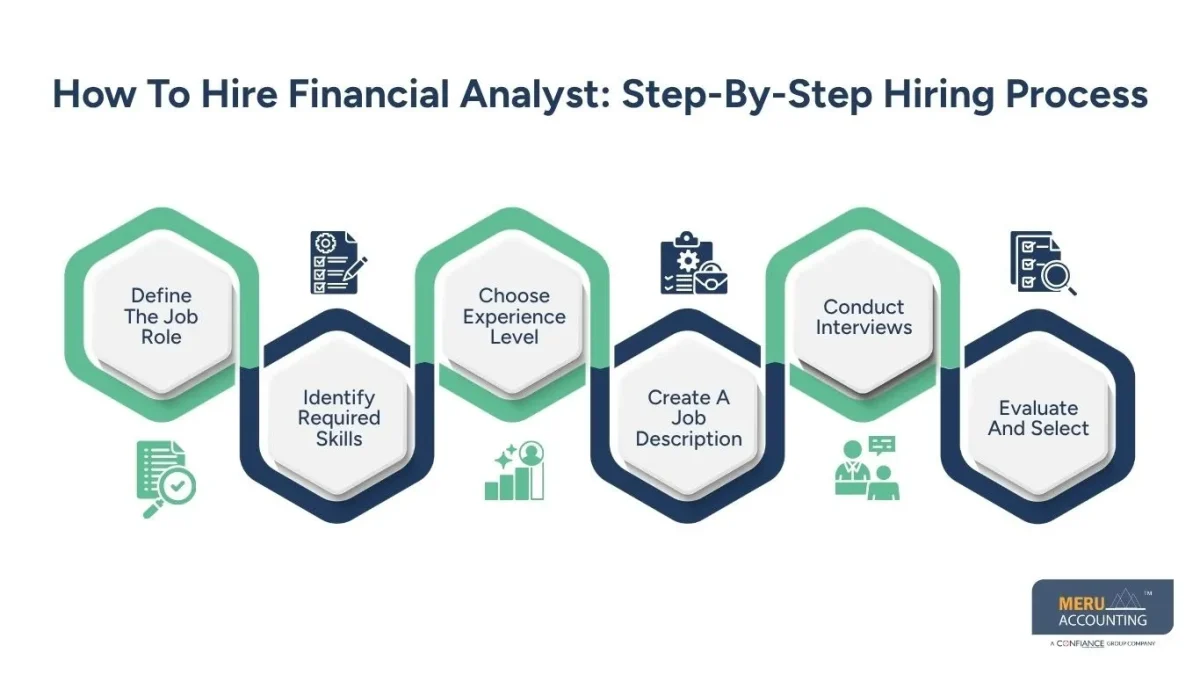
Create A Job Description
Write a simple and clear job description to attract the right candidates. Include responsibilities, required skills, and expected outcomes to avoid confusion.
Conduct Interviews
Ask practical questions to test real knowledge and problem-solving skills. You can also include case studies or sample tasks to assess their analytical thinking.
Evaluate And Select
Compare candidates and choose the one who fits your needs best. Review both technical skills and communication ability before making the final decision.
Identifying Your Business Needs Before Hiring A Financial Analyst
Business Size Matters
Small businesses may need basic financial support, while larger ones require advanced analysis. Knowing your business size is a key step in understanding how to hire financial analyst effectively.
Define Your Budget
Set a clear budget before starting the hiring process. This ensures you focus only on candidates within your affordability range.
Determine Scope Of Work
List down tasks you expect the analyst to handle daily. Clear scope helps avoid confusion and improves productivity.
Short-Term Vs Long-Term Needs
Decide whether you need temporary support or a long-term role. This helps you choose between contract hiring and full-time employment.
Industry Requirements
Some industries need specialized financial knowledge. Hiring someone with industry experience improves accuracy and efficiency.
Internal Team Support
Check if your current team needs additional help or full support. This evaluation guides your approach to how to hire financial analyst effectively within your existing structure.
Daily Tasks Of A Financial Analyst Explained
Monitoring Financial Transactions
Daily financial data is reviewed to ensure accuracy. Quick identification of errors, missing entries, or unusual activities helps maintain reliable records.
Preparing Reports
Daily, weekly, and monthly financial reports are prepared. Clear reports allow management to track performance and make informed decisions.
Budget Tracking
Actual expenses are compared with planned budgets. Differences are highlighted to control spending and maintain financial discipline.
Data Interpretation
Financial data is explained in simple and easy language. Better understanding of numbers helps teams take correct actions without confusion.
Supporting Teams
Financial insights are shared with management and other departments. Better coordination helps align team activities with overall business goals.
Forecast Updates
Forecasts are updated based on recent financial data. Accurate updates ensure future plans match current business performance.
Cash Flow Monitoring
Cash inflows and outflows are tracked regularly. Proper monitoring helps maintain liquidity and avoid cash shortages.
Variance Analysis
Differences between expected and actual results are analyzed. This helps in identifying areas that need improvement or correction.
Financial Data Entry Review
Recorded financial entries are checked for accuracy and completeness. Consistent review reduces the risk of errors in final reports.
Compliance Checks
Financial activities are reviewed to ensure compliance with policies and regulations. This helps avoid penalties and keeps the business financially secure.
Junior Vs Senior Financial Analyst: Key Differences In Expertise
Basis | Junior Financial Analyst | Senior Financial Analyst |
Experience Level | 0–3 years of experience with basic exposure to financial tasks | 5+ years of experience with deep industry knowledge |
Skill Set | Focus on basic analysis, data entry, and report preparation | Handle complex financial modeling, forecasting, and strategic analysis |
Decision-Making Ability | Support decisions by providing data and reports | Provide strategic advice and influence key business decisions |
Cost Difference | More affordable, suitable as a financial analyst for small business and budget-friendly hiring | Higher cost due to expertise and advanced skill set |
Responsibility Level | Assist in tasks and follow instructions from senior team members | Lead projects, manage teams, and take ownership of financial outcomes |
Business Impact | Limited impact, mainly supports daily operations | Strong impact on long-term planning and business growth |
Common Mistakes To Avoid When Hiring A Financial Analyst
Not Defining Job Roles Clearly
Unclear job roles often create confusion and reduce overall work performance. Clearly defined responsibilities help analysts understand expectations and complete tasks efficiently.
Hiring Based On Cost Alone
Choosing candidates based only on low cost can affect overall work quality. Balancing cost with skills and experience ensures better value and long-term results.
Ignoring Practical Skills
Focusing only on degrees may ignore important real-world working experience. Recognizing practical skills is a critical part of how to hire financial analyst who can handle real business scenarios.
Skipping Background Checks
Ignoring background checks may result in hiring candidates with unreliable work history. Verifying past experience and references ensures trust and better hiring decisions.
Not Testing Analytical Skills
Skipping skill tests can make it difficult to assess problem-solving ability. Testing real scenarios helps evaluate how candidates handle financial challenges properly.
Overlooking Cultural Fit
Ignoring team compatibility can create communication issues within the organization. A good cultural fit improves teamwork, collaboration, and overall workplace productivity.
Performance Metrics To Evaluate Your Financial Analyst
Accuracy Of Reports
Check how accurate and error-free their reports are, as this reflects whether your approach to how to hire financial analyst was effective.
Timeliness
Ensure all tasks, reports, and updates are completed on schedule consistently. Meeting deadlines indicates reliability and proper time management in daily work.
Quality Of Insights
Assess how actionable and practical the financial insights provided are for decision-making. Useful insights help improve planning and support business growth effectively.
Cost Savings
Measure how much the analyst contributes to reducing unnecessary or excess expenses. Significant cost savings show that their analysis directly benefits the company financially.
Forecast Accuracy
Check how closely financial predictions match actual business results and trends. Accurate forecasts indicate strong analytical skills and a proper understanding of data.
Communication Skills
Financial data should be explained clearly to managers and non-financial staff.
Good communication ensures all teams can make informed decisions without confusion.
Why Choose Meru Accounting To Hire Financial Analyst
Experienced Professionals
Meru Accounting provides highly skilled analysts with strong industry experience. Experts handle financial data accurately and provide reliable guidance for businesses.
Customized Services
Services are tailored specifically to meet the unique needs of your business. This ensures the financial analyst supports your goals effectively and efficiently.
Cost-Effective Solutions
Affordable solutions provide expert support without compromising on quality. Businesses can access professional services while staying within their budget limits.
Support For Small Businesses
Specialized support is offered for companies seeking a financial analyst for small business. Analysts help manage finances, improve cash flow, and support growth strategies.
Reliable Reporting
Accurate and timely financial reports are prepared for decision-making purposes. Consistent reporting helps businesses track performance and plan for the future.
Easy Hiring Process
We simplify how to hire financial analyst with a quick, efficient onboarding process tailored to your business needs.
Key Takeaways
- Knowing how to hire financial analyst helps improve financial decisions
- A financial analyst for small business supports growth and stability
- Clearly define roles before hiring as part of an effective how to hire financial analyst strategy.
- Choose between junior and senior based on needs and budget
- Avoid common hiring mistakes for better results
- Track performance using clear metrics
- Outsourcing can be a cost-effective option
FAQs
Start by defining your business needs and job role clearly. This helps find the right candidate.
Yes, a financial analyst for small business helps manage cash flow and plan growth.
Choose based on your needs and budget. Juniors are good for basic tasks, seniors for complex work.
Costs vary based on experience, location, and job requirements.
Yes, outsourcing is a flexible and cost-effective option for many businesses.


