




A Lawyer Trust Account is a special bank account used by lawyers to manage funds that belong to clients. Understanding how it works is essential for any legal professional, as mismanagement can lead to serious legal and financial consequences.
In this blog, we explain how a lawyer trust account functions, the principles of Trust Accounting for Lawyers, and why accurate management is vital.
Managing a Lawyer Trust Account requires careful attention to detail and strict adherence to legal and ethical guidelines. Every transaction, from client deposits to payments for legal services, must be properly recorded and monitored.
By understanding the flow of funds and the responsibilities involved, lawyers can avoid mistakes, maintain client confidence, and ensure compliance with regulations. Proper trust accounting not only protects clients’ money but also safeguards the lawyer’s professional reputation.
What You Will Learn From This Blog
- How a Lawyer Trust Account differs from regular accounts
- Key Principles of Trust Accounting for Lawyers
- How money flows through client accounts and legal transactions
- Common mistakes lawyers make when managing trust accounts
- Tips for staying compliant during audits and reviews
By the end of this blog, you will have a clear understanding of what makes a lawyer trust account safe and reliable for handling client funds.
Introduction To A Lawyer Trust Account
A Lawyer Trust Account is a special account where client money is held separately from the lawyer’s personal or business funds. This separation ensures that client funds remain protected and are never used for personal expenses. Every lawyer who receives advance payments or holds funds for cases, settlements, or legal transactions is required to maintain such an account to meet professional and ethical standards.
The primary purpose of a trust account is to manage client funds responsibly, keeping them safe until they are disbursed for legal services or related expenses.
Lawyer trust accounts are strictly regulated by state or country laws, and lawyers must follow these rules carefully to prevent misuse and maintain ethical practice.
Transparency is a key aspect of trust accounts, allowing lawyers to maintain clear records and demonstrate proper use of client funds during audits or disputes.
Unlike regular business or personal accounts, a Lawyer Trust Account cannot be used for the lawyer’s own fees or operating expenses until the transactions are properly documented, ensuring accountability at every step.
Essential Principles Of Trust Accounting For Lawyers
Segregation Of Funds
Funds belonging to clients must be kept separate from the lawyer’s operating money to prevent conflicts or misuse. This separation ensures that client money is always identifiable and protected.
Accurate Record-Keeping
Trust Accounting for Lawyers requires detailed logs of every deposit, withdrawal, and payment linked to client funds in a Lawyer Trust Account. Accurate records make it easier to track transactions and provide transparency during audits.
Timely Reconciliation
Regular reconciliation ensures that the account balances match client ledgers and prevents errors or discrepancies. It also helps detect mistakes or unauthorized transactions early.
Clear Documentation
Every transaction must have proper supporting documents such as invoices, agreements, or receipts. Proper documentation provides proof of compliance and strengthens accountability.
Ethical Compliance
Lawyers must follow the ethical guidelines set by legal authorities to avoid penalties or license suspension. Adhering to these standards maintains professional integrity and client trust.
Regular Monitoring
Continuous monitoring of accounts reduces risks of mismanagement and strengthens client trust. Consistent oversight ensures that all transactions are accurate and timely.
How Funds Flow In A Lawyer Trust Account
Client Deposits
Clients deposit funds into the Lawyer Trust Account for legal services or case expenses. These deposits must be recorded immediately to ensure accurate tracking of each client’s balance.
Holding Period
The lawyer holds the funds in trust until they are needed for case-related expenses or fees. During this period, the money must remain untouched for other purposes to protect client interests.
Payments To Third Parties
Lawyers can pay vendors, courts, or service providers directly from the trust account with proper authorization. Every payment should be documented with receipts and approvals for transparency.
Release Of Funds To Client
Unused funds in the Lawyer Trust Account must be returned promptly to the client with a clear accounting of deductions and fees. This timely return helps maintain client confidence and avoids disputes.
Recording Transactions
Every movement of money in the trust account must be logged to maintain transparency and comply with the Trust Accounting for Lawyers rules. Proper records make audits and reconciliations simpler and more accurate.
Monitoring Balances
Regularly checking the account ensures enough funds are available for pending obligations and avoids overdrafts. Consistent monitoring also helps detect errors or unauthorized transactions early.
Handling Retainers
Lawyers must carefully manage retainer funds, applying them only as agreed with the client. Proper tracking prevents overuse and ensures transparency in billing.
Managing Disbursement Schedules
Some client funds are released in stages for long-term cases or projects. Clear schedules help maintain accurate balances and avoid premature withdrawals.
Communication With Clients
Lawyers should provide clients with regular updates on their trust account balances and transactions. Open communication reinforces trust and avoids misunderstandings.
Why Segregating Client Funds Is Essential In A Lawyer Trust Account
Preventing Misuse
Separating client funds avoids accidental or intentional use for the lawyer’s business or personal expenses. This practice ensures that client money is always protected and used only for its intended purpose.
Maintaining Client Trust
Clients feel secure knowing their money is handled professionally and safely in a separate account. Clear segregation demonstrates integrity and builds long-term confidence in the lawyer’s services.
Compliance With Law
Segregation is a legal requirement in most jurisdictions, protecting lawyers from fines or disciplinary action. Following these rules helps avoid legal complications and professional penalties.
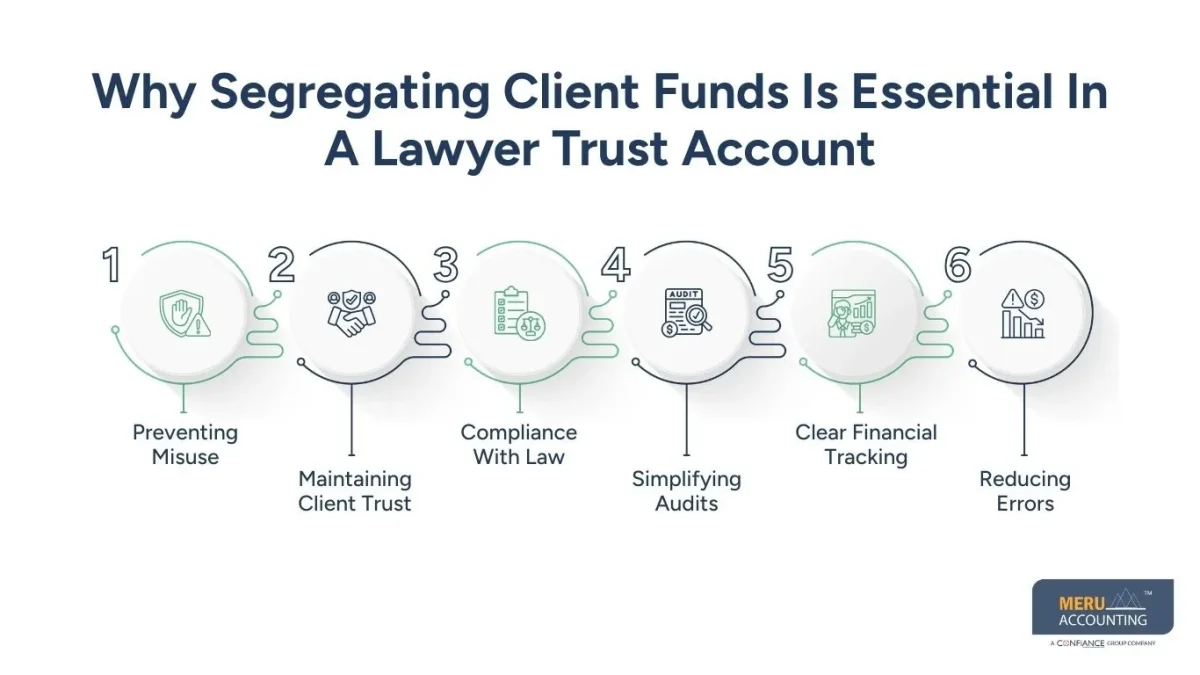
Simplifying Audits
Auditors can easily verify client funds when they are not mixed with other money. Separate accounts reduce confusion and make audit processes faster and more transparent.
Clear Financial Tracking
Separate accounts allow better tracking of payments, disbursements, and remaining balances for each client. This clarity helps lawyers manage funds efficiently and plan case-related expenses accurately.
Reducing Errors
Errors are easier to detect and correct when funds are segregated for each client or matter. Segregation also prevents accidental overdraws or misallocation of funds.
How To Maintain Accurate Records In Trust Accounting For Lawyers
Use Ledgers
Maintain a separate ledger for each client in the Lawyer Trust Account to track deposits, withdrawals, and transactions. This ensures that every client’s funds are recorded clearly and accurately.
Record Every Transaction
Document every deposit, payment, or transfer, including dates, amounts, and purpose. Detailed records help resolve disputes and provide transparency during audits.
Reconcile Regularly
Compare bank statements to internal records to ensure balances match and discrepancies are addressed immediately. Regular reconciliation prevents errors and maintains trust account accuracy.
Keep Supporting Documents
Save invoices, receipts, and contracts related to trust account transactions for reference and audits. Proper documentation provides proof of all financial activity and protects both the lawyer and clients.
Monitor Retainers
Track retainer amounts carefully and apply them only after client approval or according to agreements. This prevents accidental overuse and ensures client funds are handled ethically.
Use Accounting Software
Reliable software simplifies Trust Accounting for Lawyers by automating records and reducing human errors. Digital tools also make it easier to generate reports and maintain consistent records.
What Common Mistakes Lawyers Make In Managing Trust Accounts
Mixing Personal And Client Funds
Using trust account funds for personal or business expenses is a common mistake that leads to serious legal issues. Keeping client funds separate protects both the lawyer and the client from legal complications.
Late Record Updates
Failing to update records promptly can result in inaccurate balances and confusion during audits. Timely updates ensure that all transactions are accurately reflected and easy to track.
Ignoring Reconciliation
Skipping regular reconciliation can hide errors, missed payments, or overdrafts. Regular checks help detect mistakes early and maintain trust account integrity.
Not Keeping Documentation
Missing receipts, invoices, or approvals creates compliance risks and audit problems. Proper documentation also serves as proof of transactions in case of disputes.
Overdrawing Accounts
Spending more than the client’s available funds can lead to disciplinary actions or fines. Monitoring account balances carefully prevents accidental overdrafts.
Misunderstanding Trust Rules
Not understanding state or country-specific trust account rules can result in violations, even if done unintentionally. Lawyers must stay informed to ensure full compliance and ethical management.
How Audits And Compliance Checks Affect Lawyer Trust Accounts
Routine Audits
Lawyers may face audits to verify compliance with Lawyer Trust Account regulations and trust accounting standards. These audits ensure that client funds are handled correctly and according to legal requirements.
Detecting Errors
Audits help identify mistakes, discrepancies, or missing records before they become bigger issues. Early detection prevents financial losses and protects both lawyers and clients.
Ensuring Ethical Practice
Compliance checks confirm that lawyers are using client funds responsibly and ethically. Following these practices helps maintain professional integrity and client trust.
Preparing For Audits
Regular reconciliation, documentation, and ledger maintenance ensure smooth audit experiences. Being prepared reduces stress and minimizes the risk of penalties or violations.
Consequences Of Violations
Non-compliance can result in fines, account freezes, or suspension of legal practice. Understanding the rules and following proper procedures helps avoid these serious consequences.
Building Client Confidence
Demonstrating audit readiness builds trust with clients and reinforces professional reputation. Clients are more likely to feel secure knowing their funds are managed properly.
Continuous Improvement
Using insights from audits, lawyers can refine their trust accounting processes. Regular improvements reduce errors and enhance overall financial management practices.
Why Choose Meru Accounting For Lawyer Trust Account Management
Expertise In Trust Accounting
Meru Accounting provides specialized services for Trust Accounting for Lawyers, ensuring full compliance. Our team stays updated with the latest rules and regulations.
Accurate Record Maintenance
We maintain precise ledgers and transaction records to reduce errors and avoid fines. Detailed record-keeping ensures transparency and simplifies audits.
Audit Support
Our team helps lawyers prepare for audits, ensuring smooth compliance with regulations. This support minimizes stress and prevents potential penalties.
Segregation And Monitoring
We ensure proper segregation of client funds and regular monitoring to prevent mistakes. Continuous oversight protects client money and maintains ethical standards.
Customized Solutions
Meru Accounting tailors trust account management solutions to fit each law firm’s specific needs. Personalized strategies improve efficiency and accuracy.
Reporting And Insights
We provide regular reports and insights on trust account activity. These reports help lawyers track client funds and make informed decisions.
Training And Guidance
Meru Accounting offers guidance and training on best practices in Trust Accounting for Lawyers. This empowers law firms to maintain compliance and avoid common errors.
Key Takeaways
- A Lawyer Trust Account is separate from personal or business funds and protects client money.
- Accurate Trust Accounting for Lawyers ensures transparency, compliance, and client trust.
- Segregation, record-keeping, reconciliation, and documentation are essential practices.
- Common mistakes include mixing funds, ignoring reconciliations, and poor documentation.
- Professional accounting support, like Meru Accounting, simplifies trust account management and audit preparation.
FAQs
A lawyer trust account holds client money separately. Lawyers use it for payments, retainers, and case expenses while keeping funds safe.
Trust accounting ensures client funds are tracked accurately, preventing errors and legal penalties. It helps lawyers stay compliant with regulations.
No, client funds in a trust account cannot be used for personal or business expenses. Lawyers can only withdraw fees properly approved or earned.
Lawyers should reconcile their trust accounts monthly. Regular reconciliation keeps records accurate and prevents overdrafts or mistakes.
Mixing client funds with personal money, late record updates, missed reconciliations, and poor documentation are common mistakes that lead to compliance issues.


