




Running a small legal practice comes with its unique set of challenges and managing finances is one of the most critical. Law firm accounting is not just about keeping track of income and expenses. It is about ensuring compliance, protecting client funds, and making informed business decisions.
For small legal practices, adopting the right systems and strategies early can prevent costly mistakes and provide a clear path toward sustainable growth.
What You Will Learn From This Blog
- How law firm accounting works and why it matters for small practices.
- Common challenges small legal practices face when handling finances.
- How accounting software for small law firms can simplify daily operations.
- Step-by-step guidance for setting up a practical accounting system.
- Best bookkeeping practices and how to generate meaningful financial reports.
- How to maintain compliance with legal accounting rules.
By the end of this blog, small law firm owners and managers will have a clear understanding of the steps needed to run smooth and accurate accounting processes.
Understanding Law Firm Accounting
Law firm accounting refers to financial management specifically designed for legal practices. It involves tracking billable hours, client trust accounts, operating expenses, and revenue. Unlike regular business accounting, accounting for law firms requires separate tracking of client trust accounts and operating accounts.
This separation is essential to maintain client trust and comply with legal regulations. Key components include accounts receivable, accounts payable, payroll, client trust funds, and financial reporting. Managing these components accurately helps small law firms avoid penalties and keep client funds secure.
Accurate record-keeping is a critical part of law firm accounting. It reduces errors, simplifies audits, and ensures compliance with local bar association rules.
Professional accountants or trained staff can provide guidance and manage trust accounting, generate financial insights, and ensure all transactions are properly documented. This support allows small law firms to make informed decisions, maintain compliance, and focus on providing quality legal services.
Key Challenges Faced Without Proper Accounting
Mismanagement of Client Trust Funds
Without proper systems, client funds can be mistakenly used for operational expenses, leading to legal consequences. Law firm accounting ensures that client money is separate and well-managed.
Inaccurate Billing and Cash Flow Issues
Small law firms often face billing errors that affect revenue. Inaccurate billing can lead to delayed payments and cash flow problems.
Difficulty During Tax Filing
Improper accounting records complicate tax preparation and may result in penalties. Accurate law firm accounting makes filing taxes straightforward and error-free.
Lack of Financial Visibility
Without clear financial reports, law firm owners struggle to understand profitability or make informed business decisions. This lack of insight can hinder planning for growth or investment opportunities.
Time-Consuming Manual Processes
Manually tracking expenses and invoices wastes valuable time that lawyers and staff could spend on client matters. Manual processes also increase the risk of errors and make it harder to maintain up-to-date financial information.
The Growing Need for Law Firm Accounting in Modern Businesses
Ensuring Compliance With Regulations
Law firms must follow strict accounting rules, including proper management of client trust accounts. Non-compliance can lead to disciplinary action.
Protecting Client Funds
Proper law firm accounting protects client funds and maintains the trust of clients and regulatory authorities. This separation of funds ensures that clients’ money is handled responsibly and transparently.
Improving Financial Decision-Making
With accurate accounting, small law firms can make better decisions regarding hiring, expansion, and investment. Access to up-to-date financial information allows firms to plan effectively for short-term and long-term goals.
Supporting Growth
Accounting helps identify profitable practice areas and operational inefficiencies, supporting sustainable growth for the firm. It also highlights where resources can be reallocated to maximize revenue and reduce unnecessary costs.
Streamlining Operations
Modern accounting systems, including accounting software for small law firms, allow small practices to automate repetitive tasks, saving time and reducing errors. Automation also ensures consistent record-keeping and makes it easier to generate reports whenever needed.
How Accounting Software for Small Law Firms Streamlines Operations
Automating Billing and Invoicing
Accounting software for small law firms allows lawyers to generate invoices quickly, reducing errors and improving client satisfaction. Automated billing also ensures that billable hours are captured accurately and payments are tracked in an organized manner.
Tracking Client Trust Accounts
Automated software ensures accurate tracking of client trust funds, minimizing the risk of mismanagement. It maintains clear records of deposits and withdrawals, helping firms stay compliant with legal requirements.
Managing Expenses Efficiently
All operational expenses can be recorded and categorized automatically, giving clear insight into firm costs. This organized tracking helps identify unnecessary spending and improves overall budget control.
Generating Reports Easily
Software can produce financial reports in minutes, helping law firms monitor cash flow, profitability, and outstanding receivables. Quick access to reports allows firm owners to make informed decisions without delay.
Integrating With Other Tools
Most modern accounting software integrates with practice management and payroll systems, reducing the need for duplicate data entry. This integration improves accuracy and saves administrative time for legal staff.
Step-by-Step Setup for Your Law Firm Accounting System
Step 1: Define Accounting Goals
Identify what you want to achieve: accurate billing, compliance, financial visibility, or all of the above. Clear goals guide system setup.
Step 2: Choose the Right Accounting Software
Select accounting software for small law firms that fits your needs, such as trust accounting, invoicing, and expense management features. The right software should be easy to use and capable of handling the specific requirements of law firm accounting.
Step 3: Organize Your Chart of Accounts
Create accounts for revenue, expenses, assets, liabilities, and client trust funds. A well-organized chart of accounts ensures clarity and consistency.
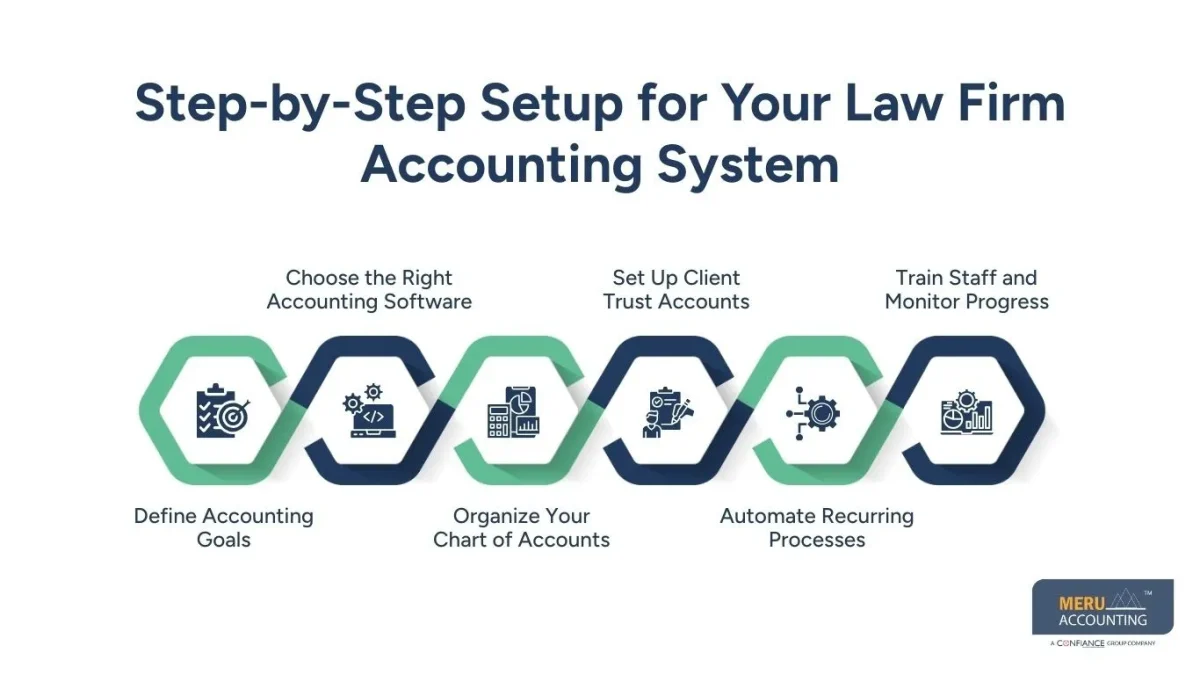
Step 4: Set Up Client Trust Accounts
Segregate client funds from operational funds, as required by law. Proper trust account management is a cornerstone of accounting for law firms.
Step 5: Automate Recurring Processes
Automate billing, expense tracking, and report generation to save time and reduce errors. Automation also ensures that important financial tasks are completed on schedule without manual follow-up.
Step 6: Train Staff and Monitor Progress
Ensure your team knows how to use the software and understands accounting procedures. Regular monitoring ensures compliance and accuracy.
What Are the Best Bookkeeping Practices for Small Legal Practices?
Keep Client and Firm Funds Separate
Always separate operating and trust accounts to avoid legal issues. This practice is essential for proper law firm accounting and helps maintain compliance with professional regulations.
Record Transactions Promptly
Update books regularly to avoid missing entries and errors in reports. Timely recording ensures that your financial data remains accurate and reliable throughout the year.
Reconcile Accounts Regularly
Compare bank statements with accounting records monthly to detect discrepancies early. Regular reconciliation reduces the risk of unnoticed errors or fraudulent transactions.
Maintain Organized Documentation
Keep receipts, invoices, and contracts organized for quick reference and audits. Proper documentation also makes tax preparation and financial reviews much easier.
Use Accounting Software for Accuracy
Accounting software for small law firms reduces manual errors and ensures consistent record-keeping. It also helps maintain clear records of trust transactions and operating expenses.
Review Financial Reports Monthly
Regular review helps identify trends, monitor profitability, and plan for upcoming expenses. Consistent report analysis strengthens overall law firm accounting practices.
Monitor Accounts Receivable Closely
Track unpaid invoices and follow up with clients in a timely manner. Effective monitoring improves cash flow and reduces delays in collections.
Establish Clear Billing Procedures
Create standard billing policies for time tracking and invoicing. Clear procedures reduce confusion and ensure clients are billed accurately.
Schedule Internal Financial Reviews
Set aside time each quarter to review financial performance and accounting processes. These reviews help identify weaknesses and improve your law firm accounting system.
Maintain Backup of Financial Records
Keep secure digital and physical backups of important financial data. Reliable backups protect your firm from data loss and unexpected disruptions.
How to Generate Financial Reports That Actually Help Your Law Firm
Profit and Loss Statements
Shows revenue, expenses, and net income, helping law firms understand financial performance. This report highlights whether your law firm accounting system is supporting profitability.
Balance Sheets
Provides a snapshot of assets, liabilities, and equity, essential for strategic decisions. Reviewing the balance sheet regularly helps assess the overall financial stability of the firm.
Accounts Receivable Reports
Tracks unpaid invoices, helping lawyers follow up on outstanding payments efficiently. Monitoring receivables improves cash flow and reduces payment delays.
Expense Reports
Breaks down firm spending by category, allowing for better budget management. Clear expense tracking also helps identify areas where costs can be controlled.
Trust Account Reports
Ensures client funds are handled properly and in compliance with regulations. These reports are a critical part of responsible law firm accounting practices.
Custom Reports for Decision Making
Many accounting software for small law firms allow customizable reports tailored to your practice’s needs. Custom reporting provides deeper insight into performance trends and financial patterns.
How to Stay Compliant With Law Firm Accounting Rules
Understand Legal Requirements
Familiarize yourself with local bar association rules and trust accounting standards. A clear understanding of regulations strengthens your legal accounting framework.
Regular Internal Audits
Conduct periodic checks to ensure all transactions follow legal guidelines. Internal audits help detect errors early and maintain financial integrity.
Maintain Accurate Client Records
Track all deposits, withdrawals, and billings linked to client accounts. Accurate records are essential for transparency and regulatory compliance.
Seek Professional Help
Consult qualified accounting professionals when complex compliance issues arise. Expert guidance reduces the risk of mistakes and improves the accuracy of law firm accounting.
Keep Up with Updates
Accounting regulations change over time. Staying informed avoids penalties and errors. Regular review of updated rules ensures ongoing compliance and financial stability.
Why Choose Meru Accounting for Your Law Firm Accounting Needs
Industry Expertise
Meru Accounting specializes in law firm accounting, offering professionals who understand legal finance. Our team is familiar with trust accounting rules, billing structures, and compliance requirements specific to legal practices.
Customized Solutions
We provide tailored solutions to fit your small law firm’s specific needs, including trust accounting and expense management. Every service is designed to align with your firm’s size, practice areas, and financial goals.
Support With Accounting Software
Our team assists in implementing accounting software for small law firms, making the transition smooth and effective. We also provide guidance and training to ensure your staff uses the system correctly and efficiently.
Accurate and Timely Reports
Meru Accounting ensures that all financial reports are precise, helping you make informed decisions. Timely reporting gives you a clear view of cash flow, profitability, and outstanding receivables.
Key Takeaways
- Law firm accounting is essential for compliance, protecting client funds, and understanding financial performance.
- Small legal practices face challenges like billing errors, cash flow issues, and time-consuming manual processes.
- Using accounting software for small law firms streamlines billing, trust account management, and reporting.
- Proper setup, bookkeeping practices, and regular audits ensure accuracy and compliance.
- Partnering with experienced accountants like Meru Accounting helps small law firms focus on clients while staying financially healthy.
FAQs
Law firm accounting manages a legal practice’s income, expenses, and client trust accounts. Client funds must be kept separate from business funds and follow strict legal rules.
Law firm accounting helps small legal practices protect client funds and stay compliant with regulations. Proper accounting also improves cash flow tracking and supports better financial decisions.
Law firm accounting includes trust account management, billing, expense tracking, and payroll. Financial reporting is also included to monitor performance and ensure compliance.
The best accounting software for small law firms should support trust accounting, invoicing, and reporting. Strong features and ease of use help reduce manual bookkeeping errors.
Accounting software for small law firms automates billing, tracks trust funds, and organizes expenses. Automation saves time, reduces mistakes, and makes financial reporting faster.


