

When running a law firm, managing finances accurately is just as important as providing excellent legal services. A legal bookkeeper plays a key role in keeping a law firm’s finances organized, accurate, and compliant. They handle specialized bookkeeping tasks that regular accountants may not fully understand, ensuring that law firms maintain financial integrity.
In this blog, we will explore the responsibilities, benefits, and importance of hiring a legal bookkeeper for law firms. Whether you are a small firm or a large practice, understanding this role can help you manage your firm’s finances efficiently.
What You Will Learn From This Blog
- Why law firms need a legal bookkeeper for law firms
- Key tasks handled by Bookkeeper for Law Firms
- How Law Firm Bookkeepers maintain compliance with legal accounting rules
- Ways legal bookkeepers improve financial management
- Tips to choose the right Law Firm Bookkeeper for law firms
This blog will give law firm owners a clear picture of how a legal bookkeeper can streamline financial processes and ensure smooth operations.
What Is a Legal Bookkeeper?
A legal bookkeeper is an accounting professional with specialized knowledge of the financial needs of law firms. They manage the firm’s accounts, track billable hours, handle client retainers, and ensure compliance with trust accounting rules.
Unlike general bookkeepers, they understand the unique operations of legal practices, including managing client trust accounts and accurately recording every transaction to minimize errors and avoid potential audits.
In addition to accuracy, a law firm bookkeeper maintains strict confidentiality while handling sensitive client information. They also provide detailed financial reports that help lawyers and firm managers make informed decisions, supporting the overall financial health and smooth operation of the law firm.
The primary role of a bookkeeper for law firms is to manage all financial transactions for a law firm, including invoices, payments, and expenses.
Bookkeepers for law firms also handle payroll, ensuring staff salaries, deductions, and benefits are processed accurately, while keeping track of accounts receivable to maintain steady cash flow.
A law firm bookkeeper is responsible for managing client trust accounts (IOLTA or similar) in compliance with regulations.
Law firm bookkeepers also prepare essential financial reports such as profit and loss statements, balance sheets, and cash flow reports, providing law firm owners with clear insights into their financial position.
Why Law Firms Need a Legal Bookkeeper for Law Firms
Ensuring Compliance
Law firms must follow strict accounting regulations. A legal bookkeeper for law firms helps maintain compliance with trust accounting rules and tax requirements. This ensures the firm avoids penalties and legal complications.
Reducing Errors
Handling complex legal transactions can lead to mistakes. A skilled bookkeeper reduces errors and maintains accurate financial records. Accurate bookkeeping also builds trust with clients and stakeholders.
Saving Time
By delegating bookkeeping tasks to a legal accounting expert, lawyers can focus on client work instead of spending hours on financial records. This improves overall efficiency within the firm.
Improving Financial Insights
A bookkeeper for law firms provides insights into firm profitability, cost management, and areas for improvement. These insights help lawyers make informed decisions for the firm’s future.
Supporting Growth
Accurate financial management helps law firms plan for expansion, hire staff, and invest in resources efficiently. It also allows the firm to pursue new opportunities with confidence.
What Tasks Does a Legal Bookkeeper Handle?
Billing and Invoicing
A law firm bookkeeper prepares accurate client invoices, records payments, and manages billing cycles for law firms. This ensures timely payments and helps maintain steady cash flow.
Expense Tracking
They monitor and categorize business expenses, ensuring all deductions and payments are accounted for properly. This also helps identify unnecessary costs and optimize spending.
Trust Account Management
A legal bookkeeper for law firms handles client funds, ensuring money is deposited, recorded, and withdrawn according to legal regulations. Proper trust account management protects client interests and keeps the firm compliant.
Payroll Processing
They calculate salaries, taxes, and benefits for employees, maintaining compliance with employment laws. Accurate payroll also improves staff satisfaction and reduces errors.
Bank Reconciliation
A legal accounting experts reconciles firm accounts with bank statements, identifying discrepancies early to prevent errors. This ensures financial records are always accurate and up-to-date.
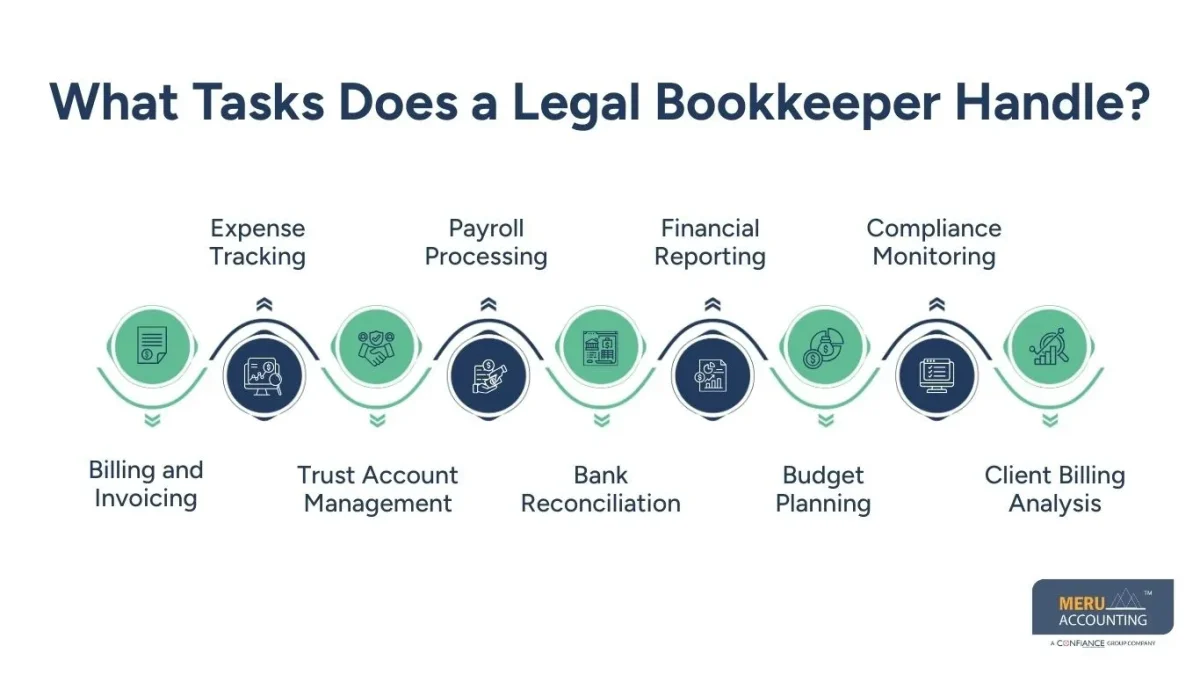
Financial Reporting
They provide detailed reports that help law firm owners understand profits, losses, and financial trends. These reports also support strategic planning and business decisions.
Budget Planning
A legal bookkeeper for law firms helps create realistic budgets based on historical data and expected expenses. This allows firms to manage resources efficiently and avoid overspending.
Compliance Monitoring
They ensure all financial practices follow legal and tax regulations. This minimizes the risk of audits and ensures the firm stays in good standing with regulatory authorities.
Client Billing Analysis
A bookkeeper for law firms reviews billing patterns and client payment histories. This helps law firms identify late-paying clients and improve collections.
How a Legal Bookkeeper for Law Firms Ensures Compliance
Understanding Legal Accounting Rules
A legal bookkeeper for law firms is well-versed in the specific accounting rules for law firms, including trust accounting and client fund management. This ensures all financial practices meet professional and legal standards.
Following Tax Regulations
They ensure tax filings are accurate and timely, avoiding penalties and legal complications for the law firm. This keeps the firm in good standing with tax authorities and prevents costly fines.
Maintaining Accurate Records
By keeping detailed records of all transactions, a bookkeeper for law firms makes audits easier and reduces legal risk. Accurate records also help in quickly resolving any discrepancies or disputes.
Avoiding Commingling of Funds
A legal accountant and bookkeeper for law firms ensures client funds are kept separate from the firm’s operating accounts. This protects client money and maintains trust and compliance.
Regular Audits
They assist in internal and external audits by preparing reports and verifying account accuracy. Frequent audits help detect errors early and maintain financial transparency.
How Bookkeepers for Law Firms Improve Financial Management in Law Firms
Cash Flow Monitoring
A bookkeeper for law firms monitors cash flow to ensure the firm has enough funds to cover operations and client projects. This helps prevent shortages and ensures smooth day-to-day functioning.
Budget Planning
They help create realistic budgets based on historical data and financial projections. Accurate budgeting supports smarter spending and resource allocation.
Profitability Analysis
A bookkeeper for law firms analyzes revenue streams and expenses to identify profitable areas and reduce losses. This helps the firm focus on high-value clients and services.
Cost Management
They track spending patterns, helping law firms cut unnecessary costs and optimize resource allocation. This ensures the firm maximizes profit without compromising quality.
Strategic Financial Advice
With accurate data, a bookkeeper for law firms provides insights that guide investment, expansion, and other financial decisions. Their advice helps law firms make informed choices for long-term growth.
How to Choose the Right Legal Bookkeeper for Your Law Firm
Look for Law Firm Experience
Choose a legal bookkeeper for law firms with experience in legal accounting and trust fund management. Experience ensures they understand the nuances of legal financial operations.
Check Qualifications
Certified bookkeepers with knowledge of legal accounting standards are more reliable. Proper certification indicates professionalism and adherence to industry rules.
Ask for References
Request references from other law firms to verify their track record in managing legal accounts. Positive feedback shows their ability to handle complex legal finances.
Evaluate Software Knowledge
A bookkeeper for law firms should be proficient in legal accounting software like Clio, Timeslips, or QuickBooks for law firms. Proficiency ensures efficient bookkeeping and accurate reporting.
Communication Skills
They must explain financial information in a clear, understandable way to lawyers who may not be accounting experts. Good communication prevents misunderstandings and supports better decisions.
Why Choose Meru Accounting for Legal Bookkeeping?
Expertise in Law Firm Accounting
At Meru Accounting, our team has years of experience as a legal bookkeeper for law firms, handling trust accounts, billing, payroll, and compliance.
Customized Services
We tailor bookkeeping services according to your firm’s size, specialty, and workflow requirements.
Timely Reporting
Our legal bookkeepers provide accurate financial reports regularly to keep your law firm informed.
Compliance Focus
We ensure all your financial records follow legal accounting rules and regulations, reducing your risk of errors.
Affordable and Efficient
Meru Accounting provides reliable bookkeeping services that save your firm time and money, allowing lawyers to focus on clients.
Key Takeaways
- A bookkeeper for law firms manages law firm finances accurately and ensures compliance.
- They handle tasks like billing, payroll, trust account management, and financial reporting.
- Hiring a legal bookkeeper for law firms saves time and improves financial decision-making.
- Accurate bookkeeping supports law firm growth and reduces legal and financial risks.
- Meru Accounting offers experienced legal bookkeepers who specialize in law firm financial management.
FAQs
A legal bookkeeper manages a law firm’s daily financial records. This includes billing, expense tracking, payroll, and trust account management to keep finances accurate.
A legal accountant and bookkeeper understands law firm accounting rules, especially client trust accounts. Regular bookkeepers may not have knowledge of legal compliance requirements.
Yes, small law firms also handle client funds and legal billing. A bookkeeper for law firms helps avoid errors, keeps records organized, and supports steady cash flow.
A bookkeeper for law firms handles invoicing, bank reconciliation, payroll, expense tracking, trust accounting, and financial reports.
Yes, a bookkeeper for law firms ensures client trust accounts follow legal rules, keeps funds separate, and maintains proper records to reduce compliance risks.


