




Legal bookkeeping services are specialized accounting solutions designed specifically for law firms and legal professionals. Unlike regular bookkeeping, these services require a deep understanding of legal compliance, client trust accounts, and strict regulatory requirements.
Every law firm handling client funds must ensure accuracy, transparency, and accountability, making legal bookkeeping services an essential aspect of legal operations.
In addition, legal bookkeeping involves precisely tracking of billable hours, retainers, and expense allocations to maintain ethical and financial integrity.
A qualified legal bookkeeper ensures proper segregation of client and firm funds, helping law practices avoid compliance violations, audits, and potential legal penalties. These specialized services ultimately support smoother financial management and long-term law firm sustainability.
What You Will Learn From This Blog
- What legal bookkeeping services are and how they differ from regular bookkeeping practices
- Why law firms require specialized legal bookkeeping solutions to meet compliance and regulatory standards
- The role of a professional law firm bookkeeper in managing law firm finances
- How client trust accounts and legal funds are handled accurately and ethically
- The benefits of outsourcing legal bookkeeping services for law firms
- Essential skills and expertise required to become a qualified legal bookkeeper
- Common bookkeeping challenges faced by law firms and how to overcome them
- Best practices for maintaining accurate, compliant, and transparent legal financial records
Introduction To Legal Bookkeeping Services
Legal bookkeeping services involve the accurate recording, tracking, and management of financial transactions for law firms while ensuring full compliance with legal regulations and trust account rules.
These specialized services are designed to support the unique financial structure of legal practices, including client retainers, billable hours, and regulated trust accounts.
The primary purpose of legal bookkeeping is to maintain financial accuracy, prevent mismanagement of client funds, and provide law firms with clear, reliable financial reports for informed decision-making.
Law firms routinely handle sensitive client funds and complex financial transactions that demand a higher level of accountability. Legal bookkeeping services help firms remain compliant with bar association requirements, reduce the risk of audits or penalties, and maintain transparency in financial operations.
By ensuring proper segregation of client and operating funds, these services protect both the firm and its clients while allowing attorneys to focus on legal work rather than administrative tasks.
Unlike regular bookkeeping, legal bookkeeping solutions specifically address the management of client trust accounts, including IOLTA funds, and adhere to strict regulatory and ethical guidelines.
A professional legal accounting specialist plays a critical role in overseeing trust fund management, invoicing, expense tracking, and regulatory reporting. Their expertise ensures that law firm finances remain compliant, organized, and aligned with industry standards.
Key Differences Between Legal Bookkeeping Services and Regular Bookkeeping
Aspect | Legal Bookkeeping Services | Regular Bookkeeping |
Focus on Client Funds | Prioritizes client trust accounts and ensures client funds are never mixed with operational accounts | Focuses mainly on business income and expenses |
Compliance Requirements | Follows strict bar association rules, legal ethics, and trust accounting regulations | Adheres to general accounting standards |
Transaction Complexity | Manages retainers, settlements, escrow accounts, and trust disbursements | Handles standard business transactions |
Reporting and Documentation | Provides detailed trust account reports, billable hour tracking, and compliance-ready documentation | Offers basic financial reports such as profit and loss statements |
Risk Management | Minimizes risks related to fraud, fund mismanagement, audits, and non-compliance | Limited risk mitigation specific to legal practices |
Audit Readiness | Maintains audit-ready records to meet bar association and regulatory reviews | Not typically prepared for legal or compliance audits |
Industry-Specific Expertise | Requires in-depth knowledge of legal accounting rules and law firm operations | Does not require legal industry-specific knowledge |
Why Compliance And Regulatory Requirements Are Critical In Legal Accounting
Bar Association Guidelines
Legal bookkeeping services must follow strict bar association rules to maintain law firm credibility and compliance. Failure to adhere to these guidelines can result in disciplinary action and damage to a firm’s professional reputation.
IOLTA Compliance
Interest on Lawyers’ Trust Accounts (IOLTA) has strict rules for fund management, which legal bookkeepers are trained to follow. Proper handling ensures accurate tracking of client funds and prevents unauthorized use or misallocation.
Client Protection
Proper legal bookkeeping ensures client funds are protected and used only for their intended purposes. This level of financial transparency builds client trust and reinforces ethical legal practice.
Avoiding Legal Penalties
Non-compliance can result in fines, license suspension, or other serious penalties, making adherence crucial. Legal bookkeeping solutions help law firms stay aligned with regulatory requirements and avoid costly violations.
Audit Readiness
Legal bookkeeping solutions maintain clear and accurate records to simplify audits by regulatory authorities. Well-organized financial documentation allows law firms to respond confidently and efficiently during audits.
How Are Trust Accounts and Client Funds Managed by Legal Bookkeepers?
Segregation of Funds
Client funds are kept separate from the law firm’s operating accounts to prevent misappropriation. This separation is a mandatory ethical requirement for law firms handling client money.
Accurate Recording
Legal bookkeepers track every transaction related to client accounts to ensure accurate reporting. Each entry is documented with supporting records for full transparency.
Reconciliation Practices
Regular reconciliation of client accounts helps prevent errors and ensures proper fund allocation within structured Legal Bookkeeping Services. This process identifies discrepancies before they become compliance issues.
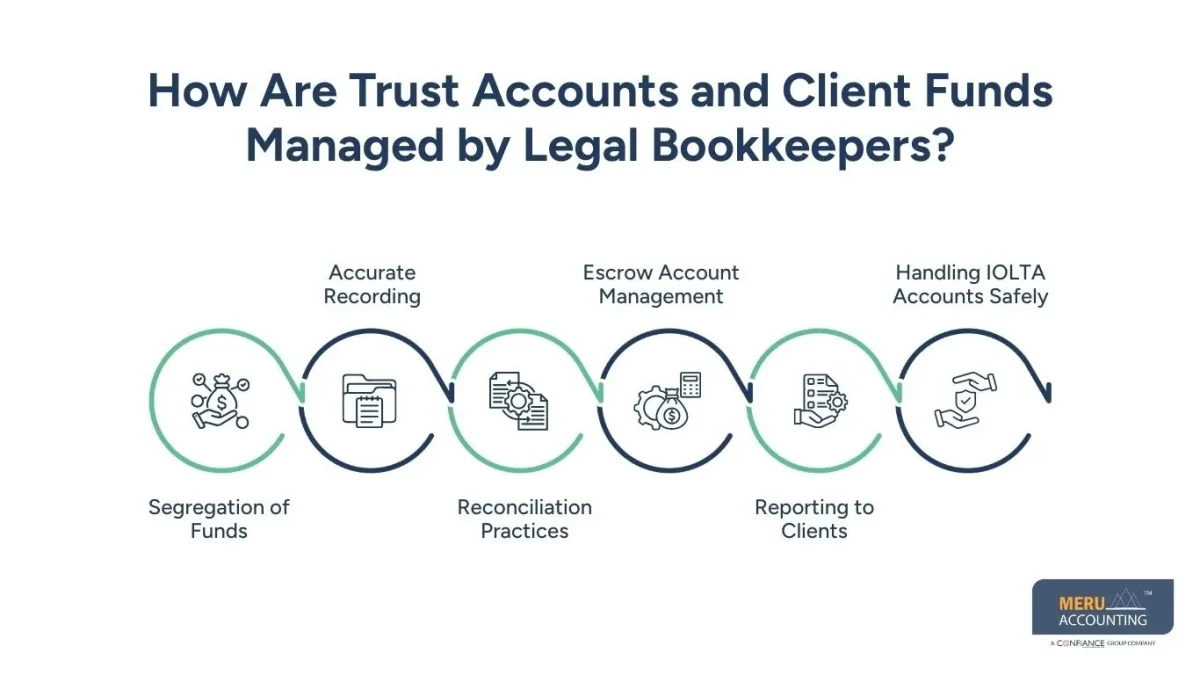
Escrow Account Management
Escrow funds are monitored and recorded precisely to comply with legal obligations. Timely tracking ensures funds are released only under authorized conditions.
Reporting to Clients
Law firms can provide transparent account statements to clients, enhancing trust and accountability. Clear reporting helps clients understand how their funds are managed.
Handling IOLTA Accounts Safely
Law Firm Bookkeepers follow specific procedures to manage IOLTA accounts correctly. This ensures interest and principal amounts are allocated in accordance with regulatory rules.
What Are the Benefits of Outsourcing Legal Bookkeeping Services?
Focus on Core Legal Work
Outsourcing frees lawyers from bookkeeping tasks, allowing them to concentrate on legal matters. This improves productivity and client service quality.
Cost Efficiency
Hiring a dedicated legal bookkeeper or outsourcing Legal Bookkeeping Services can be more cost-effective than in-house teams. Law firms save on salaries, training, and software expenses.
Expert Knowledge
Professional law firm bookkeepers are trained in trust accounting and regulatory compliance. Their expertise reduces the learning curve and operational errors.
Risk Reduction
Outsourced legal bookkeeping reduces the risk of errors, fraud, and non-compliance penalties. Specialized oversight strengthens financial controls.
Scalability
Law firms can scale bookkeeping services based on case volume and workload. This flexibility supports firm growth without long-term commitments.
Improved Reporting
Outsourced services deliver detailed financial reports for better decision-making. These insights support budgeting, forecasting, and strategic planning.
Which Skills Make a Legal Bookkeeper Essential for Law Firms?
Knowledge of Legal Compliance
A law firm bookkeeper providing legal bookkeeping services understands bar rules, IOLTA requirements, and regulatory obligations. This knowledge ensures law firm operations remain audit-ready.
Attention to Detail
Managing client funds requires precision in recording every transaction accurately. Even minor errors can lead to serious compliance risks.
Trust Account Management
Expertise in handling retainers, settlements, and escrow accounts is critical. Proper trust management protects both clients and the firm.
Financial Reporting
Legal bookkeepers generate reports for internal review and client transparency. Accurate reports support financial planning and compliance reviews.
Problem-Solving
They identify discrepancies quickly and implement corrective measures. This proactive approach prevents financial and regulatory issues.
Communication Skills
A law firm bookkeeper explains complex financial data clearly to lawyers and clients. Strong communication ensures informed financial decisions.
How To Implement Best Practices For Legal Bookkeeping Services
Maintain Separate Accounts
Always keep client funds in dedicated trust accounts, separate from operational accounts when using compliant legal bookkeeping services. This prevents commingling of funds and ensures compliance with ethical guidelines.
Regular Reconciliation
Perform monthly reconciliation of trust and operating accounts to identify discrepancies. Consistent reconciliation helps detect errors before they become compliance issues.
Accurate Documentation
Keep detailed records of all transactions, invoices, and receipts for auditing purposes. Proper documentation supports transparency and simplifies regulatory reviews.
Use Accounting Software
Invest in legal-specific accounting software for precise tracking and reporting. Automation improves accuracy and reduces manual bookkeeping errors.
Periodic Audits
Conduct internal or external audits to ensure compliance with legal and regulatory standards. Audits help identify gaps and strengthen financial controls.
Train Staff
Ensure staff handling bookkeeping understand trust accounting and compliance requirements. Ongoing training reduces the risk of costly mistakes.
How To Choose The Right Legal Bookkeeper Or Service Provider
Experience in Legal Accounting
Select a bookkeeper with proven experience in law firm accounting and trust management. Industry-specific expertise ensures accurate handling of legal finances.
Knowledge of Regulations
Ensure the provider offering Legal Bookkeeping Services understands bar association rules and IOLTA account requirements. Regulatory knowledge protects your firm from penalties and audits.
References and Reviews
Check client testimonials and references to assess reliability and performance. Positive reviews indicate consistent service quality.
Service Offerings
Look for services that include reporting, reconciliation, compliance, and audit support. Comprehensive offerings reduce the need for multiple vendors.
Transparent Pricing
Choose a provider with clear pricing and no hidden charges. Cost transparency supports better financial planning.
Technology Integration
Ensure the bookkeeper can work with your preferred accounting software efficiently. Seamless integration improves workflow and reporting accuracy.
Meru Accounting’s Legal Bookkeeping Services
- Meru Accounting has a team of professional legal bookkeepers trained to handle complex trust accounting.
- We ensure all transactions comply with local bar association guidelines and IOLTA regulations.
- Law firms receive accurate financial statements, reconciliations, and trust account reports.
- Our outsourced services save law firms money while providing expert bookkeeping support.
- Our Legal Bookkeeping Services adapt to the size and needs of law firms, whether small practices or large firms.
- Meru Accounting prioritizes transparency, accuracy, and timely communication with clients.
Key Takeaways
- Legal bookkeeping services are designed specifically for law firms and client fund management.
- Compliance with bar association rules and IOLTA regulations is critical.
- Law Firm Bookkeepers have specialized skills that differentiate them from regular bookkeepers.
- Outsourcing legal bookkeeping provides cost efficiency, risk reduction, and expert support.
- Choosing the right legal bookkeeper ensures accuracy, transparency, and smooth law firm operations.
FAQs
Legal bookkeeping services help law firms record financial transactions, manage trust accounts, and follow legal accounting rules. These services focus on client funds, compliance, and accurate reporting.
Legal bookkeeping services follow bar association rules and trust accounting laws. Regular bookkeeping does not manage client trust accounts or IOLTA requirements.
A legal bookkeeper ensures client funds are handled correctly, trust accounts are accurate, and financial records meet legal compliance standards.
A law firm bookkeeper records all trust account transactions, keeps client funds separate, and performs regular reconciliation to avoid errors or misuse.
Yes, outsourcing legal bookkeeping solutions helps law firms stay compliant with trust accounting rules, reduce errors, and maintain accurate financial records.


