



Introduction to Liability Accounts
Liability accounts are a fundamental element of accounting, representing the obligations and debts a company owes to outside parties. These accounts play a crucial role in maintaining an accurate financial position and enable businesses to measure their financial health effectively. Understanding the types and classifications of liabilities is essential for accountants, business owners, and financial analysts alike.
In this comprehensive article, we will explore the complete list of liability accounts, providing detailed examples ranging from short-term to long-term liabilities. Whether you are a novice accountant seeking to grasp basic concepts or an experienced professional looking to refine your skills, this resource covers everything you need to know about liability accounts.
Understanding the Nature and Classification of Liabilities
Liabilities are financial obligations that a company is required to fulfill in the future. These obligations arise from past transactions or events and represent claims against the company’s assets by creditors, suppliers, lenders, or other entities. The primary function of liability accounts is to record and track these obligations in the company’s accounting system.
Liabilities are broadly classified into two main categories based on their maturity:
- Short-Term Liabilities (Current Liabilities): These are obligations that a company expects to settle within one year or within the company’s operating cycle, whichever is longer.
- Long-Term Liabilities (Non-Current Liabilities): These refer to debts or obligations that are due beyond one year, indicating longer-term financial commitments.
The distinction between these two categories is vital for preparing the balance sheet and understanding liquidity and solvency ratios.
Short-Term Liability Accounts: Definitions and Examples
Short-term liabilities are essential to managing day-to-day business operations. They commonly include accounts payable, accrued expenses, and short-term loans. Here, we provide a detailed list of liability accounts typically categorized under current liabilities:
Common Examples of Short-Term Liability Accounts
- Accounts Payable: Money owed to suppliers for goods and services purchased on credit.
- Accrued Expenses: Expenses that have been incurred but not yet paid, such as wages payable, interest payable, and taxes payable.
- Short-Term Notes Payable: Promissory notes that are payable within one year.
- Unearned Revenue: Cash received in advance of delivering goods or services.
- Current Portion of Long-Term Debt: The portion of long-term debt payments due within the next 12 months.
- Dividends Payable: Dividends declared by the company but not yet paid to shareholders.
- Income Taxes Payable: Taxes owed to the government for income earned.
- Customer Deposits: Advances received from customers that are expected to be settled shortly.
These examples represent common liabilities companies encounter regularly during their operations and must manage carefully to maintain liquidity.
Long-Term Liability Accounts: Definitions and Examples
Long-term liabilities involve financial obligations whose maturity extends beyond one year. These debts are critical for strategic business financing and capital structure optimization. Below is a comprehensive list of typical long-term liabilities:
Common Examples of Long-Term Liability Accounts
- Bonds Payable: Debt securities issued by a company to investors that typically mature in more than one year.
- Long-Term Notes Payable: Promissory notes with due dates extending beyond one year.
- Mortgage Payable: Loans secured by real estate property, payable over several years.
- Lease Liabilities: Obligations under long-term lease agreements.
- Deferred Tax Liabilities: Taxes that are assessed but not due to be paid in the current period.
- Pension Liabilities: Obligations related to employee retirement benefits.
- Other Long-Term Debt: Various other obligations that do not fall under the categories listed above, such as installment loans or subordinated debt.
Managing long-term liabilities effectively is essential for maintaining company solvency and planning future capital requirements.
Comparing Short-Term and Long-Term Liabilities
Understanding the differences and relationships between short-term and long-term liabilities helps businesses strategically structure their finances. The following table provides a detailed comparison:
| Feature | Short-Term Liabilities | Long-Term Liabilities |
|---|---|---|
| Definition | Obligations due within one year or one operating cycle. | Obligations due beyond one year. |
| Examples | Accounts payable, accrued expenses, short-term loans. | Bonds payable, mortgage payable, long-term notes. |
| Purpose | Fund daily operations and short-term projects. | Finance long-term assets and investments. |
| Impact on Liquidity | Directly affects current liquidity since payments are imminent. | Less immediate impact on liquidity; affects long-term solvency. |
| Balance Sheet Classification | Current liabilities section. | Non-current liabilities section. |
Both short-term and long-term liabilities must be accurately reported and managed, as they collectively represent total company debt and financial obligations.
Examples of Liability Accounts in Different Industries
Liability accounts vary somewhat depending on the industry and company business model. The following examples illustrate typical liabilities found in various sectors:
Manufacturing Industry
- Accounts Payable (raw materials suppliers)
- Accrued Wages Payable (factory labor costs)
- Short-Term Bank Loans (bridge financing)
- Bonds Payable (capital projects)
- Pension Liabilities (employee benefits)
Retail Industry
- Unearned Revenue (gift cards and customer deposits)
- Sales Tax Payable (collected but unpaid taxes)
- Accounts Payable (inventory purchases)
- Lease Liabilities (storefront rentals)
- Short-Term Notes Payable (seasonal working capital loans)
Technology Sector
- Deferred Revenue (subscriptions and software licenses)
- Accrued Expenses (consulting fees and utilities)
- Bonds Payable (funding for expansion)
- Long-Term Notes Payable (equipment financing)
- Deferred Tax Liabilities (timing differences in software amortization)
Key Concepts and Terms Related to Liability Accounts
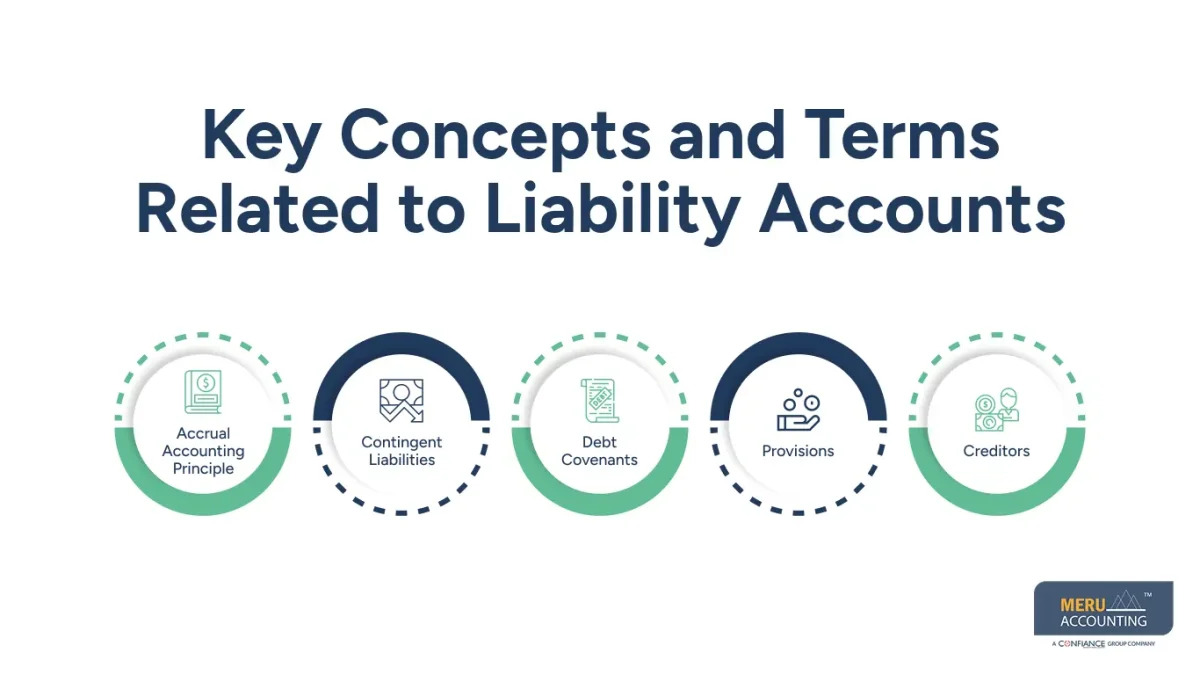
To effectively understand and utilize liability accounts, familiarity with key terms and accounting principles is imperative:
Accrual Accounting Principle
This principle requires companies to record liabilities as soon as obligations arise, regardless of when cash payments are made. This ensures that financial statements reflect a true and fair view of current obligations.
Contingent Liabilities
Refers to possible liabilities that may arise from future events, such as lawsuits or warranty claims. These are disclosed in financial statements if they are probable and the amount can be reasonably estimated.
Debt Covenants
Agreements between borrowers and lenders that impose certain restrictions or obligations. Understanding debt covenants is important as they can affect company operations and reporting.
Provisions
Estimated liabilities for future obligations that are uncertain in timing or amount—for example, warranty provisions or restructuring costs.
Creditors
Entities or parties to whom the company owes money. Identifying creditors helps prioritize liability settlements.
Managing Liability Accounts for Accurate Financial Reporting
Accurate management of liability accounts impacts financial reporting, decision-making, and compliance. Implementing sound control procedures and timely reconciliations is critical.
Best Practices for Managing Liability Accounts
- Maintain a detailed chart of accounts including all liability types.
- Regularly reconcile accounts payable and accrued liabilities.
- Monitor debt maturity schedules to ensure timely payments.
- Classify liabilities correctly between short-term and long-term categories.
- Review legal and financial agreements to identify contingent liabilities.
- Keep transparent disclosure in notes to the financial statements.
Importance of Accurate Liability Reporting
Accurate liability reporting improves stakeholder confidence, ensures regulatory compliance, and aids in assessing creditworthiness. It also supports internal management in budgeting and cash flow forecasting.
Role of Meru Accounting in Liability Account Management
Meru Accounting is a recognized provider of professional accounting services specializing in comprehensive liability account management and financial reporting solutions. By leveraging the latest accounting standards and technology, Meru Accounting helps businesses maintain precise records of their short-term and long-term liabilities, optimize debt management, and improve financial transparency. Their expert team offers tailored accounting support, including account reconciliations, liability classifications, and audit preparations, enabling companies to stay compliant and make informed financial decisions.
Conclusion: Comprehensive Understanding of Liability Accounts
Liability accounts serve as a cornerstone of effective accounting and financial management. From short-term obligations like accounts payable to long-term debts such as bonds payable, these accounts provide critical insight into a company’s financial commitments. A thorough understanding of the complete list of liability accounts, along with their classifications and examples, equips business professionals to maintain accurate financial records, improve liquidity management, and plan for sustainable growth.
Proper management of liabilities, supported by industry best practices and expert advice from firms like Meru Accounting, ensures that companies can meet obligations timely and present transparent financial statements. This further builds trust with creditors, investors, and regulatory bodies alike.
For anyone seeking to deepen their knowledge of liability accounts, whether for academic, professional, or practical purposes, mastering these concepts is vital for achieving long-term financial success.
FAQs
What are liability accounts in accounting?
Liability accounts represent the debts and obligations a company owes to external parties, classified as either short-term or long-term liabilities.
Can you provide examples of short-term liability accounts?
Examples of short-term liability accounts include accounts payable, short-term loans, wages payable, and accrued expenses.
What are common long-term liability accounts?
Common long-term liability accounts include mortgage payable, bonds payable, long-term loans, and deferred tax liabilities.
How do liability accounts differ from asset accounts?
Liability accounts represent what a business owes, whereas asset accounts represent what a business owns.
Why is it important to distinguish between short-term and long-term liabilities?
Distinguishing between short-term and long-term liabilities helps assess a company’s liquidity and financial health by identifying which debts need to be paid within one year versus those due later.


